High-Efficiency Warehouse & External Racking Series
Manufactured under strict ISO 9001:2015 and CE EN15512 engineering protocols. Optimized for harsh ambient conditions, extreme load cycles, and seamless logistics operation.
The Architecture of Exterior & Outdoor Pallet Racking Systems
Deploying heavy-duty racking systems beyond interior facility walls demands advanced metallurgy, structural stability analysis, and bespoke anti-corrosion chemistry.
Total Cost of Ownership (TCO)
Building real estate costs continue to outpace logistics budgets worldwide. Converting external apron zones, open yards, and intermodal staging spaces into high-density external pallet racking arrays delivers immediate cubic capacity without capital overhead in bricks and masonry.
Environmental Load Dynamics
Unlike indoor selective setups, external pallet racks act as massive civil structural grids. Every configuration must account for site-specific live wind loads, localized seismic acceleration co-efficients, rainwater shedding, and thermal expansion across Q235B and Q355B cold-rolled steel profiles.
Anti-Corrosive Metallurgy
Surface degradation directly degrades load factor ratings. Elite manufacturers apply rigorous hot-dip galvanizing (HDG) per ISO 1461, yielding zinc coatings exceeding 85 microns, or dual-layer multi-stage zinc phosphating combined with UV-stabilized architectural outdoor powder coatings.
| Storage System Type | Optimal Handling Unit | Coating Technology | Wind Load Tolerance | Selectivity vs Density |
|---|---|---|---|---|
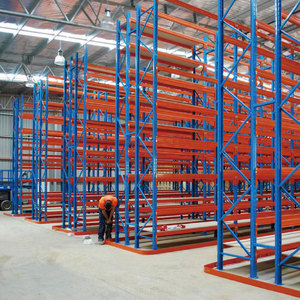
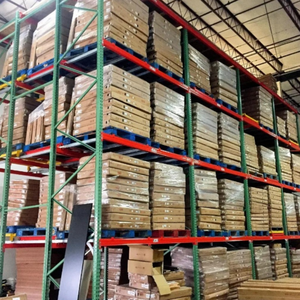
| Hot-Dip Galvanized Selective | Standard Euro / ISO Pallets | Hot-Dip Galvanized (ISO 1461) | Engineered to Beaufort Force 10–12 | 100% Selectivity / Baseline Density |
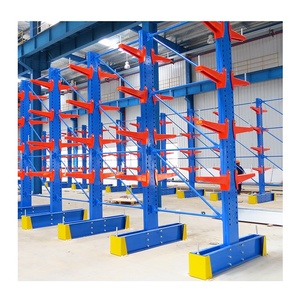
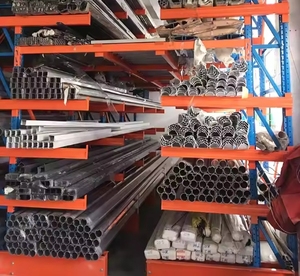
| Outdoor Cantilever System | Pipes, Timber, Rebar, Coils | Electrostatic Zinc + Fluorocarbon | Shear-braced to local wind codes | Linear Continuity / High Density |
| Covered Canopy Rack Clad | Bulk Freight, Palletized Cement | Epoxy Primer + Architectural Polyester | Integrated Roof Truss Dissipation | Dual Protection / Maximum Cube |
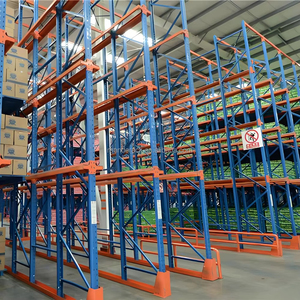
| Heavy Duty Drive-In Exterior | Homogeneous Seasonal Cargo | Pickled & Phosphated Powder Coat | Rigid Portal Frame Optimization | LIFO Strategy / Ultra-High Density |
Emerging Trends Shaping Industrial External Racking (2025–2030)
The transition toward automation, sustainable metallurgy, and digital asset tracking is redefining procurement specifications for global EPCs, 3PL giants, and supply chain operators.
1. Convergence of Rack-Supported Clad Structures (Rack-Clad Buildings)
Rather than erecting standalone warehouses and later inserting racking, modern enterprise procurement favors rack-supported building systems. The upright frames serve as primary load-bearing members that anchor exterior side cladding and insulated roofing decks. This approach slashes civil construction timeframes by up to 40% while maximizing volumetric storage coefficient efficiency.
2. Autonomous Exterior Material Handling (Outdoor AGVs & Shuttle Carts)
High-density external storage is rapidly decoupling from standard counterbalanced forklift fleets. Heavy-duty radio shuttle racking and autonomous automated guided vehicles (AGVs) engineered with IP67 navigation scanners are operating in yard environments, driving procurement demand for millimeter-accurate roll-formed beam profiles and seamless rail tolerances.
3. Decarbonized Steel & Green Supply Chain Compliance
With EU Carbon Border Adjustment Mechanism (CBAM) regulations and international ESG auditing tightening, tier-1 tier exporters are adopting certified low-carbon recycled scrap electric-arc furnace (EAF) steel and zero-VOC heavy-duty thermosetting polyester powder resins, ensuring imported equipment satisfies environmental criteria effortlessly.
4. IoT-Driven Structural Health & Tilt Monitoring
Large exterior racking installations face seismic micro-movements, wind-induced harmonic resonance, and accidental impact by handling plant. The frontier of rack engineering incorporates solar-powered, wireless IoT telemetry transponders embedded into baseplates and top ties to deliver real-time load displacement alerts straight to warehouse management systems.
Why Tier-1 Importers Partner With Our Guangzhou Facility
Combining world-class manufacturing scale with tailored international engineering expertise. Here is how our production framework safeguards your industrial capital expenditure.
Rigorous In-House Roll Forming
We operate 30+ precision automatic cold-bending and roll-profiling lines within our 30,000 m² Guangzhou production campus. From continuous column hole-punching to robotic seam welding, component dimensional tolerances are held within tight margins (±0.5mm), eliminating on-site installation misalignment.
Rapid Deep-Water Maritime Logistics
Located immediately adjacent to the maritime hubs of Guangzhou, Nansha, and Shenzhen, our shipping department coordinates direct factory-to-port container stuffing. Sea transits to Southeast Asian hubs (Vietnam, Philippines, Singapore, Malaysia) average 2 to 7 days, significantly slashing total project lead times.
Certified Compliance & FEM/RMI Alignment
Every system structural computation satisfies Australian AS4084-2023, European EN 15512, and American RMI standards. Our verifiable certifications include CE Certificate No. 2435-CPR-8605159 and ISO 9001:2015 registration No. 18624Q00169R0M, providing absolute audit readiness for tenders.
Frequently Asked Questions on Exterior Pallet Racking Sourcing
Essential engineering and procurement answers for warehouse directors, structural engineers, and global procurement officers.
What is the standard protective finish recommended for external racking systems?
For open-air yards exposed to coastal humidity, acid rain, or extreme precipitation, continuous Hot-Dip Galvanizing (HDG) per ISO 1461 is the engineering gold standard, providing a sacrificial zinc barrier exceeding 70-85 µm. For arid or shaded outdoor areas, an intensive dual-stage pickling, phosphating, and UV-resistant thermosetting architectural powder coating will guarantee multi-year performance without peeling or chalking.
How are wind uplift and lateral wind shear loads calculated for outdoor setups?
Our structural engineering division employs 3D Finite Element Analysis (FEA) calibrated to your exact geographical site codes (such as AS/NZS 1170.2, Eurocode 1 EN 1991-1-4, or ASCE 7). We engineer heavy-gauge oversized base plates, chemical anchor embedment depths, cross-aisle portal bracing, and top canopy ties to handle extreme storm gusts and typhoon-force conditions.
What foundation and civil engineering parameters are necessary prior to installation?
Exterior racking requires a reinforced concrete slab (typically minimum 200mm to 250mm thickness, C25/30 or C30/37 grade concrete) that has achieved full cure. The apron must provide adequate sub-base compaction, level tolerances within DIN 18202 standards, and integrated surface run-off drainage channels so that water cannot pool permanently at baseplate anchors.
Can you provide turnkey customized layout designs and CAD engineering validation?
Yes. By furnishing your raw yard dimensions, forklift turn radius, pallet load weights, and intended SKU operational throughput, our engineering team supplies complete CAD layout prints, 3D visual renderings, and structural loading certifications completely free of charge before production begins.
Request a Professional Engineering Consultation & Custom Quote
Connect directly with our senior racking structural engineers in Guangzhou. We review your site drawings, load requirements, and logistics parameters to deliver a comprehensive layout and quotation within 24 hours.
Get a Quote