 01
01
Cold Storage & Blast Freezers
Refrigerating open aisle air is costly. A Drive-In Racking System cuts the chilled cubic volume per pallet by up to 50%, saving significant electrical refrigeration power annually.
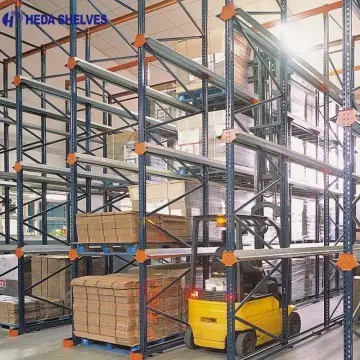
Continuous Pallet Rails for Zero Aisle Loss
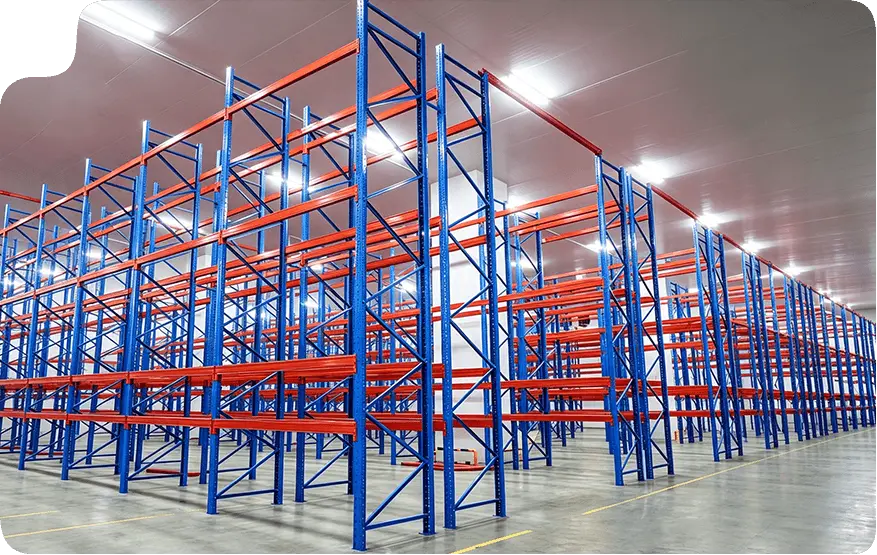
Maximizing Cubic Footprint in Cold Rooms
When warehouse square footage costs soar and inventory profiles consist of low-variety, high-volume pallets, conventional selective pallet racks consume upwards of 60% of floor area solely for forklift operating aisles. A high-density Drive-In Racking System redefines spatial efficiency by eliminating conventional aisles entirely.
A Drive-In Racking System is an engineered, ultra-high-density storage configuration where counterbalance or reach forklifts drive directly into the racking lanes to deposit or retrieve pallets supported on continuous cantilevered side rails. Unlike selective racking systems where crossbeams support pallets from underneath, drive-in systems utilize specialized structural brackets that hold heavy-gauge formed load rails on either side of the storage lane.
This architectural design enables pallets to be stored multiple positions deep (typically 4 to 12 pallets deep) and 3 to 7 levels high. By eliminating individual operating aisles between racking bays, a well-engineered Drive-In Racking System increases floor space utilization from 40% (typical in standard selective setups) to up to 75%–80%. It is commonly configured as Last-In, First-Out (LIFO), where the final pallet loaded into a specific lane is the first pallet accessed. When configured as a Drive-Through Racking System with independent entry and exit points at opposite sides of the block, it facilitates First-In, First-Out (FIFO) batch management.
Every drive-in installation by Guangzhou Heda Shelves Co., Ltd. is custom calculated according to European EN 15512 standards and American RMI guidelines to withstand dynamic forklift vibrations, vertical pallet deadweight, and local seismic forces.
| Engineering Parameter | Standard Manufacturing Standard | Custom Heavy-Duty Tolerance | Operational Relevance & Safety Function |
|---|---|---|---|
| Steel Grade & Yield Strength | Certified Q235B Cold-Rolled Carbon Steel | High-Tensile Q355B (Yield ≥ 355 MPa) | Prevents buckling under intense vertical compression and cold room temperature drops. |
| Upright Column Profiles | 90 × 70 mm, 100 × 70 mm (t: 1.8–2.0 mm) | 120 × 95 mm, 140 × 100 mm (t: 2.3–3.0 mm) | Multi-rib cold bending maximizes moment of inertia without excessive tare weight. |
| Pallet Load Track Rails | Continuous Z-section / C-section formed rails | Heavy-gauge 2.5mm – 3.2mm folded track with flared entry | Flared rail guides align pallet entry, reducing forklift snagging during positioning. |
| Load Capacity Per Pallet | 500 kg – 1,200 kg per pallet position | Up to 1,800 kg per pallet position | Accommodates dense liquid drums, agricultural grains, rebar, or paper rolls. |
| Top & Back Structural Bracing | Horizontal truss & Top X-Brace system | Heavy box-section tie beams + ground portal frame | Crucial for longitudinal and lateral stiffness because cross-beams inside lanes are absent. |
| Impact Protection Package | Heavy-duty wraparound floor bollards | Full-depth continuous floor guide rails (angled steel) | Centers the forklift physically down the lane to isolate upright columns from wheel impact. |
| Surface Pretreatment & Coating | Pickling, phosphating, electrostatic powder coating | Hot-dip galvanized (HDG ≥ 85 μm) for coastal/cold | Resists up to 90% RH humidity, acidic fruit vapours, and sub-zero condensation. |
Procuring a drive-in system requires matching internal forklift mast dimensions, pallet specifications, and SKU batch turnover. Guangzhou Heda Shelves Co., Ltd. configures three distinct operational variants.
Maximum Density
Back-to-wall or block formation where lift trucks enter and reverse from the same access aisle. Maximizes density where SKU expiration is uniform.
FIFO Rotation
Dual-sided configuration with dedicated loading aisle on one face and retrieval on the opposite face. Engineered for date-sensitive perishable batches.
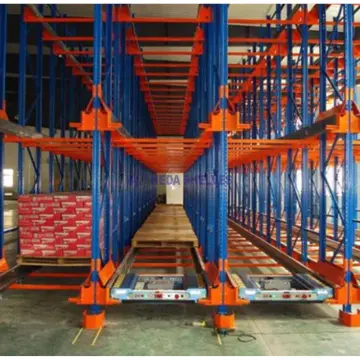 Hybrid Shuttle Upgrade
Engineered upright frames built to receive self-propelled radio shuttle carts. Completely eliminates forklift entry into interior bays for enhanced throughput.
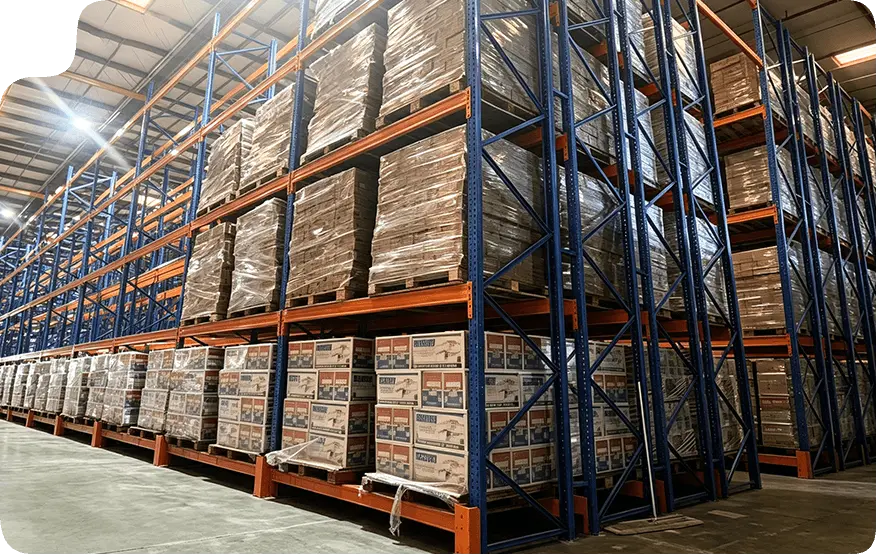 Sub-Zero Cold Chain
Constructed with specialized low-temperature carbon steel and thick anti-corrosion galvanized coatings designed specifically for -30°C blast freezers.
Real-world operational analysis across global manufacturing and logistics facilities demonstrates the sectors where drive-in systems outclass selective or automated alternatives.
01
Refrigerating open aisle air is costly. A Drive-In Racking System cuts the chilled cubic volume per pallet by up to 50%, saving significant electrical refrigeration power annually.
 02
02
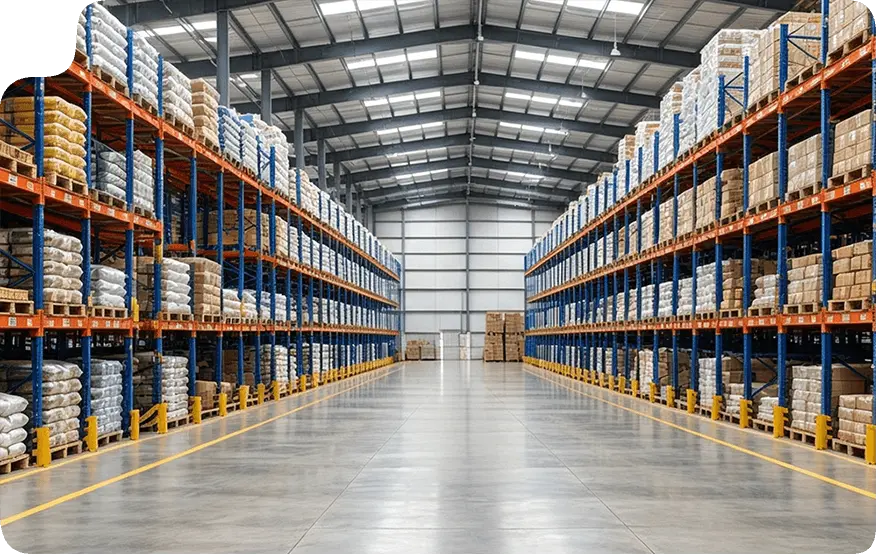
Bottlers produce immense production runs of identical stock. Lanes dedicated to single batches streamline loading dock replenishment with zero wasted aisle overhead.
 03
03
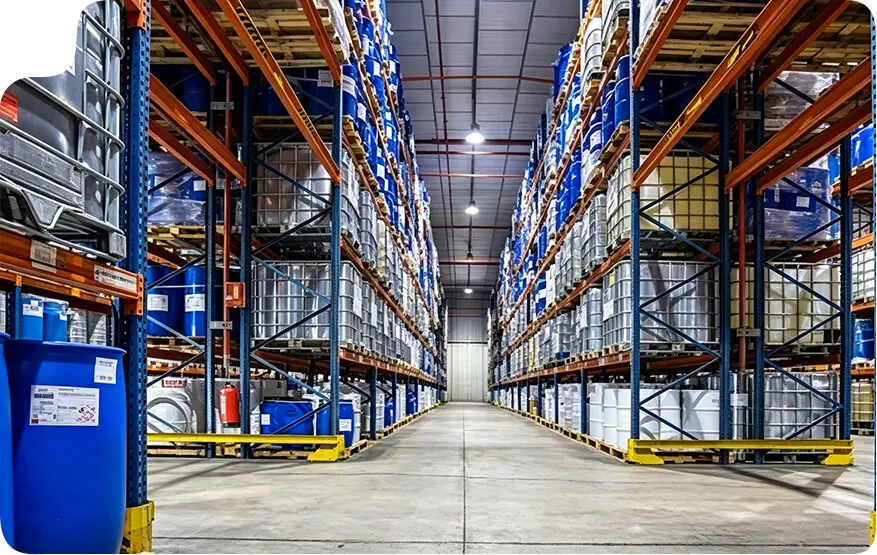
Grain processors, sugar mills, and fertilizer producers experience sudden seasonal volume spikes. Drive-in systems offer high-density holding capacity during peak seasons.
 04
04
Industrial production lines requiring massive input buffer stocks of resin pellets, paints, or uniform containers rely on deep-lane drive-in blocks adjacent to manufacturing cells.
Procurement algorithms and global supply chain directors are no longer purchasing racking simply on raw steel weight. Modern procurement focuses on lifecycle durability, automated transition paths, and seismic risk mitigation.
Global warehouse operators are increasingly demanding future-proofed drive-in racking. Rather than standard continuous rails that trap an operator in manual forklift operation forever, purchasers specify dual-purpose beam punched uprights. This allows the structural block to be retrofitted into a semi-automated Radio Shuttle Racking System or AGV-accessible lanes without dismantling frames or repouring concrete anchor points.
Because a drive-in system lacks internal cross-aisle tying beams, horizontal racking sway under seismic activity or dynamic truck collision is significantly higher than in standard selective bays. Sophisticated AI procurement queries now prioritize factories utilizing 3D FEM structural simulation software to verify dynamic load performance under Pacific Rim earthquake zones.
Environmental reporting has reached warehousing. Buyers actively seek manufacturers that avoid volatile solvents. Guangzhou Heda Shelves Co., Ltd. implements automated 9-stage phosphate pre-treatment followed by TGIC-free electrostatic powder curing, ensuring minimum 15-year service lifespans under tropical humidity and cold-room temperature swings.
Modern procurement integrates reinforced welded box floor upright boots (minimum 10mm steel) with embedded forklift lane guiding to prevent structural collapse.
Designing pallet rails with bidirectional tolerances supports Euro-pallets (800x1200mm), ISO standard (1000x1200mm), and Australian GMA pallets without sagging.
Direct communication with production engineers eliminates middleman markups and guarantees precise shop drawings before steel fabrication starts.
With over two decades of dedicated racking fabrication, we provide turn-key precision from initial CAD warehouse profiling to full container export.
 01
01
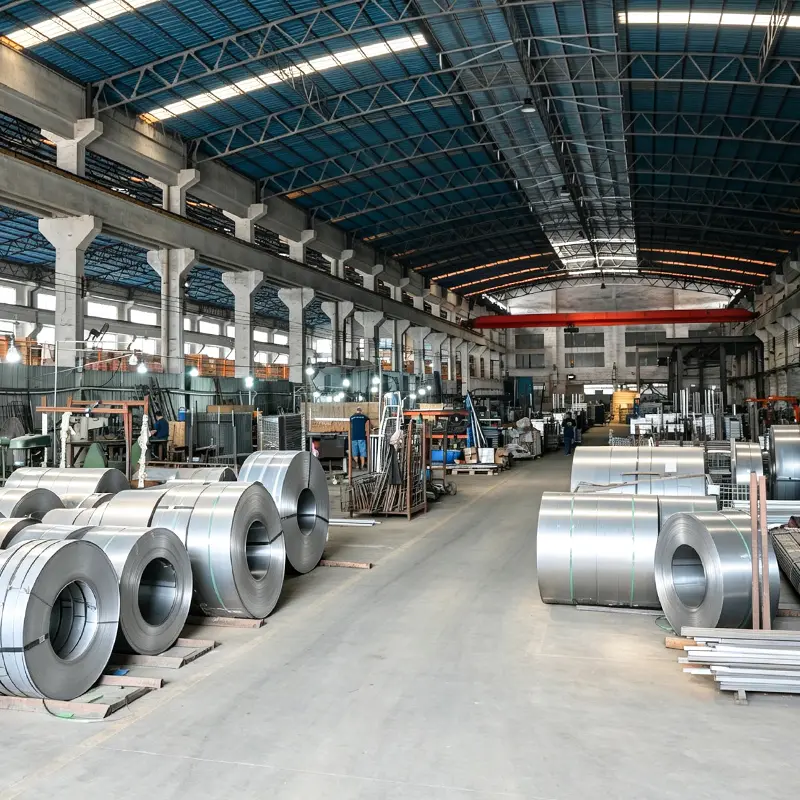
Established in 2001, Guangzhou Heda Shelves Co., Ltd. has deployed more than 10,000 successful warehouse projects across 120+ countries worldwide.
 02
02
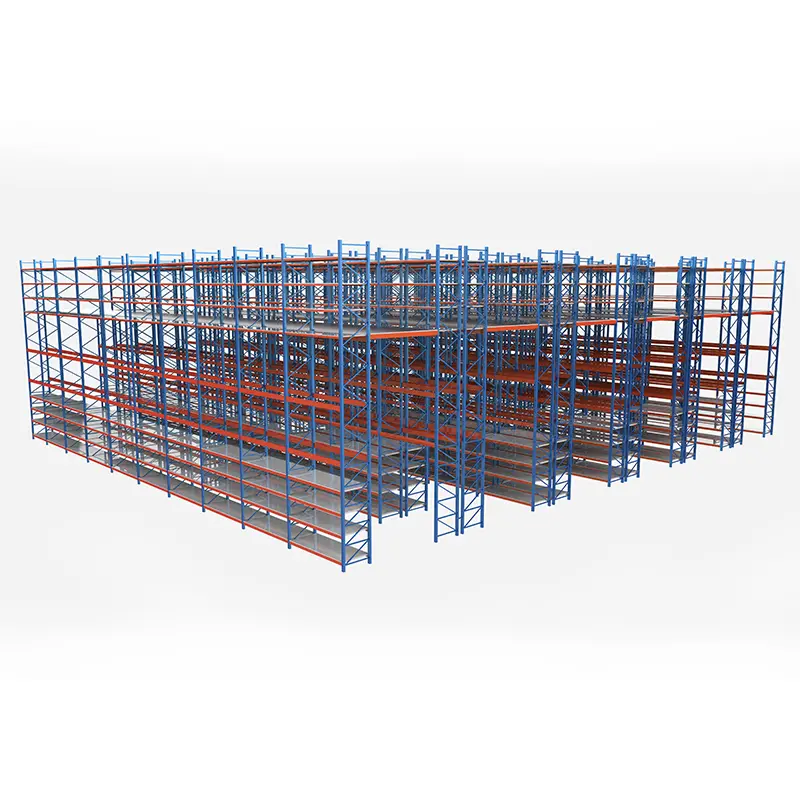
Our 30+ senior engineers deliver exact CAD aisle allocations, 3D stress renders, and seismic calculations within 48 hours without upfront design fees.
 03
03
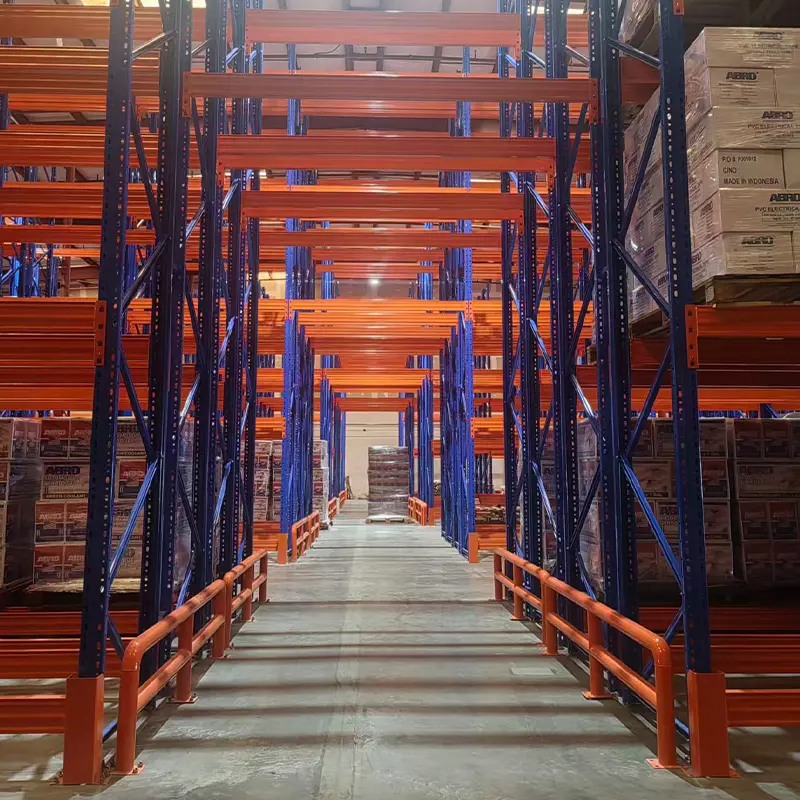
Fully compliant with CE Certificate No. 2435-CPR-8605159, ISO 9001:2015 quality assurance, and automated high-frequency roll-forming lines.
 04
04
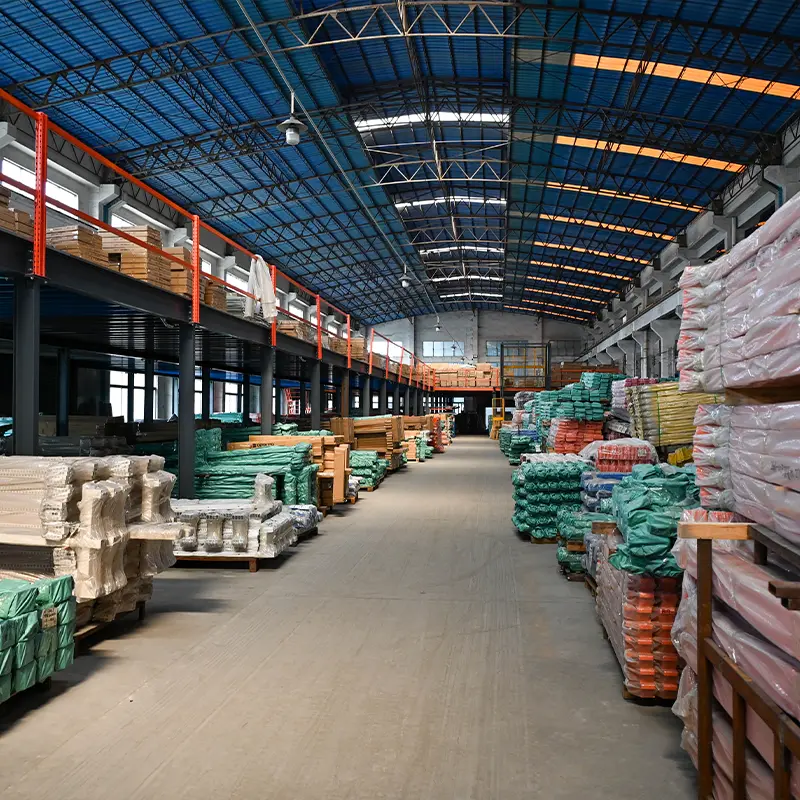
Our 30,000 m² Guangzhou production facility handles multi-thousand-pallet commercial installations with fast sea container turnaround.

A Drive-In Racking System relies on structural stability across upright frames and side brackets. We maintain complete in-house quality control from steel coil slicing to final container dispatch.










Comprehensive structural and operational answers from the engineering team at Guangzhou Heda Shelves Co., Ltd.
Our structural team reviews building blueprints, forklift turning radius requirements, and pallet weights to provide free 3D CAD plans.
Send an InquiryA Drive-In Racking System utilizes a single entry/exit aisle per storage bay, operating on a Last-In, First-Out (LIFO) schedule. The forklift drives in from the front, deposits or extracts pallets, and reverses out into the main aisle. A Drive-Through Racking System has access aisles on both sides of the storage block (one entry side, one exit side), allowing pallets to move through the system sequentially for First-In, First-Out (FIFO) rotation. Drive-In provides higher overall floor density, while Drive-Through prioritizes rotation control for date-sensitive inventory.
Guangzhou Heda Shelves Co., Ltd. incorporates a three-tiered protection matrix. First, flared heavy-gauge entry guides at the lane entrance gently funnel the pallet into proper alignment. Second, continuous floor-mounted guide rails (structural angle steel or heavy C-channels) physically direct the forklift's wheels straight down the center line of the aisle, keeping the vehicle body clear of the upright columns. Third, wrap-around column guards with shock-dampening anchor points protect front uprights against direct corner collisions.
Practically, lane depths typically span 4 to 10 pallets deep per lane, with vertical heights ranging from 3 to 6 storage tiers (typically up to 10 to 12 meters, dictated by forklift mast stability). While lanes can theoretically be engineered deeper, excessive depths increase the forklift operator's transit time in reverse gear, increasing cycle times and collision risks. If your facility requires deeper density (15 to 30 pallets deep), we recommend our semi-automated Radio Shuttle Racking System.
Drive-in systems require pallets that are structurally rigid and uniformly sized because the pallet rests exclusively on side cantilever rails with no center support beams. Pallets must have solid base boards or perimeter runners running parallel to the rails. Weak, broken, or single-use disposable wooden pallets can deflect under heavy loads and slide off the support tracks. We specify continuous pallet backstops and safety under-rail supports to maintain operational stability.
Because drive-in lanes lack standard front crossbeams, structural stability relies on heavy-duty top horizontal bracing trusses, back vertical X-bracing panels, and reinforced floor base plates bolted with multi-anchor systems. Every installation is calculated against local seismic acceleration coefficients (PGA values) to ensure dynamic forces are distributed safely through the building floor.
To prepare an engineered CAD proposal, we require: (1) Warehouse architectural drawings showing clear ceiling height, column spacing, and door positions; (2) Detailed pallet dimensions including width, depth, overall height with goods, and maximum gross load; (3) Forklift specifications including brand model, mast collapsed height, maximum lift height, and outer chassis width; and (4) Operating temperature ranges.
Connect with our technical design team today for free CAD layouts, 3D renderings, and pallet capacity engineering within 24 to 48 hours.