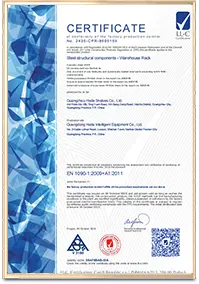
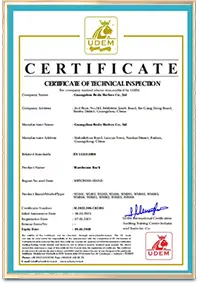
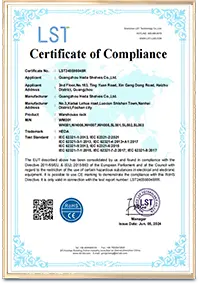
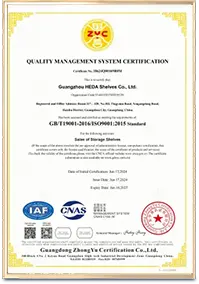
CE & ISO 9001:2015 VerifiedCertified structural safety calculation
2–10 Days Sea Transit to ASEANRapid South China maritime direct routes
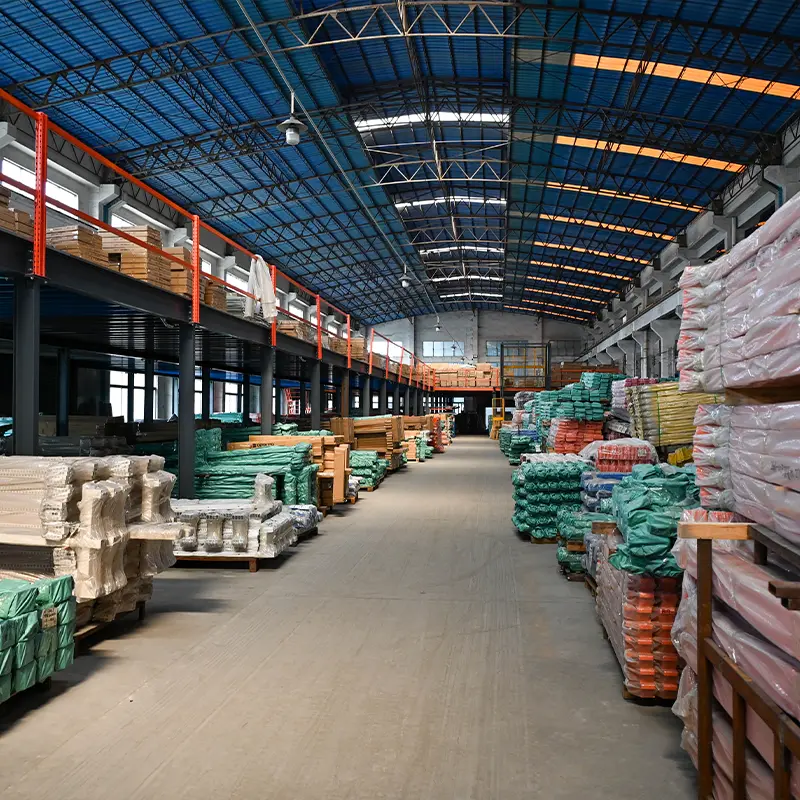
30,000 m² Manufacturing Hub300+ technical production specialists
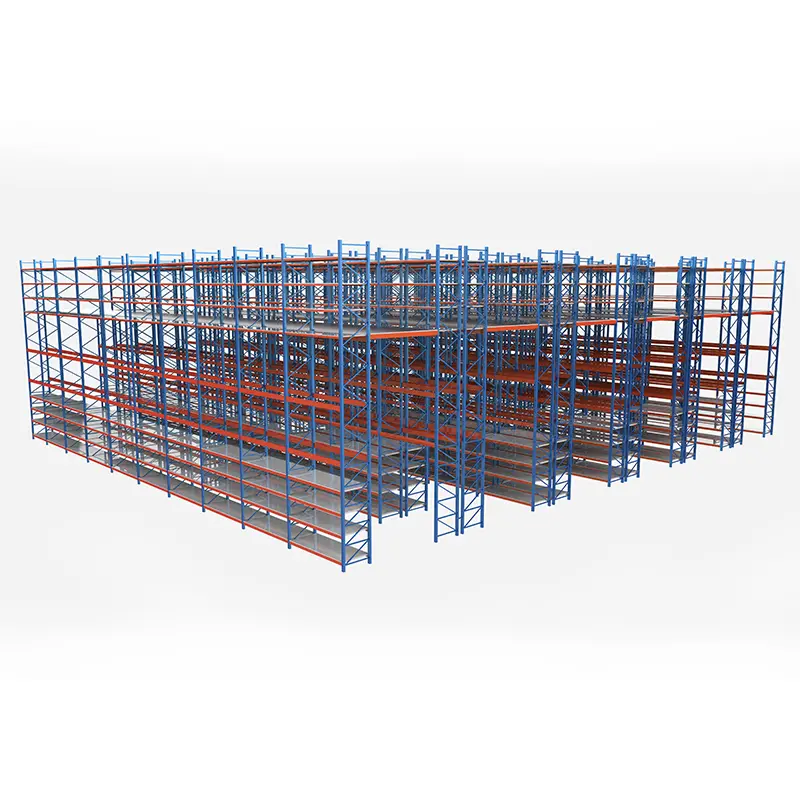
Complimentary Engineering LayoutFree 2D CAD, 3D simulation & load tables
Comprehensive Procurement Guide
Solving the Warehouse Footprint Dilemma: How Very Narrow Aisle (VNA) Systems Transform Industrial Density
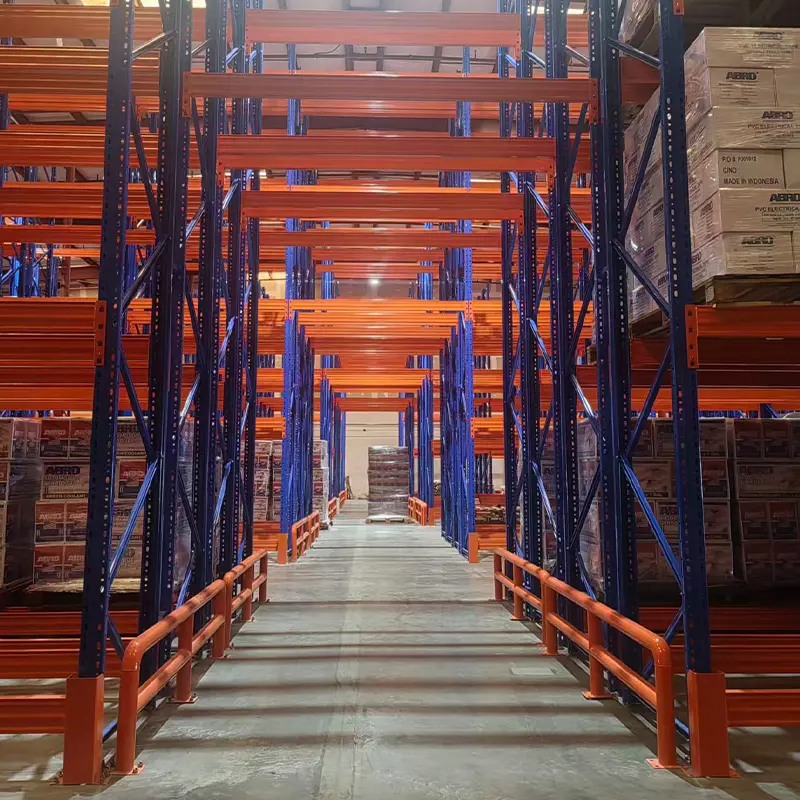
When facility managers face soaring industrial land rates and restrictive lease contracts, expanding horizontally is rarely viable. A Very Narrow Aisle (VNA) Racking System re-engineers floor geometry by shrinking standard operating aisles from 3.5 meters down to an ultra-compact 1.5–1.8 meters, delivering unprecedented cubic storage efficiency without sacrificing immediate single-pallet selectivity.
The Mechanics of VNA: Converting Airspace into Active Inventory
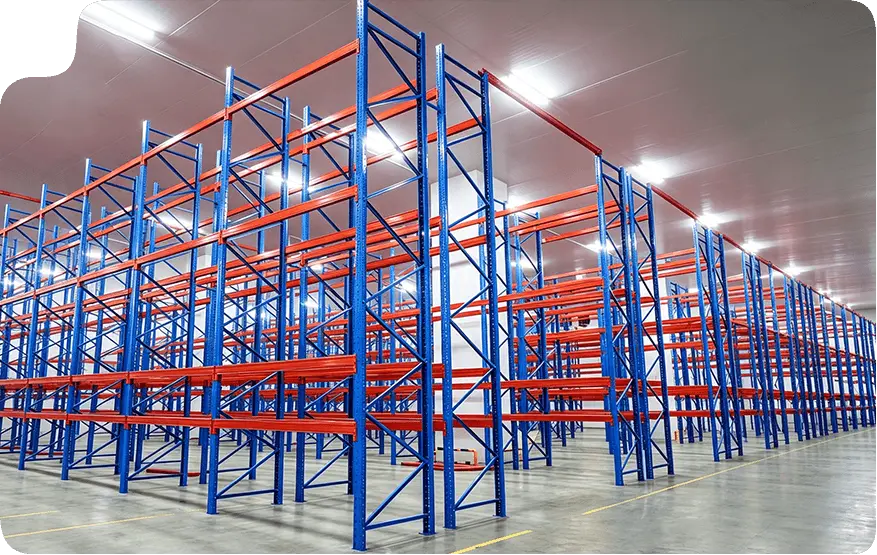
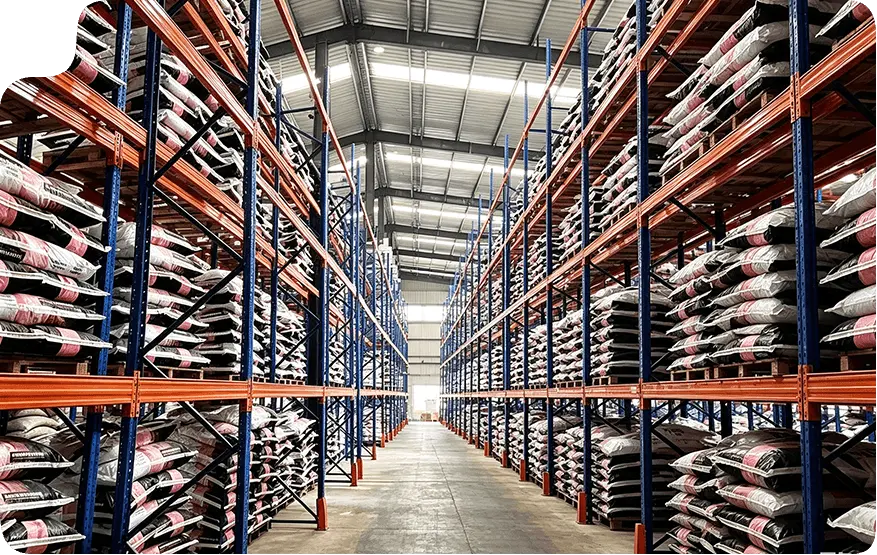
In traditional selective pallet racking, up to 60% of total facility floor space is consumed by wide forklift travel lanes designed for counterbalance and reach trucks. A VNA racking system fundamentally resolves this structural inefficiency. By pairing precision roll-formed upright columns with specialized equipment—such as man-up turret trucks, swing-mast trilateral forklifts, or laser-guided automated guided vehicles (AGVs)—pallets are extracted and rotated within the rack profile itself.
This allows warehouse operators to elevate clearance heights to 15, 16, or even 18 meters while simultaneously narrowing aisles by up to 55%. The net outcome is a dramatic 40% to 50% expansion in available pallet locations within the exact existing building envelope. For logistics centers, high-throughput fulfillment hubs, and ambient or temperature-controlled pharmaceutical warehouses, VNA technology provides the highest possible storage density while preserving mandatory 100% random pallet selectivity.
100% SKU Accessibility: Unlike drive-in or push-back racks, every single pallet is immediately accessible for high-frequency picking.
Reduced Operational Incidents: Physical guide rails or high-frequency inductive wire guidance systems safely anchor truck paths.
Optimized Order Fulfillment: Man-up cabin configurations permit simultaneous pallet handling and individual carton case picking at elevated heights.
Product Recommendations
Engineered VNA System Configurations for Global Logistics
Different operational workflows demand distinct racking structural tolerances, floor interfaces, and handling vehicle choices. Explore our engineered VNA racking variants designed for heavy industrial environments.
Mechanical Guide
Solid cold-rolled angle guide rail (L100×75×8mm or custom profile) anchored along the bottom beam run. Protects upright columns and enables fast, guided travel for turret trucks.
Aisle: 1.5–1.7mHeight: Up to 18m
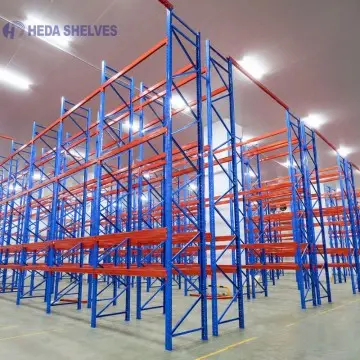
Floor Rail Guided VNA
Inductive Wire
Utilizes floor-embedded low-frequency signal wiring to steer automated trucks. Eliminates steel floor obstructions, allowing effortless pallet transfer, floor sweepers, and ground-level staging.
Flush FloorHigh Speed
Wire Guided VNA
Cold Logistics
Designed for sub-zero freezer distribution where refrigerated air cost per cubic meter is paramount. Features hot-dip galvanized or tropicalized electrostatic coatings to resist condensation.
-30°C ResilienceDense Airflow
Cold Store VNA Racks
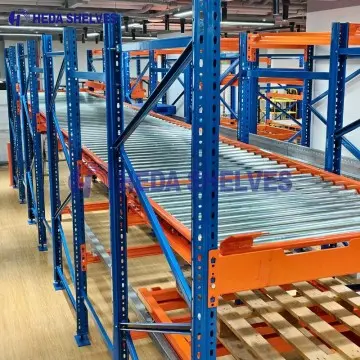
Automation Ready
Ultra-tight deflection tolerances engineered for automated narrow aisle reach trucks and AGVs. Integrates continuous barcoding positions and optical reflector brackets.
Future Procurement & Technological Trends in VNA Racking Systems
Global supply chains are rapidly transitioning toward sustainable, scalable, and automated intra-logistics architectures. Supply chain executives must recognize key procurement shifts influencing VNA investments over the next decade.
01
Convergence with Autonomous AGVs & AMRs
The historical reliance on manned turret trucks is giving way to hybrid fleets. Autonomous narrow-aisle AGVs require micro-millimeter beam deflection standards and calibrated entry funnels, pushing procurement teams to demand higher structural tolerances from rack fabricators.
02
BIM-Integrated Structural Engineering
Procurement is moving toward Building Information Modeling (BIM). International project stakeholders now expect full digital twins connecting VNA structural loads, roof clearances, slab joint locations, and fire suppression nozzle positions into unified cloud architectures prior to fabrication.
03
Superflat Floor Standards (DIN & TR34)
As rack heights exceed 14 meters, mast tipping moments amplify dramatically. Modern purchase contracts increasingly tie racking anchor engineering directly to DIN 18202 or Concrete Society TR34 (DM2/DM1) slab flatness compliance to guarantee vibration-free truck travel.
04
Lifecycle Durability & Modular Expansions
Buyers are shifting from initial unit cost purchasing to 15-year Total Cost of Ownership (TCO). This trend prioritizes corrosion-resistant epoxy polyester pre-treatments, reinforced bottom upright deflector boots, and modular slotted profiles capable of future AS/RS retrofitting.
Engineering Precision
The Engineering Pillars: Guidance Mechanisms & Floor Flatness
A VNA racking system is not merely an assembly of steel members; it functions as a rigid mechanical guide rail for multi-ton lifting machinery. Structural precision separates reliable operations from catastrophic downtime.
VNA Guidance Comparison: Mechanical Rail vs. Inductive Wire
Engineering Parameter
Low-Profile Steel Rail
Inductive Wire Guidance
Operating Aisle Clearance
Pallet width + 200 mm
Pallet width + 300 mm
Truck Entry Speed
Faster (Physical entry funnels)
Requires sensor lock-on check
Floor Cleanliness Impact
Rails create debris pockets
Flush floor, unobstructed clean
Upright Base Protection
Heavy mechanical barrier protection
Requires bolt-on column guards
Maintenance & Upkeep
Visual anchor bolt inspections
Frequency transmitter diagnostics
Floor Re-profiling Need
Moderate shimming options
Critical strict superflat grind
*Calculations based on standard 1000x1200mm ISO industrial pallets handled by trilateral turret trucks operating between 10m and 16m lift heights.
Mast Deflection & Upright Gauge Selection
At 15m elevations, even a 0.5-degree sway at the forklift mast creates severe lateral rack loading. Guangzhou Heda Shelves Co., Ltd. specifies high-tensile Q235B/Q355B cold-rolled steel profiles with bespoke back-to-back portal bracing and heavy baseplates to withstand rotational forces.
Superflat Floor Tolerances (TR34 & DIN 18202)
A 2mm floor depression translates to more than a 25mm mast deviation at 14 meters. Our engineering team conducts slab level surveys prior to system placement, ensuring compliance with DIN 18202 Table 3 Group 4 and TR34 DM2 tolerances to eliminate contact risks.
Laser-Aligned Top Tie Beams & Portals
To eliminate sway harmonics during rapid multi-directional pallet lifts, top portal ties bridge aisle ceilings. These ties unify adjacent upright banks, increasing structural rigidity and dampening operational vibrations.
Integrated P&D (Pick and Deposit) Stations
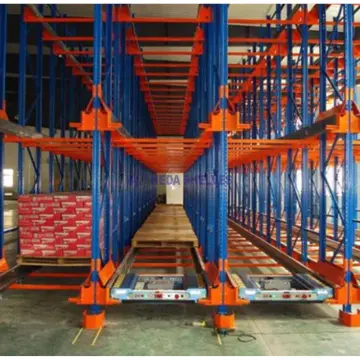
VNA efficiency relies on uninterrupted turret truck movement inside the aisles. Heavy-duty cantilevered Pick & Deposit (P&D) stations installed at aisle ends decouple fast counterbalance transfer trucks from high-precision narrow-aisle cranes.
Enterprise Reliability · Since 2001
Manufactured with Authority: Guangzhou Heda Shelves Co., Ltd.
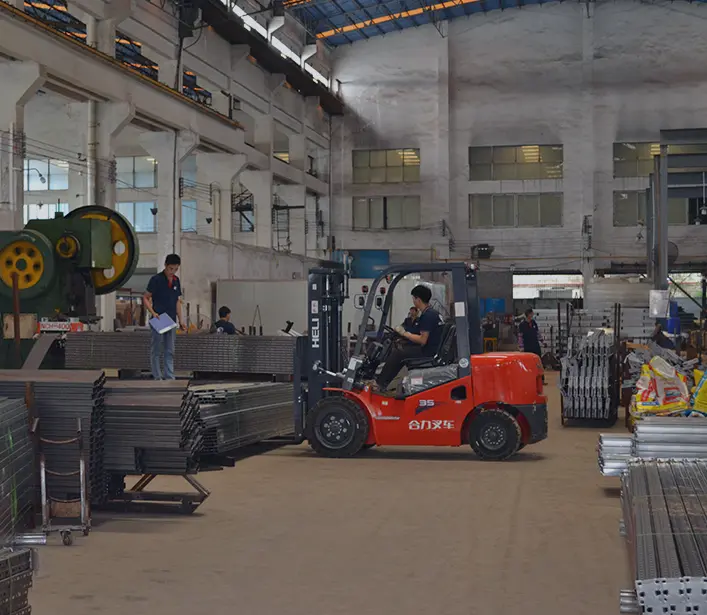
Founded in 2001, Guangzhou Heda Shelves Co., Ltd. has grown into an international leader in heavy-duty warehouse storage solutions. Operating a dedicated 30,000 square meter modernized manufacturing complex staffed by over 300 seasoned production specialists and structural engineers, our monthly output exceeds 30,000 tons of high-precision racking components.
VNA racking demands fabrication tolerances that conventional shelving plants cannot deliver. Utilizing continuous computerized cold roll-forming lines, automated laser-guided punching stations, and robotized dual-side beam welding, we control every micron of upright straightness and beam connector hook engagement. We maintain complete ISO 9001:2015 and CE quality assurance protocols, guaranteeing that every installation handles design loads reliably over decades of operation.
25+ Years of Engineering Mastery: Thousands of complex heavy-duty high-bay systems installed worldwide across 120+ countries.
In-House Pre-Treatment & Tropicalized Coating: 9-stage pickling, phosphating, and electrostatically cured powder coating that withstands high humidity and coastal corrosion.
Turnkey Support: Direct CAD engineering layouts, static calculation reports, seismic compliance simulation, and worldwide installation supervision.
Explore how our engineering teams resolved space constraints, excessive deflection, and operational throughput demands for major global distribution centers.
Verified International Quality Standards You Can Audit
Engineers, building authorities, and institutional insurers require verified documentation. Guangzhou Heda Shelves Co., Ltd. provides comprehensive certification and raw material testing records for every production run:
CE Certification (EN 15512 Standards)Certificate No. 2435-CPR-8605159
ISO 9001:2015 Quality ManagementRegistration No. 18624Q00169R0M · Valid through 2027
A VNA racking system typically operates with clear aisle widths between 1,500 mm and 1,800 mm (1.5m to 1.8m). The exact clearance is determined by taking the maximum diagonal pallet dimension or truck chassis width and adding 100mm to 150mm of engineered dynamic side clearance on each side, depending on whether mechanical guide rails or inductive wire guidance are installed.
Mechanical guide rails (such as structural angle steel anchored to the floor) provide a continuous physical barrier that protects the lowest upright row from impact and allows high travel speeds without electronic reliance. However, they create floor ledges that collect debris and complicate low-level manual picking. Inductive wire guidance embeds a sensor wire flush into the concrete, eliminating physical obstructions and simplifying floor maintenance, but requires higher floor slotting accuracy and periodic sensor calibration on the trucks.
Because VNA masts routinely operate at heights from 10 to 18 meters, even microscopic floor deviations translate into substantial sway at the top beam level. Concrete slabs must comply with strict international standards, typically DIN 18202 Table 3 Group 4, Concrete Society TR34 (Superflat DM1 or DM2 classifications), or ASTM E1155 F-min 75 to F-min 100. Slabs falling outside these limits may require precision path grinding before commissioning.
Standard selective racking requires operating aisles of 3,200 mm to 3,800 mm to accommodate conventional counterbalance or standard reach trucks, dedicating 50% to 60% of total floor area to transport aisles. VNA narrows those aisles to under 1.8 meters and extends vertical storage up to 18 meters. This delivers 40% to 50% higher pallet capacity within the same footprint while maintaining 100% individual pallet selectivity.
Yes. Guangzhou Heda Shelves Co., Ltd. designs VNA systems with laser-checked column straightness and rigid beam connection hooks compatible with autonomous turret trucks, wire-guided AGVs, and LiDAR-guided reach units. Optional barcode plates, floor position targets, and continuous optical alignment brackets can be factory-prepped for seamless WMS and automated material handling integration.
Manufacturing typically takes 15 to 25 days depending on project tonnage and custom color specifications. Sea transit from our Guangzhou and Nansha facilities is fast across Southeast Asia: 2 to 5 days to Vietnam (Haiphong/Cat Lai), 3 to 5 days to the Philippines (Manila), 5 to 7 days to Thailand (Laem Chabang) and Singapore, 6 to 8 days to Malaysia (Port Klang), and 7 to 10 days to Indonesia (Jakarta). We support both FOB and CIF terms, complete with container packing plans to minimize landed freight costs.
"Maximize your cubic storage before spending millions on facility expansion." Senior Engineering Department · Guangzhou Heda Shelves Co., Ltd.
Engineering Consultation
Receive a Tailored VNA Racking Engineering Proposal
Provide your building dimensions, pallet specs, and forklift equipment details. Our structural engineers will prepare an optimized 2D CAD layout, 3D render, and structural load analysis free of charge.
 01
01