Free Engineering LayoutFull CAD, 3D & FEA load analysis
Worldwide Fast Sea TransitPort-optimized shipping logistics
Engineering Insights & Mechanics
How Push Back Pallet Rack Systems Function: Technical Mechanics, Kinematics & Structural Design
A deep dive into nested cart kinematics, track inclination formulas, mechanical bearing tolerances, and structural steel load distributions for supply chain engineers and industrial procurement directors.
Modern high-density warehousing is governed by a fundamental mathematical trade-off: pallet storage density versus direct SKU selectivity. Conventional selective pallet racking provides 100% immediate selectivity but dedicates up to 60% of total warehouse floor area to forklift operational aisles. Conversely, drive-in systems drastically compress aisle space but introduce severe structural impact risks and honeycombing inventory inefficiencies.
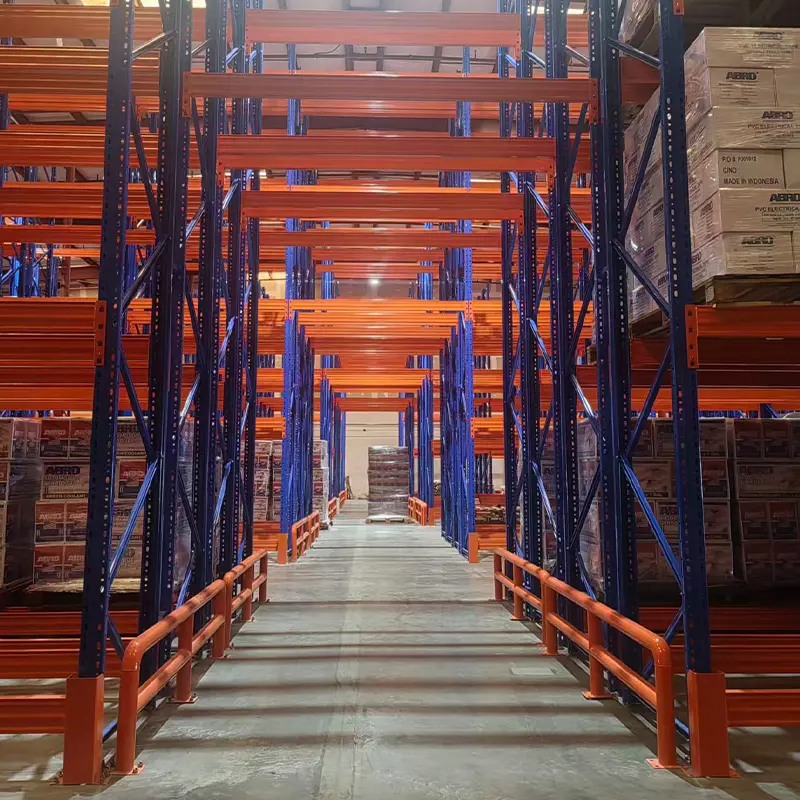
The Push Back Pallet Rack system resolves this structural bottleneck. Engineered on an inclined structural rail system (typically calibrated between 1.5% and 3.0% gravitational pitch), push back racking utilizes a series of nested rolling steel carts configured telescopically. The first pallet is placed directly on the top cart by the forklift. When introducing a second pallet, the forklift operator pushes back the top cart, exposing the secondary nested cart beneath it.
During unloading, the process utilizes controlled gravity: removing the front pallet triggers the trailing carts to glide forward at a controlled velocity of 0.15 to 0.25 m/s until resting safely against heavy-duty mechanical stops at the aisle pickup face. Because the lift truck never breaches the rack perimeter, rack impact failure rates decline by over 80% compared to drive-in configurations.
Structural Inclination Ratio: Precise slope of 1:30 (approx. 1.8°) prevents runaway acceleration while overcoming static rolling friction without excessive forklift thrust.
Nested Low-Profile Cart Geometry: Laser-welded cold-formed structural steel chassis nested within identical vertical planes to save critical vertical headroom.
Flanged Steel Track Rollers: CNC-machined dual-flange hardened carbon steel wheels equipped with sealed precision bearings preventing wheel hop and track derailment.
Push-Back Kinematics & Mechanical Force Calculation
When dimensioning push back rack installations, structural engineers must balance the forklift's horizontal pushing force against gravity, rolling friction, and cart inertia. The theoretical pushing force required ($F_{push}$) is calculated by:
\mu_r: Coefficient of rolling friction (typically 0.015–0.025 for hardened steel wheels on steel tracks)
F_{inertia}: Kinetic acceleration threshold for smooth movement
At Guangzhou Heda Shelves Co., Ltd., every system is modeled with custom finite element analysis (FEA) to confirm that standard Class II and Class III industrial counterbalance forklifts can easily operate lanes up to 6-deep without excessive tire slippage or transmission strain.
Engineering Specifications
Push Back Pallet Rack Depth Configurations & System Types
Choose from our precision-engineered nested cart systems tailored for specific pallet dimensions, unit loads (up to 1,500 kg/cart), and warehouse ceiling clearances.
Optimized replacement for double-deep selective racks. Requires standard single-reach forklifts instead of expensive pantograph reach mechanisms, accelerating handling cycles by 35%.
Depth: 2 PalletsSingle Nested CartLoad: Up to 1,500kg/plt
Explore 2-Deep
Industry Standard
3-Deep Push Back Racks
The standard balance between lane depth and SKU granularity. Eliminates honeycombing for batch manufacturing, consumer goods, packaging, and retail logistics hubs.
Expands lane storage capacity while maintaining independent level access. Features low-profile linked carts with integrated secondary anti-drift lock tabs for maximum seismic stability.
Depth: 4 Pallets3 Nested CartsStructural Beams
Explore 4-Deep
Ultra-Dense LIFO
5 & 6-Deep Heavy-Duty Racks
Maximum physical density utilizing specialized low-friction rolling assemblies. Ideal for bulk commodity storage, cold room freezers, and raw material buffer warehouses.
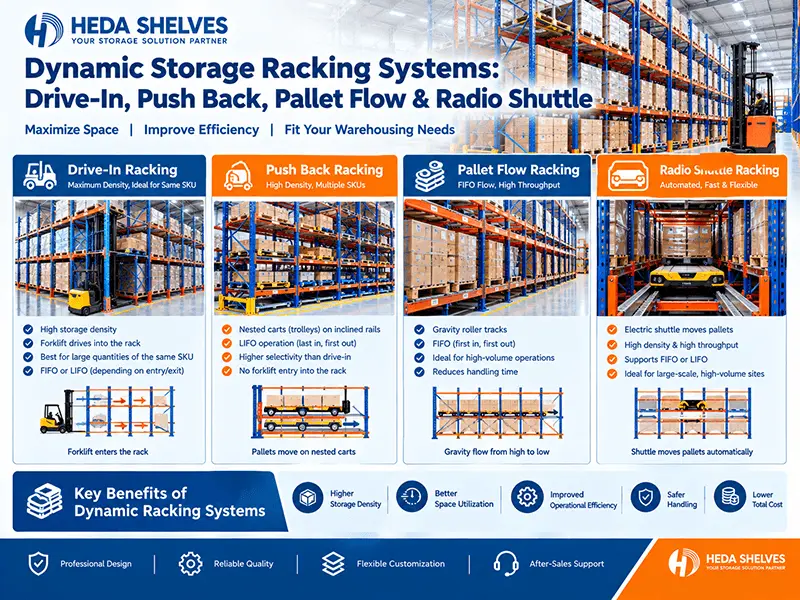
Comparative Analysis: Push Back vs Drive-In vs Pallet Flow vs Radio Shuttle
A side-by-side engineering evaluation of high-density storage technologies based on floor space utilization, operational safety, CapEx, and handling speed.
Future Procurement & Technological Trends in Push Back Pallet Racking
How automation hybridization, sub-zero cold chains, seismic engineering codes, and ESG sustainable steel are reshaping warehouse investments through 2030.
01
AGV & AMR Integration
Autonomous Guided Vehicles and automated counterbalance reach trucks are increasingly deployed alongside push back systems. Optical vision targets and laser alignment stops fitted to the rack face allow automated vehicles to push pallets back with millimeter precision, eliminating operator fatigue.
02
Cold-Chain & Blast Freezer Boom
With global cold chain logistics expanding rapidly for pharmaceutical distribution and frozen foods, push back racks provide an ideal alternative to shuttle racking. Because they require no electronic sensors or lithium batteries that degrade under sub-zero conditions (-30°C), mechanical downtime drops to zero.
03
Seismic-Resilient Mechanical Locks
Warehouses built along seismic fault zones (such as the Pacific Rim) demand high dynamic ductility. Modern push back rails feature positive mechanical interlocking flanges, secondary anti-rebound latches, and anchored safety stoppers preventing cart lift-off during earthquake ground accelerations.
04
Sustainable High-Tensile Steel (Q355B)
Procurement directors are demanding reduced structural self-weight to lower carbon footprints. Transitioning to high-strength Q355B hot-rolled micro-alloy steels enables thinner upright profiles with greater load capacities, accompanied by eco-friendly powder coatings free from VOCs.
Enterprise Manufacturing Capabilities
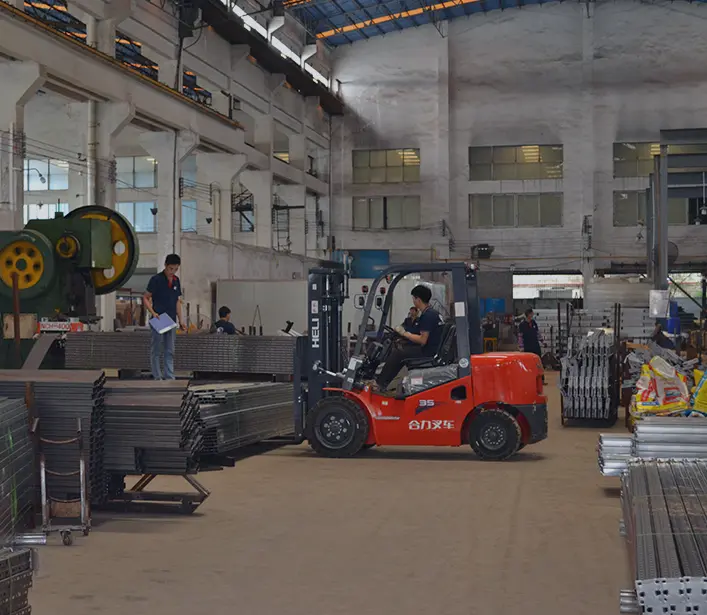
Guangzhou Heda Shelves Co., Ltd.: Global Manufacturer & Engineering Partner
Founded in 2001, Guangzhou Heda Shelves Co., Ltd. has grown to become an international leader in structural storage racking and industrial warehouse equipment. Operating from a dedicated 30,000 m² automated manufacturing hub, our facility houses high-precision CNC punching lines, roll-forming profile lines, robotic welding stations, and automated electrostatic powder coating tunnels.
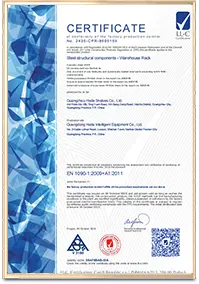
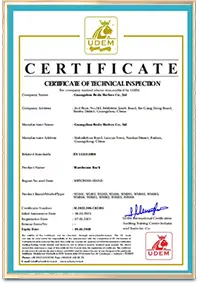
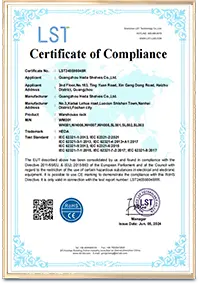
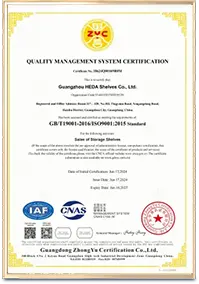
With an engineering and technical staff of more than 300 professionals and a monthly production output exceeding 30,000 metric tons, we have successfully completed more than 10,000 turn-key warehouse projects across 120+ countries and regions. From heavy 3PL cross-docking facilities to deep cold storage blast freezers, our push back systems are built to meet or exceed rigorous international standards, including EN 15512, RMI, CE Certificate No. 2435-CPR-8605159, and ISO 9001:2015 Certification No. 18624Q00169R0M.
In-House Pre-Treatment & Anti-Corrosion: Every beam, upright, and cart chassis undergoes multi-stage pickling, phosphating, and electrostatic powder curing to withstand high humidity and tropical climates.
Complimentary Engineering & FEA Calculations: We deliver full CAD floor layout blueprints, 3D photorealistic renderings, and FEA stress calculations tailored to your forklift specs free of charge before purchase commitment.
Factory-Direct Global Sourcing Value: Direct shipping from Guangzhou port provides competitive tier-1 mill pricing, eliminating intermediary margins and ensuring end-to-end quality tracking.
For municipal fire approvals, insurance underwriting, and building permits, our clients receive authenticated test certificates conforming to EN 15512:2009, AS 4084:2012, and RMI 2012 codes.
CE Construction Products RegulationCertificate No. 2435-CPR-8605159
ISO 9001:2015 Quality SystemRegistration No. 18624Q00169R0M
Critical Questions Global Buyers Ask About Push Back Pallet Racks
Direct engineering responses to frequently researched queries regarding push back cart mechanics, derailment prevention, forklift requirements, and real ROI calculations.
Need a Custom Calculation?
Our senior structural engineers will analyze your exact pallet dimensions, load weights, and building clearances within 24 hours.
Cart derailment and binding are strictly prevented through precision engineering tolerances. Guangzhou Heda Shelves Co., Ltd. designs its push back tracks with encapsulated C-channel structural profiles and dual-flanged steel wheels that mechanically lock the wheel lip onto the guide beam. Even if an uneven wooden pallet or unbalanced load shifts off-center, the interlocking carriage lips make it mechanically impossible for the cart to dislodge or jump the rail. In addition, front rubber-cushioned end-stops absorb deceleration inertia upon pallet retrieval.
Because push back rails require an inclination slope of approximately 1.8% to 2.5%, the back of a 4-deep lane sits roughly 100mm to 125mm higher than the front load beam. Across multiple vertical levels (e.g., 4 to 6 beam levels high), this slope accumulation plus the low-profile nested cart stack (approx. 55mm to 80mm) requires consideration during vertical clearance planning. As a benchmark, a 4-level high, 4-deep push back system typically operates comfortably in facilities with a minimum clear ceiling height of 7.5 to 8.5 meters.
No special attachments are required. Standard counterbalance forklifts and standard reach trucks handle push back racking seamlessly. Unlike double-deep racking which demands costly pantograph scissor-reach trucks (which often suffer from reduced mast capacities at upper levels), push back racking allows standard forklift tines to place pallets directly on the front-facing cart. Forklift operators simply require a brief 30-minute orientation on smooth pushback technique and mast tilting alignment.
One of the major engineering advantages of nested cart push back racks over gravity roller flow racks is broad pallet tolerance. In a gravity roller system, broken bottom runner boards or missing bottom slats can lodge between rollers, stopping the lane. In a push back system, the pallet rests entirely on top of a rigid steel welded platform cart. The pallet never touches the rollers or tracks. As long as the pallet can be safely picked by forklift tines, it will ride safely on the push-back cart without hanging up.
A push back pallet rack system typically costs 30% to 50% less in total investment compared to a semi-automated radio shuttle racking installation for lane depths between 2 to 5 pallets. Furthermore, because push back systems rely purely on gravity and mechanical nested carts, ongoing OpEx is virtually zero: there are no expensive lithium batteries to recharge and replace, no electronic PLC sensors to recalibrate, and no proprietary software maintenance contracts.
To produce a fully calculated CAD layout and cost proposal, our engineering team requires: (1) Warehouse architectural drawings showing column grid locations and clear ceiling height under beams; (2) Pallet dimensions (width, depth, overall height including cargo); (3) Maximum gross weight per pallet; (4) Forklift model, maximum lift height, and turning aisle radius; and (5) Ambient warehouse operating temperature.
"Maximize your warehouse footprint by up to 85% with custom-engineered Push Back Pallet Racks manufactured direct from our Guangzhou plant."Guangzhou Heda Shelves Co., Ltd. Structural Engineering Division
Factory Direct Quotation
Request a Custom Layout & Push Back Racking Quote
Submit your warehouse dimensions and storage requirements. Our design team returns a comprehensive CAD blueprint, 3D rendering, and structural load analysis within 24 hours.
 Highest Throughput