High-Performance Storage Equipment for Russian Industrial Hubs
Engineered to international standards and fully adaptable to Russian SNiP and GOST structural tolerances, our cold-rolled steel racking modules provide turnkey resilience for multi-tier e-commerce fulfillment centers, cold chains, and manufacturing reserves.
Overcoming Moscow's Class A Logistics Space Deficit via Vertical Engineering
A strategic analysis of warehouse footprint optimization across Moscow Ring Road (MKAD), Central Ring Road (TsKAD), and outer arterial logistics corridors.
The Greater Moscow logistics hub—encompassing key transit corridors such as the MKAD (Moscow Ring Road), TsKAD (Central Ring Road / A-113), the M-11 "Neva" Highway, and the M-4 "Don" arterial corridor—remains the most congested and high-value distribution epicenter in Eastern Europe. Recent structural shifts in the Eurasian supply chain landscape have accelerated supply consolidation within Moscow Oblast. Third-party logistics (3PL) providers, e-commerce giants (such as Wildberries, Ozon, and Yandex Market), and fast-moving industrial spare parts distributors are facing unprecedented warehouse vacancy constraints, with average vacancy rates in modern Class A and Class B logistics complexes hovering consistently below 1.0%.
Concurrently, lease prices for industrial real estate along the secondary transport ring (Betonka / A-107) and primary arterial entry gates (Domodedovo, Podolsk, Noginsk, Chekhov, Sheremetyevo) have surged to historical highs. Under these capital-intensive conditions, traditional horizontal floor expansion is economically unviable or physically impossible. Warehouse operators cannot simply lease adjacent land bays to meet increased SKU volumes. The definitive engineering countermeasure is volumetric vertical densification through Rack-Supported Mezzanines (RSM).
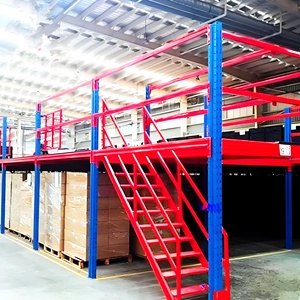
Strategic Metric for Moscow Facility Directors: By eliminating dedicated structural columns and utilizing the heavy-duty upright frames of the storage racks to support the upper decking, a multi-tier rack-supported mezzanine multiplies net usable floor surface area by 200% to 300% within the exact same structural footprint, bypassing municipal construction permit delays.
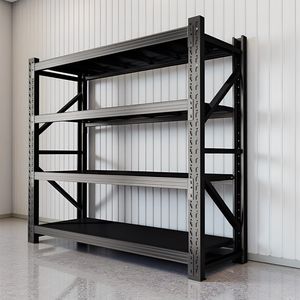
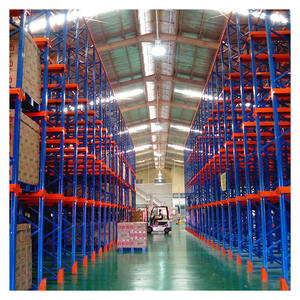
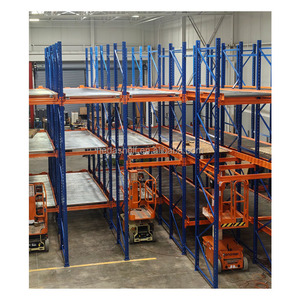
A rack-supported mezzanine functions simultaneously as a high-density pallet or carton storage rack system on the ground tiers and an elevated industrial floor platform overhead. The upper levels can accommodate manual picking zones, conveyor sortation belts, value-added packaging tables, or secondary light-to-medium cantilever and shelving systems. This hybrid architecture drastically mitigates the high square-meter overhead characteristic of the Moscow warehouse market, reducing long-term amortization periods to mere months compared to physical facility relocation.
300%
Usable Surface Multiplier
< 0.8%
Moscow Class A Vacancy Rate
1,200 kg
Max Deck Load per m²
8–11 Mo
Typical Moscow ROI Window
Engineering Architecture: Rack-Supported Mezzanine Anatomy
Comprehensive metallurgical and structural specifications designed for extreme operational durability, thermal variations, and structural deflection thresholds.
Low-Alloy Cold-Rolled Uprights
Manufactured using Q235B and high-yield Q355B high-tensile steel, matching Russian GOST 09G2S and St3sp engineering criteria. Continuous multi-roll cold bending creates a multi-flanged Omega profile that prevents torsional buckling under heavy vertical eccentric loads.
Interlocking Primary & Secondary Beams
Precision-welded box beams and C-profile cold-formed floor joists lock directly into upright punch slots with multi-claw connector plates. Heavy spring safety pins resist accidental upward dislocation from material handling equipment.
Specialized Decking Systems
Available in three configurations: hot-dip galvanized perforated planks (providing >50% water dispersion for Russian SP 4.13130 fire sprinkler compliance), heavy-duty press-locked steel grating, or wear-resistant phenolic plywood laid over galvanized corrugated steel decking.
| Engineering Parameter | Light-to-Medium Multi-Tier | Heavy-Duty Industrial Mezzanine | Automated Hybrid System |
|---|---|---|---|
| Uniform Walkway Live Load | 300 – 500 kg / m² | 600 – 1,200 kg / m² | 800 – 1,500 kg / m² |
| Primary Pallet Beam Capacity | 1,000 – 2,000 kg / pair | 2,500 – 4,500 kg / pair | Up to 5,000 kg / pair |
| Floor Deflection Limit (Standard) | L / 250 (FEM 10.2.02) | L / 300 to L / 350 | L / 400 (High-Precision Robotics) |
| Upright Omega Column Sections | 80×60×1.8mm / 90×70×2.0mm | 100×70×2.5mm / 120×95×2.5mm | 120×95×3.0mm Heavy Reinforced |
| Corrosion Resistance Treatment | Electrostatic Epoxy Powder (80μm) | Degreasing + Phosphating + Epoxy | Hot-Dip Galvanized (Outdoor/Cold Zone) |
| Sub-Zero Operating Temperature | -10°C to +40°C | -30°C to +45°C (Tested Charpy V) | -35°C to +40°C |
Structural Deflection and Lateral Bracing Systems
In accordance with Eurocode 3 (EN 1993-1-3), EN 15512, and Russian GOST R 55525-2017 standards, every rack-supported mezzanine manufactured by our plant undergoes rigorous static and dynamic FEA (Finite Element Analysis) modeling. Our engineering calculations explicitly factor in vertical deflection limits (strictly maintaining a deflection ratio tighter than L/250 under full uniform load conditions) and horizontal frame stability.
Because rack-supported mezzanines eliminate traditional cast-in-place building columns, lateral forces (generated by rolling manual pallet trucks, seismic pulses, and forklift frame impacts) must be transferred efficiently to the concrete foundation slab. Our configurations utilize high-strength horizontal and diagonal X-bracing cross-members manufactured from tensioned structural steel cables and structural steel angle bracing. Heavy anchor base plates, secured with dynamic wedge anchors into M300/B22.5 reinforced concrete floors, ensure that lateral sway is engineered out of the structure, providing complete stability for picking operators working on the third or fourth tiers.
Engineered for Moscow’s Key Commercial & Industrial Clusters
Custom structural configurations developed to resolve localized challenges across the diverse logistics ecosystems of the Moscow Metropolitan Area.
Mega E-Commerce Sorting & Picking Hubs
Location Focus: Podolsk, Sofyino, Noginsk, and Chekhov logistics zones.
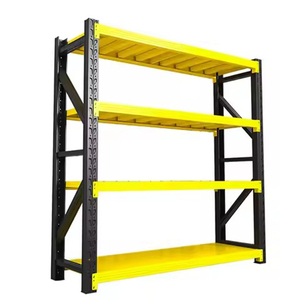
Moscow's booming retail fulfillment demands high-density picking of hundreds of thousands of individual SKUs (apparel, cosmetics, dry packaged goods). We deploy 3- to 4-tier rack-supported mezzanines where lower tiers hold pallet reserves for fast replenishment, and intermediate and top catwalk levels feature ultra-dense carton shelving integrated with spiral gravity chutes, vertical reciprocating conveyors (VRCs), and carton flow rollers for lightning-fast pick-to-light picking workflows.
Temperature-Controlled & Cold Storage Logistics
Location Focus: Domodedovo and Sheremetyevo International Air Cargo Free Zones.
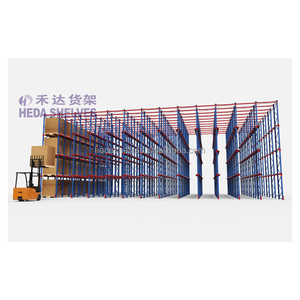
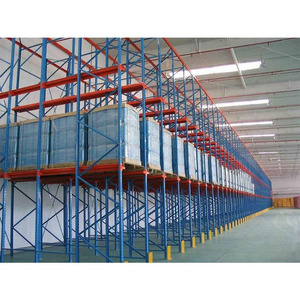
In sub-zero cold rooms (-18°C to -25°C) and climate-controlled pharmaceutical reserves (+2°C to +8°C), thermal operating energy per cubic meter is extraordinarily costly. Our drive-in rack frameworks combined with galvanized catwalk mezzanines eliminate unconditioned dead headspace. Utilizing low-temperature certified steel that preserves impact toughness without cold-embrittlement cracking, our platforms double pallet capacity within energy-hungry cold rooms.
Automotive Components & Industrial Spares Hubs
Location Focus: Industrial parks in Khimki, Solnechnogorsk, and Yuzhny Port.
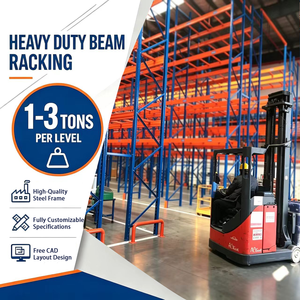
Accommodating both ultra-heavy bulk engine blocks and microscopic clips requires variable-tier engineering. We integrate heavy-duty selective pallet racks at the base (rated up to 4,000 kg per beam level) with a secondary mezzanine deck supporting medium-duty longspan shelving and cantilever arms for exhaust pipes, metal profiles, and body panels, protected by perimeter anti-impact steel bollards and wire-mesh back stops.
Cross-Docking & Express 3PL Terminals
Location Focus: Radumlya, Lobnya, and TsKAD Interchange Intermodal Parks.
High pallet turnaround speeds require direct clearance on the ground floor with zero column interference for reach trucks. We utilize wide-span box beams (clear spans up to 5,000mm) that form open drive-through staging lanes below, while the elevated mezzanine level houses consolidated customs-clearing workstations, automated shrink-wrapping systems, and buffer storage for deferred delivery parcels.
Procurement & Logistics Trends: China-to-Moscow Supply Realities
A transparent examination of freight routing, customs protocols, and monetary settlements ensuring frictionless delivery from our production line to Moscow.
Sourcing large-scale structural steel systems from our factory in Guangzhou to Moscow warehouse sites has entered a mature, streamlined era. Following recent shifts in Eurasian trade architecture, direct logistics channels have expanded significantly, rendering high-end Chinese manufacturing the primary source of supply for Russian developers and warehouse retrofits.
1. Multimodal Rail & Maritime Corridors
Structural steel rack components represent high-weight, high-density freight where container space optimization is paramount. We pack every upright bundle, beam pack, and galvanized floor panel with custom heavy-duty steel strapping and moisture-barrier protective wraps engineered specifically for containerized intermodal transit:
- Direct Rail Container Freight (CR Express): Originating from South China inland consolidation hubs, routed via the Manzhouli / Zabaikalsk border crossing or Dostyk / Alashankou corridor directly to Moscow freight terminals (Vorsino, Bely Rast, or Kresty). Total transit duration typically ranges from 14 to 20 days, offering the ideal balance between speed and logistics expenditure.
- Multimodal Maritime + Trans-Siberian Rail: Ocean shipping from Chinese coastal ports to the Far East Russian ports of Vladivostok or Vostochny, followed by accelerated container rail flatcar transport directly to Moscow. Transit averages 22 to 28 days, providing superior economies of scale for bulk projects exceeding 500 tons.
2. Currency Settlement & Commercial Compliance
All procurement contracts are fully structured to facilitate smooth cross-border execution. Transactions are cleared seamlessly via direct CNY (Chinese Yuan) settlements through operational Russian and international banking partner networks (including VTB Shanghai, Bank of China, and regional commercial banks), completely eliminating Western currency exchange barriers and escrow complexities.
Customs & Technical Harmonization: Our export engineering department supplies all required commercial documentation, including unified HS Code classifications (TN VED 7308 90 590 0 for structural steel storage racks), factory mill test certificates (MTC 3.1), and technical passports harmonized to TR CU 010/2011 ("On Safety of Machinery and Equipment") for immediate customs release without demurrage delays.
Why Tier-1 Russian Enterprises Partner with HEDA Shelves
Over two decades of precision manufacturing, engineering excellence, and international project execution.
30,000 m² Automated Plant
Equipped with high-speed automated continuous roll-forming production lines, precision CNC punch presses, and robotic GMAW welding stations, delivering a reliable monthly capacity of 30,000 tons of structural steel storage equipment.
Verified Global Certification
Fully compliant with international quality benchmarks holding genuine CE Certification (No. 2435-CPR-8605159), ISO 9001:2015 Quality Management Accreditation (No. 18624Q00169R0M), and full compliance with RoHS finishing protocols.
Full-Cycle Engineering Delivery
Our in-house structural engineering group provides complimentary AutoCAD facility layout planning, 3D photorealistic renderings, load calculation reports, and comprehensive installation manuals with step-by-step video guidance for local Russian installation crews.
Rigorous 10-Stage Surface Treatment & Quality Control
In unconditioned warehouse facilities in the Moscow region, winter-to-spring condensation cycles can rapidly trigger oxide formation on poorly treated steel components. Every component emerging from our factory lines undergoes an industrial 10-step finishing regimen:
1. Premium Hot-Rolled Steel Coil Uncoiling → 2. CNC Precision Slitting → 3. Automatic High-Speed Punching → 4. Multi-Stage Cold Roll Forming → 5. Profile Trueing & Calibrating → 6. Robotic GMAW Welding → 7. Mechanical Polishing & Degreasing → 8. Automated 9-Stage Chemical Acid Pickling & Phosphating Pre-Treatment (creating an anti-corrosion barrier layer) → 9. Electrostatic Thermoset Powder Coating with High-Bake Curing at 200°C → 10. Multi-Point Acoustic & Ultrasonic Weld Inspection & Engineered Palletized Packing.
Frequently Asked Questions by Moscow Warehouse Buyers
Clear, direct answers regarding Russian compliance standards, fire protection regulations, dynamic load verification, and turnkey execution.
How do your rack-supported mezzanines comply with Russian fire safety regulations (SP 4.13130.2013 and Federal Law No. 123-FZ)?
Russian emergency situations ministries (EMERCOM / MChS) maintain strict fire sprinkler penetration regulations for multi-tier industrial mezzanines. If the upper platform utilizes solid decking, a dedicated under-deck sprinkler grid is legally mandated, significantly increasing CAPEX. To eliminate this expense, we manufacture high-capacity galvanized slotted steel planks and press-locked steel gratings with open surface ratios exceeding 50%. This allows standard ceiling-mounted high-expansion sprinkler discharge and smoke venting to penetrate directly through all levels, fully satisfying SP 4.13130.2013 guidelines without redundant plumbing.
Can your steel frames withstand cold temperatures in unheated cross-dock terminals in Moscow Oblast?
Yes. Unheated distribution centers along the TsKAD can reach internal winter temperatures of -25°C to -30°C. Standard commercial mild steel risks brittle failure at such temperatures. We utilize low-alloy Q355B (equivalent to Russian GOST 09G2S), which possesses certified Charpy V-notch impact toughness properties tested down to -40°C. This prevents stress-crack propagation at the beam-to-column connector teeth under heavy dynamic impact loads.
Are your structural calculations compliant with GOST R 55525-2017 and GOST R 57381-2017?
Absolutely. GOST R 55525-2017 sets forth explicit testing methodologies and load ratings for collapsible metal shelving and multi-tier racks in the Russian Federation. Our technical engineering proposals incorporate static calculation sheets verifying safety factors (>1.5 for beams, >1.65 for upright stability) compliant with GOST R and FEM 10.2.02 standards. All upright and beam profiles can undergo mandatory local third-party static testing upon installation completion.
What specific details are required to generate a complete layout and quotation?
To produce an exact 2D AutoCAD layout, 3D volumetric rendering, and accurate quotation, we require: (1) Architectural DWG drawing or dimensioned sketch of the building including clear roof truss heights and column grid positions, (2) Pallet dimensions (EUR: 800×1200mm or FIN: 1000×1200mm) including maximum load heights and weights, (3) Required live load capacity on the elevated mezzanine floor (typically 300 to 1,000 kg/m²), (4) Desired number of levels, staircase accesses, and pallet drop gates, and (5) Forklift model, maximum lifting height, and mast clearance specifications.
How are installation and assembly managed on site in Russia?
Every structural system is prefabricated with full bolt-together connectivity—no on-site field cutting or structural welding is required, preserving the factory powder-coated finish. Upright frames are pre-assembled or flat-packed with numbered components. We supply an exhaustive structural assembly blueprint, component tag lists, and detailed video installation sequences. For large projects exceeding 1,000 square meters, our factory can dispatch English- and Russian-speaking installation supervision engineers directly to the Moscow site to direct local assembly contractors.
Request an Engineered Layout & Cost Estimation for Your Moscow Warehouse
Consult with our senior logistics structural engineers today. We will review your warehouse architectural floor plan, verify operational live load limits, and supply an optimized AutoCAD layout and formal commercial quotation within 24 to 48 hours.