Heavy-Duty & Dynamic Pallet Racking Systems
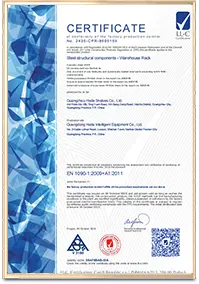
Constructed from certified Q235B structural grade steel, compliant with EN 15512 and CE No. 2435-CPR-8605159 standards. Fully optimized for high-density Osaka metropolitan logistics hubs.
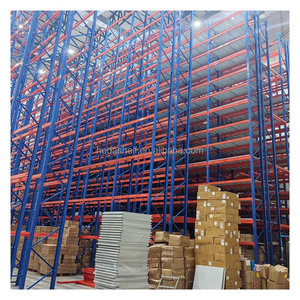
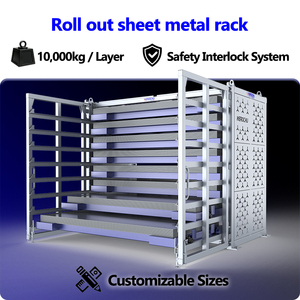
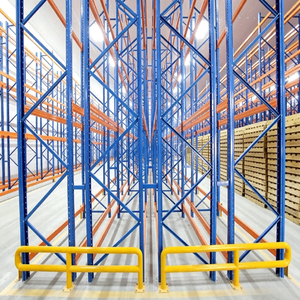
Engineering Whitepaper: Structural Demands & Seismic Considerations for Osaka Logistics Real Estate
The Greater Osaka logistics corridor, spanning the reclaimed waterfront industrial zones of Konohana-ku, Nanko (Osaka Port), and Sakishima to inland distribution epicenters like Ibaraki, Kadoma, and Sakai, imposes rigorous mechanical and structural requirements on erected pallet racking frameworks. Warehousing operations across the Kansai economic sphere navigate acute space pressures, escalating land rents, and stringent Japanese Building Standard Law (Kenchiku Kijun-hō) compliance guidelines regarding lateral seismic displacement.
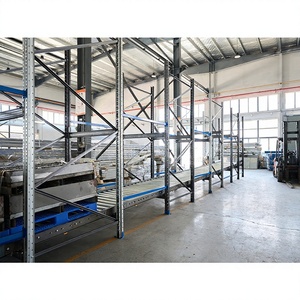
When engineering pallet racking structures intended for Osaka deployment, the seismic design criteria diverge significantly from standard static-load warehouse installations. Osaka sits proximate to complex active fault zones, including the Uemachi Fault system and the Nankai Trough subduction zone. Consequently, erecting pallet racking systems within Osaka distribution centers requires rigorous horizontal acceleration design. Pallet racks cannot function merely as dead-weight shelving units; they must be calculated as complex ductile steel frames capable of dampening harmonic resonance during high-magnitude seismic events without catastrophic progressive frame collapse.
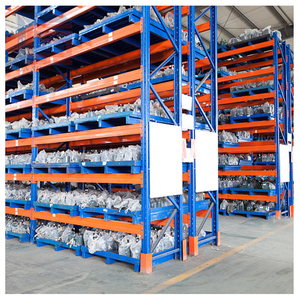
Our CE-certified racking configurations (CE Certificate No. 2435-CPR-8605159) exported to the Japanese market are engineered with oversized baseplates, high-ductility anchor bolt patterns, and custom profile cold-formed uprights. Upright frames are rolled from high-yield Q235B structural grade steel, featuring precisely calculated moment-resisting beam-to-column connectors. Each connector incorporates robust multi-claw mechanical interlocks coupled with high-shear safety pins that prevent dislodgement under violent upward thrust or severe dynamic torsion commonly generated by Long-Period Ground Motion (LPGM) in multi-story waterfront Osaka facilities.
Where Our Storage Architectures Perform in Kansai
From multi-temperature cold chain platforms at the Port of Osaka to fast-moving cross-docking operations along the Meishin and Kinki Expressways.
Nanko & Konohana Port Cold Logistics
Refrigerated and blast-freezer facilities throughout Osaka Port require compact, high-density storage that resists condensation corrosion. Our radio shuttle and drive-in racking solutions feature anti-corrosion pre-treatment and specialized hot-dip galvanized or ultra-durable electrostatic polyester coatings engineered specifically to withstand -30°C thermal cycles without brittle micro-fracturing.
Inland 3PL & E-Commerce Fulfilment (Ibaraki / Settsu)
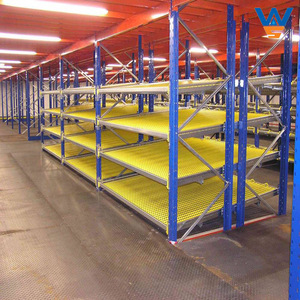
Operating near critical Kansai transit arteries, high-velocity omnichannel DCs demand rapid pallet access and high pick density. We deploy heavy-duty selective pallet racking integrated with carton flow and wire-mesh decks, accommodating JIS T11 standard wooden and plastic pallets (1,100mm × 1,100mm) with absolute selectivity and zero structural deflection under 1,000–3,000 kg/level continuous loads.
Higashiosaka Precision Machinery & Raw Profiles
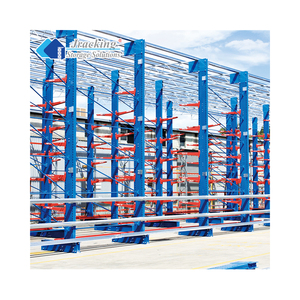
Higashiosaka represents Japan’s premier light-to-medium precision manufacturing cluster. Sourcing long-stock raw steel bars, extrusions, dies, and injection tooling mandates custom-engineered cantilever racking systems. With arm capabilities reaching up to 3,000 kg per level, our designs prevent deflection and allow uninhibited overhead crane or side-loader picking access.
End-to-End Structural Verification: From Coil to Erection
Sourcing structural warehouse racking into Japan demands absolute supply-chain transparency and metallurgical traceability. Guangzhou Heda Shelves Co., Ltd. operates a strictly audited 30,000 m² automated manufacturing facility, maintaining full control over all 10 production tiers: from laser profiling, cold bending, and automatic column punching to shot-blasting, phosphating pre-treatment, and electrostatic curing.
- Structural Steel Traceability: Certified mill test certificates (MTC) supplied with every container load of Q235B high-tensile steel.
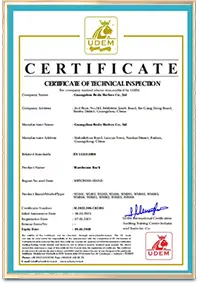
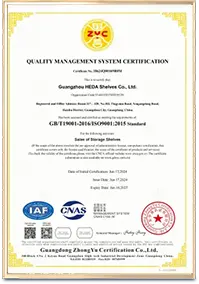
- Global Code Conformance: Fully compliant with CE standard EN 15512:2009 for steel static storage systems and certified under ISO 9001:2015 quality frameworks.
- Finite Element Structural Modeling: In-house CAD and 3D FEA stress simulations providing complete moment-curvature checks, shear values, and allowable seismic anchor uplift data.
- Turnkey Container Packaging: Sequentially numbered components bundled with engineered steel strapping to eliminate transit deformities over maritime routes into Osaka Port.
Osaka Warehouse Modernization Trends: Density, Automation, and Labor Adaptation
The warehousing sector across Osaka Prefecture is undergoing an unprecedented modernization cycle driven by structural economic shifts. Foremost is Japan's "2024 Problem"—the implementation of strict statutory caps on truck driver overtime hours under the Work Style Reform Bill. This regulatory shift has compressed allowable transit times, forcing manufacturers and third-party logistics (3PL) providers to transform Osaka into a much denser, hyper-efficient distribution node to avoid shipping bottlenecks between Kansai, Chubu, and Kanto regions.
Simultaneously, severe labor aging across the Kansai industrial corridor has spurred an urgent transition away from low-efficiency manual bulk-stacking toward semi-automated, ergonomic vertical storage configurations. Facilities that historically operated on 2-tier floor stacking are retrofitting with high-tolerance narrow-aisle (VNA) and double-deep racking architectures. These systems allow automated guided vehicles (AGVs) and reach trucks to triple cubic storage capacity within existing building footprints, eliminating the excessive capital expenditures associated with securing new land leases in high-cost Osaka industrial zones.
Another dominant trend is the integration of carton flow and gravity roller rails directly into the lower tiers of heavy-duty pallet racking frameworks. By consolidating bulk pallet reserve storage on upper beam elevations with dynamic FIFO picking lanes on lower accessible levels, distribution centers drastically compress worker travel times, supporting the rapid picking velocities demanded by modern e-commerce fulfilment networks.
Frequently Asked Questions for Osaka Racking Buyers
Clear, technically precise answers addressing seismic calculations, JIS compatibility, customs clearance, and site assembly.
Are your pallet racking systems engineered to accommodate standard Japanese pallet specifications?
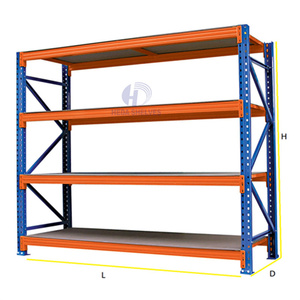
Yes. While standard European racks are dimensioned for Euro pallets (800mm × 1200mm) and American racks for GMA standards (48" × 40"), our structural layouts for the Osaka and broader Japanese market are custom-configured for the standard Japanese Industrial Standard pallet (JIS T11 type: 1,100mm × 1,100mm) as well as the beer/beverage pool pallet (1,100mm × 900mm). Beam clear lengths, bay depths (typically 1,000mm to 1,050mm), and heavy-duty front-to-back cross pallet supports are dimensioned to guarantee proper overhang and load distribution without deflection.
How do your engineering calculations address seismic requirements in the Osaka/Kansai region?
We incorporate site-specific seismic response spectra into our structural calculations. Based on your warehouse's geological subsoil classification (such as soft marine alluvial strata in Osaka Bay ports versus firmer inland gravels) and clear building height, our engineering department calculates allowable horizontal seismic coefficients (k-values typically ranging from 0.2g to 0.4g+). We deliver heavy-duty flared baseplates, double-anchor column footings, upgraded diagonal and horizontal bracing profiles, and top-tie rack portal beams to assure ultimate frame ductility and structural equilibrium.
What shipping terms, transit durations, and documentation apply to Osaka Port deliveries?
We regularly ship direct from our manufacturing complex via Guangzhou or Shenzhen ports directly to Osaka Port (Nanko) and Kobe Port under CIF, CFR, or FOB terms. Direct sea transit typically ranges between 4 to 7 days, representing one of the shortest international maritime freight lanes. Full customs and engineering dossiers—including Bill of Lading, Commercial Invoice, Packing Lists, Mill Test Certificates (MTC), Factory Quality Inspection Sheets, and CE Conformity Declarations—are issued systematically to ensure immediate customs clearance through Japan Customs.
Can Heda Shelves assist with onsite assembly, installation drawings, and technical supervision in Japan?
Every shipment is organized with container-packing optimization; every upright, beam, diagonal brace, and shim pack is clearly labelled to match detailed CAD architectural erection drawings and step-by-step 3D assembly guides. For Japanese contractors or end-user internal teams handling installation, we provide remote engineering supervision, anchor torque specifications, floor level tolerance guidelines, and comprehensive video installation documentation. Onsite engineering supervisors can also be coordinated for complex, multi-tier mezzanine or high-bay racking implementations.
How does the durability of your powder coating resist coastal oxidation in waterfront logistics facilities?
All our cold-formed steel sections undergo a multi-stage automated pre-treatment bath incorporating acid pickling to strip surface oxides and immersion phosphating to deposit a micro-crystalline conversion layer. This provides superior mechanical adhesion for the high-grade electrostatic polyester powder coating cured at 180°C–200°C. For extreme saline environments along Osaka Bay or refrigerated cold-store operations, we provide certified hot-dip galvanizing options conforming to strict salt-spray testing benchmarks.