Featured Industrial Pallet Racking & Multi-Tier Storage Systems
Directly manufactured at our 30,000 m² facility with certified structural structural steel (Q235B / Q355B), engineered for high volumetric density and maximum asset protection.
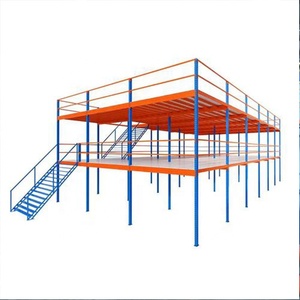 Modular System
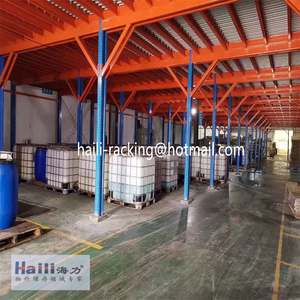 Dual Integrated
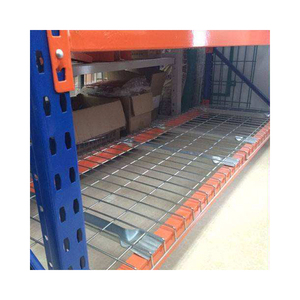 Safety Component
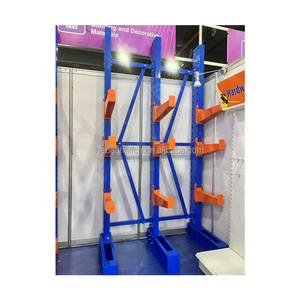
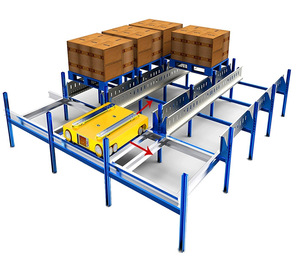 Automated Run
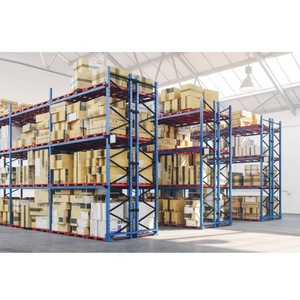 Dynamic Storage
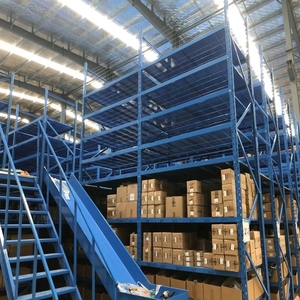 Corrosion Proof
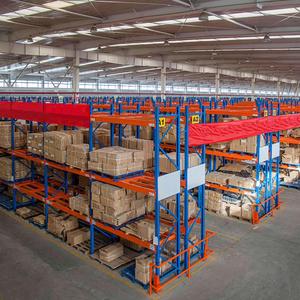
Drive-In vs. Drive-Through Racking Systems: Structural Kinematics & Volumetric Efficiency
Analyzing load path mechanics, cantilever rail configurations, dynamic sway tolerances, and operational dispatch cycles for ultra-high-density intralogistics facilities.
In modern industrial logistics, storage cubic utilization directly determines operational ROI. Standard selective pallet racking configurations allocate between 55% and 65% of warehouse footprint solely to operating forklift aisles. For cold chain distribution centers, pharmaceutical staging zones, food processing plants, and bulk chemical distribution depots, dedicated single-aisle access translates into massive structural, thermal, and HVAC energy inefficiencies. Drive-In and Drive-Through racking systems eliminate the conventional access aisle, consolidating up to 85% of total warehouse cubic volume into active pallet positions.
From an applied structural engineering perspective, Drive-In and Drive-Through racking diverge sharply from cross-beam selective configurations. Because counterbalanced or reach forklifts must drive directly into the racking cube itself, continuous horizontal load beams cannot span across the bays. Instead, pallets are supported on longitudinal, cold-formed structural steel rails cantilevered from vertical upright frames via heavy-duty stamped bracket arms. This architectural configuration radically alters structural kinematics under load: the absence of rigid horizontal tie-beams across the front face reduces frame stiffness, requiring precision portal frames, roof horizontal bracing trusses, and vertical back bracing networks engineered to FEM 10.2.02 and EN 15512 specifications.
"The core structural challenge of high-bay drive-in racking is compensating for torsional flex and lateral sway induced by forklift maneuvering without obstructing vertical clear lift heights. We solve this through continuous welded top tie beams, floor-anchored high-tensile guide rails, and specialized heavy-duty base plates with finite element calculated anchor bolt patterns." — HEDA Chief Structural Engineer
The operational distinction between Drive-In and Drive-Through is rooted in inventory velocity and fulfillment doctrine:
- Drive-In Racking (Last-In, First-Out / LIFO): Configured with a single operational access entry/exit point. Forklifts deposit and retrieve pallets from the identical front aisle. It is the premier choice for large-batch, homogenous SKU environments with low rotation frequency, such as seasonal agricultural harvest buffers, raw packaging materials, and deep freeze cold storage.
- Drive-Through Racking (First-In, First-Out / FIFO): Configured with dedicated entry and exit aisles situated on opposite ends of the storage cube. Forklifts load from the intake face and retrieve from the dispatch face. This guarantees rigid batch-traceability and stock rotation, making it mandatory for expiration-date-sensitive goods, pharmaceuticals, dairy processing, and export-grade perishable commodities.
| Storage Architecture | Floor Space Utilization | Stock Rotation Logic | SKU Selectivity | Forklift Aisle Requirement | Structural Complexity |
|---|---|---|---|---|---|
| HEDA Drive-In Racking | 75% – 85% (Ultra-High) | LIFO (Last-In, First-Out) | Low (Ideal for homogenous bulk) | Single front aisle (3.2m – 3.6m) | Top/back structural cross-bracing |
| HEDA Drive-Through Racking | 70% – 80% (Very High) | FIFO (First-In, First-Out) | Medium-Low (Batch managed) | Dual front & rear aisles | Continuous portal top tie trusses |
| Standard Selective Racking | 35% – 45% (Baseline) | FIFO / LIFO Dynamic | 100% Direct Access | Aisles between every rack run | Standard horizontal beam ties |
| Radio Shuttle Runner System | 80% – 88% (Maximum) | Configurable FIFO / LIFO | Automated lane level | External aisle only (No truck entry) | Integrated runner guide rails |
Pallet Support Rail Kinematics
Fabricated from 2.5mm to 3.0mm high-tensile cold-rolled steel profiles with specialized unibody flanges. Flanged rails provide a self-centering bevel for pallet runners, mitigating pallet derailment while providing high torsional rigidity under maximum point-load deflections.
Portal Bracing Architecture
Because Drive-Through racks omit vertical back X-bracing, our engineers incorporate rigid overhead portal beam trusses and longitudinal horizontal tie-struts. This transfer grid safely redistributes horizontal dynamic braking loads down to heavy-duty anchor embedments.
Forklift Impact Shielding
Truck entry creates inherent column strike exposure. We provide heavy-gauge floor-mounted structural guide rails (100x75x6mm angle steel) and wraparound cast upright protectors that isolate upright bases from forklift wheel collisions.
Guangzhou Heda Shelves: World-Class Engineering & Export Precision
For over two decades, Guangzhou Heda Shelves Co., Ltd. has delivered turnkey intralogistics systems worldwide, adhering to ISO 9001:2015, CE EN 1090-1 execution standards, and rigorous metallurgical controls.
Selecting a racking manufacturer is fundamentally an exercise in structural risk mitigation. Warehouse racking is a life-safety critical asset that carries hundreds of tons of suspended kinetic and potential energy overhead. Sourcing directly from Guangzhou Heda Shelves Co., Ltd. eliminates intermediary markups while providing global contractors and facility directors with direct access to our 300+ strong engineering and manufacturing workforce.
Our fully integrated 30,000 m² factory operates automated CNC precision roll-forming lines, computerized multi-stage punching presses, automatic robotic welding gantries, and a multi-stage continuous chemical pre-treatment and electrostatic powder-coating facility. Every upright column, pallet support arm, and heavy structural guide rail is monitored through systematic statistical quality control (SPC) tracking from certified raw steel coil intake to final container stowage.
Certified Structural Steel
Exclusively cold-formed using prime domestic Q235B and high-yield Q355B hot-rolled steel strip, mill-certified with full mechanical tensile, yield, and chemical traceability certificates (EN 10204 3.1).
Pickling & Phosphating Pretreatment
Prior to electrostatic polyester powder coating, components pass through 8 continuous chemical immersion tanks (degreasing, acid pickling, rinsing, phosphating) ensuring 500+ hours salt-spray resistance in tropical climates.
Verified Third-Party Compliance
Holding verifiable CE Certification No. 2435-CPR-8605159, ISO 9001:2015 Quality Management No. 18624Q00169R0M, and full RoHS compliance for environmentally sustainable supply chains.
Container Packing & Fast Freight
Direct ocean access from Guangzhou / Nansha / Shenzhen ports. Fast transit to Southeast Asia (2–10 days), Middle East (14–18 days), and the Americas with damage-proof bundle packing.
Future Procurement & Technological Trends in High-Density Warehousing
How automation, dynamic cold chain compliance, structural sensorization, and carbon-accounting criteria are transforming heavy-duty storage system specifications over the next decade.
The global warehouse racking sector is undergoing a profound paradigm shift driven by skyrocketing industrial real estate valuations, labor supply constraints, and strict net-zero operational mandates. Warehouse operators are no longer procuring static racking systems based strictly on price-per-tonnage; procurement directors and logistics engineers now evaluate total cost of ownership (TCO) across an expected 20-year operational lifecycle.
Key procurement trends dictating the next generation of Drive-In and Drive-Through systems include:
1. Hybridization & Migration Paths to Automated Radio Shuttles: Leading enterprise buyers are intentionally designing their Drive-In rack structural profiles with forward compatibility. By specifying upright profile punch patterns and beam depths compatible with radio shuttle runner rails, operators preserve the option to convert manual drive-in lanes into semi-automated or fully automated radio shuttle runner channels without requiring structural dismantling. This de-risks future capital upgrades while capturing immediate high-density gains.
2. Structural Resilience & Seismic Ring of Fire Optimization: Logistics hubs expanding throughout the Pacific Rim, Southeast Asia, South America, and earthquake-prone European sectors require precise dynamic seismic modeling. Procurement guidelines now demand nonlinear dynamic push-over analysis, customized baseplate anchor spacing, and energy-dissipating structural hinges that satisfy local building codes (e.g., ASCE 7, Eurocode 8, and NZS 1170).
3. Advanced Metallurgy for Sub-Zero Cold Chain Environments: With global cold storage capacity expanding at an unprecedented rate, procurement specifications require steel alloys that resist low-temperature ductile-to-brittle transitions. At operating temperatures from -25°C to -35°C, standard commercial grade steel risks catastrophic crack propagation. HEDA engineers utilize fine-grained structural steels characterized by high Charpy V-notch impact toughness values at sub-zero temperatures, paired with specialized low-bake powder resins or continuous hot-dip galvanizing.
4. Digital Twin Layout Simulation & Real-Time IoT Health Monitoring: Forward-thinking supply chain developers require fully compliant BIM (Building Information Modeling) 3D assets and structural finite element analysis (FEA) reports prior to releasing purchase orders. Furthermore, large distribution hubs are piloting integrated strain-gauge sensors in critical baseplates and top portal ties to measure cumulative fatigue and monitor structural impacts in real time.
Frequently Asked Technical Questions by Global Warehouse Buyers
Straightforward engineering and logistics answers regarding tolerances, forklift compatibility, climate performance, and export supply chain management.
Q1 What clearance tolerances are required between pallets and the support rails?
Standard engineering practices dictate a minimum lateral clearance of 75mm to 100mm on each side between the forklift mast and the upright frame profiles. The bottom of the pallet must overlap the horizontal support rail surface by at least 50mm to 75mm on either side to ensure stable, non-slip resting. Our project engineers evaluate your exact wooden, plastic, or metal pallet bottom runner profile (two-way or four-way) to customize rail flange dimensions.
Q2 How does Drive-In racking handle forklift operator collision risks?
Because forklifts enter the interior of the system, collisions represent the primary operational hazard. We mitigate this through a three-tier protection architecture: (1) Heavy-duty ground-anchored steel guide rails running the full depth of each lane; (2) Heavy-gauge wrap-around column guards at the front entrance uprights; and (3) High-visibility electrostatic signal powder coatings (RAL 2004 orange / RAL 1023 yellow) on all lead-in structural members.
Q3 Can your systems be engineered for high seismic risk zones?
Yes. For clients operating in active seismic regions (such as the Philippines, Indonesia, New Zealand, Japan, or the Western Americas), our structural design department incorporates site-specific ground acceleration coefficients (Ss, S1). We incorporate enlarged structural base plates, multiple M16/M20 chemical or mechanical expansion anchors, reinforced bracing sections, and heavy cold-formed box beams to resist dynamic lateral and torsional forces.
Q4 What surface treatment should we choose for sub-zero cold rooms or coastal sites?
For standard humidity and dry indoor applications, our 8-stage pickling, phosphating, and electrostatic polyester powder coating delivers exceptional durability. However, for ambient sub-zero cold freezers with high condensation risk, or semi-outdoor coastal shipping yards, we recommend hot-dip galvanization (HDG) conforming to ISO 1461, providing a minimum 65–85 μm zinc layer for lifetime sacrificial corrosion protection.
Q5 What primary data does HEDA require to generate a free layout and load quote?
To produce a fully engineered CAD layout and 3D architectural rendering within 24–48 hours, our engineers require: (1) Warehouse architectural drawings showing clear heights, column grids, and floor flatness (FF/FL ratings); (2) Pallet specifications (width x depth x height including cargo overhang, and gross weight); (3) Forklift model, overall mast width, collapsed height, and maximum reach height; and (4) Operational target (FIFO vs LIFO).
Q6 How are goods packed to prevent damage during long ocean voyages?
Every shipment is packed using our standardized container loading protocol. Upright frames are systematically nested with corrugated cardboard separator strips and heavy-gauge steel strapping. Beams, support rails, and brackets are unitized on heavy steel skids with waterproof stretch-wrapping and edge angle guards. Fasteners and anchors are crated in seaworthy, fumigated wooden boxes, ensuring optimal cubic container loadability without scuffing or mechanical deformities.
Accelerate Your Warehouse Capacity with Direct-from-Factory Engineering
Speak directly with our senior intralogistics structural engineers. Submit your warehouse floor plan, pallet parameters, or tender specifications for a comprehensive load calculation, free 2D/3D layout proposal, and factory-direct export quote.
- Free CAD & 3D Rendering (24h Turnaround)
- FEM 10.2.02 / RMI / CE Certified Calculations
- Factory-Direct Pricing (No Intermediaries)
- Comprehensive Overseas Installation Guidance
Initiate Project Engineering
Connect with a HEDA logistics engineering specialist now to review your technical specifications.
Send an Inquiry