Featured Industrial Pallet Racking & High-Density Systems
Direct from certified manufacturing lines in Guangzhou, China. Engineered strictly to international FEM 10.2.02, RMI, and AS4084 standards using premium cold-rolled structural steel.
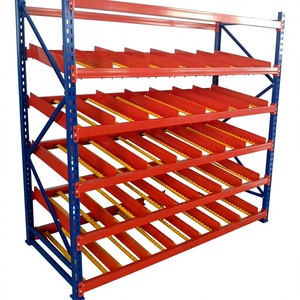
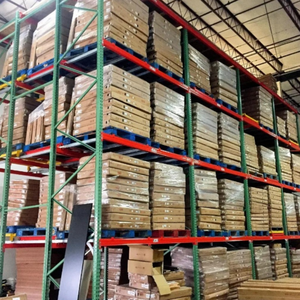
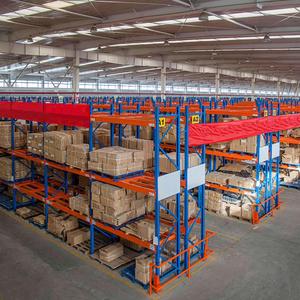
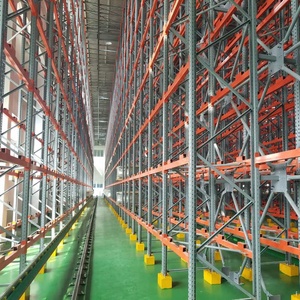
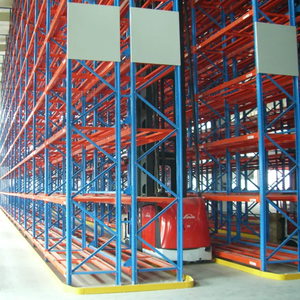
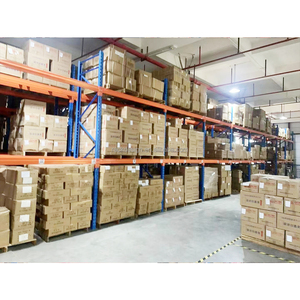
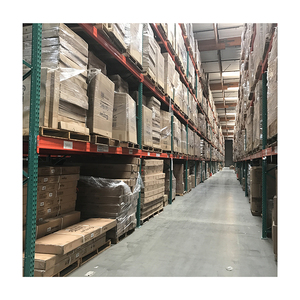
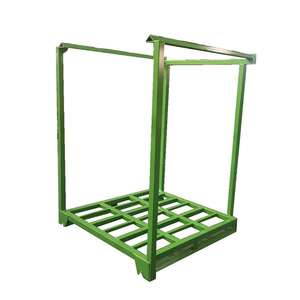
Engineering Integrity & Structural Steel Manufacturing Excellence
Global supply chain logistics require absolute predictability, maximized volumetric cube utilization, and uncompromised structural stability. When sourcing industrial rack storage systems from China, global procurement directors, industrial engineers, and Third-Party Logistics (3PL) operators face complex technical specifications. Industrial racking is not merely a steel shelving commodity; it is a critical, load-bearing engineering structure operating under intense dynamic fatigue, static loading, and potential seismic lateral stresses.
As one of the preeminent production clusters globally, leading Chinese manufacturers such as Guangzhou Heda Shelves Co., Ltd. (established in 2001) have redefined global procurement dynamics. Modern high-bay selective, drive-in, radio shuttle, and AS/RS installations utilize premier structural hot-rolled and cold-formed coil steels—principally certified Q235B and high-tensile Q355B (equivalent to ASTM A36 and S355JR). The integration of continuous CNC roll-forming lines, automated punch presses with tolerance limits within ±0.1mm, and multi-stage pre-treatment chemical conversion coatings ensures load stability that complies with European standard EN 15512, American RMI ANSI MH16.1, and Australian AS 4084 guidelines.
The distinction between standard commercial shelving and heavy-duty industrial storage lies in precise metallurgical engineering. Structural upright column sections undergo cold-roll forming with multiple longitudinal stiffeners and continuous return flanges to increase the radius of gyration, dramatically mitigating local buckling under full axial loads. Beams utilize heavy double C-sections interlocked into robust box beams or step beams with multi-claw robotically welded connectors. This design transfers bending moments efficiently into the upright perforations while locking safety clips prevent accidental dislodgement during high-speed forklift operation.
The 10-Step Controlled Fabrication Process
How tier-one Chinese factories eliminate structural failure through integrated quality governance, from certified prime coil to sea-container export.
Raw Materials
Mill-certified Q235B/Q355B coils verified via spectrometer and tensile test.
Precision Slitting
Automated uncoiling and precision longitudinal slitting to strict width tolerances.
Column Punching
High-speed hydraulic punch presses creating uniform 50mm/75mm pitch profiles.
Cold Bending
Multi-station roll forming to achieve complex cross-sectional torsional stiffness.
Profile Forming
Automated interlocked seam continuous welding for box and step beam sections.
Shot Blasting
Mechanical surface descaling to Sa2.5 cleanliness, eliminating rolling scale and rust.
Robotic Welding
CO2 gas-shielded robotic multi-axis welding for beam connector end-plates.
Pre-Treatment
Multi-stage ultrasonic degreasing, acid pickling, and nanoceramic phosphating wash.
Powder Coating
Electrostatic thermoset epoxy-polyester powder cure at 200°C (60-80μm film thickness).
QC & Packing
Deflection load validation, weld penetration testing, and container-optimized bundling.
Engineering Comparison: Industrial Storage Typologies
Evaluating volumetric efficiency, throughput speed, and capital expense parameters across major industrial systems.
| Storage System Type | Space Utilization | SKU Selectivity | Inventory Rotation | Aisle Width (Typical) | Seismic & Load Suitability |
|---|---|---|---|---|---|
| Selective Pallet Racking | 40% – 50% | 100% (Direct Access) | FIFO / LIFO Flexible | 3,000mm – 3,800mm | Standard to High; versatile frame configurations |
| Very Narrow Aisle (VNA) | 60% – 70% | 100% (Direct Access) | FIFO / LIFO Flexible | 1,600mm – 1,900mm | Requires ultra-flat concrete slab (DIN 18202) |
| Double-Deep Pallet Rack | 55% – 65% | 50% (Two Pallets Deep) | LIFO Operational | 3,000mm – 3,400mm | Moderate seismic resistance; requires pantograph reach truck |
| Drive-In / Drive-Through | 70% – 80% | Low (Batch SKU) | LIFO (Drive-In) / FIFO | Dedicated Drive Lanes | Needs rigid top-tie bracing & heavy portal frames |
| Push-Back Trolley System | 70% – 75% | Medium (Per Lane SKU) | LIFO by Lane | Standard Counterbalance | Nested carrier carts; minimal forklift intrusion |
| Pallet Live Gravity Flow | 75% – 85% | Medium (Per Lane SKU) | Strict FIFO Rotation | Separated Charge / Pick | Incorporates dynamic magnetic speed controllers |
| Semi-Automated Radio Shuttle | 80% – 88% | High Batch Density | Software Selectable FIFO/LIFO | Single Transfer Aisle | Deep lane channels; excellent sub-zero performance |
| Automated AS/RS High-Bay | 85% – 95% | 100% Computerized | WMS Optimized Dynamic | 1,400mm – 1,600mm (Crane) | Rack-clad building structures up to 40+ meters high |
Guangzhou Heda Shelves: Enterprise Strengths & Structural Credentials
Bridging heavy engineering fabrication with international trade agility, supporting EPC projects across 120+ sovereign markets.
25+ Years Heavy Fabrication
Founded in 2001, operating a 30,000 m² factory equipped with CNC roll-forming lines, automated punching arrays, and multi-axis welding robots producing 30,000 tons monthly.
Verified Global Compliance
Holders of verified CE Certification (No. 2435-CPR-8605159), ISO 9001:2015 Quality Management (No. 18624Q00169R0M), and strict RoHS chemical safety compliance.
Free 3D & CAD Engineering
Professional structural engineers deliver full CAD layout blueprints, 3D photorealistic renderings, and FEA static/seismic load deflection calculations at zero upfront cost.
Tropical & Coastal Protection
Advanced multi-stage chemical pickling and phosphating pre-treatment coupled with high-adhesion electrostatic powder coating withstands 85%+ relative humidity and saline environments.
Optimized Export Logistics
Strategically situated in Guangzhou near Nansha and Huangpu ports. Custom bundle packaging and component nesting maximize 40HQ container cube volume, reducing per-pallet freight overhead.
Turnkey Project Oversight
From single mezzanine catwalk platforms to 10,000-pallet regional distribution centers, we provide comprehensive installation drawings, step-by-step videos, and global on-site supervisory engineers.
Future Procurement & Technological Trends in Industrial Storage (2025–2035)
Anticipating engineering transformations, automation compatibility, and sustainable steel procurement for the next generation of fulfillment centers.
1. Convergence of Structural Racks with Robotics & AMR/AGV Integration
Traditional static pallet racks are rapidly evolving into hybrid automation ecosystems. Autonomous Mobile Robots (AMRs) and robotic reach trucks require ultra-precise rail guides, tighter beam deflection tolerances (tightened from L/200 to L/350), and specialized integrated optical fiducial markers. Future warehouse specifications prioritize rack designs engineered for direct interface with shuttle-lifts and automated pallet conveyors.
2. Advanced Seismic & Non-Linear Dynamic Modeling
Global logistics hubs across the Pacific Rim, Southeast Asia, and seismic-active regions of the Americas now enforce stringent non-linear pushover structural analysis. Racking manufacturers must simulate dynamic interactions between building foundations, upright anchor bolt shear capacities, and pallet live loads. Top China factories deploy advanced Finite Element Analysis (FEA) to tailor heavy base plates and cross-aisle portal bracing.
3. Decarbonization and Green Supply Chain Procurement
Corporate ESG imperatives are accelerating demand for Low-Carbon Steel certified under Environmental Product Declarations (EPD). Modern Chinese tier-one suppliers are transitioning to electric arc furnace (EAF) steel coils and closed-loop powder recovery booths that achieve 99% paint reclamation, drastically reducing the embodied carbon footprint per pallet position.
4. Cold Chain Boom & Sub-Zero Anti-Embrittlement Metallurgy
With temperature-controlled pharmaceutical, vaccine, and frozen food logistics expanding globally, sub-zero warehouse storage (-25°C to -30°C) is a primary growth sector. Procurement now demands high-impact toughness structural steel alloys with low ductile-to-brittle transition temperatures (DBTT), accompanied by pre-galvanized or hot-dip galvanized finishes to resist micro-condensation corrosion.
Industrial Warehouse Racking: Technical FAQ
Essential technical answers for warehouse operations heads, procurement managers, and industrial structural engineers.
Accelerate Your Warehouse Capacity with Direct Engineering Support
Connect directly with Heda Shelves' structural design team. Submit your architectural floor drawings and pallet load profiles for a complimentary, fully engineered 2D CAD blueprint, 3D visualization, and comprehensive project quotation.