Logistics Turning
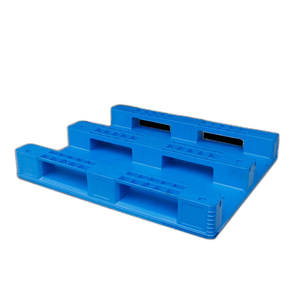
Explore our certified portfolio of heavy-duty selective frameworks, automated deep-lane shuttle tracks, structural mezzanines, and precision flow storage engineered for extreme industrial duty cycles.
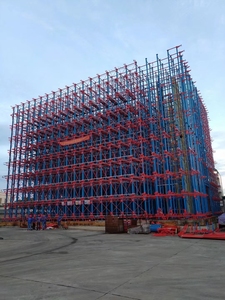
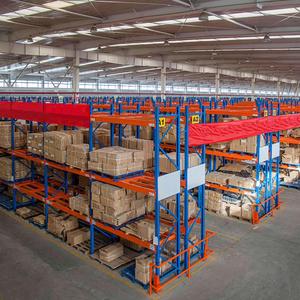
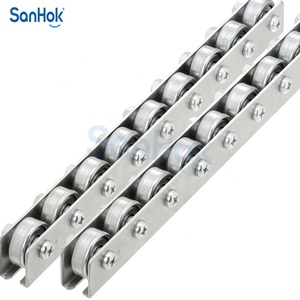
As a Tier-1 China custom pallet racking manufacturer based in Guangzhou, Guangzhou Heda Shelves Co., Ltd. approaches high-bay warehouse infrastructure from a rigorous structural mechanical baseline. Heavy-duty pallet racking systems are dynamic structures subject to transient kinetic loads, seismic spectral accelerations, building sway, and cyclic fatigue from mechanical fork trucks. Modern logistics demands zero tolerance for structural deflection and joint failure.
The structural integrity of custom racking begins with raw alloy specification. We source hot-rolled steel coils exclusively from premier domestic mills such as Baosteel and Shougang. For general ambient selective racking, Q235B carbon structural steel (yield strength fy ≥ 235 MPa, tensile strength fu = 370–500 MPa, elongation ≥ 26%) offers optimum ductility and energy absorption under dynamic load transfer. In high-bay installations exceeding 12 meters, automated crane AS/RS configurations, and deep-lane shuttle projects, we engineer upright posts utilizing cold-rolled high-strength Q355B low-alloy steel (yield strength fy ≥ 355 MPa, tensile strength fu = 470–630 MPa). This elevated yield point resists local buckling in thin-walled open cross-sections and minimizes vertical deflection under extreme axial compression.
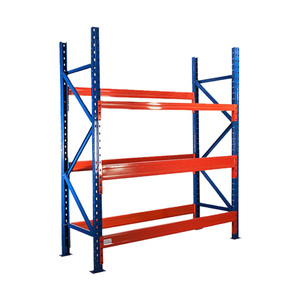
Every vertical upright column features a specialized multi-bend omega profile (e.g., 90×70mm, 100×70mm, 120×95mm) roll-formed through 18 to 22 sequential forming passes. Continuous CNC in-line punching maintains pitch accuracy within ±0.2mm over an 11.8-meter single-piece post length. This guarantees that beam connectors seat flush against the column face with full mechanical engagement. Upright diagonal and horizontal bracing members (C-channel or box-rolled) are bolted at optimized triangle nodes to prevent torsional-flexural buckling under non-uniform bay loadings.
Horizontal pallet load beams are manufactured using interlocking twin C-sections cold-welded into seamless structural tubular box beams (80×50mm to 160×50mm, with wall thicknesses spanning 1.5mm to 2.5mm). Heavy-duty stamped steel end connectors featuring 4 or 5 interlocking tapered claws are robotically welded to the beam profile using shielded gas metal arc welding (GMAW). The tapered claw design creates a friction-assisted wedge fit under load: as pallet weight increases, the connector seats deeper into the upright teardrop or diamond slot, transferring moment forces smoothly and eliminating rotational beam slippage.
Corrosion undercuts steel tensile capacity, especially in Southeast Asian tropical humidity or refrigerated cold chain facilities. HEDA operates an automated 7-stage surface pre-treatment line that includes alkaline degreasing, twin rinses, acid pickling to eliminate mill scale, and micro-crystalline zinc phosphating conversion coating. This chemical conversion establishes a 2.5–3.5 g/m² corrosion-resistant substrate that chemically bonds with the subsequent electrostatic thermoset polyester powder coating (film thickness: 60–90 μm). Cured at 190°C to 200°C, the resulting finish provides 500+ hours of continuous salt-spray resistance (ASTM B117) and pencil hardness ≥ 2H.
Evaluate load capacities, space utilization factors, throughput dynamics, and equipment compatibility across primary racking archetypes.
| Racking Typology | Space Utilization | Stock Rotation | Standard Max Bay Capacity | Clearance Height Span | Typical Applications |
|---|---|---|---|---|---|
| Selective Pallet Racking | 40% – 45% (High Aisle Ratio) | 100% Selective / FIFO | Up to 4,500 kg / level | 2.5m – 14.0m | 3PL fulfillment, mixed FMCG, spare parts, high-SKU distribution. |
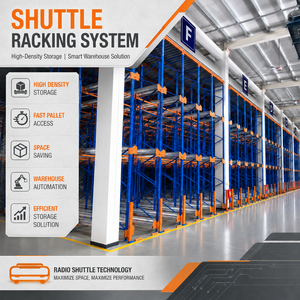
| Radio Shuttle Racking | 75% – 85% (Ultra High Density) | FIFO or LIFO Selectable | Up to 2,000 kg / pallet | 3.0m – 24.0m (AS/RS compatible) | Cold storage (-25°C), beverage production, batch manufacturing. |
| Drive-In / Drive-Through | 65% – 75% (Aisle-Free Density) | Strict LIFO (FIFO if Drive-Thru) | Up to 1,500 kg / pallet | 3.0m – 12.0m | Seasonal grain, homogeneous cold store stock, chemical drums. |
| Gravity Flow Racking | 60% – 70% (Continuous Flow) | Strict Automatic FIFO | Up to 1,200 kg / pallet | 2.5m – 8.0m | Fast-moving food, pharmaceuticals, cross-dock consolidation. |
| Push-Back Racking (Carts) | 55% – 65% (Dynamic Dense) | Strict LIFO (2–6 Deep) | Up to 1,500 kg / pallet | 2.5m – 9.0m | Medium-turnover retail distribution, staging zones, cold rooms. |
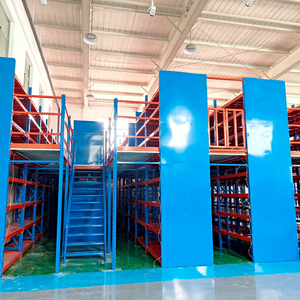
| Rack-Supported Mezzanine | 85% – 95% (Vertical Floor Gain) | Manual & Cart Access | 300 – 1,000 kg / m² floor | Up to 4 Tiers (12.0m) | E-commerce apparel piece picking, garment-on-hanger, packing pods. |
Industrial procurement executives are shifting from transactional purchasing of steel tonnage to sourcing lifecycle-engineered, modular assets. The global warehouse equipment market is undergoing radical transformations driven by supply chain resilience mandates, automation convergence, and carbon emission targets.
Traditional static racking designs are being superseded by automation-ready structures. Future-proof pallet racking procurement requires tight structural tolerances (±1.0mm deflection limits along aisle corridors) capable of interfacing with autonomous counterbalanced lift trucks, automated pallet conveyors, and high-speed radio shuttles. Floor slab settlement, rack verticality under dynamic loading, and laser reflector integration are now baseline engineering requirements in every custom project.
Leading international buyers no longer accept static hand calculations. Sourcing agreements increasingly mandate comprehensive 3D FEA stress simulations modeled in ANSYS or STAAD.Pro. These models simulate non-linear inelastic frame behavior, seismic floor drift, impact loads on front column protectors, and full-bay thermal contraction within cryogenic environments (-30°C). A digital twin model guarantees structural compliance with EN 15512:2020 and RMI MH16.1 standards before the first steel coil is unrolled on the factory floor.
Multinational corporate supply chains demand verified Environmental Product Declarations (EPDs). Specifying scrap-based Electric Arc Furnace (EAF) steel versus traditional blast furnace production cuts embedded carbon footprints by up to 60%. Combined with solvent-free low-VOC thermoset powder polymers and demountable, reusable structural components, custom pallet racking from China is evolving into a long-lifecycle circular asset.
With massive investments in pharmaceutical hubs and perishable food export corridors across Southeast Asia, Latin America, and the Middle East, pallet racking must withstand continuous sub-zero operating environments combined with warm, humid loading dock interfaces. Specifying hot-dip galvanized structural profiles (ISO 1461, minimum 65 μm coating thickness) for deep freeze bays prevents internal condensation corrosion and micro-fracturing along welded seams.
Two decades of certified Chinese manufacturing scale combined with western engineering tolerances, factory-direct pricing, and end-to-end project management.
Direct manufacturing facility in Guangzhou housing automated roll-forming lines, OTC robotic welding workstations, and high-speed electrostatic powder coating tracks with 30,000t monthly throughput.
Stringent compliance with European EN 15512, Australian AS 4084-2023, and US RMI MH16.1. Certified CE (No. 2435-CPR-8605159), ISO 9001:2015 (No. 18624Q00169R0M), and RoHS test compliance.
Our senior structural engineering team prepares comprehensive AutoCAD 2D layouts, photorealistic 3D BIM renderings, and load calculation sheets within 24 hours of receiving site schematics.
Headquartered in Guangzhou, our close proximity to Nansha, Huangpu, and Shenzhen ports guarantees rapid container dispatch, optimized packing configurations, and 2–10 day transit times across the Asia-Pacific region.
A common pitfall in international warehouse racking procurement is prioritizing initial steel cost per metric ton over total system lifecycle economics. A low-grade racking system prone to frame buckling, excessive beam sag, and difficult reconfigurations leads to disastrous long-term operational expenses.
Standard commercial storage racks are often calculated to an allowable beam deflection of δ ≤ L/200 under uniform distribution load (UDL). While code-compliant for basic hand-loaded operations, automated pallet interfaces and high-density narrow aisle (VNA) operations require δ ≤ L/300 or even L/350. Specifying this tighter deflection threshold eliminates pallet tilt, prevents mast collisions during high-lift forklift insertions (up to 14m), and prevents permanent plastic strain in beam step profiles.
Racking stability relies fundamentally on the interface between the steel baseplate and the concrete slab. In high-seismic zones (such as Indonesia, the Philippines, New Zealand, or western South America), HEDA engineers design enlarged base plates (minimum 10–16mm thickness) with ductile steel anchor configurations. We compute concrete cone breakout strength, shear friction, and anchor edge distance in accordance with ACI 318 Appendix D to prevent catastrophic floor spalling during tremor cycles.
Over 85% of warehouse racking failures result from repeated fork truck impacts on bottom corner uprights. A turnkey procurement specification must incorporate wrap-around heavy-gauge column guards (minimum 5mm steel plate), structural tubular end-of-row aisle protectors, and drop-in wire mesh safety decking. These accessories preserve the structural integrity of upright frames, preventing load drops and preserving warehouse operating safety.
Critical engineering, shipping, certification, and customization answers for logistics directors, procurement specialists, and warehouse contractors.
Send our senior engineering team your warehouse architectural floor plans or storage footprint requirements. We will deliver a comprehensive 2D CAD layout, 3D render, and structural budget proposal within 24 hours.
Get a Quote