High-Density Dynamic Storage & Component Solutions
Explore heavy-duty systems, nested gravity solutions, and structural accessories engineered to balance deep-lane density with direct forklift selectivity.
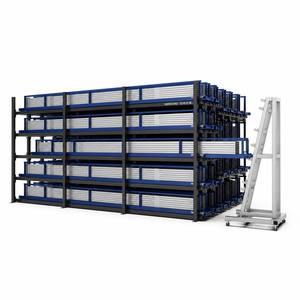
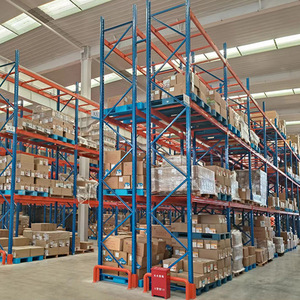
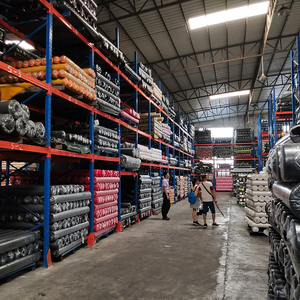
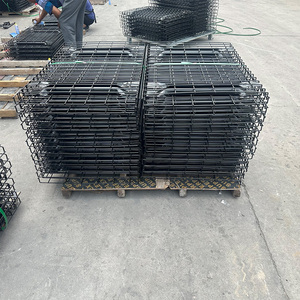
Engineering Fundamentals: How Push Back Racking Delivers High Density
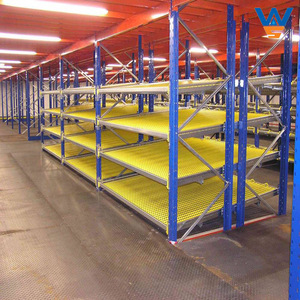
Push back pallet racking is a dynamic LIFO (Last-In, First-Out) accumulation system that stores pallets up to 2 to 6 deep on nested structural rolling carts or gravity-fed inclined steel roller beds.
Nested Cart Kinetics
Each pallet position beyond the initial opening sits on a heavy-gauge nested cart gliding on inclined structural steel channels. When a lift truck inserts a pallet, it gently contacts and pushes back the preceding load, exposing the subsequent carriage beneath.
Elimination of Flue Aisles
Unlike standard selective systems requiring an operational aisle every two rows, push back setups eliminate up to 60% of operating aisles. Forklift operators never enter the rack interior, which slashes drive-in collision rates by up to 90%.
Precision Slope Dynamics
Manufactured with a structural slope of roughly 1.5% to 3.0%, the gradient ensures smooth gravity return when unloading without creating uncontrolled runaway velocity. Heavy-duty mechanical end-stops securely capture the front carriage.
| System Type | Typical Depth | Accessibility Mode | Aisle Utilization | Forklift Impact Risk | Relative Cost/Position |
|---|---|---|---|---|---|
| Push Back Racking | 2 to 6 Pallets | LIFO (Per Lane) | High (Up to 75% Floor Fill) | Extremely Low (Face Entry Only) | Moderate ($$) |
| Standard Selective Racking | 1 Pallet | 100% Direct Access | Low (35-40% Floor Fill) | Low-Medium | Base ($) |
| Drive-In / Drive-Through | 4 to 10+ Pallets | LIFO / FIFO | Very High (80% Floor Fill) | High (Frequent Upright Impact) | Low-Moderate ($) |
| Pallet Flow (Gravity Roller) | 5 to 20+ Pallets | Strict FIFO | Extremely High | Low (Dedicated Input/Output) | High ($$$$) |
| Radio Shuttle Cart System | 10 to 40+ Pallets | FIFO or LIFO | Maximum | Low (Automated Vehicle) | High-Capital ($$$$) |
Top 10 Push Back Warehouse Racking Manufacturers & Suppliers
A vendor evaluation based on manufacturing capabilities, structural design compliance, steel grading, dynamic carriage engineering, and international delivery execution.
1. Guangzhou HEDA Shelves Co., Ltd.
Headquarters: Guangzhou, China (Factory-Direct Global)Overview: Founded in 2001, HEDA Shelves operates a state-of-the-art 30,000 m² smart fabrication base with a monthly cold-formed structural capacity exceeding 30,000 tons. Recognized as an engineering powerhouse for turn-key heavy-duty warehouse racking and push back systems, HEDA delivers factory-direct pricing alongside full structural engineering calculations tailored to international standards.
Technical Core: HEDA integrates CNC laser-cut carriage frames, precision low-friction sealed bearings, and dual pickling-phosphating electrostatic coatings suited for humid industrial facilities, automated distribution centers, and sub-zero cold chain operations across Southeast Asia, North America, and Europe.
- Lane Capacities: 2 to 6 Deep Systems
- Max Load/Pallet: Up to 1,500 kg per carriage
- Credentials: CE (2435-CPR-8605159), ISO 9001:2015
- Free Services: Full CAD design, 3D simulation
2. Frazier Industrial Company
Headquarters: Long Valley, New Jersey, USAOverview: Frazier is recognized globally for manufacturing 100% hot-rolled structural steel racking systems. Unlike roll-formed channels, Frazier's push back systems utilize structural C-channels for columns and cart tracks, offering exceptional resistance to repeated lift truck collisions.
Technical Core: High-yield structural steel members designed specifically for punishing freezer logistics, seismic design categories D through F, and heavy beverage distribution facilities.
- Lane Capacities: 2 to 5 Deep Cart Systems
- Material: Hot-rolled ASTM A36 / A572 Structural Steel
- Target Segments: Heavy Food & Beverage, Cold Storage
3. Advance Storage Products
Headquarters: Huntington Beach, California, USAOverview: Renowned for patenting the "Lo-Pro" (Low Profile) push back cart design, Advance Storage Products manufactures dynamic nested push back systems that preserve valuable vertical clearance across multiple levels.
Technical Core: Their proprietary linked-carriage mechanism prevents carts from jumping their tracks, while coupled safety flow-stops stabilize pallet tracking across cold storage environments.
- Lane Capacities: 2 to 6 Deep Configurations
- Specialty: Lo-Pro clearance-saving geometry
- Target Segments: Third-Party Logistics (3PL), Retail Warehouses
4. Mecalux, S.A.
Headquarters: Barcelona, SpainOverview: As one of the largest storage equipment vendors in Europe, Mecalux engineers both cart-based push back and dynamic push back roller lane configurations that adhere strictly to EN 15512 and FEM design codes.
Technical Core: High-speed modular automation integration. Mecalux push back systems frequently integrate with Warehouse Management Software (Easy WMS) to coordinate FIFO and LIFO consolidation buffers.
- Configurations: Nested Carts and Gravity Roller Beds
- Certifications: EN 15512, ISO 14001, CE
- Target Segments: European and Pan-American Logistics Hubs
5. SSI SCHAEFER Systems
Headquarters: Neunkirchen, GermanyOverview: SSI SCHAEFER is a premier tier-one automated systems provider offering high-tolerance dynamic pallet racking and nested roller systems designed for zero-failure industrial manufacturing environments.
Technical Core: Extreme cold-formed profile consistency, galvanized dynamic tracks for aggressive environments, and end-to-end integration with automated guided vehicles (AGVs) and stacker cranes.
- Standards: FEM, DIN EN ISO 9001
- Durability: High-grade continuous hot-dip galvanizing
- Target Segments: Pharmaceutical, High-Precision Manufacturing
6. Ridg-U-Rak, Inc.
Headquarters: North East, Pennsylvania, USAOverview: Ridg-U-Rak produces substantial volumes of roll-formed and structural push back racking, leveraging proprietary hook-and-slot column designs and bolted beam integrations.
Technical Core: Heavy-gauge dynamic wheel assemblies with lifetime-lubricated internal bearings designed to perform reliably in blast freezing cells down to -30°C.
- Lane Capacities: 2 to 5 Pallets Deep
- Design Basis: RMI (Rack Manufacturers Institute) Certified
- Target Segments: Frozen Seafood, Meat Packing, Wholesale Distribution
7. Stow Group
Headquarters: Spiere-Helkijn, BelgiumOverview: Operating across Europe and global export territories, Stow Group manufactures push back systems characterized by ultra-rigid beam connections and specialized safety interlocks for automated carriage movement.
Technical Core: Finite Element Analysis (FEA) optimization of cold-formed upright profiles to eliminate unnecessary deadweight while sustaining dynamic live loadings during rapid pallet insertion.
- Standards: FEM 10.2.02, EN Standards
- Innovation: Stow Atlas dynamic carriage coupling
- Target Segments: European FMCG & Contract Logistics
8. Steel King Industries
Headquarters: Stevens Point, Wisconsin, USAOverview: Steel King is recognized for heavy-duty structural steel and closed-tube upright designs (SK2000 and SK3000 series) that provide exceptional torsional resistance against off-center forklift pushes.
Technical Core: Fully welded tubular carts that resist dynamic twisting when forklifts misalign off-center pallet pushes in 4-deep and 5-deep lane setups.
- Material: Closed tubular steel uprights & welded cart channels
- Warranty: Extended heavy industrial durability guarantees
- Target Segments: Heavy Component Logistics, Automotive Stamping Plants
9. Dexion (Gonvarri Material Handling)
Headquarters: Krefeld, Germany / Madrid, SpainOverview: A historic cornerstone of industrial storage, Dexion supplies customized push back roller track and nested carriage systems engineered to withstand intense duty cycles across Europe, the Middle East, and Asia-Pacific.
Technical Core: Advanced roller track systems fitted with magnetic speed controllers and heavy-duty entry guides to prevent pallet skewing during deep-lane consolidation.
- Configurations: Multi-roller incline tracks and steel carts
- Quality Matrix: ISO 9001, ISO 14001, EN Standards
- Target Segments: High-Volume Distribution, Chemical Plants
10. Jracking Group
Headquarters: Nanjing, China / Vietnam FacilityOverview: Jracking supplies export markets with versatile teardrop and European-style racking systems, backed by multi-national fabrication plants servicing North American, Australian, and Southeast Asian logistics centers.
Technical Core: Standardized modular dynamic nested carts compatible with international pallet dimensions, supported by ISO and AS4084 certified quality inspection workflows.
- Standard Compliances: AS4084, RMI, FEM
- Lane Capacities: 2 to 5 Pallet Push Back Configurations
- Target Segments: General Warehousing, Global Equipment Wholesalers
Future Procurement Trends in Push Back Racking (2026–2030)
Strategic shifts in warehouse real estate valuations, labor safety compliance, and automation are reshaping how enterprise supply chains specify dynamic push back storage.
Total Cost of Ownership (TCO) vs. Initial CapEx
Procurement teams are moving away from evaluating systems purely on upfront steel tonnage cost. Push back systems reduce aisle travel distances by up to 40% and virtually eliminate forklift-in-rack impact repairs, delivering complete CapEx payback within 18 to 24 months compared to drive-in racking.
Cold Chain Cubic Optimization
Sub-zero refrigeration power consumption has escalated cold warehouse operational costs to historic highs. Converting selective or drive-in setups to 4-deep or 5-deep push back systems increases thermal volumetric storage density by 55%, lowering cooling energy cost per pallet position.
Nearshore Sourcing & Strategic Tariffs
International buyers increasingly specify dual-source manufacturing agreements. Tier-one buyers partner with large-scale hubs such as HEDA Shelves in Guangzhou to access integrated hot-rolled and cold-formed supply chains while securing rapid port-to-port ocean transit.
Engineering Advances Redefining Modern Dynamic Racking
The push back sector is incorporating smarter safety interlocks, lighter materials, and hybrid automation interfaces.
AGV/AMR Interface Compatibility
Modern push back cart stops and guide angles are engineered with optical reflectors and laser alignment markers, allowing automated guided reach trucks to deposit and retrieve pallets without human intervention.
Anti-Pushout Mechanical Locks
Innovative mechanical latching stops prevent subsequent nested carts from migrating forward under severe seismic vibration or sudden forklift braking until the front cart has cleared the bay threshold.
Advanced Metallurgical Coatings
Multi-stage pickling, zinc-phosphating, and nano-ceramic powder applications provide long-term corrosion protection in high-humidity facilities and coastal distribution hubs.
Hybrid Flow Rail Integration
Cross-breeding nested cart lanes with specialized flow roller tracks enables multi-depth storage of non-standard pallets, open-bottom skids, and wire-mesh containers within the same lane infrastructure.
Guangzhou HEDA Shelves: Engineering Authority in Storage Solutions
Backed by over two decades of in-house manufacturing, certified precision tooling, and an engineering team dedicated to maximizing warehouse capacity across the globe.
30,000 m² Integrated Facility
From raw steel slit coil leveling, CNC column punching, and cold-roll section forming to beam robotic welding and pre-treatment finishing, all 10 production steps occur under one roof for rigorous quality control.
Certified Structural Compliance
Our push back and high-density pallet systems hold CE (Certificate No. 2435-CPR-8605159), ISO 9001:2015 (No. 18624Q00169R0M), and RoHS verification, satisfying building permit and seismic code inspections worldwide.
Free Engineering Design & CAD
We provide full structural static and seismic calculations, custom warehouse CAD layouts, and clear 3D architectural renderings before purchase orders are signed—at no upfront engineering charge.
Sub-Zero Cold Chain Reliability
Engineered with cold-resistant lubricants, reinforced mechanical stops, and optional hot-dip galvanized finishes that prevent binding down to -30°C in food and pharmaceutical freezers.
Container-Optimized Logistics
Components are bundled with custom steel dunnage to maximize ocean container cube utilization, protecting pre-coated surfaces while reducing port-to-port freight costs per pallet position.
Direct Port-to-Port Connections
Positioned minutes from Nansha and Huangpu ports, our maritime shipments reach major hubs with fast transit: 2–5 days to Vietnam, 3–5 days to Manila, and 5–7 days to Singapore.
Frequently Asked Questions: Push Back Racking Procurement
Key technical, operational, and commercial questions answered by HEDA's senior warehouse engineering team.
What are the primary differences between Push Back and Drive-In racking?
While both provide high-density storage, push back racking operates via face-access nested carts, meaning forklifts never drive into the rack structure. This design increases pallet picking speeds by up to 2.5 times and cuts structural upright collision damage by up to 90% compared to drive-in bays.
Can non-standard or weak pallets be used on push back cart systems?
Yes. Because the pallet is fully supported by a steel frame cart rather than resting on narrow parallel side rails (as in drive-in systems), half-pallets, disposable skids, and damaged wooden pallets can be handled safely without risk of falling between rails.
How much vertical ceiling height clearance is lost with nested carts?
Modern low-profile nested carts consume minimal vertical clearance. Typically, a 2-deep cart stack requires only 4 to 5 inches of extra vertical height per level, while a 5-deep assembly uses approximately 6.5 to 8 inches, preserving ceiling clearance in facilities with tight sprinkler envelopes.
What regular maintenance is required for push back cart wheels and rails?
Quality push back carts feature sealed, lifetime-lubricated stainless steel bearings. Maintenance is simple: quarterly visual inspections of lane end-stops, debris clearance from cart rails, and torque checks on base anchors and beam safety pins.
How does the system perform in sub-zero cold storage facilities?
Push back racking performs exceptionally well in cold storage because it eliminates the need for battery-powered shuttles or electrical wiring inside frozen chambers. Systems specified for cold environments use low-temperature lubricants and galvanized or epoxy-coated steel to prevent moisture binding.
What structural data is required to generate a custom proposal?
To produce an engineering CAD layout, load calculation, and price quote, our team requires your warehouse floor plan (with column grids and clear ceiling heights), pallet dimensions (length, width, height, and gross weight), and forklift lift-height capabilities.
Transform Your Warehouse Volumetric Capacity Today
Consult directly with our senior application engineers. We will analyze your warehouse drawings, model throughput requirements, and provide a complimentary CAD layout and price quotation.
Send an Inquiry