Factory-Direct Selective & Dynamic Pallet Racking Systems
Explore our primary heavy-duty warehouse racking assemblies. Each system is engineered to FEM 10.2.02, EN 15512, and RMI standards, delivering structural safety, modular adaptability, and optimized floor-to-ceiling cubic utilization.
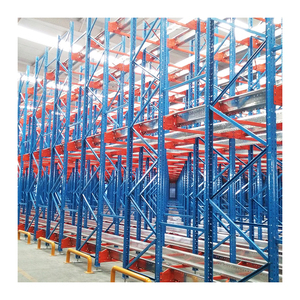 High Density Semi-Auto
Industrial Warehouse Shuttle Selective Pallet Rack Storage Solution
Combines radio shuttle automation with selective bay access. Enhances cold storage and high-turnover FMCG operations with minimal forklift aisle intrusion.
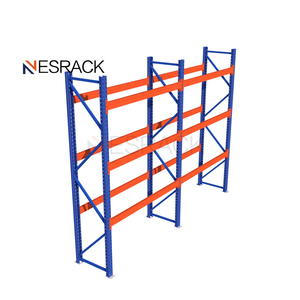 100% Direct Selectivity
Customized Industrial Multi-Layer Heavy Duty Selective Pallet Racking
Our flagship selective racking model featuring multi-tier adjustable box beams and cold-formed uprights. Delivers immediate 100% access to every single SKU.
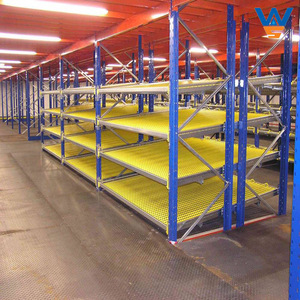 Gravity Dynamic Flow
High Capacity FIFO Dynamic Storage Adjustable Roller Rails Carton Flow Rack
Dynamic gravity-fed roller tracks integrated into selective structures for split-case picking, assembly line buffers, and high-speed distribution fulfillment.
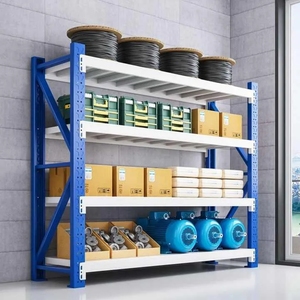 Medium-to-Heavy Longspan
High-Ampacity Durable Metal Racks Adjustable Multi-Function 5-Layer Steel
Versatile longspan shelving units ideal for manual case handling, maintenance tool cribs, and intermediate order staging within selective aisle perimeters.
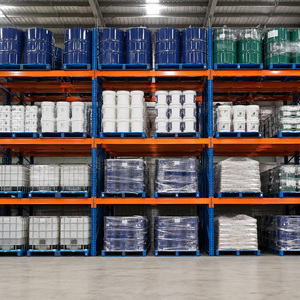 Automotive Logistics
Industrial Heavy Duty Selective Pallet Racking System for Auto Parts Logistics
Reinforced steel upright frames and specialized cross-support brackets configured for irregular automotive components, stamping dies, engines, and heavy crates.
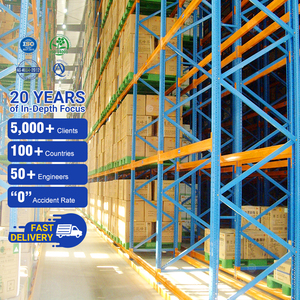 Very Narrow Aisle (VNA)
Strong Load Capacity Industrial Narrow Aisle (VNA) Steel Pallet Rack System
Compact selective geometry engineered for narrow guide-rail or wire-guided turret trucks. Decreases operating aisle widths down to 1.6m–1.9m for maximum floor density.
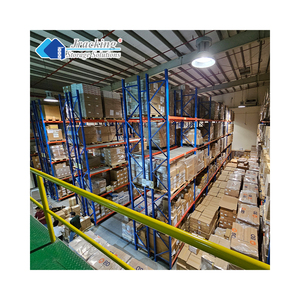 European Standard FEM
EU Standard Heavy Duty Selective Steel Pallet Racking Systems for Warehouses
Fabricated strictly according to European FEM 10.2.02 and EN 15512 specifications. Features high-precision 5-hook connector claws and safety drop-in lock clips.
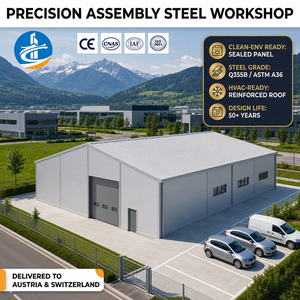 Automated AS/RS High-Bay
Automated High-Bay Steel Structure Storage Warehouse for AS/RS Logistics
Ultra-tall rack-supported building structural frame engineered for stacker cranes and automated guided vehicles (AGVs). Offers millimetric deflection tolerances.
Engineering White Paper: Metallurgical & Structural Architecture of Selective Racking
Selective pallet racking represents the foundational architecture of global modern warehousing, accounting for over 70% of installed pallet positions worldwide. Characterized by its straightforward configuration of vertical upright frames and horizontal load-bearing beams, selective racking provides unconstrained 100% immediate access to every pallet position without honeycombing or unnecessary stock relocations. However, behind its conceptual simplicity lies a sophisticated balance of cold-formed structural engineering, metallurgical optimization, cyclic stress endurance, and dynamic seismic resistance.
As a premier selective pallet racking manufacturer based in Guangzhou, China, Guangzhou Heda Shelves Co., Ltd. (HEDA Shelves) engineers every component from certified prime hot-rolled and cold-rolled steel coils. Our manufacturing processes adhere to international structural testing standards, including European Standard EN 15512 (Racking Design Code), FEM 10.2.02 (European Materials Handling Federation), and American RMI (Rack Manufacturers Institute) MH16.1. Understanding the mechanical behavior of these systems is vital for warehouse planners, supply chain directors, and EPC structural engineers evaluating large-scale wholesale procurement.
Upright Frame Profiling
Fabricated from continuous cold-roll formed Omega-shaped profiles with continuous stiffener ribs along the flanges. This complex multi-bend geometry prevents torsional-flexural buckling under extreme vertical loads, distributing localized stresses evenly across the column section.
Interlocking Box Beams
Engineered via twin C-channels interlocked, rolled, and seam-welded automatically via CO2 gas-shielded robotic lines. High-tensile 3, 4, or 5-claw steel end connectors feature precision stamped hooks that taper downward into upright teardrop or diamond perforations.
Seismic Base Anchoring
Heavy-duty structural footplates engineered from Q355B thick steel plates. Designed to withstand substantial overturning bending moments during seismic lateral ground acceleration, reinforced with mechanical wedge expansion anchors or epoxy chemical studs.
Mechanical Deflection Limits & Structural Safety Criteria
Under international safety guidelines, the maximum allowable vertical deflection of a selective racking beam under maximum uniformly distributed load (UDL) must not exceed L/200 (where L is the clear span distance between upright columns) in standard configurations, or L/300 for automated and high-precision narrow aisle implementations. For instance, on a standard 2700mm bay span supporting two 1,200kg pallets (2,400kg total load), the maximum vertical deflection at the midpoint is engineered to remain strictly below 13.5mm, recovering completely to zero residual deflection upon payload removal.
Furthermore, upright frames are subjected to second-order non-linear structural analysis (P-Delta effect). When vertical axial loads combine with lateral sway forces (caused by forklift eccentricities, guide rail impacts, wind loads in open canopies, or seismic acceleration), the frame must provide a safety coefficient of no less than 1.65 to 1.95 against structural yield stress.
Comparative Engineering Standard Matrix: Selective Pallet Racking vs. Alternative High-Density Systems
Evaluate how traditional selective racking contrasts with high-density variants across capital expenditure, access selectivity, space optimization, and SKU compatibility:
| Racking Topology | Direct SKU Access | Floor Area Utilization | Forklift Compatibility | Relative CapEx / Position | Optimal Operational Suitability |
|---|---|---|---|---|---|
| Selective Pallet Racking | 100% Immediate | 40% – 50% | Counterbalance, Reach, VNA | Baseline (Low) | High SKU diversity, 3PLs, Retail FMCG, Auto Parts |
| Double Deep Racking | 50% Direct | 55% – 65% | Pantograph Double Reach | Low + 15% | Medium SKU counts, batch production buffering |
| Drive-In / Drive-Through | 10% – 20% (LIFO/FIFO) | 65% – 75% | Standard Counterbalance | Moderate (+35%) | Homogeneous stock, raw material seasonal holding |
| Radio Shuttle System | Deep-lane batch | 75% – 85% | Shuttle Cart + Forklift | High (+90%) | Cold storage freezers, beverage bottling plants |
| Very Narrow Aisle (VNA) | 100% Immediate | 60% – 70% | Man-Up / Man-Down Turret | Moderate (+25%) | High land cost hubs, pharmaceutical distribution |
Strategic Procurement Dynamics: Future Sourcing Trends (2025–2030)
The global industrial warehouse storage equipment market is experiencing transformative structural shifts. Driven by skyrocketing real estate square-meter lease costs across key ASEAN logistics hubs (such as Selangor in Malaysia, Samut Prakan in Thailand, Bac Ninh in Vietnam, and West Java in Indonesia), as well as nearshoring corridors in North America and Eastern Europe, supply chain procurement directors are no longer purchasing commodity steel racks. Instead, procurement strategies focus heavily on Total Cost of Ownership (TCO), adaptive modularity, lifecycle corrosion resilience, and automation readiness.
1. The Shift to Hybrid Selective-Automation Corridors
While fully automated AS/RS high-bay installations continue to proliferate, traditional warehouse operators are increasingly deploying "Hybrid Selective" footprints. In these layouts, the lower 2 to 3 beam levels are designated for manual order picking, split-case carton flow, or pallet truck retrieval, while vertical levels reaching up to 12 or 15 meters are reserved for high-bay reserve buffer pallets accessed by Reach Trucks or Automated Guided Vehicles (AGVs). Sourcing selective pallet racking with high column stability and standardized hole punch pitches (50mm or 75mm) guarantees future compatibility with autonomous reach trucks and AMR fleet deployments without structural re-engineering.
2. Tropicalized Surface Coatings & Corrosion Mitigation
Traditional single-layer spray coatings frequently fail within 24 to 36 months when installed in Southeast Asian, Middle Eastern, or coastal environments with ambient relative humidity consistently surpassing 80% to 90%. Sourcing specifications increasingly mandate comprehensive 7-stage pre-treatment chemical protocols (degreasing, pickling, and nano-ceramic phosphating) followed by electrostatic powder deposition cured at 180°C to 200°C. For aggressive environments—such as marine port terminals, unconditioned fertilizer facilities, or cold storage defrost zones—the procurement trend favors hot-dip galvanized (HDG) beam connectors and pre-galvanized cold-formed upright structural steel conforming to ASTM A123 / ISO 1461 standards.
3. Carbon Optimization & Green Steel Sourcing in China
With environmental reporting, ESG audits, and Carbon Border Adjustment Mechanisms (CBAM) entering international trade frameworks, Chinese top-tier manufacturers like HEDA Shelves are leading the transition toward low-carbon cold-rolled coils processed from electric arc furnaces (EAF). Selecting suppliers with verified scrap-recycling processes, zero-VOC powder formulations, and compact container flat-pack bundling reduces the direct carbon-intensity footprint per pallet position shipped.
4. Container Optimization & Direct-to-Port Consolidation
Ocean freight fluctuations require intelligent container stuffing algorithms. Uprights are nested, baseplates are demounted, and beams are packaged with protective spacer chocks to maximize the cubic weight-to-volume ratio of 40-foot High Cube (40HQ) maritime containers. By leveraging HEDA Shelves' strategic location in Guangzhou—proximate to Nansha, Huangpu, and Shenzhen ports—buyers secure direct shipping sailings with transit times as brief as 3 to 7 days into primary Southeast Asian ports, reducing transit capital lock-up.
Technological Evolution: Smart Pallet Racking & Digital Warehousing
As Industry 4.0 and smart logistics evolve, the physical racking skeleton is transforming from passive steel framing into an intelligent, sensor-monitored warehouse asset. Future-ready selective pallet racking is increasingly engineered to incorporate digital tracing, load-deflection telemetry, and automated maintenance monitoring systems:
IoT Strain & Deflection Sensors
Micro-electromechanical strain gauges integrated into high-stress beam welds and upright baseplates. These wireless sensors communicate beam deflections in real-time to Warehouse Management Systems (WMS), flagging dangerous overload events immediately.
RFID & Optical QR Pallet Tracking
Factory-etched barcode and RFID locator tags mounted directly into upright beam recesses during punch-pressing. Eliminates manual scanning errors and enables overhead vision-equipped AGVs to verify inventory accuracy autonomously.
Impact-Absorbing Polymer Shields
Replacing brittle metal column guards with high-density ballistic polyurethane or synthetic polymer shock protectors that deform elastically during forklift collisions, transferring zero kinetic shock energy into the structural baseplate anchor bolts.
Manufacturing Protocol: 10 Controlled Stages from Steel Coil to Container
Quality control in high-load structural steel racking is not a retrospective inspection; it is an uncompromising, continuous protocol embedded into every production stage. At our modern 30,000 square meter Guangzhou manufacturing facility, HEDA Shelves implements an end-to-end 10-stage fabrication workflow conforming to ISO 9001:2015 Quality Management Systems (Certificate No. 18624Q00169R0M):
Mill test certificates (MTC) verification for yield, elongation, and carbon chemistry (Q235B/Q355B).
High-speed rotary longitudinal slitting into exact master strip widths with deburred edges.
Continuous hydraulic high-speed punching dies ensuring ±0.1mm pitch accuracy across 12-meter upright lengths.
Progressive 22-station roll-forming lines creating continuous Omega columns and interlocked box beams.
Fiber laser cut-off machines ensuring clean 90-degree square profiles and precise beam connector slots.
Automated Panasonic multi-axis robotic welders securing beam-connector claws with continuous penetration.
Shot blasting and automated surface de-slagging eliminating weld spatter and mill scale imperfections.
Full acid pickling, ultrasonic degreasing, neutral rinse, and nano-ceramic phosphating bath treatment.
Electrostatic automatic guns applying 60-90µm epoxy-polyester powder, cured in continuous 200°C convection ovens.
Destructive weld tensile tests, coating adhesion cross-hatch checks, and container-optimized steel banding.
CE Certification Compliant
Certified under Factory Production Control Certificate No. 2435-CPR-8605159, fully satisfying European Construction Products Regulation standards.
ISO 9001:2015 Registered
Accredited Quality Management System under Registration No. 18624Q00169R0M. Full traceability across all raw steel heats and robotic welding logs.
RoHS & Lead-Free Assurance
Environmentally safe heavy-metal-free polymer coatings fully certified against hazardous chemicals, essential for global food and pharmaceutical supply chains.
Comprehensive Selective Pallet Racking Procurement FAQ
Direct, technical answers to critical engineering, manufacturing, logistics, and installation inquiries commonly evaluated by international B2B procurement professionals:
- Architectural building drawings: Clear warehouse length, width, clear height under roof trusses, column grid locations, overhead sprinkler drops, and dock door positions.
- Pallet payload profile: Pallet dimension (W × D × H including cargo overhang), maximum pallet gross weight, and pallet entry orientation.
- Material handling equipment (MHE): Forklift type (counterbalance, reach truck, VNA turret), maximum mast lift height, turning radius (Aisle Width requirement), and collapsed mast height.
- Operating environment: Ambient temperature (dry warehouse vs. cold storage sub-zero), floor slab thickness, concrete compressive strength (e.g., C25/30), and local seismic zone data.
Transform Your Warehouse Floor Space into Maximum Storage Capacity
Direct factory pricing, custom structural engineering, and fast container shipping from Guangzhou, China. Send our engineering team your building dimensions or pallet requirements today for a free CAD layout, 3D structural simulation, and quotation.
Contact Us