High-Performance Racking & Foundational Heavy-Duty Systems
Manufactured with robotic welding precision, Q235B/Q355B high-tensile hot-rolled steel, and surface micro-phosphating pre-treatment. Directly supplied from our 30,000 m² Guangzhou production headquarters.
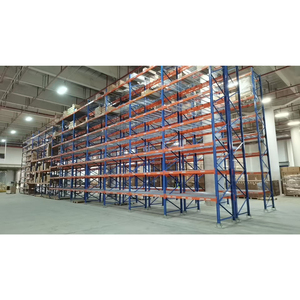
Robust Longspan Shelving Systems Warehouse Organization Heavy Duty Shelves
Engineered for high manual picking throughput, featuring heavy-gauge base anchor feet and fully adjustable stepped beams.
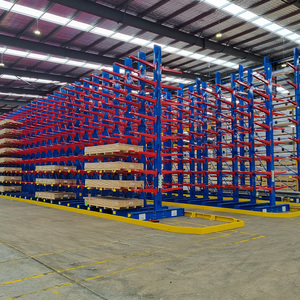
China Factory Heavy Duty Cantilever Racks Steel Warehouse Cantilever Rack
Cold room cantilever design with hot-dip galvanized foot spreaders for low-temperature structural equilibrium.
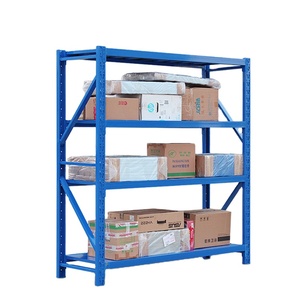
JIAMEI Storage Shelving Warehouse Storage Rack Long Span Shelf Rack
High-density modular picking structure built with reinforced column foot assemblies to prevent point-load floor cracking.
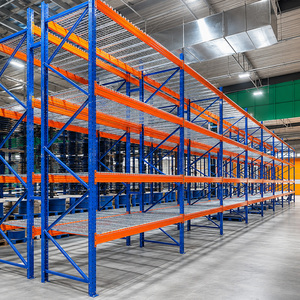
High Density Pallet Racking for Automotive Parts Distribution Center
Heavy pallet positions integrated with anti-collapse safety locking feet designed for automotive SKU density.
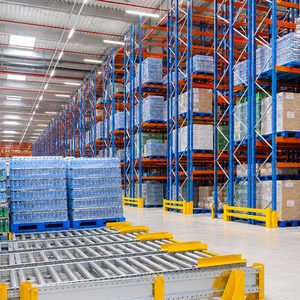
Adjustable Warehouse Storage Rack System 3000kg Capacity
Optimized for structural industrial storage with custom thick-gauge seismic footpads anchoring up to 3 tons per level.
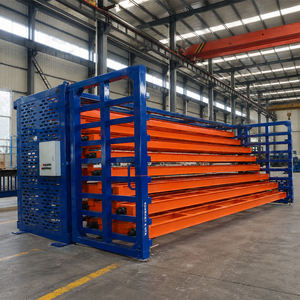
Heavy Duty Durable Push-Back Pallet Rack Space Saving Anti-Rust
Nested nested-cart design requiring ultra-flat anchoring feet alignment to prevent dynamic tracking tilt.
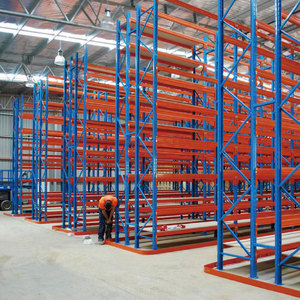
Cold Rolled Steel Heavy Duty Narrow Aisle Racks Tight Passage
Designed for floor-guided turret trucks; features ultra-stable base anchors resisting micro-deflections at up to 15m elevations.
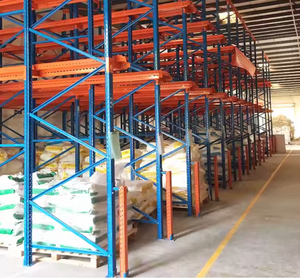
High Quality Adjustable Drive-Through Pallet Rack Industrial System
Continuous bay framework supported by structural upright feet engineered to withstand forklift entry lateral shocks.
Future Procurement Trends in Pallet Racking Feet & Base Structural Engineering
In modern high-bay logistics, upright base plates (pallet racking feet) have transitioned from simple mounting brackets into sophisticated structural load dissipators. As procurement directors upgrade warehouse facilities, four major engineering trends define international supply contracts:
1. Seismic Ductility & Dynamic Damping Baseplates
Supply chain infrastructure located across seismically active corridors (such as Indonesia, the Philippines, and the Western Americas) has pushed procurement requirements toward FEM 10.2.02 and RMI-compliant base plates. Modern base connections are calculated to absorb lateral spectral accelerations.
- Shift from 4mm standard cold-rolled plates to 8mm–12mm ductile structural plates.
- Elongated anchor slots to allow calculated energy dissipation during seismic excitation.
- Finite Element Analysis (FEA) certified base assemblies to avert slab shear collapse.
2. VNA & Automated High-Bay Tolerance Requirements
With automated storage and retrieval systems (AS/RS) and Narrow Aisle (VNA) systems reaching heights of 12m to 24m, micro-millimeter tolerance deviations at the base will translate into catastrophic top-of-rack misalignments. High-precision shimming and micro-machined base feet are becoming mandatory.
- Laser-cut interlocking shim plates with precision anchor-pass apertures.
- Dual-welded anchor housings that prevent column twist under full capacity torque.
- Strict DIN 18202 slab flatness tolerance integration to ensure perpendicularity.
3. Cold-Chain & Coastal Corrosion Barrier Upgrades
Blast freezers (-30°C) and tropical seaport storage hubs suffer from severe micro-condensation and chemical salt crystallization. Global buyers have moved away from conventional spray-paint finishes at ground level, demanding industrial barrier treatments right from the factory floor.
- Pickling and phosphating pre-treatments followed by multi-stage electrostatic thermoset polyester powders.
- Hot-dip galvanizing per ISO 1461 to guarantee zero corrosion in continuous sub-zero conditions.
- Dielectric isolation barriers to halt chemical reactions between zinc and wet-cured concrete slabs.
| Evaluation Parameter | Legacy Baseline Sourcing | Modern Technical Sourcing Standard (HEDA Shelves) | Operational Safety Return |
|---|---|---|---|
| Base Plate Steel Grade | Commercial Scrap Hot-Rolled (Q195 / Q215) | Certified Structural Coil Q235B / Q355B with Mill Certificates | +42% Yield strength resilience under direct anchor torquing |
| Fabrication Methodology | Manual Torch Cutting & Hand Welding | CNC Automated Stamping, Laser Beveling & Multi-Axis Robotic MIG Welding | Uniform weld throat thickness, zero micro-porosity fractures |
| Surface Pre-Treatment | Direct Enamel Coating on Oily Steel | Full Immersion Acid Pickling + Phosphating Pre-treatment Line | Passing 500+ hour continuous ASTM B117 salt spray testing |
| Anchor Hole Configuration | Single-Hole Unreinforced Center Cut | Dual or Quad Offset Anchoring Pattern with Perimeter Gussets | Prevents concrete cone blowout during mechanical forklift impact |
Structural Evolution of Racking Base Assemblies: The Path to Smart Infrastructure
The engineering trajectory of warehouse storage feet reflects broader structural developments across global logistics automation. Base assemblies have evolved through distinct technological epochs:
Generation 1: Welded Fixed Feet Plates
Historically, upright columns featured fixed, shop-welded flat steel pads. While sufficient for static manual shelving, they offered zero adjustability for uneven concrete screeds, suffered transport deformities during container shipping, and concentrated stress directly into the column corners without load-spreading dynamics.
Generation 2: Bolted Modular Footplates
The industry benchmark introduced detachable base components secured by Grade 8.8 tensile bolts through the column bottom. This eliminated shipping bulk, enabled on-site leveling via cold-formed precision shims, and allowed fast component-level replacement following forklift vehicle impacts without replacing entire upright profiles.
Generation 3: Integrated Heavy Base Shoes with Integrated Floor Dampers
Today's cutting edge integrates heavy wrapped column protectors directly into the foot foundation. By welding heavy formed upright wraps to the footplate, ground-level horizontal impacts are absorbed by the floor anchors rather than bucking the thin column steel. Integrated load sensors and IoT strain gauges are now emerging for structural health monitoring.
Guangzhou HEDA Shelves: 25+ Years of Certified Racking Manufacturing
Operating as a premier direct manufacturing plant since 2001, Guangzhou HEDA Shelves Co., Ltd. provides complete logistics storage engineering to distributors, racking installers, logistics contractors, and multinational enterprise operators worldwide.
Certified Production Standards
All structural components, upright columns, load beams, and foot plates adhere rigorously to European CE standards (CE Certificate No. 2435-CPR-8605159), ISO 9001:2015 Quality Management standards (Certificate No. 18624Q00169R0M), and RoHS environmental safety mandates.
Scale, Automation & Capacity
Backed by over 300 technical engineers and production specialists, our modernized 30,000 m² factory floor produces up to 30,000 metric tons per month. From automatic precision steel cutting, profiling, automated column punch lines, cold bending, robotic welding, to in-house powder coating lines.
Free Engineering Design & Layout Support
We eliminate sourcing risk prior to order release. Our engineering department develops comprehensive 2D CAD floor layouts, photorealistic 3D warehouse renderings, and accurate structural slab-weight calculation sheets—at zero charge. Custom steel gauges, heights, and finishes are tailored to regional seismic profiles.
Frequently Asked Questions: Technical Sourcing of Pallet Racking Feet
Practical structural insights addressing load dispersion, anchoring mechanics, slab specifications, and international export logistics.
Q1: How is the required thickness of an upright pallet racking foot determined?
Foot plate thickness (commonly 4.0mm, 6.0mm, 8.0mm, or 12.0mm) is determined by calculated total frame load, building seismic risk categories (Seismic Design Category A–F), and concrete slab compressive strength (typically 20 to 30 MPa). Heavier frame designs or high bays over 8 meters demand thicker plates to spread the point load and avoid punching shear through the concrete floor.
Q2: What type of concrete anchor bolts should be specified for racking footplates?
Heavy-duty pallet racking requires certified carbon steel mechanical wedge expansion anchors or heavy chemical adhesive resin anchors (typically M10 to M16 diameters). In seismic zones or uncracked concrete conditions, torque-controlled expansion anchors tested according to ACI 355.2 / ETAG 001 criteria are mandatory to prevent anchor pullout under dynamic lateral swaying.
Q3: Can HEDA Shelves engineer racking feet for uneven concrete floors?
Yes. We manufacture interlocking cold-rolled steel shimming plates precisely matching the hole pattern of our foot assemblies, in thicknesses ranging from 1.0mm to 3.0mm. These prevent baseplate bending during anchoring. For pronounced elevation discrepancies, we engineer heavy threaded leveling jacks or high-adjustability base plate brackets.
Q4: How does your manufacturing process prevent weld failure on high-load feet?
We utilize multi-axis automated robotic MIG/MAG welding stations with AWS D1.1-certified welding parameters. Before welding, all profile connection points undergo automated precision plasma bevelling. Every batch undergoes non-destructive magnetic particle inspection and weld penetration destruction testing to guarantee zero crack propagation under cyclic fatigue.
Q5: What are the lead times and shipping logistics from your Guangzhou facility?
With our production facility strategically situated in Guangzhou, port-to-port sea freight transit to Southeast Asia (Vietnam, Philippines, Singapore, Malaysia, Thailand, Indonesia) takes 2 to 10 days. Global shipments to the Middle East, Europe, Africa, and the Americas are loaded directly into 20GP or 40HQ containers utilizing export-grade bundles that eliminate surface scratches during long maritime transits.
Q6: Can you manufacture custom footplates for third-party rack frame profiles (OEM)?
Yes. As an OEM and ODM factory partner, we reverse-engineer or custom-stamp baseplates to match teardrop, slotted, keyhole, or diamond-punched uprights from international brands. Send us your CAD drawings or physical component samples, and our tooling division can stamp, punch, and finish custom-gauge base assemblies to exact tolerances.
Transform Your Warehouse Storage Safety & Density
Connect directly with HEDA Shelves' engineering team in Guangzhou. Receive a full structural review, free 2D/3D CAD layout, load capacity calculation sheet, and an itemized factory-direct quote.