Medium Duty Shelving Rack with Separator Board
Adjustable powder-sprayed steel shelving equipped with vertical steel dividers, ideal for spare parts rooms, e-commerce order sorting, and organized hardware inventory.
From automated pallet flow mechanisms to precision ESD storage cabinets, explore high-durability storage systems built to withstand the rigorous throughput of Indonesian supply chains.
Adjustable powder-sprayed steel shelving equipped with vertical steel dividers, ideal for spare parts rooms, e-commerce order sorting, and organized hardware inventory.
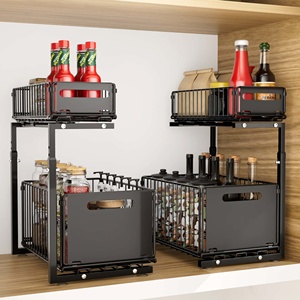
Space-optimizing sliding drawer system engineered for retail displays, enterprise pantry organization, and high-density light-weight auxiliary parts picking.
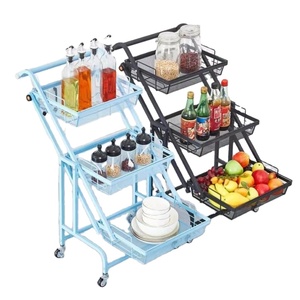
Sanitary-grade SUS stainless rolling cart with smooth casters, utilized widely in food processing cleanrooms, pharmaceutical testing facilities, and line-side replenishment.
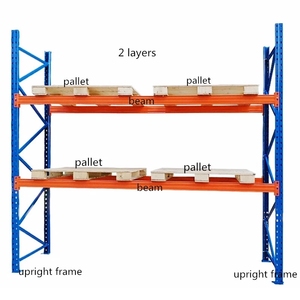
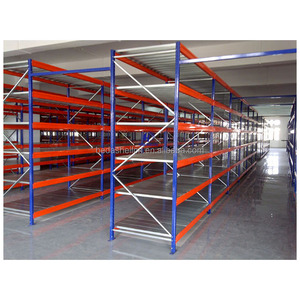
Structural steel beam and upright configuration engineered for roll storage, heavy textile coils, and high-volume sample exhibition with enhanced vertical load capacity.
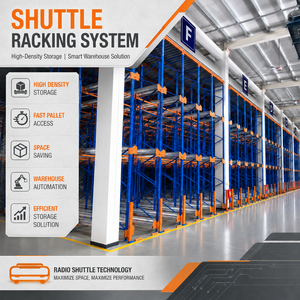
High-density semi-automated deep-lane storage system driven by radio-controlled shuttles. Delivers maximum volumetric density for cold stores and high-volume beverage distribution.
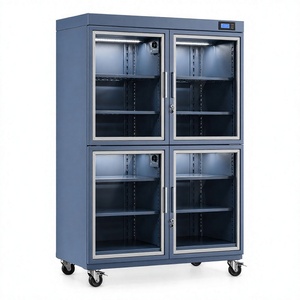
Microprocessor-controlled 4-door cabinet engineered for moisture-sensitive SMT components, IC wafers, and precision optical sensors operating in high-humidity Indonesian climates.
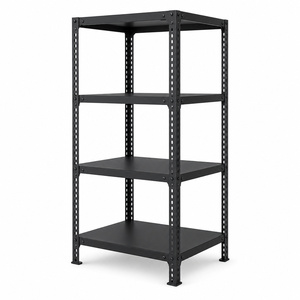
Corrosion-treated cold-rolled steel slotted framing with modular height adjustments, specifically finished to prevent rust in coastal warehouse and showroom conditions.
Rapid-assembly snap-in shelving with rigid beam connections, engineered for commercial fulfillment centers, spare part logistics, and retail distribution centers.
An engineering analysis of modern racking infrastructure across Jakarta’s vital industrial corridors, from Tanjung Priok to the eastern manufacturing spine.
The Special Capital Region of Jakarta and its surrounding industrial conurbation—encompassing Bogor, Depok, Tangerang, Bekasi, and Karawang (Jabodetabekjur)—constitute the undisputed macroeconomic engine of Indonesia. Accounting for over 60% of the country's national containerized cargo flows, this expansive corridor faces unprecedented pressures on warehousing footprint. With prime industrial land prices in hubs like Cikarang, Marunda, and Cibitung experiencing sharp escalation alongside soaring land acquisition costs along the Jakarta-Cikampek Toll Road, industrial operators no longer have the luxury of horizontal storage expansion.
Consequently, modern warehouse architects and supply chain vice presidents are executing aggressive cubic-maximization strategies. Transitioning from traditional block stacking and low-profile selective racks to high-bay, narrow-aisle (VNA), and automated radio shuttle systems is no longer merely an optimization exercise; it is an urgent financial imperative. A warehouse footprint operating at an 8-meter clear height must now achieve 12 to 16 meters of vertical clearance, requiring certified cold-rolled structural steel profiles with finite element load-bearing calculations capable of absorbing high dynamic forces.
Operating in Greater Jakarta introduces severe engineering variables that standard off-the-shelf racking simply cannot survive. First is the harsh marine atmospheric environment originating from the Java Sea. Northern coastal logistics precincts like Marunda, Tanjung Priok, and Kamal Muara suffer from high relative humidity (averaging 75% to 90% year-round) coupled with airborne chlorides. Without specialized chemical passivation, degreasing, and electrostatic powder coating, standard steel uprights suffer rapid galvanic corrosion, jeopardizing structural safety within 24 to 36 months.
Second, and most critically, is Indonesia's complex seismic profile. Positioned on the Pacific Ring of Fire, industrial storage systems erected in Western Java must comply with stringent seismic design criteria under SNI 1726 (Indonesian National Standard for Earthquake Resistance) alongside international benchmarks like FEM 10.2.02 and RMI (Rack Manufacturers Institute) standards. Every racking installation must integrate seismic bracing, heavy-duty footplates, reinforced anchor embedments, and beam connector safety locks engineered to withstand both static pallet loads and horizontal harmonic ground accelerations.
In accordance with international structural logistics codes, beam deflection under maximum design loading (pallet weight + dynamic impact factor) must not exceed L/200, where L equals the clear span between upright frames. For Jakarta seismic zones (Soil Class D/E profiles), our engineering team calculates the spectral acceleration response parameters (Ss and S1), customizing brace angle inclinations, cold-formed upright profiles (Q235B / Q355B premium steel), and heavy base plate anchor diameters to prevent beam detachment and progressive frame collapse during tremor events.
Every logistics cluster in West Java features unique inventory profiles, building constraints, and throughput demands. Here is how our racking systems are engineered for each micro-market.
The industrial belt across MM2100, GIIC Cikarang, and Suryacipta Karawang houses massive assembly plants for tier-1 automotive suppliers, two-wheeler manufacturers, and consumer electronics. These plants require heavy-duty selective racking integrated with dynamic wire mesh decking and drop-in pallet support bars.
For small parts and sub-assemblies, our multi-tier rack-supported mezzanines double or triple pick-face availability above the shop floor, using slotted angle structural profiles and anti-slip steel decking rated for 300 to 1,000 kg/m² loads.
North Jakarta's cold-chain facilities and bonded logistics zones (PLB) process seafood, poultry, dairy, and pharmaceuticals under strict temperature controls (-25°C to +4°C). Because refrigeration power represents the primary operational expense, density is paramount.
Our radio shuttle pallet racking and automated deep-lane storage systems reduce aisle space by up to 60% compared to traditional selective racking. All structural components destined for cold storage undergo hot-dip galvanization or specialized polyurethane powder coating to prevent condensation flaking.
Third-party logistics providers (3PLs) and leading Indonesian e-commerce platforms operating around Halim, Pondok Ungu, and Tangerang handle volatile SKU profiles requiring rapid replenishment and high-throughput order fulfillment.
We deploy high-bay narrow-aisle (VNA) racking systems with guide rails, paired with carton flow gravity racks for high-velocity picking zones. This architecture maximizes SKU accessibility, decreases picker travel time by 45%, and integrates seamlessly with warehouse management systems (WMS).
Select the optimal storage topology based on space utilization ratios, SKU selectivity, forklift aisle clearance, and seismic performance parameters.
| Racking Topology | Space Efficiency | SKU Selectivity | Inventory Rotation | Aisle Width Req. | Jakarta Application Fit |
|---|---|---|---|---|---|
| Selective Pallet Racking | 40% - 50% | 100% Direct Access | FIFO (First-In, First-Out) | 3,000 - 3,800 mm | Multi-SKU 3PLs, Retail DCs (Bekasi / Tangerang) |
| Double Deep Racking | 55% - 65% | 50% Direct Access | FILO (First-In, Last-Out) | 3,000 - 3,400 mm | Medium batch manufacturing & FMCG dry storage |
| Very Narrow Aisle (VNA) | 60% - 75% | 100% Direct Access | FIFO (First-In, First-Out) | 1,600 - 1,900 mm | High-bay urban distribution hubs with high land value |
| Drive-In / Drive-Thru | 65% - 75% | 20% - 30% Access | FILO / FIFO Modes | Forklift Lane Guided | Bulk beverage, seasonal agri-products, raw materials |
| Radio Shuttle System | 80% - 88% | Lane Dependent | FIFO or FILO (Flexible) | Forklift Transfer Aisle | Cold storage freezers (-25°C), high-throughput food |
| Rack-Supported Mezzanine | Up to 200% Floor Gain | Direct Manual Access | Modular Picking Flows | Integrated Catwalks | Auto parts bins, apparel picking, assembly workshops |
How regulatory shifts, e-commerce maturation, and supply chain modernizations are reshaping industrial racking engineering in Greater Jakarta.
Industrial ground lease prices across prime Cikarang and Cibitung zones have risen over 35% in recent years. Warehouse developers are constructing 14- to 18-meter clear height envelopes, requiring high-bay automated racking systems with laser-straight vertical tolerances.
Government mandates for Halal supply chain tracking (BPJPH certification) coupled with rapid online grocery adoption across Jabodetabek are catalyzing investments in multi-temperature cold stores. Systems require segregated racking bays and rust-proof finishes.
To reduce human operating error and lift-truck damage within deep-lane storage, Indonesian enterprises are transitioning from standard drive-in systems to radio-frequency automated pallet runners that travel autonomously inside storage channels.
Following recent geological events in Java, municipal building inspectors and multi-national insurance underwriters now strictly mandate seismic calculation documentation and independent structural stamp approvals for warehouse racking permits.
Founded in 2001, Guangzhou HEDA Shelves Co., Ltd. has established itself as an authoritative global manufacturer of high-precision heavy-duty warehouse storage equipment. With our advanced 30,000 square meter intelligent production complex and over 300 technical engineers and production specialists, we supply turnkey logistics projects across more than 120 nations.
Industrial storage structural failures stem from two root causes: micro-cracking at cold-formed stress bends, and subterranean rust corrosion under the powder coat. Here is our technical prevention process.
Racking components installed in Jakarta, Tangerang, or coastal Bekasi are subjected to relentless relative humidity levels exceeding 80%, compounded by ambient industrial pollution and coastal salinity. To counteract rapid oxidation, HEDA Shelves enforces an uncompromised 10-stage automated pre-treatment and powder-coating regimen. Every structural coil undergoes automatic uncoiling, continuous precision punching, and cold-roll profile forming on multi-station CNC roll-forming lines.
Unlike regional fabricators who wipe steel manually with solvent before painting, HEDA immerses all components in acid pickling baths to strip every mill-scale impurity. This is followed by neutral rinsing, high-density zinc-iron phosphating, and deionized water flushes. The phosphating layer creates a microscopic crystalline barrier that chemically bonds the electrostatic powder coat to the steel substrate, completely preventing atmospheric oxygen and moisture ingress.
Components are then coated using Swiss Gema electrostatic spray guns inside cleanroom powder booths, applying high-performance epoxy-polyester architectural thermoset powder to a controlled film thickness of 60 to 80 microns. The parts proceed into a 180°C to 200°C curing oven for 25 minutes of cross-linking polymerization. The resulting surface delivers pencil hardness ≥ 2H, cross-hatch adhesion meeting Grade 0 (ISO 2409), and 500+ hours of continuous salt-spray resistance (ASTM B117).
For outdoor lumber yards, chemical tank storage, and marine cold stores in Marunda or Muara Baru, HEDA provides optional hot-dip galvanized finishes (HDG) conforming to ASTM A123 / EN ISO 1461. The steel is submerged into molten zinc at 450°C, producing a metallurgical zinc-iron alloy coating exceeding 85 microns in thickness, guaranteeing maintenance-free protection for over 20 years in extreme tropical marine environments.
Clear, factual answers regarding sea transit times to Tanjung Priok, customs clearance documentation, seismic engineering compliance, and installation services.
Whether you are designing a greenfield automated distribution hub in Karawang or retrofitting an existing fulfillment center in Tangerang, our structural engineers are ready to design your optimal high-density storage layout.