Industrial Intralogistics Whitepaper

Roller Pallet Racking Manufacturer & Supplier Serving Kuwait

Engineering Heavy-Duty Dynamic Gravity Flow Systems & High-Density Storage Built for Extreme Thermal Resilience and Industrial Vision 2035 Infrastructure

Direct Factory Catalog

Engineered Pallet Storage Systems Available for Kuwait

Precision cold-rolled structural steel warehousing equipment manufactured to EN 15512 and FEM standards, pre-treated for Gulf ambient conditions.

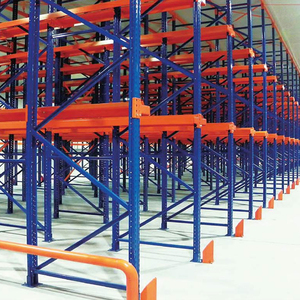
Industrial Drive-In Pallet Racking Durable Metal Storage with Powder Coating High Density

Industrial Drive-In Pallet Racking

Continuous lane pallet racking engineered for cold storage and high-batch homogenous inventory across Kuwait distribution hubs.
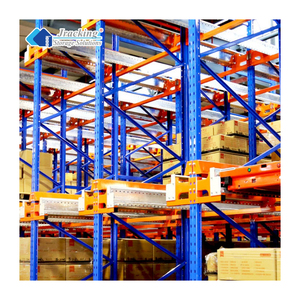
Movable Steel Pallet Racks Automation Warehouse Storage Racking System Automated

Movable Pallet Racks System

Motorized floor-rail mobile bases creating a 95% floor volume utilization index for maximum space conservation in high-rent zones.
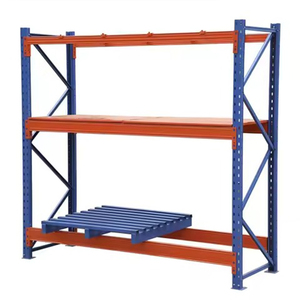
Multi Level Industrial Pallet Racking With Q235 Steel Upright Frame Structural

Multi-Level Industrial Q235 Racking

Certified high-yield Q235B structural upright frameworks built to accommodate heavy vertical dynamic loads up to 5,000 kg per beam level.
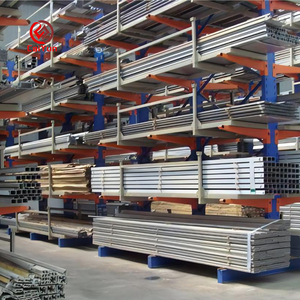
Low-Profile Cantilever Shelves for Low-Ceiling Warehouse Small Parts Storage Specialized

Low-Profile Cantilever Shelves

Obstacle-free horizontal cantilever arm systems designed for long structural extrusions, piping, timber, and building supplies.
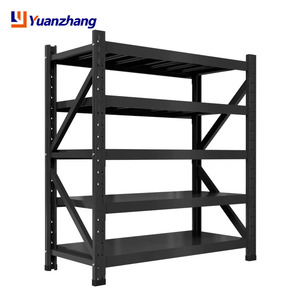
Custom Steel Heavy Duty Shelving 300 Kg Layer Garage Black 4 Tier Warehouse Storage Metal Stacking Rack Unit Heavy Shelving

Heavy Duty Modular Steel Shelving

Interchangeable tiered industrial shelving for spare parts, maintenance distribution, and manual case-picking operations.
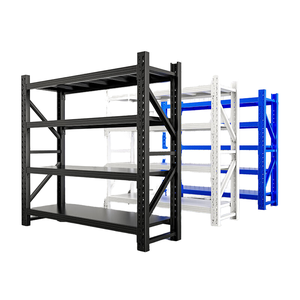
Industrial Heavy Duty 5 Storage Shelves System Stacking Units Adjustable Steel Rack Powder Coated Warehouse Pallet Racking Adjustable

Industrial Adjustable Steel Racks

Precision-punched 50mm/75mm upright pitch configurations allowing flexible vertical beam reconfiguration for dynamic SKU portfolios.
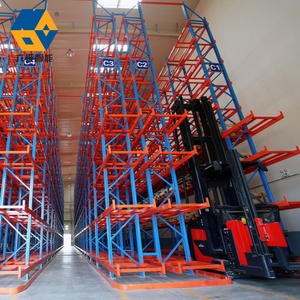
High Duty Powder Coating Steel Warehouse Racks System High Bay Storage Racking System VNA Pallet Racking VNA System

High-Bay VNA Pallet Racking

Very Narrow Aisle architectures reaching up to 15 meters clear height, maximizing vertical airspace for logistics facilities in Shuwaikh.
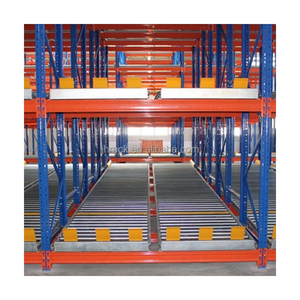
Chinese Racking Suppliers Roller Racking System Pallet Storage Warehouse Gravity Flow Rack in Warehousing Core Focus

Pallet Gravity Flow Roller Racking

First-In-First-Out dynamic roller track systems with centrifugal speed brakes for fast-moving FMCG, cold chain, and chemical fulfillment.

Executive Engineering Summary: Operating high-throughput supply chains in the State of Kuwait demands specialized intralogistics engineering. With summer ambient temperatures exceeding 50°C, airborne desert particulate (PM10 sand and silica), and aggressive real estate costs in core industrial nodes such as Shuwaikh, Al Rai, and Sabhan, standard warehouse storage is economically and operationally insufficient. Roller Pallet Racking (Pallet Flow / Dynamic Gravity Flow) provides an engineered solution combining 100% First-In, First-Out (FIFO) discipline with maximum cubic density, eliminating dedicated interior forklift access aisles while minimizing mechanical failure risks.

1. The Mechanical Physics of Roller Pallet Racking (Gravity Flow)

Roller pallet racking—commonly designated across Gulf logistics hubs as gravity flow racking or pallet live storage—functions on an unpowered inclined wheel or roller track bed positioned within heavy-duty upright frames and load-bearing beams. The system operates entirely by kinetic gravity, making it impervious to internal electrical drive failures and exceptionally energy-efficient for temperature-controlled facilities.

The structural geometry is engineered along a standard gradient of 1.5° to 2.0° (approximately 3% to 3.5% slope) depending on pallet substrate material (solid wood Euro-pallets, GMA pallets, or perimeter-base plastic runners) and gross load weight (typically spanning 500 kg to 1,500 kg per pallet position):

  • Infeed Loading Lane: Pallets are introduced into the lane via conventional counterbalanced or reach trucks. Directional entry guides align the pallet accurately to prevent track flange binding or offset tracking.
  • Centrifugal Speed Controller Rollers: As gravity propels the pallet forward, internal centrifugal brake rollers engage once pallet descent exceeds 0.25 to 0.30 meters per second. This ensures a controlled, constant glide velocity regardless of whether the pallet is loaded to 300 kg or 1,500 kg.
  • Separation & Stop Mechanism: At the discharge face, a heavy-duty mechanical pallet separator holds back accumulating upstream pallets, isolating the front-most pallet from back-pressure. This eliminates operational resistance, allowing the forklift operator to extract the target pallet smoothly and safely without rack damage or tipping hazards.

Strict FIFO Control

Inventory loaded first travels to the picking face first. This makes roller racking the definitive structural choice for perishable foods, date-coded pharmaceuticals, and cold stores operating under Kuwait Ministry of Health mandates.

60%+ Floor Footprint Reduction

By compressing access requirements into single loading and retrieval aisles, roller racking eliminates wasted intermediate gangways, unlocking up to 80% theoretical cubic volume utilization compared to standard selective layouts.

Zero-Energy Automation

Requiring zero batteries, on-board circuitry, or external power distribution inside the racking blocks, gravity flow minimizes maintenance overhead, heat radiation in freezer plants, and electrical explosion risks.

2. Structural Metallurgy and Coating Durability for the Kuwait Climate

Kuwait's hyper-arid environment presents aggressive operational friction factors rarely encountered in European or temperate zones. Racking assets must withstand sustained external ambient peaks of 55°C, high indoor warehouse temperatures during peak summer, and micro-abrasive dust infiltration (saline-laden sand blown from the Arabian Gulf and northern desert corridors). Sourcing low-specification racking leads to rapid powder coating delamination, accelerated surface oxidation, and critical joint shear failures under continuous cyclic loading.

As a seasoned manufacturer, our manufacturing process enforces strict mechanical and metallurgical specifications:

  • High-Tensile Prime Steel Selection: All primary structural members (uprights, cross-beams, diagonal lacings, and roller bed brackets) are rolled strictly from certified Q235B and Q355B structural steel (equivalent to ASTM A1011 and European S355JR). The minimum yield strength exceeds 355 MPa, providing documented safety factors exceeding 1.65 in compliance with RMI and EN 15512 specifications.
  • 10-Stage Pickling and Phosphating Pre-Treatment: Steel coils and roll-formed sections undergo intensive immersion degreasing, multi-stage acid pickling, and chemical iron-phosphating before surface coating. This creates a dense microscopic conversion layer that seals the substrate against corrosion under high humidity conditions found in coastal facilities in Shuaiba and Shuwaikh.
  • Thermoset Electrostatic Powder Coating: We apply high-performance epoxy-polyester architectural-grade powders cured at 180°C to 200°C, producing an average film thickness of 70 to 90 microns. This finish exhibits supreme hardness (>2H pencil test), superior resistance to cyclic thermal expansion, and resilient anti-flaking performance when subjected to accidental forklift bumper abrasion.
  • Galvanized Components for Condensation Zones: For sub-zero cold stores (-25°C to -30°C) and semi-open loading docks, our roller tracks, side frames, and floor-mounted footplates can be specified in hot-dip continuous pre-galvanized sheet (standard Z275 coating) to completely eliminate rust bleed and condensation fatigue.
30,000 m²
State-of-the-Art Factory Area
30,000 t
Monthly Manufacturing Capacity
25+ Yrs
Global Racking Engineering History
10,000+ +
Logistics Installations Worldwide

3. Localized Application Scenarios Across Kuwait Industrial Hubs

Kuwait's supply chain topology is highly concentrated, with distinct warehousing districts governed by zoning limitations, port proximities, and municipal development initiatives. Implementing roller pallet racking directly resolves specific logistical bottlenecks across the country's prominent logistics epicenters:
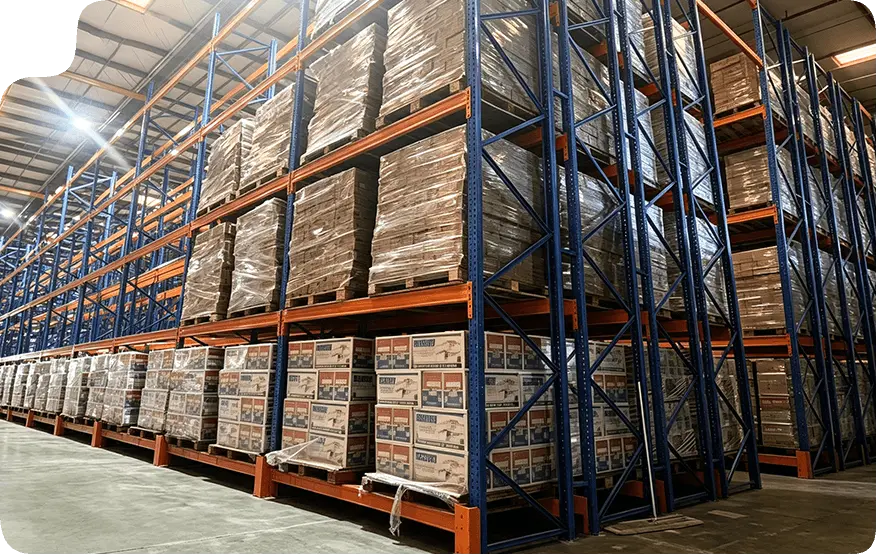
Sabhan Food Industrial Area Pallet Flow Racking
Cold Chain & FMCG

Sabhan Food Industries

Sabhan hosts Kuwait's primary dairy, meat processing, bakery, and beverage bottling plants. Roller pallet racking guarantees non-negotiable FIFO compliance for perishable goods, preventing expired batch waste, and maximizing storage density inside high-energy blast chillers and holding freezers.
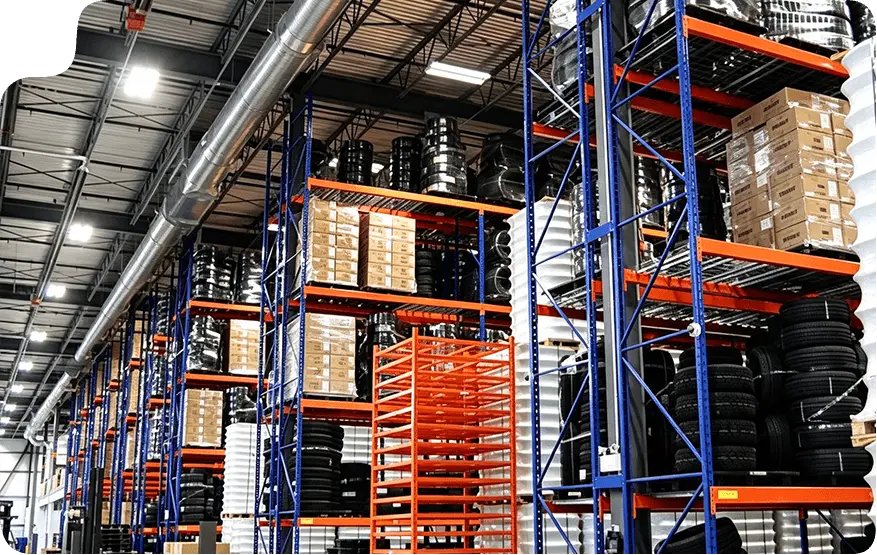
Shuwaikh and Al Rai Industrial Commercial Warehousing
Urban High Density

Shuwaikh & Al Rai Logistics

Warehouse space in Shuwaikh and Al Rai commands some of the highest square-meter rental rates in the GCC. Gravity flow racking eliminates 50% of the aisles required by selective racks, enabling distributors of consumer goods, hardware, and automotive parts to double pallet capacity without acquiring extra floor area.
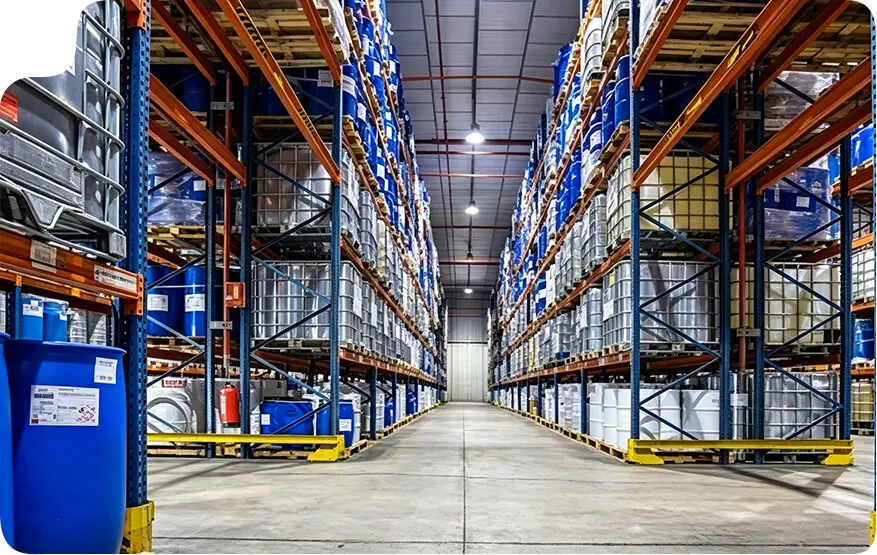
Mina Abdulla and Shuaiba Industrial Port Zones
Heavy Petrochemical & Port

Shuaiba & Mina Abdulla Zones

Serving Kuwait's oil, gas, chemical, and building materials sectors, these sites store heavy, uniform drum pallets and raw chemical containers. Our heavy-duty steel roller tracks (rated up to 1,500 kg/pallet) feature integral impact guides and reinforced column guards to handle punishing 24/7 terminal operations.

4. Strategic Trends: Kuwait National Vision 2035 & Logistics Modernization

Under the strategic guidelines of Kuwait National Development Plan (New Kuwait Vision 2035), the government is investing heavily in transforming the nation into a regional trade, commercial, and financial hub. Landmark initiatives—including the expansion of Mubarak Al-Kabeer Port on Boubyan Island, modernization of Shuwaikh Port facilities, and development of logistics distriparks along the Northern Gateway—are reshaping the intralogistics sector.

Key technological and market shifts driving the surge in roller pallet racking adoption include:

  • Food Security Reserves: In response to regional supply chain vulnerabilities, the Kuwait Public Authority for Food and Nutrition and major local retail conglomerates have mandated significant expansions in emergency strategic food reserves. High-density dynamic flow racks provide the optimal blend of bulk density and batch traceability for grain, canned goods, and dairy storage.
  • Surging E-Commerce & Quick-Commerce Fulfillment: Hyper-local delivery hubs in Kuwait City, Farwaniya, and Hawalli require accelerated outbound order picking. Carton and pallet flow racks enable replenishing inventory from the rear while pickers pick from the front, totally eliminating traffic collisions between forklifts and manual picking personnel.
  • Skyrocketing Energy Costs in Cold Storage: Refrigerating cubic airspace in the Kuwait summer requires immense kilowatt expenditures. Reducing empty aisle space through high-density gravity flow translates to measurable 30% to 45% reductions in thermal refrigeration volume per pallet stored.

5. Structural Comparison: Roller Flow Racking vs. Alternative Storage Systems

Selecting the right storage medium requires weighing trade-offs between capital expenditure (CAPEX), cubic density, accessibility, and maintenance overhead. The following matrix illustrates the performance differences between roller racking and traditional alternatives under typical Kuwait warehouse conditions:

Performance Criteria Roller Pallet Racking (Gravity Flow) Radio Shuttle Racking Drive-In Pallet Racking Standard Selective Racking
Inventory Rotation Strict FIFO (First-In, First-Out) Flexible FIFO or LIFO Strict LIFO (Last-In, First-Out) 100% Random Access
Space Utilization Up to 80% Cubic Space Up to 85% Cubic Space Up to 70% Cubic Space 35% - 40% Floor Footprint
Throughput Velocity High (Separate Infeed / Outfeed) High (Automated Cart) Slow (Forklift Enters Lanes) Medium (High Travel Distance)
Forklift Impact Risk Extremely Low (Outside Racks) Very Low (Outside Racks) High (Inside Lane Maneuvers) Moderate
Power / Battery Dependency Zero (Pure Kinetic Gravity) High (Lithium/Shuttle Carts) Zero (Manual Forklift) Zero
Operating Temp Range -35°C to +60°C Extreme Thermal Range Limited by Battery Lifespan in Cold -35°C to +60°C -35°C to +60°C
Suitability for Kuwait Ideal: High Heat & Perishables Excellent for Large Same-SKU Low-Throughput Bulk Stacking General Low-Density Warehousing

6. Comprehensive 10-Step Quality Assurance Manufacturing Process

As an international manufacturing partner supplying high-stakes projects across the Middle East and Southeast Asia, Guangzhou Heda Shelves Co., Ltd. operates a vertically integrated 30,000 square meter production facility. Every structural component—from roll-formed upright columns to precision bearing roller tracks—undergoes standardized quality testing certified by CE (Certificate No. 2435-CPR-8605159) and ISO 9001:2015 (Certificate No. 18624Q00169R0M).

01

Steel Coil Inspec.

Mill certificate validation & ultrasonic thickness testing on raw Q235B/Q355B coils.

02

Laser Cutting

CNC fiber laser slitting for exact dimensional tolerance and clean edge finishes.

03

Auto Punching

Multi-station mechanical presses punch teardrop/diamond holes at 50/75mm intervals.

04

Cold Roll-Form

Continuous 24-station rolling mills form omega-profile uprights without stress points.

05

Profile Forming

Step beams and box beams manufactured with interlocked cold-formed double lips.

06

Robotic Weld

Automated multi-axis robotic CO2 shielded arc welding ensures deep joint penetration.

07

Shot Blasting

Surface descaling and mechanical polishing to Sa 2.5 standard for coating adhesion.

08

Pre-Treatment

Automated pickling, chemical degreasing, and rust-inhibiting zinc phosphating baths.

09

Powder Coat

GEMA electrostatic powder application followed by precision curing at 200°C.

10

Load QC & Pack

Static load batch testing, bundling with moisture-resistant wrap for container freight.

7. Localized Engineering Guidelines for Kuwait Warehouse Developments

Deploying storage systems in the GCC requires adherence to local municipal regulations and strict physical constraints. When designing a roller pallet racking project for Kuwait, our structural engineering team focuses on five critical engineering factors:

  1. Kuwait Fire Department (KFD) Fire Suppression Approvals: High-density gravity flow creates compact blocks of combustible material. Designs must integrate vertical and horizontal flue spaces (typically 150mm clear gap) allowing NFPA 13-compliant in-rack sprinkler heads to penetrate deep lanes. Our CAD team coordinates directly with your fire safety consultants.
  2. Floor Slab Concrete Integrity and Chemical Anchoring: Ambient heat during building construction can cause slab micro-cracking. We calculate baseplate anchor pull-out loads using Hilti or Fischer chemical heavy-duty mechanical anchors, guaranteeing frame stability under full dynamic capacity even in high seismic acceleration categories.
  3. Pallet Substrate Standardization: Gravity rollers require uniform friction contacts. Pallets with broken bottom boards, missing nail heads, or non-rigid plastic deflection can cause mid-lane stalling. We custom-engineer roller spacing and triple-track roller lines based specifically on your exact pallet profile.
  4. Sand Ingress Mitigation on Roller Bearings: All our gravity flow roller beds use shielded, dust-sealed high-precision ball bearings. This prevents the abrasive Kuwait silica dust from infiltrating the race, ensuring maintenance-free spinning over decades of heavy duty use.
  5. Thermal Expansion Joint Accommodation: Large-span warehouses in regions like Mina Abdulla experience significant expansion and contraction cycles. Long continuous racking runs are engineered with structural expansion gaps to prevent joint buckling and fastener shearing.
Procurement Clarity

Frequently Asked Questions by Kuwait Warehouse Managers

Key technical, logistical, and compliance questions addressed by our engineering and export team.

How do you ship and handle customs clearance to Kuwait ports (Shuwaikh & Shuaiba)?
We regularly supply warehouse racking projects into the State of Kuwait on both FOB Guangzhou/Nansha and CIF Shuwaikh / Shuaiba Port commercial terms. Standard ocean container transit from South China to Kuwait typically averages 18 to 24 days. Every export container is bundled with detailed pallet manifests, numbered structural components, certificate of origin, and certified packing lists authenticated for seamless Kuwait Customs and KUCAS (Kuwait Conformity Assurance Scheme) clearance.
Can your roller racking handle sub-zero cold storage conditions down to -25°C in Kuwait?
Yes. Our gravity flow racking systems are explicitly engineered for refrigerated and freezer warehouses. For sub-zero operations, we utilize cold-resistant steel grades, low-temperature synthetic lubricants inside the roller bearings, and optional hot-dip galvanized finishes on all roller tracks and structural baseplates. This completely eliminates freezing jams, condensation corrosion, and paint delamination.
What technical data is required to design a customized warehouse layout and quotation?
To provide an engineered proposal, our design office requires: (1) Warehouse architectural drawings (AutoCAD DWG or PDF) showing clear ceiling height, column grids, and dock doors; (2) Pallet specifications (width, depth, total loaded height, and gross weight); (3) Pallet bottom design (Euro standard, perimeter base, or skid); (4) Type and mast reach height of operating forklifts; and (5) Ambient operating temperature profile. Our engineers will return a complimentary 2D CAD layout and 3D realistic rendering within 48 hours.
How is on-site installation managed for clients inside Kuwait?
We provide a flexible two-tier installation approach: (1) Comprehensive engineering documentation including stamped 3D assembly drawings, piece-marked bolt maps, and HD step-by-step video guides allowing your local warehouse installation contractor to erect the system rapidly; or (2) Dispatching our experienced project engineers to Kuwait to provide on-site supervision, laser alignment inspection, dynamic load testing, and formal hand-over certification.
What ensures pallets do not gain dangerous speeds down a long gravity flow lane?
Our roller tracks feature precision-calibrated centrifugal brake rollers placed at calculated intervals along the lane (typically every 1 to 2 pallet depths). When a pallet glides over a brake roller, internal centrifugal flyweights engage against an internal drum brake, absorbing kinetic energy and capping descent speed at a safe 0.25 to 0.3 meters per second regardless of lane depth (even in lanes 15+ pallets deep).
What compliance certificates do your racking systems carry?
Our manufacturing infrastructure holds verified international credentials: CE Certification No. 2435-CPR-8605159, ISO 9001:2015 Quality Management No. 18624Q00169R0M, and full RoHS compliance. Furthermore, our load calculations follow European FEM 10.2.02 and EN 15512 specifications, ensuring complete approval by third-party testing inspectors and Kuwait municipal engineering auditors.

Maximize Your Kuwait Warehouse Capacity Today

Connect directly with our senior intralogistics structural engineers. We will analyze your warehouse floor plan, calculate dynamic load capacities, and deliver an optimized 2D/3D roller pallet racking proposal tailored to Kuwait's industrial environment.

Inquire Now