High-Performance Storage Equipment Engineered for Industrial Demands
Explore structural configurations certified under rigorous ISO 9001 and CE benchmarks, calibrated to withstand severe loading environments across Texas manufacturing and distribution centers.
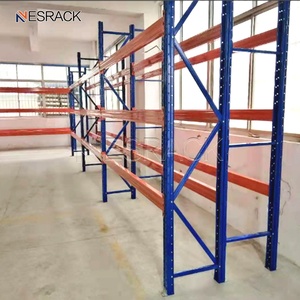
Intelligent Warehouse Storage Pallet Racking Beams & Uprights
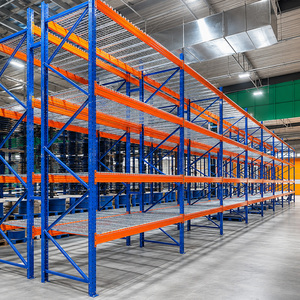
High Density Pallet Racking for Automotive Distribution Centers
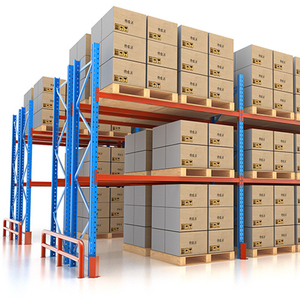
Heavy Duty Steel Selective Pallet Racks (CE Certified)
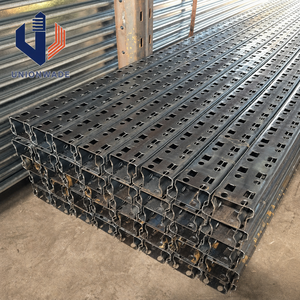
Medium Duty Industrial Boltless Steel Shelving System
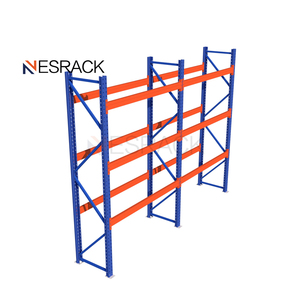
Heavy Duty Multirack Pallet & Shelving System (2000kg)
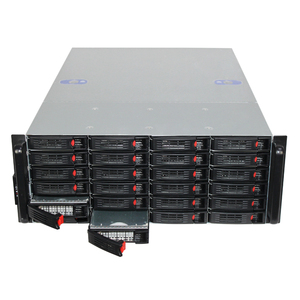
4U 24-Bay Hot Swap Rackmount Storage Enclosure Chassis
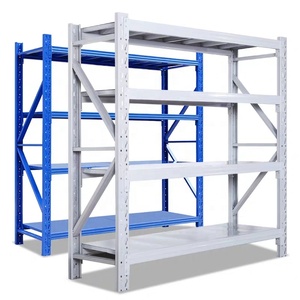
Adjustable Boltless Industrial Light & Medium Shelf Rack
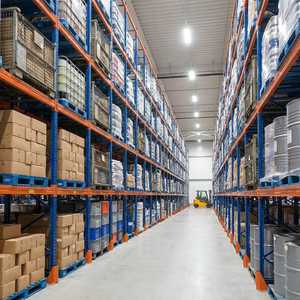
Heavy Duty Adjustable Selective Pallet Racking for Factories
Technical White Paper: Industrial Shelving & Racking Dynamics in Greater Houston
As the premier energy capital of the world and home to the nation's busiest seaport in foreign waterborne tonnage, Greater Houston represents one of the most operationally demanding logistics environments in North America. Warehouses spanning Harris County, Fort Bend County, and Chambers County cannot rely on standardized, off-the-shelf shelving solutions. From petrochemical storage along the Houston Ship Channel to heavy machinery assembly along the US-290 and I-10 corridors, industrial storage systems must balance intense structural point loads, aggressive climatic factors, and strict regulatory compliance.
Sourcing an industrial shelving system supplier serving Houston requires deep engineering validation. Systems must meet American National Standards Institute (ANSI) MH16.1 specifications (governed by the Rack Manufacturers Institute - RMI), while aligning with the International Building Code (IBC 2021/2024), local City of Houston amendments, and the stringent fire flue clearances dictated by NFPA 13. Below, our engineering team breaks down the structural applications dominating Houston's industrial footprint.
1. Houston Ship Channel & Downstream Petrochemical Hubs (Pasadena, Deer Park, Baytown)
The concentration of refineries, specialty chemical manufacturers, and synthetic polymer plants surrounding the Houston Ship Channel requires racking engineered for extreme load factors and hazardous material containment. Drum storage and intermediate bulk container (IBC) holding areas present high fluid dynamic forces during seismic or accidental impact events.
- Structural Roll-Formed Hybrid Frames: Cold-rolled upright columns featuring reinforced rear flange bracing to resist forklift outrigger collisions during heavy barrel handling.
- Chemical & Environmental Resilience: Facilities located within maritime air zones encounter high relative humidity and airborne salinity. Racking finishes must undergo multi-stage pre-treatment, including acid pickling, phosphating, and thermo-cured epoxy-polyester powder coats rated for prolonged salt-fog resistance.
- Spill Containment Decking: Integration of galvanized wire mesh decks and structural sump pallets under beam elevations to comply with Harris County hazardous liquid containment ordinances.
2. The Energy Corridor & Heavy Oilfield Equipment Fabricators (NW Houston, I-10 West, Hwy 290)
Suppliers serving oilfield services, subsea valve manufacturing, and downhole drilling tools deal with atypical load profiles: non-palletized, long-span, exceptionally dense steel billets, flanges, and directional drill strings. Standard pallet racks deform under these concentrated linear point loads.
- Heavy-Duty Cantilever Racking: Featuring solid structural I-beam columns with bolted, adjustable arm configurations supporting upwards of 3,000 kg (6,600 lbs) per arm level, preventing deflection under prolonged static bending moments.
- Structural Steel Mezzanines: High-clearance multi-tier mezzanine decks designed to withstand 150 to 250 lbs/sq.ft. live loads, allowing oilfield machine shops to segregate CNC machining on the ground floor while staging precision QA testing equipment above.
3. Port Houston Intermodal Terminals & E-Commerce Fulfillment (Bayport, Barbours Cut, Grand Parkway 99)
Driven by container throughput spikes at Barbours Cut and Bayport terminals, distribution centers along the Grand Parkway and Beltway 8 require extreme SKU selectivity, multi-directional picking paths, and vertical cubic volume utilization upwards of 36 to 40 feet clear heights.
- Very Narrow Aisle (VNA) and Selective Pallet Systems: Maximizing floor space utilization up to 85% by reducing operating aisles down to 5.5–6.0 feet, paired with wire-guided turret trucks or articulated forklifts.
- Multi-Tier Rack-Supported Pick Modules: Combining heavy structural uprights with integrated catwalk systems and carton flow lanes, allowing hundreds of manual pickers to process thousands of distinct e-commerce SKUs simultaneously across multiple levels without interfering with bulk pallet replenishment below.
Macro Trends Shaping Industrial Storage Across Houston, TX
Strategic logistics shifts across the Texas Gulf Coast demand scalable warehouse architectures that mitigate rising real estate costs and harsh subtropical weather patterns.
Nearshoring & Port Houston Container Resurgence
As supply chains pivot from West Coast ports toward the Gulf Coast, Port Houston has sustained historic TEU container volumes. Logistics operators are converting older 24-foot clear warehouses into high-density narrow-aisle setups, replacing outdated timber decks with structural steel pallet racks capable of accommodating diverse imported goods.
High-Bay Automation & Semi-Automated Shuttles
With industrial land rates surging across inner loops (610, Beltway 8), warehouse operators are building upwards rather than outwards. Radio shuttle racking and push-back systems are rapidly replacing conventional floor stacking, enabling deep-lane storage that cuts forklift operating travel times and reduces structural rack damage by 40%.
Severe Storm Resilience & Micro-Climates
Houston's subtropical environment—characterized by relentless summer heat, extreme relative humidity (frequently exceeding 80%), and recurring hurricane events—demands superior anti-corrosion surface treatments. Buyers now mandate certified industrial powder coatings or hot-dip galvanized steel to safeguard structural integrity against premature oxidation.
Structural Engineering Comparison: Houston Storage Systems
Selecting the optimal industrial storage framework requires calculating structural deflection limits, access cycle requirements, and capital expenditure per pallet position. The matrix below contrasts the core systems engineered for Houston facilities:
| Storage System Type | Typical Capacity / Level | Selectivity | Floor Space Utilization | Ideal Houston Application |
|---|---|---|---|---|
| Selective Pallet Racking | 1,500 – 4,000 kg (3,300 – 8,800 lbs) | 100% (Direct Access) | 40% – 50% | General 3PL fulfillment, FMCG distribution, retail distribution centers along I-45. |
| Heavy Cantilever Racks | 1,000 – 3,500 kg per Arm | 100% (Linear Open) | 65% – 75% | Oilfield tubulars, drill collars, PVC pipes, lumber, and structural steel profiles. |
| Drive-In / Drive-Thru | 1,000 – 2,000 kg per Pallet | Low (LIFO / FIFO) | 75% – 85% | Cold storage, single-SKU food processing, bulk resin storage in petrochemical plants. |
| Industrial Boltless Shelving | 200 – 800 kg (440 – 1,760 lbs) | 100% (Manual Pick) | 55% – 65% | Automotive aftermarket parts, industrial tool rooms, pharmaceutical staging. |
| Rack-Supported Mezzanines | 300 – 1,200 kg/m² Uniform Load | Configurable | 150% – 200% (Multiplied) | E-commerce fulfillment centers needing doubled floor space without footprint expansion. |
Why Enterprise Procurement Managers Partner With Us
Operating a 30,000 m² advanced fabrication complex with over 300 technical specialists, we combine Tier-1 manufacturing scale with customized engineering direct to the Port of Houston.
25+ Years Manufacturing Heritage
Established in 2001, our engineering facilities have delivered over 10,000 completed warehouse racking systems across 120 countries, satisfying stringent global safety building codes.
30,000 Tons Monthly Capacity
Equipped with continuous automated roll-forming lines, computerized multi-station punching, and robotic beam welding cells capable of executing enterprise-scale logistics rollouts on tight timelines.
ISO 9001 & CE Certified Quality
Holding verified CE Certification (No. 2435-CPR-8605159) and ISO 9001:2015 Quality Management standards. Every heat of raw steel coil undergoes tensile, yield, and elongation testing prior to forming.
Free 3D Layout & PE Calculations
Our dedicated structural engineering team provides complete AutoCAD warehouse layouts, 3D conceptual modeling, and beam deflection calculations customized to your specific forklift reach and building height.
10 Controlled Manufacturing Steps: From Certified Steel Coil to Container Dispatch
High-load warehouse racking cannot tolerate dimensional variances or weak weld seams. Our manufacturing methodology adheres to a rigid, 10-phase production process that guarantees consistent tolerances and superior structural performance across every upright, beam, and connector pin dispatched to Texas:
Raw Materials to Punching
We source certified high-grade Q235B and Q355B cold-rolled steel coils. Slitting lines cut widths to sub-millimeter precision, followed by automated multi-station CNC presses that punch standardized column hole patterns (including teardrop and diamond geometries) at exact intervals without thermal metal fatigue.
Continuous Forming & Welding
Multi-roller cold roll-forming machines gradually bend the steel into complex upright column profiles with multiple load-bearing ribs. Beams are cold-formed into heavy box-beam sections and seam-joined using high-penetration robotic CO₂ shielded welding systems for flawless structural joins.
Chemical Pre-Treatment to Dispatch
Components undergo comprehensive chemical pickling and phosphating baths to remove scale and ensure rust-free surface bonding. Electrostatic powder coating is applied uniformly, then cured in 200°C ovens. Finally, pieces are bundled with custom corner protectors to maximize container stowage.
Ready to Maximize Your Houston Warehouse Storage Capacity?
Send our senior engineering team your warehouse architectural floor plan, ceiling clear heights, and pallet parameters. We will engineer a custom CAD layout and complete structural load analysis within 24 hours.
Contact UsFrequently Asked Questions by Industrial Storage Buyers in Houston
Clear, direct answers regarding city permitting, seismic design requirements, high-pile fire codes, and direct ocean freight deliveries into Port Houston terminals.
Do warehouse storage racks require permits in Houston and Harris County?
Yes. Within the City of Houston jurisdiction and Harris County, industrial storage racks exceeding 8 feet in height are classified as commercial equipment structures under the International Building Code (IBC). They require plan review and permitting through the Houston Permitting Center. For installations over 12 feet storing combustible inventory (or plastic packaging), "High-Piled Combustible Storage" permits are required, necessitating verified structural anchor calculations and certified egress planning.
How do NFPA 13 fire sprinkler codes impact our shelving and beam spacing?
NFPA 13 mandates clear vertical "flue spaces" between pallet racks to allow sprinkler water penetration and exhaust heat venting during a fire event. For solid shelving or deep racking arrays, continuous 6-inch transverse and longitudinal flue spaces are typically enforced. Wire mesh decking is standardly required in place of solid wood planks across Houston distribution facilities to ensure sprinkler water cascades effectively through all rack tiers.
What concrete slab thickness and PSI strength are required for heavy pallet racks?
Most standard industrial installations require a reinforced concrete slab of at least 6 to 8 inches thickness, with a compressive strength of 3,000 to 4,000 PSI, to handle heavy baseplate anchor embedment without shear failure. Because expansive clay soils are prevalent throughout Southeast Texas, floor flatness (FF/FL ratings) and slab settlement parameters should be evaluated prior to setting heavy-duty or VNA high-bay systems.
How does your powder coating endure Houston's coastal and humid environment?
Standard industrial coatings often blister and peel under Houston's humid subtropical climate and marine atmospheric salinity. We utilize a comprehensive multi-stage surface preparation line consisting of acid pickling, neutralizing baths, and chemical iron phosphating prior to applying electrostatic thermoset powder coatings. This creates a chemically bonded barrier layer offering superior adhesion, impact resistance, and corrosion inhibition.
What are the logistics lead times and ocean shipping routes to Houston?
We routinely dispatch full container loads (20GP, 40GP, 40HQ) directly to the Port of Houston terminals (Barbours Cut and Bayport Container Terminals) via direct Gulf Coast ocean carrier calls. Components are bundled, palletized, and precision-stowed with edge protectors to prevent container transit abrasions. Door-to-door or port-to-port incoterms (FOB, CIF, DDP) are supported with complete customs documentation packages provided.
Can your engineering team customize racking dimensions to fit unique warehouse columns?
Absolutely. Over 60% of our manufactured projects involve custom engineering around existing facility obstructions such as building columns, overhead HVAC ducting, in-plant offices, and dock door swing clear zones. By supplying our CAD engineers with your architectural building survey, we produce tailored bay widths, offset frame depths, and reinforced bridge spans that maximize usable square footage.
Request an Engineered Layout & Factory-Direct Quotation
Speak directly with our technical engineering consultants. We provide complete CAD design proposals, structural component specifications, and transparent logistics schedules tailored for your Houston industrial operation.
Contact Us