Engineered High Bay Pallet Racking Systems
Designed in compliance with RMI MH16.1 specifications and California Title 24 seismic codes. Maximize vertical clear heights from 32 to over 100 feet across industrial properties in San Francisco, South San Francisco, and the East Bay.
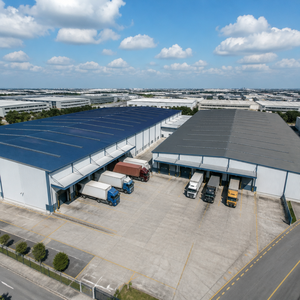
Large Scale Steel Warehouse Building High Bay Pallet Racking Storage Steel Frame Structure Design
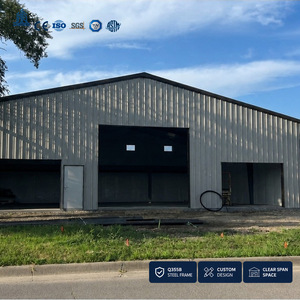
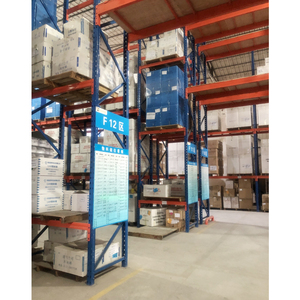
Custom Height Layer Beam Pallet Racking Rust Proof Surface Treatment Heavy Duty Warehouse Cargo Stacking Rack
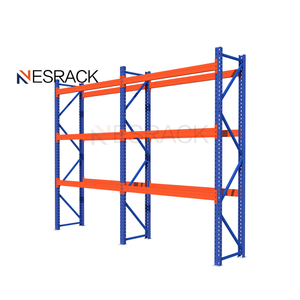
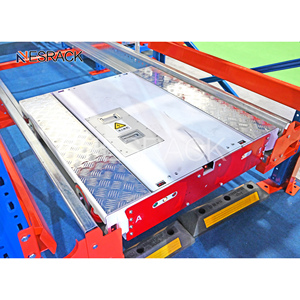
High Quality Customized Warehouse Storage Pallet Shuttle Rack Heavy Duty Racks Manufacturer Racking System Made In China
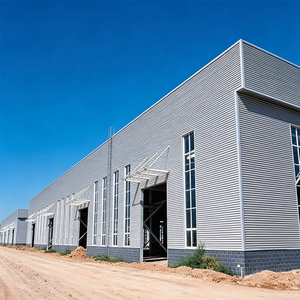
High Bay Racking Warehouse for Delivery Sorting Center and Inventory Storage Depot Steel Structure Factory
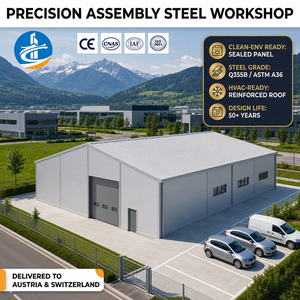
High-Bay Racking Steel Structure Warehouse for High Density Automated Storage and Logistics
Heavy Duty High Bay Warehouse Racking System Industrial Pallet Storage Shelves for Large Distribution Warehouses
Solving the San Francisco Bay Area Industrial Real Estate Bottleneck
The industrial and logistics landscape of the San Francisco Bay Area is marked by an acute geographic and economic tension: an exceptionally high demand for rapid consumer delivery, biotech staging, and clean-tech supply chains operating within one of the most supply-constrained, expensive commercial real estate markets in North America. With industrial warehouse asking rents consistently hovering between $1.65 and $2.85 per square foot (triple net / NNN) across primary submarkets including Brisbane, South San Francisco, Hayward, and Fremont, warehouse operators and supply chain directors can no longer justify single-story, low-density footprint strategies.
Horizontal warehouse expansion in the Bay Area is geographically hemmed in by the Pacific Ocean, the San Francisco Bay, and strict municipal zoning ordinances limiting new industrial entitlements. Consequently, leading logistics operations are pivoting exclusively toward High Bay Pallet Racking Systems. By engineering vertical storage envelopes that extend upward from 32 feet to beyond 80 or 100 feet in automated crane facilities, enterprise operators convert expensive horizontal square footage into high-yield cubic volumetric storage.
Engineering Economic Maxim: In submarkets like Alameda County and San Mateo County, shifting an existing 50,000 sq. ft. logistics footprint from standard 20-foot selective racking to a 45-foot High Bay VNA (Very Narrow Aisle) or AS/RS system increases overall pallet capacity by 140% to 210%—neutralizing astronomical land lease rates without incurring capital penalties associated with industrial relocation.
As a specialized high bay racking manufacturer and structural systems supplier with over 25 years of global manufacturing prowess, HEDA Shelves delivers direct-from-factory, custom-engineered high bay solutions designed specifically to withstand the unique architectural, geotechnical, and operational rigors of the Northern California industrial market.
San Francisco Bay Area Industrial Submarket Applications
Different corridors of the San Francisco Bay Area present distinct supply chain demands. Our high bay racking systems are customized to the operational workflows, SKU velocities, and thermal environments native to each local hub.
Biopharma & Cold Chain High Bay
South San Francisco represents the epicenter of biotechnology and pharmaceutical research. Cold storage, cGMP validation, and raw material staging demand ultra-dense, condensation-resistant racking within high-operating-cost refrigerated and freezer environments (-20°C to 4°C).
- Automated Radio Shuttle integration in blast freezers
- Anti-corrosive galvanized or thermo-powder coated steel
- Strict FIFO tracking for batch-sensitive clinical inventory
Omni-Channel & E-Commerce Sorting
Positioned along the I-880 and I-580 corridors, East Bay distribution centers service same-day delivery mandates for San Francisco, Oakland, and Silicon Valley. Operators deploy 40ft+ VNA and high-throughput pallet-flow racking adjacent to Port of Oakland freight terminals.
- Very Narrow Aisle (VNA) with wire or optical guide systems
- Structural rack-supported multi-tier order picking towers
- Reinforced upright post protectors against rapid forklift cycles
Advanced Tech & EV Component Staging
Fremont and Milpitas host hardware manufacturing, clean tech, and electric vehicle supply networks. Facilities require high bay heavy-duty pallet stacking capable of handling extreme point loads—such as EV battery cells, robotics equipment, and silicon wafers.
- Extra-heavy box-welded step beams rated up to 9,000 lbs/tier
- Precision deflection tolerances for AGV and AMR interfaces
- Integrated ESD (Electrostatic Discharge) grounding features
Wine, Beverage & Heavy Retail Staging
Serving as the gateway to Napa and Sonoma wine production and large-format dry consumer goods, North Bay distribution depots rely on double-deep and drive-in high bay structures to buffer seasonal surges of high-density bottled goods and packaging materials.
- High-density pallet live-storage and push-back systems
- Reinforced horizontal cross-bracing for top-heavy loads
- High clearance baseplates engineered for older regional slabs
Comparative Analysis of High Bay Configurations
Selecting the ideal high bay architecture requires balancing floor space utilization, SKU selectivity, capital investment, and dynamic seismic performance.
| Storage Architecture | Operable Clear Height | Floor Space Utilization | SKU Access / Selectivity | Handling Equipment Required | CA Seismic Design Rigor |
|---|---|---|---|---|---|
| Standard Selective Racking | 16 - 28 ft | 35% - 40% (Baseline) | 100% Immediate Direct Access | Standard Counterbalance / Reach Truck | Standard Base Anchors |
| Very Narrow Aisle (VNA) High Bay | 32 - 55 ft | 60% - 70% (+80% Gain) | 100% Direct Selectivity | Turret Trucks / Articulating Forklifts | Engineered Top-Tie Struts |
| Radio Shuttle Automated Deep Lane | 30 - 65 ft | 75% - 85% (+120% Gain) | Batch / Lane Dependent (LIFO/FIFO) | Standard Reach Truck + Shuttle Carts | Heavy Longitudinal Bracing |
| Double-Deep High Bay | 28 - 42 ft | 50% - 60% (+50% Gain) | 50% Immediate (Deep Reach) | Deep-Reach Pantograph Forklifts | Reinforced Upright Columns |
| Fully Automated AS/RS Crane High Bay | 45 - 100+ ft | 85% - 92% (+180% Gain) | 100% Automated Micro-Managed | Automated Stacker Cranes / Hoists | Rigid Base-Isolation & Dual Truss |
California Title 24, CBC 2022 & RMI Seismic Engineering Standards
Designing industrial high bay racking for the San Francisco Bay Area is fundamentally an exercise in advanced structural dynamics. San Francisco, Oakland, and the surrounding peninsula are crisscrossed by active strike-slip seismic faults, notably the San Andreas, Hayward, and Calaveras faults. Under the California Building Code (CBC 2022) and the American Society of Civil Engineers (ASCE 7-16 / ASCE 7-22) standard, the Bay Area falls almost entirely within Seismic Design Category (SDC) D, E, or F, with mapped Spectral Acceleration parameters ($S_s$ and $S_1$) frequently exceeding $1.5g$.
Critical Compliance Mandate: In California, warehouse racking exceeding 5 feet 9 inches in height constitutes a regulated building structure. Any high bay system installed in the City and County of San Francisco, Alameda County, or San Mateo County must have its calculation package analyzed by a licensed California Professional Engineer (PE) and receive local building and fire department plan check approvals prior to erection.
Essential Structural Features for SF Bay Seismic High Bay Racks
HEDA Shelves fabricates its high bay structural members using prime high-tensile cold-rolled steel (Q235B and Q355B structural steel, with minimum yield strengths verified by mill test certifications equivalent to ASTM A36 and ASTM A572 Grade 50). To counteract the intense base shear, overturning moments, and seismic drift associated with high-acceleration ground shaking, our structural engineering incorporates:
Seismic Heavy Baseplates & Anchor Arrays
Standard 4" x 4" baseplates are strictly inadequate in Northern California. Our high bay uprights feature laser-cut, oversized seismic baseplates (ranging up to 8" x 10" x 3/4" thick) paired with multi-hole patterns to accommodate Hilti or Simpson Strong-Tie chemical/epoxy anchors or heavy-duty screw anchors that distribute cyclic seismic shear forces deep into the concrete slab.
Closed-Box Step Beams & 4-Prong Connectors
Under high lateral sway, open channel beams can suffer torsional failure. HEDA utilizes continuously seam-welded box beams and heavy teardrop/keyed beam connectors with 4-to-5 locking prongs and grade-5 safety lock pins, preventing vertical beam dislodgement under intense upward vertical seismic ground motion ($A_v$).
Heavy Diagonal X-Bracing & Top-Ties
Upright frames feature fully welded or structural bolted tubular diagonal and horizontal lattice bracing configured to resist buckling. For systems exceeding 32 feet, our designs include heavy-duty portal ties, aisle overhead bridge trusses, and spine back-to-back dynamic cross-bracing to lock the entire rack structure into a monolithic seismic block.
High-Piled Combustible Storage & NFPA 13 Fire Compliance
Vertical racking in the San Francisco market immediately triggers municipal High-Piled Combustible Storage Permits (governed by California Fire Code Chapter 32). Storing Class I-IV commodities or plastic products over 12 feet (or high-hazard commodities over 6 feet) dictates precise coordination between the racking upright depth, pallet longitudinal flue spaces (minimum 3" clear), transverse flue spaces (minimum 6" clear), and the overhead building sprinkler system.
Whether your Bay Area facility utilizes early suppression fast response (ESFR) ceiling sprinklers or requires factory-integrated in-rack sprinkler support saddles within each bay tier, HEDA Shelves engineers our beam elevations, wire mesh deck overhangs, and pallet backstops to ensure 100% alignment with San Francisco Fire Department (SFFD) and regional fire district inspectors.
Emerging Trends in San Francisco High Bay Warehousing
Driven by digital commerce demands, clean energy initiatives, and intense automation adoption, Northern California warehouse operations are rapidly evolving.
Integration with Autonomous Mobile Robots (AMRs)
Bay Area logistics facilities are rapidly replacing manual material handling with AMR and AGV automated shuttle swarms. High bay racking structures must maintain millimeter-precision beam alignment, zero floor deflection, and custom pallet pickup stations to integrate seamlessly with automated guided pallet jacks.
Electrification & Sustainable Logistics Facilities
Under California's aggressive decarbonization targets, warehouses across Alameda, Santa Clara, and San Francisco counties are adopting electrified forklift fleets and rooftop solar arrays. Racking installations now feature durable, zero-VOC electrostatic powder coatings and recyclable structural steel components meeting LEED building standards.
Conversion of Brownfield Sites to Vertical Hubs
With virgin industrial land nonexistent in the inner San Francisco urban core, developers are buying older mid-century industrial warehouses and executing structural retrofits—replacing low-slung trusses with high-clearance steel framing to accommodate 40ft+ high bay selective and VNA rack layouts.
Why Bay Area Logistics Leaders Partner with HEDA Shelves
Eliminate local middleman markups while gaining full access to our 300+ engineering and fabrication specialists. We design, structurally calculate, fabricate, and deliver turnkey high bay storage directly from our specialized manufacturing facility.
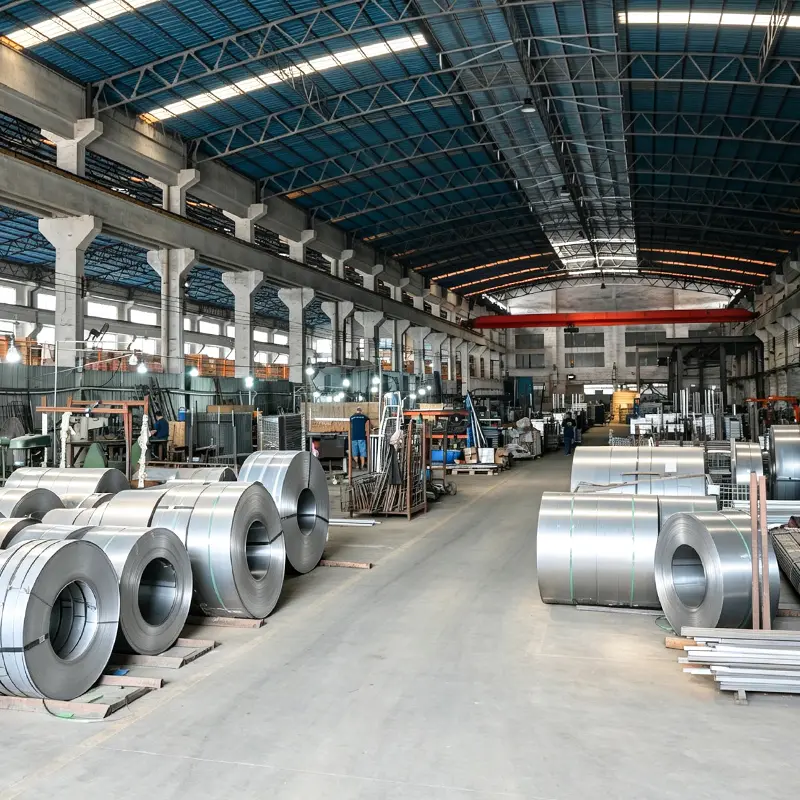
Quarter-Century of Engineering
Established in 2001, HEDA Shelves brings over 25 years of specialized racking manufacturing. We possess an exhaustive understanding of global structural codes, material tolerances, and structural longevity.
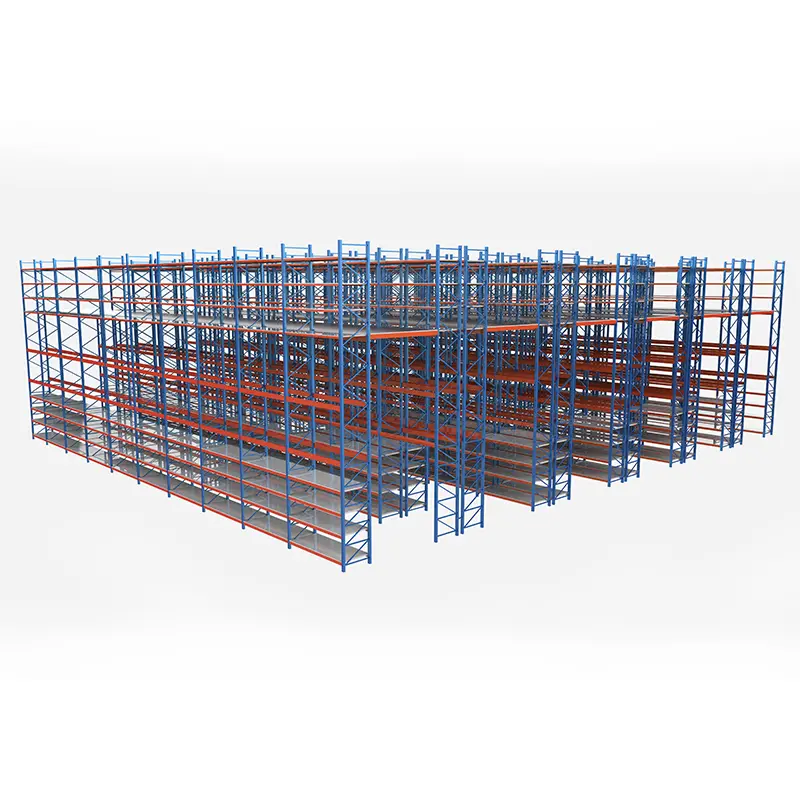
Free 2D CAD & 3D Modeling
Before committing a single dollar, our structural engineers review your architectural floor plans, slab specifications, and forklift profiles to provide complete CAD layout drawings and photorealistic 3D structural renderings at no cost.
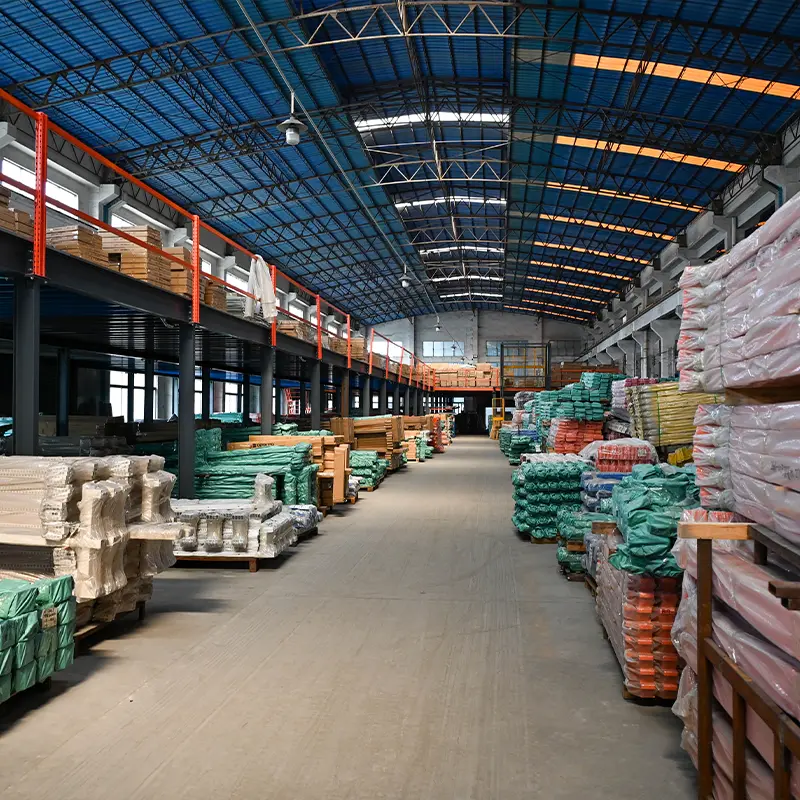
ISO 9001:2015 & CE Certified
Our manufacturing operations are audited under ISO 9001:2015 standards (Cert. No. 18624Q00169R0M) and carry full CE certification (No. 2435-CPR-8605159), backed by automated roll-forming and robotic welding lines.
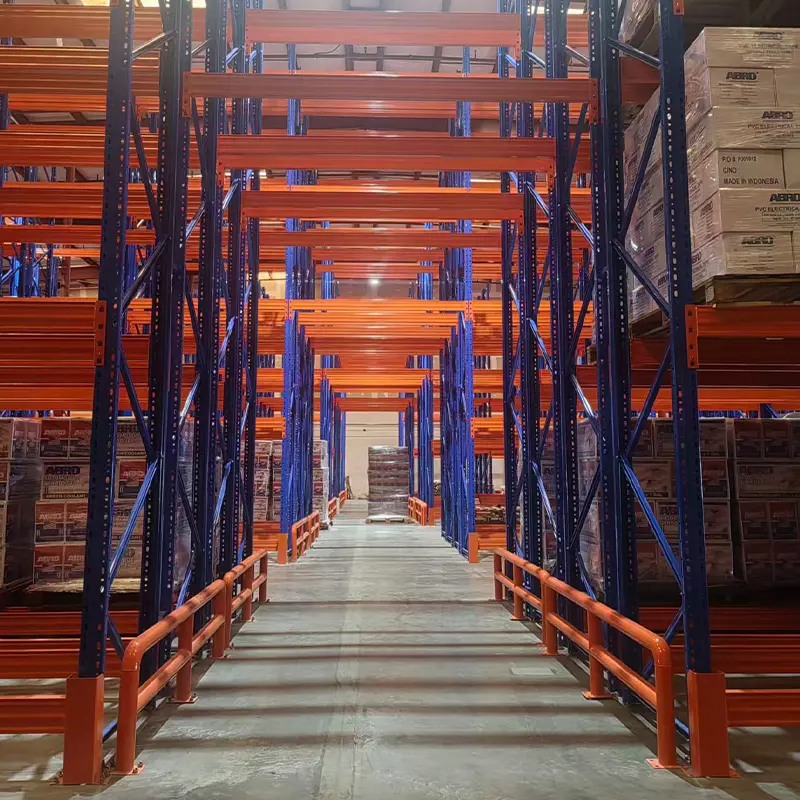
Direct Sea Logistics to Port of Oakland
Shipping directly from our state-of-the-art export facility through direct trans-Pacific maritime routes, your containers arrive directly at the Port of Oakland with pre-bundled, color-coded components ready for staging and erection.
Controlled Fabrication from Raw Steel Coil to San Francisco Job Site
Every structural column, beam clip, and load shelf undergoes rigorous in-line quality controls across ten automated manufacturing stations.
01. Premium Raw Steel Slitting & Inspection
Only high-grade prime steel coils verified by structural testing enter our production line, ensuring zero metallurgical inclusions and uniform tensile yield strengths.
02. Continuous Precision Roll Forming
High-precision CNC automated roll-forming machines shape complex multi-bend column profiles (up to 12 cold-bent angles per profile), providing exceptional structural stiffness against dynamic buckling.
03. Robotic Welding & Seam Verification
Automatic robotic arm workstations weld step beam connector clips, end plates, and structural baseplates with complete bead penetration, verified by ultrasonic and load tests.
04. Multi-Stage Pickling & Phosphating
Before coating, every steel part passes through a chemical acid pickling and immersion phosphate bath to remove all surface scale and oil, ensuring unmatched coating adhesion.
05. Electrostatic Powder Coating & Curing
Components pass through an automated electrostatic powder booth, receiving an even 60-80 micron thermal coat cured at 200°C for superior impact, scratch, and corrosion resistance.
06. Containerized Modular Bundling & Palletizing
Structural beams and frames are bundled with protective spacers, labeled by bay number, and loaded into ocean containers to maximize volume and eliminate trans-shipment scratching.
Frequently Asked Questions by Bay Area Facility Managers
Clear, definitive answers regarding California building permits, seismic engineering certifications, concrete slab specifications, and direct container logistics.
Can HEDA Shelves provide PE-stamped structural calculations for California building permits?
Yes. We regularly supply detailed structural design packages, material mill test reports, and finite element stress analysis data conforming to RMI ANSI MH16.1 and the California Building Code (CBC 2022). For our clients in San Francisco, Alameda, and San Mateo counties, our engineering data coordinates directly with local California-licensed Professional Engineers (PE / SE) to provide signed structural calculations and stamped architectural drawings required for municipal building plan checks.
What concrete slab thickness and PSI strength are required for high bay racking?
High bay structures exceeding 32 feet impose substantial concentrated point loads (often exceeding 15,000 to 28,000 lbs per upright leg under full static and seismic overturning forces). In the Bay Area, standard recommendations call for a minimum 6-inch to 8-inch reinforced concrete slab with a compressive strength of at least 3,500 to 4,500 PSI. During our preliminary CAD design phase, our engineers calculate the exact post footprint loads so your structural slab engineer can verify anchor embedment depths and punching shear capacity.
How do you handle shipping, customs clearance, and delivery to the San Francisco Bay Area?
We provide full-container-load (FCL) shipments via 40ft High Cube (40HQ) containers routed directly into the Port of Oakland. Our dedicated logistics team can quote factory-direct FOB terms or comprehensive CIF / DDP terms. Ocean transit from South China to the Port of Oakland typically takes between 14 to 18 days, followed by scheduled flatbed drayage directly to your warehouse loading dock in South San Francisco, Oakland, Hayward, Fremont, or San Jose.
How do our racking designs satisfy San Francisco Fire Department (SFFD) requirements?
Our layouts are custom-engineered to comply with NFPA 13 and California Fire Code Chapter 32 for High-Piled Combustible Storage. We engineer transverse flue spaces (minimum 6" between pallet loads) and longitudinal flue spaces (minimum 3" between back-to-back rows) utilizing heavy-duty snap-in pallet backstops and rigid row spacers. In addition, our galvanized open-mesh wire decking ensures a minimum 70% water permeability, allowing ceiling ESFR fire sprinklers to penetrate unimpeded to lower tiers.
Can your high bay racking integrate with Very Narrow Aisle (VNA) forklifts and AS/RS equipment?
Absolutely. Our manufacturing lines run at strict millimeter-level dimensional tolerances to ensure perfectly straight column uprights across total elevations exceeding 60 to 80 feet. We supply floor-mounted steel guide rails, entry guide shoes, and anchor hardware for VNA man-up turret trucks, as well as reinforced structural mast attachments and top tie-bars engineered for automated crane hoists and automated storage and retrieval systems (AS/RS).
What is the typical production and delivery lead time for custom high bay racking?
Our monthly capacity of 30,000 metric tons enables rapid factory turnaround times. Upon final approval of your 2D CAD floor plan and structural layout, high-volume manufacturing is typically completed within 18 to 25 calendar days. Ocean freight into the Port of Oakland requires approximately 2 to 3 weeks, enabling enterprise clients across Northern California to receive fully customized, certified high bay racking significantly faster and at substantial savings compared to domestic distributors.
Request Your Free CAD Layout & Seismic Engineering Proposal
Maximize your San Francisco warehouse storage density today. Send us your architectural floor plan, ceiling clear heights, and pallet specifications. Our senior structural racking engineers will deliver a comprehensive 2D CAD layout, 3D rendering, and factory-direct cost quotation within 24 hours.