Engineered Deep Racking & High-Density Storage Inventories
Precision-formed structural storage systems optimized for the standard Australian Chep footprint (1165mm × 1165mm), ambient distribution centers, and sub-zero logistics operations.
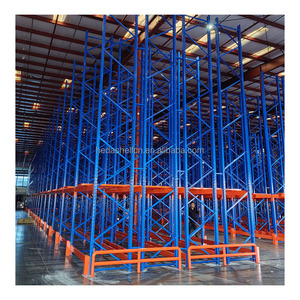
Heavy Duty Industrial Shelving Double Deep Pallet Racks
Two-deep storage layout doubling unit capacity along central warehouse corridors using pantograph reach trucks.
View Specifications →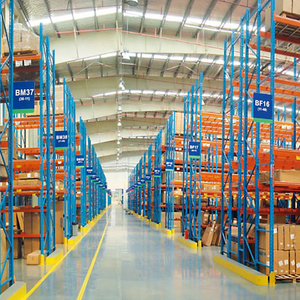
Heavy Duty Double Deep Steel Warehouse Storage Rack
High-yield cold-rolled upright profiles tailored for rapid inventory turns and elevated pallet stability thresholds.
View Specifications →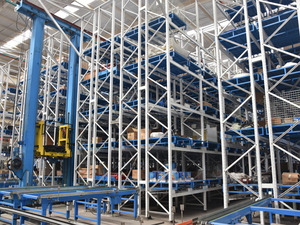
Double Deep Steel Pallet Racking with Shuttle Drive-In
Semi-automated pallet runner architecture engineered for high-throughput sub-zero freezer hubs and food staging.
View Specifications →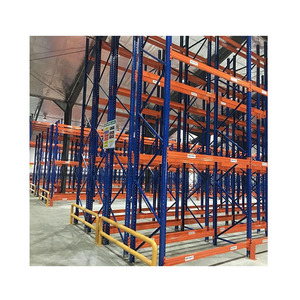
Galvanized Heavy Duty Pallet Racking VNA / Double Deep
Hot-dip zinc coating offering multi-decade anti-corrosion resistance in humid Australian coastal facilities.
View Specifications →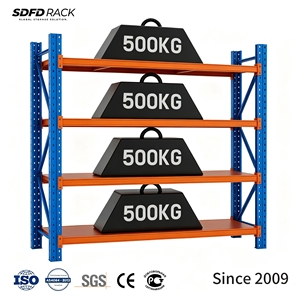
Multi-Level Stacking Storage Carpet Roll Beam Racking
Continuous support shelf spans designed for non-standard, long-dimension rolls and specialized building supplies.
View Specifications →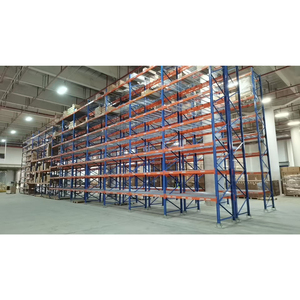
Robust Longspan Shelving Industrial Warehouse Storage
Adjustable medium-duty beam levels engineered for hand-pick cartons, retail spare parts, and intermediate deck tiers.
View Specifications →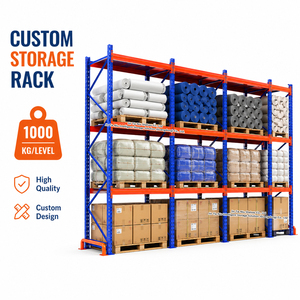
1000KG Warehouse Heavy Duty Pallet Rack System
Standard high-rigidity structural bays customized to store multi-ton pallet units across varying warehouse ceiling heights.
View Specifications →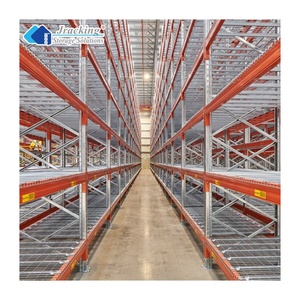
Australian Standard Industrial Heavy Duty Pallet Racking
Certified engineering fully aligned with AS 4084 steel structural codes, seismic load criteria, and test certifications.
View Specifications →Structural Compliance & Operational Dynamics in Australia
Deploying deep storage architectures across Melbourne, Sydney, Brisbane, and Perth demands exact integration with Australian industrial standards and local handling logistics.
AS 4084-2023 Structural Integrity
Australia updated its primary steel storage racking specification (AS 4084) to impose stricter limit state design methods, upright deformation allowances, and seismic base-anchor requirements. Our fabrication adheres strictly to high-tensile cold-formed standards (Q235B/Q355B), ensuring that second-bay reaches under maximum load cycles do not induce dangerous torsional deflections.
Standard Australian CHEP Optimization
Unlike European ISO sizes or North American 48x40-inch profiles, the domestic Australian market is dominated by the square 1165mm × 1165mm CHEP pallet. Double deep frames must be spaced with precision clear entry depths—typically 2300mm to 2400mm back-to-back—to prevent the rear pallet bottom boards from snagging on rear structural braces or safety stops during dynamic drops.
Aisle Footprint & Pantograph Reach
Double deep racking converts operating aisles into active floor storage by eliminating 50% of the access corridors required by conventional single-selective systems. Specialized double-reach pantograph reach trucks or articulating masts access the second pallet slot effortlessly, boosting warehouse volumetric cube utilization up to 60-65% without expanding building footprints.
System Architecture Comparison Matrix
Evaluate storage densities, handling equipment requirements, and capital outlay profiles across standard warehouse racking methodologies in the Australian supply chain.
| Storage Configuration | Storage Density Gain | Direct SKU Selectivity | Material Handling Type Required | Best-Fit Industry Application |
|---|---|---|---|---|
| Conventional Selective | Baseline (100%) | 100% Immediate Access | Standard Counterbalance / Reach | General 3PL, e-Commerce, High-SKU Picking |
| Double Deep Storage | +50% to +60% vs Selective | 50% Immediate (Last-In First-Out) | Pantograph Reach / Deep-Reach Mast | Cold Storage, Food & Beverage, Homogeneous Batches |
| Pallet Shuttle Deep Lane | +80% to +120% vs Selective | Channel Dependent (FIFO/LIFO) | Standard Forklift + Automated Shuttle | Bulk FMCG, Sub-zero Freezers, Beverage Depots |
| Drive-In Lane Racking | +75% to +90% vs Selective | Low (Strict LIFO Batches) | Standard Forklift (Must Enter Bays) | Raw Material Reserves, Low Velocity Pallets |
Regional Application Profiles Across Australian Supply Hubs
Strategic warehouse designs customized to the unique commercial and geographical pressures of the Australian industrial property sector.
Western Sydney & Melbourne 3PL Corridors
With industrial land values and square-meter leasing costs surging across Erskine Park, Kemps Creek, and Dandenong South, third-party logistics (3PL) providers utilize double deep racking to dramatically lower pallet rental break-evens. Systems are configured with heavy-duty column protectors and heavy-gauge floor run spacers to endure rapid-fire shifts and container cross-docking operations.
Cold Chain Hubs in Brisbane & Queensland
Chilled energy utility is the single largest operational expense in refrigerated and frozen food supply lines. Incorporating double deep or deep shuttle configurations minimizes refrigerated cubic volume waste. Galvanized steel or multi-stage pre-treated electrostatic powder coats eliminate rust risks resulting from constant condensation cycles during Brisbane's sub-tropical summer humidity spikes.
Mining & Heavy Spare Depots in WA
Distribution warehouses surrounding Perth, Welshpool, and the Pilbara mining logistics corridor require extreme load-bearing configurations. Double deep racking systems deployed here are frequently designed with reinforced boxed-step beams, heavy-duty wire mesh decking, and engineered seismic base plates designed to handle irregular machinery crates, pump assemblies, and structural components.
Australian Warehouse & Racking Evolution Trends
Emerging logistics requirements shaping high-bay procurement, safety mandates, and warehouse automation integration over the coming decade.
Retrofit-Ready Deep Automation
Warehouse operators are increasingly specifying deep rack profiles capable of upgrading from reach trucks to autonomous mobile robots (AMRs) or radio-shuttle automated handling without tearing out structural upright frames, protecting capital investments against ongoing blue-collar labor shortages.
Green Building Council (GBCA) Compliance
Australian commercial developments seeking 5-Star and 6-Star Green Star ratings demand low-emission, non-toxic powder finishes. Our facilities employ closed-loop electrostatic powder coating lines free from volatile organic compounds (VOCs) and heavy-metal primers.
Stringent Annual AS 4084 Audits
SafeWork Australia and state regulators are actively enforcing annual rack structural audits. We supply each project with complete engineering data plates, localized safety load signs, and definitive deflection threshold schematics for immediate verification by third-party certifiers.
Precision Manufacturing Standards
From prime hot-rolled coils to fully packaged export containers, every component undergoes certified in-house production control.
Raw Steel
Certified structural steel coils tested for tensile and yield thresholds.
Precision Slitting
CNC slitting and automatic punching ensures exact pitch alignments.
Cold Roll Forming
Continuous roll forming mills craft high-rigidity upright omega geometries.
Pre-Treatment
Multi-stage chemical wash, pickling, and phosphating prevents rust creep.
Powder Coating & QC
Automated electrostatic polymer cure with micron-gauge depth checks.
Why Direct Importers & Integrators Partner with Us
Combining tier-1 production scale with individualized technical design for demanding logistics tenders across Oceania.
30,000 m² Scale & Capacity
Operating a modernized 30,000 square-meter production facility with a dedicated team of over 300 manufacturing specialists, we achieve a sustained output of 30,000 tons per month. This output guarantees large-scale project delivery deadlines without splitting shipments across subcontractors.
Global Quality Validations
Our quality management systems are benchmarked by verified international certifications, including CE Certificate No. 2435-CPR-8605159, ISO 9001:2015 Management System Registration No. 18624Q00169R0M, and comprehensive RoHS environmental material compliances.
Complimentary Engineering & 3D Modeling
We eliminate spatial design guesswork before manufacturing starts. Clients receive complete CAD structural floor plans, detailed bay load calculation sheets, and immersive 3D layout renderings free of charge to submit with their local development applications (DA) and site permits.
Australian Buyer & Specifier Frequently Asked Questions
Essential answers regarding compliance, handling equipment compatibility, shipping lanes, and structural safety.
Can your double deep racking support the standard 1165mm x 1165mm CHEP pallet?
Yes. Our designs are customized for the Australian standard pallet. We configure frame depths, clear entry spans, and double-entry guide stops to ensure effortless 1165mm Chep entry while preventing pallet overhang from contacting rear diagonal sway bracing.
How does our facility certify AS 4084-2023 compliance upon project completion?
We supply full mill test certificates (MTCs), structural calculation packs, and deflection limit data mapped to AS 4084-2023 standards. Local Australian structural engineers can directly verify these calculations for installation sign-off and council occupancy compliance.
What reach forklift configurations are required for double deep operations?
Double deep setups require deep-reach trucks equipped with pantograph mechanisms or specialized double-depth telescopic forks. Masts generally incorporate integrated side-shifters and fork-tip wireless camera systems to assist drivers in placing pallets on the second tier safely.
What are the typical sea shipping transit times to Australian ports?
Direct ocean freight voyages from our Guangzhou/Nansha port facilities typically take 12 to 16 days to Port Botany (Sydney) and Port of Melbourne, 14 to 18 days to Port of Brisbane, and 18 to 22 days to Fremantle (Perth). We optimize 40HQ container packing to minimize maritime landed unit cost.
Are galvanized finishes mandatory for cold store or outdoor yards?
For sub-zero cold rooms and semi-open outdoor storage yards across coastal Queensland, NSW, and Victoria, we strongly recommend our hot-dip galvanized components. Galvanizing delivers self-healing, complete metallurgical corrosion prevention against ambient temperature transitions and sea-spray salt air.
Can double deep configurations be adjusted if our SKU profiles change later?
Absolutely. Our upright columns feature modular 50mm and 75mm pitch punch profiles. As your pallet height dimensions or inventory SKU volumes fluctuate, step beams can be unclipped and repositioned rapidly without requiring structural hot works or system rebuilds.
Optimize Your Australian Warehouse Floor Footprint
Send your building blueprints, slab load ratings, and pallet dimensions. Our structural engineers will produce an optimized CAD proposal, 3D visualization, and detailed pricing schedule.
Send an Inquiry