Standard & Custom Industrial Racking Portfolio
Explore our manufactured solutions engineered for rapid deployment, high-throughput item handling, and full compatibility with Tokyo distribution infrastructures.
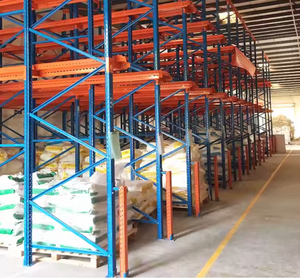
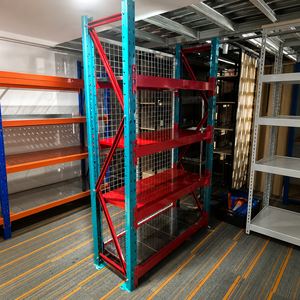
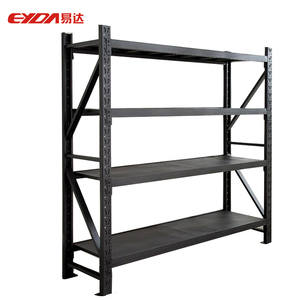
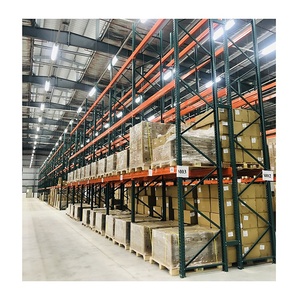
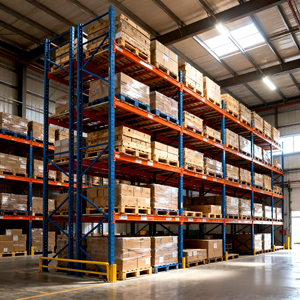
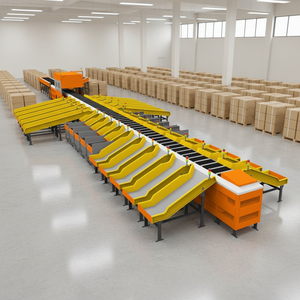
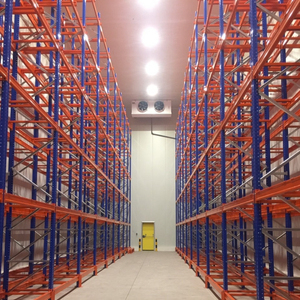
Optimizing Split-Case Picking Dynamics in Greater Tokyo's High-Cost Warehouses
How dynamic carton flow racking unlocks high-density SKU throughput, eliminates travel dead-time, and guarantees strict First-In, First-Out (FIFO) material movement.
The 2024 Logistics Cliff, Urban Land Values & Seismic Demands
Crucial macro factors driving Japanese procurement directors toward high-density gravity flow systems.
The "2024 Problem" (2024年問題) Response
With Japan's Work Style Reform Law capping annual truck driver overtime at 960 hours, freight logistics centers throughout Tokyo Bay cannot afford driver dwell times or delayed dock operations. Carton flow racking guarantees rapid staging and lightning-fast tote preparation, allowing downstream distribution lines to sort, pack, and cross-dock shipments with zero idle buffering.
Optimizing Exorbitant Rent per Tsubo
Prime modern multi-tenant logistics (LMT) facilities along the Tokyo Waterfront (Heiwajima, Kasai, Tatsumi) command monthly rents exceeding ¥8,000–¥12,000 per tsubo. Carton flow systems reduce aisle footprints by up to 50% compared to traditional shelving, packing up to 300% more SKU facings into the identical vertical and horizontal spatial envelope.
Stringent Seismic Resistance (耐震基準)
Tokyo lies in a Class-1 seismic zone vulnerable to the anticipated Nankai Trough and Tokyo Inland Earthquakes. Racking installations must adhere strictly to the Building Standards Act of Japan (建築基準法). Our structural frames are calculated with elevated seismic horizontal force coefficients, heavy-gauge baseplates, and high-tensile anchor sets to prevent collapse and carton jump under peak ground acceleration.
Engineering Note for Kanto Regional Facilities
Under Japanese fire prevention ordinances (消防法), high-density racking facilities containing combustible plastics and packaging materials require precise beam clearance and sprinkler penetration allowances. Our engineering team designs carton flow track profiles with perforated shelf beams, galvanized drop-in roller pans, and open roller pitches to ensure compliance with Tokyo Fire Department inspection mandates without sacrificing line density.
Anatomy of High-Reliability Dynamic Gravity Racking
Every component manufactured by HEDA is calibrated for continuous industrial operation, zero-energy gravitational feeding, and frictionless carton transition.
| Engineering Parameter | Heavy-Duty Industrial Specification | Light / Medium Picking System | Tokyo Facility Application Advantage |
|---|---|---|---|
| Roller Track Material | Reinforced Galvanized Steel Frame / Sheet Metal Guide | Extruded High-Tensile Aluminum Alloy Profile | Resists corrosive coastal air along Tokyo Bay terminals |
| Skate Wheel / Roller Type | Virgin High-Impact Polyethylene (PE) or Steel Core Wheels | Engineered ABS / POM High-Durability Wheels | Ultra-low rolling resistance coefficient (friction μ ≤ 0.03) |
| Incline Slope Adjustment | Variable: 3.0° to 6.5° via bracket slot indexing | Variable: 2.5° to 5.0° via tool-free boltless clips | Optimizes feed speed for corrugated cases & plastic returnable totes |
| Load Capacity Per Track | Up to 250 kg/meter uniformly distributed | Up to 100 kg/meter uniformly distributed | Accommodates heavy automotive spares, fluids, and retail cases |
| Dividers & Lane Guides | Full-depth adjustable snap-in sheet steel dividers | Clip-on synthetic wire/plastic lane separating bars | Prevents lane migration and SKU cross-contamination during transit |
| Surface Protection Finish | Pickling, phosphating, electrostatic polyester powder (80–120μm) | Galvanized zinc coating / Epoxy-polyester hybrid coat | Zero flaking, high scratch resistance, compliant with RoHS safety |
Dynamic Ergonomic Pick Trays
The pick face can be equipped with flat or tilt shelves (15° to 20° ergonomic forward tilt angle). This optimizes visibility inside open-top totes, minimizes neck strain for pickers, and simplifies rapid SKU retrieval during intensive wave-picking schedules.
Integrated Speed Controllers & End Stops
For long flow tracks exceeding 3 meters or cargo weights greater than 30 kg, integrated centrifugal speed controllers maintain steady carton descent speeds, preventing excessive impact against front stops and safeguarding delicate payloads.
Pick-to-Light (PTL) Integration Channel
Our front beam profiles feature integrated c-channel mounting flanges specifically shaped to accommodate digital picking light bars, barcode label mounts, and optical sensor arrays favored by Japanese Tier-1 systems integrators.
Engineered for Tokyo's Core Logistics Verticals
Real-world integration of carton flow racking within critical industrial environments across Greater Tokyo and the surrounding Kanto Plain.
E-Commerce & 3PL Fulfillment Hubs
Deployment Location: Ken-O Expressway belt (Atsugi, Sagamihara, Kawajima) & Tokyo Bay nodes.
Operational Flow: Fast-moving B2C parcel logistics demand rapid case-to-piece breakbulk. Carton flow levels are mounted beneath standard heavy-duty pallet beam levels, enabling upper-tier bulk replenishment and lower-tier active dynamic picking directly onto sorting conveyors.
Convenience Store (C-Store / Konbini) JIT Sortation
Deployment Location: Koto-ku, Funabashi, and Yokohama urban consolidation centers.
Operational Flow: Supplying 7-Eleven, FamilyMart, and Lawson networks requires multi-temperature picking schedules with zero stock expiry errors. Our gravity roller tracks guarantee absolute FIFO discipline for chilled daily foods, beverages, and packaged shelf goods with continuous replenishment.
Automotive Assembly & Electronics Kitting
Deployment Location: Kanagawa manufacturing zones & Saitama technical corridors.
Operational Flow: Kanban line-side replenishment setups where component bins are continually fed from rear staging zones directly to assembly personnel. Eliminates internal transportation bottlenecks, prevents assembly line starvation, and improves assembly bench floor density.
Why Greater Tokyo Enterprisers Partner with HEDA Shelves
Over two decades of precision cold-roll steel engineering, international project execution, and end-to-end quality assurance backed by verifiable structural credentials.
30,000 m² Advanced Factory
Our dedicated manufacturing facility in Guangzhou operates continuous automated cold-roll forming lines, high-speed CNC column punching stations, and dual robotic welding gantries delivering high-precision dimensional tolerances across every upright and roller beam.
30,000 Tons Monthly Output
Massive raw material purchasing agreements with Tier-1 steel mills (Q235B and Q355B high-tensile steel) safeguard our clients from market volatility, allowing us to supply large-scale logistics developments across Tokyo on strict delivery schedules.
Pre-Treatment & Anti-Corrosion
Every component undergoes an automated 8-stage pre-treatment cycle including chemical pickling and phosphating before electrostatic polyester powder coating. This prevents atmospheric delamination even in humid coastal areas such as Tokyo Bay and Yokohama Port.
Complimentary CAD & 3D Modeling
Our senior warehouse design engineers build complete AutoCAD architectural floor plans, load calculation sheets, and 3D Tekla BIM visualization models free of charge, ensuring complete alignment with client forklifts, building columns, and fire sprinklers.

CE Certification
Certificate No. 2435-CPR-8605159
Compliant with international structural steel stability and safety codes.

ISO 9001:2015 Management
Certificate No. 18624Q00169R0M
Audited quality management across raw steel sourcing, shearing, roll forming, and coating.

RoHS Compliance
Certified free of toxic heavy metals in powder coatings and polymeric wheel tracks, safe for food/pharma warehouses.
Frequently Asked Questions: Sourcing Carton Flow to Tokyo
Direct technical answers addressing structural integration, Japanese legal codes, maritime transit, and installation support.
1. How does your carton flow racking comply with Japanese Building Standard Law (建築基準法) seismic codes?
Our engineering division calculates all frame uprights, bracing members, and anchor assemblies using finite element structural analysis (FEA) compliant with Japanese JIS B 8941 standards and the Building Standards Act. When supplying projects in Greater Tokyo, structural calculations factor in local horizontal seismic acceleration coefficients (Z-factors up to 1.0). We provide reinforced heavy baseplates (up to 12mm thickness) and high-shear mechanical or chemical wedge anchors to ensure stability during major seismic events.
2. What is the typical maritime shipping lead time from Guangzhou factory to Tokyo Port or Yokohama Port?
Direct containerized sea transit from Guangzhou/Nansha or Shenzhen to Tokyo Port (Oi / Aomi Terminals) or Yokohama Port typically requires only 4 to 6 days at sea. With regular weekly container vessel sailings, standard production lead times of 15–20 days allow clients to have complete racking systems delivered on site within 25–30 days of drawing approval, significantly outpacing traditional domestic Japanese fabrication backlogs.
3. Can our warehouse retrofit carton flow beds into existing selective pallet racking frames?
Yes. We manufacture universal drop-in carton flow shelf tracks and intermediate support beams engineered to integrate seamlessly with third-party tear-drop, diamond-hole, and European/Japanese slot-profile uprights. By supplying custom universal mounting brackets, facility managers can convert lower pallet levels into dynamic carton picking tunnels while retaining upper structural pallet storage.
4. How do you prevent hang-ups or runaway acceleration with varying carton packaging materials?
Carton dynamics depend entirely on the bottom contact surface (smooth virgin plastic tote, damp corrugated paperboard, banded wooden crate). We provide track options featuring multi-row staggered skate wheels or full-width steel/plastic cylindrical rollers with precise pitch options (e.g., 28mm, 35mm, 50mm). For long runs or heavier goods, centrifugal brake rollers are inserted directly into the track to regulate descent speed regardless of load variations.
5. Are your carton flow systems suitable for cold chain and sub-zero picking rooms in Tokyo?
Absolutely. For cold storage and freezer applications down to -30°C (such as seafood and meat logistics hubs around Toyosu and Tokyo Bay), we manufacture specialized roller tracks using low-temperature resilient POM polymer wheels, stainless steel internal axles, and full hot-dip galvanized or high-adhesion powder-coated steel frameworks that eliminate brittleness and resist condensation rust.
6. What installation documentation and on-site support are provided for Japanese warehouse contractors?
Every export shipment is palletized and packed with detailed container-loading manifests and numbered modular tags matching our CAD construction drawings. We provide comprehensive step-by-step Japanese/English visual installation manuals, video guides, and live video engineering consultations. For large-scale multi-tier picking mezzanines, we can dispatch on-site technical installation supervisors to Tokyo to coordinate with your licensed local rigging crew.
Transform Your Greater Tokyo Distribution Velocity Today
Submit your warehouse floor layout, clear roof height, SKU specifications, and container flow metrics. Our senior engineering team will calculate your seismic parameters and deliver a complimentary 2D CAD layout and 3D structural proposal within 24 hours.