Engineering Whitepaper
Evaluating Industrial Warehouse Pallet Storage: Metallurgy, Statics, and International Safety Standards
Global supply chain volatility, escalating real estate rents per square meter, and surging e-commerce throughput have pushed warehouse racking design from simple static steel structures into complex structural engineering systems. Specifying pallet storage frames requires an in-depth understanding of structural mechanics, metallurgy, deflection dynamics, seismic resilience, and microclimatic corrosion resistance.
1. Metallurgical Integrity: Q235B vs. Q355B Cold-Formed Steel Coils
The foundation of structural warehouse reliability lies in the chemical composition and yield tensile strength of the raw coil steel. At HEDA Shelves, uprights and load-bearing beams are manufactured using prime-grade high-tensile cold-rolled steel coils, adhering strictly to EN 10025 and GB/T 700 standards.
While general industrial applications utilize Q235B steel (minimum yield strength $f_y = 235\text{ MPa}$), heavy-duty high-bay systems and seismic-zone projects mandate Q355B alloyed micro-titanium steel ($f_y = 355\text{ MPa}$). Higher yield performance allows thinner steel cross-sections to achieve superior moments of inertia ($I_x, I_y$), effectively reducing frame dead-weight while mitigating structural plastic deformation under dynamic forklift impact.
Key Engineering Principle: The Beam-to-Column Interlock Connection
The mechanical moment capacity of the connection between the upright column and the box-beam connector dictates overall rack stability. HEDA engineers utilize high-precision CNC punch tooling to form progressive 5-claw and 4-claw connectors with integral safety locks, ensuring dynamic locking engagement that exceeds the lateral shear thresholds specified by RMI ANSI MH16.1.
2. Deflection Limits and Finite Element Analysis (FEA) Verification
In high-capacity logistics warehousing, vertical deflection ($L/d$) of load beams is governed by strict statutory limits. International standards such as FEM 10.2.02 (European Federation of Materials Handling) and AS 4084 (Australian Standard for Steel Storage Racking) limit beam vertical deflection under maximum uniform distributed load (UDL) to:
$$\delta \le \frac{L}{200}$$
For automated crane and high-speed narrow-aisle (VNA) systems, this tolerance is tightened to $\delta \le L/300$ or a maximum absolute deflection of 10mm. Every upright profile profile geometry developed in our Guangzhou R&D center undergoes 3D Finite Element Analysis (FEA) modeling to verify local buckling, flexural-torsional buckling, and column-base anchor uplift under seismic ground accelerations.
| Structural Factor |
Selective Pallet Rack |
Drive-In / Drive-Through |
Radio Shuttle System |
Very Narrow Aisle (VNA) |
| Volumetric Efficiency |
40% – 50% |
65% – 75% |
80% – 88% |
60% – 70% |
| Pallet Selectivity |
100% Direct Access |
LIFO / Batch FIFO |
FIFO or LIFO Automated |
100% Direct Access |
| Operating Aisle Width |
3.0m – 3.8m |
Inside lane entry |
Inside rack rails |
1.5m – 1.8m |
| Forklift Direct Impact Risk |
Moderate (Bay ends) |
High (Uprights inside lane) |
Extremely Low (Front aisle) |
Low (Guide rails/wire guided) |
| Optimal Application |
General DC, Fast Multi-SKU |
Homogeneous Bulk Goods |
Cold Chain, Food, High-Volume |
High-Value, High-Bay Stacking |
3. Surface Passivation & Microclimatic Corrosion Prevention
Warehouse racking installations in Southeast Asia, the Middle East, coastal regions, and industrial chemical facilities face aggressive atmospheric oxidation. Humidity levels above 80% RH combined with airborne chlorides accelerate electrochemical corrosion, degrading upright wall thickness over time.
HEDA Shelves eliminates this failure mode via an automated 10-stage pre-treatment cycle. Components undergo hot alkaline degreasing, industrial acid pickling, phosphating passivation, and dual deionized water rinsing before entering our robotic electrostatic powder coating booth. Utilizing non-toxic polyester-epoxy powders, the cured coating achieves 70–90 µm thickness, passing ASTM B117 salt spray tests for over 600 hours without red rust blister generation. For sub-zero freezers (-30°C) and corrosive exterior sheds, pre-galvanized or hot-dip galvanized finishes complying with ASTM A123 are applied.
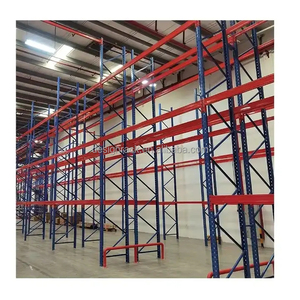 Heavy-Duty Standard