Engineered Industrial Pallet Racking & Heavy-Duty Storage Configurations
Direct from certified manufacturing lines: fully configurable selective, cantilever, gravity dynamic flow, roll-out, and rack-clad architectural systems designed to maximize vertical cubic capacity and forklift throughput.
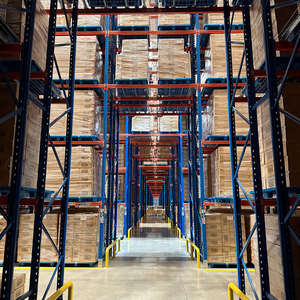
- Capacity: 1,000–4,500 kg/Beam Level
- 100% Direct SKU Selectivity (FIFO)
- High-grade Q235B / Q355B Hot-Rolled Strip
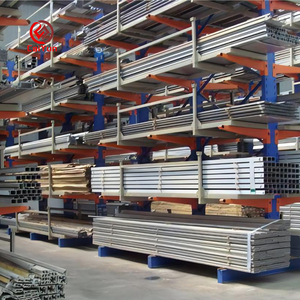
- Arm Ratings: 250–800 kg per Arm
- Optimized for Low Eaves & Mezzanine Pods
- Unobstructed Horizontal Loading Bay
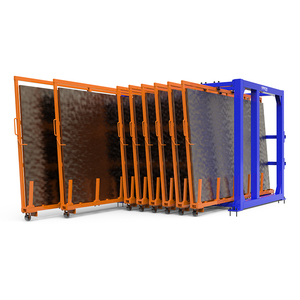
- 100% Extension Roll-Out Drawers
- Up to 2,000 kg per Sliding Level
- Overhead Crane & Hoist Accessibility
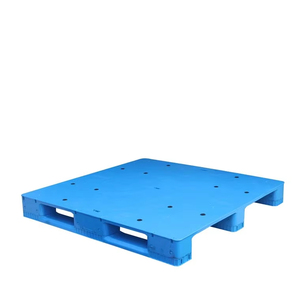
- Static Load: 4,000 kg | Racking: 1,200 kg
- High-Density Virgin HDPE Polymer
- 4-Way Entry for Automated Conveyors & AGVs
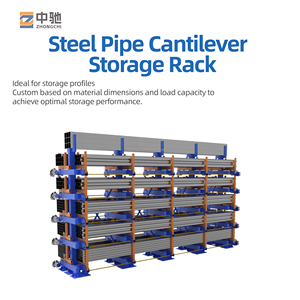
- Motorized Push-Button Retractable Arms
- Designed for Heavy Pipe, Tube & Sheet Packs
- Saves 80% Aisle Space vs. Traditional Handling
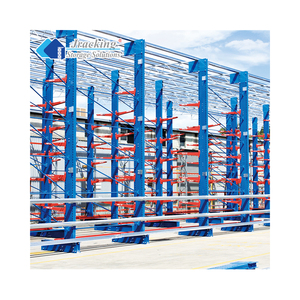
- Load: Up to 5,000 kg per Column Bay
- Single & Double-Sided Upright Columns
- Bolted Arm Pivot Joint with Shear Pins
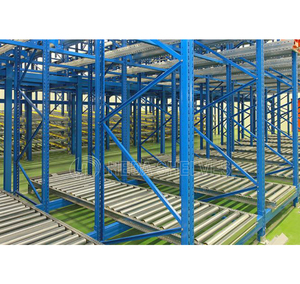
- Integrated Brake Rollers & Centrifugal Governors
- Automatic FIFO Stock Rotation Mechanism
- Up to 60% Space Consolidation vs. Selective
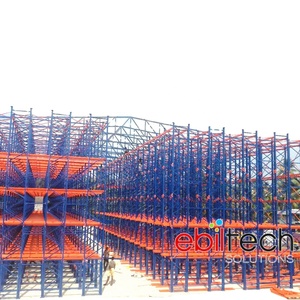
- Storage Structure Supports External Roof & Walls
- Eliminates Structural Steel Building Columns
- Height Capabilities Beyond 40 Meters (AS/RS Ready)
Guangzhou HEDA Shelves: Decades of Industrial Steel Authority
Operating since 2001, Guangzhou Heda Shelves Co., Ltd. represents the zenith of cold-formed structural steel fabrication, supplying tier-1 multinational 3PL operators, industrial manufacturers, and regional cold-chain distribution terminals across 120+ sovereign jurisdictions.
Rigorous Certification & Compliance
Every beam section and upright frame strictly conforms to European Standards (EN 15512:2020), British Standard BS 5950-5, and American RMI MH16.1 specifications. Independently tested and certified under CE Certificate No. 2435-CPR-8605159, ISO 9001:2015 Quality Management No. 18624Q00169R0M, and full RoHS ecological non-toxic coatings compliance.
Seismic-Aware Structural Calculation
For seismically active zones across ASEAN (Philippines, Indonesia) and seismic zones worldwide, our in-house structural engineering cell uses non-linear dynamic time-history analysis to calculate baseplate ductility, cross-aisle shear forces, and frame portal bracing stiffness. Calculations precisely factor soil bearing coefficients ($k_s$) and peak ground acceleration ($S_s, S_1$).
Short Coastal Sea Freight Lead Times
Direct manufacturing dispatch from our Guangzhou logistics hub, situated minutes from Nansha and Huangpu container terminals. We guarantee ocean shipping schedules of 2–5 days to Vietnam, 3–5 days to Manila, 5–7 days to Singapore and Bangkok (Laem Chabang), and 6–10 days to Jakarta, cutting project lead times by over 50% compared to inland factories.
The HEDA Precision Fabrication Protocol: 10 In-House Controlled Quality Phases
Prime Strip Slitting
Certified Baosteel Q235B/Q355B coils checked for yield strength, thickness tolerance, and chemical purity.
CNC Multi-Pitch Punching
Continuous hydraulic stamping with 50mm and 75mm teardrop/diamond pitch tolerances within ±0.1mm.
Cold Roll-Forming
Progressive 24-station rolling mills form omega and closed-box sections without localized micro-fracturing.
Robotic Seam Welding
Automated gas-metal arc welding (GMAW) joins beam end-connectors with deep root penetration and zero porosity.
Chemical Immersion Pickling
Full-dip acid bath removes mill scale, grease, and micro-contaminants prior to conversion coatings.
Zinc Phosphating
Creates a micro-crystalline protective matrix that enhances powder adhesion and inhibits sub-film corrosion.
Electrostatic Coating
Pure thermoset polyester powder applied via electrostatic guns for an even 70–110 μm tropical coating.
Curing Tunnel Baking
Polymerization at 190°C–210°C ensures structural cross-linking, hardness (2H pencil test), and impact resistance.
FEA Destructive Testing
Sample lots subjected to beam deflection loading ($L/200$), column compression, and weld coupon shear checks.
Export Dunnage Packaging
Anti-scratch corrugated separators, plastic wrap, and steel bands configured for direct sea container discharge.
Technological & Structural Development Trends Reshaping Racking
As logistics land costs climb and operational labor pools contract, industrial storage is evolving from passive static shelving into dynamically integrated, structural engineering solutions.
1. Semi-Automated Shuttle & AS/RS Hybridization
Traditional drive-in systems are rapidly giving way to 4-way deep-lane Radio Shuttle carriers and automated storage and retrieval systems (AS/RS). By decoupling the forklift from lane travel, warehouse owners reduce bay collision incidents by over 92% while cutting operating cycle times. Next-generation systems feature integrated continuous-busbar charging, optical sensor alignment, and wireless integration with Warehouse Management Systems (WMS).
2. Thin-Walled Micro-Alloy Cold-Forming Optimization
Advanced finite element analysis (FEA) has spurred the transition from basic structural steel to micro-alloyed, high-strength cold-formed steel coils. By optimizing post-buckling behavior along the multi-bend omega upright profile (often incorporating 10 to 14 discrete cold-formed bends), modern rack engineering delivers higher load capacities with 15–20% less dead-weight, lowering building floor slab foundation costs.
3. IoT Structural Health Monitoring & Dynamic Telemetry
The rise of mega-distribution centers has driven the deployment of real-time sensory monitoring within critical rack framework joints. Tri-axial accelerometers and strain gauge load cells embedded into the upright footplates measure seismic micro-vibrations, material fatigue, and impact shocks from handling equipment. This telemetry enables condition-based preventative maintenance before localized yields cause progressive collapses.
4. Tropicalized & Cryogenic Multi-Environment Coatings
Logistics facilities in equatorial, high-humidity, coastal, and sub-zero cold-storage sectors (such as frozen seafood and pharma cold chains) encounter severe surface degradation. Recent advances combine hot-dip continuous galvanizing (HDG) conforming to ISO 1461 with zinc-rich polyester powder primers. This dual barrier delivers over 1,500 hours of neutral salt spray resistance (ASTM B117), preventing delamination and rust staining.
Future Warehouse Procurement Trends & TCO Sourcing Matrix
Strategic supply chain directors prioritize Total Cost of Ownership (TCO) over initial sticker price. Evaluate floor-space utilization coefficients, capital amortization per pallet position, and automated migration capabilities.
| Racking System Architecture | Floor Space Utilization | Selectivity Ratio | Relative Cost / Pallet | Operational Throughput | Primary Material / Spec | Target Industry / Application |
|---|---|---|---|---|---|---|
| Selective Pallet Racking | 40% - 50% | 100% Direct Access | Baseline ($) | Moderate to Fast | Q235B Cold-Formed Steel | Retail FMCG, E-Commerce, 3PL Multi-Client DCs |
| Double-Deep Pallet Rack | 55% - 65% | 50% Immediate Access | 1.15x Baseline | Moderate (Special Reach Truck) | Q235B / Q355B Heavy Upright | Dry Groceries, Paper Mills, High-Volume Batches |
| Drive-In / Drive-Through | 65% - 75% | LIFO / Restricted | 1.30x Baseline | Slow (Forklift Enters Rack) | Continuous Flanged Arm Brackets | Cold Storage, Seasonal Harvest, Raw Materials |
| Radio Shuttle Automation | 75% - 85% | Automated Batch FIFO/LIFO | 2.20x Baseline | Very High (Driverless Lane Transit) | High-Precision Roll-Formed Rail | Sub-Zero Freezers, Beverage Bottling, Meat Packers |
| Gravity Pallet Flow Rack | 70% - 80% | 100% Automatic FIFO | 2.50x Baseline | Continuous Gravity Feeding | Multi-Roller Bed with Brake Rollers | Pharmaceuticals, Perishable Foods, Dairy Logistics |
| Rack-Clad Building (AS/RS) | 85% - 95% | Fully Automated 100% | 4.50x+ (Replaces Building) | Extreme (Automated Cranes) | Self-Supporting Structural Columns | Automated Mega-Hubs, High-Rise Distribution Terminals |
Nearshore Procurement & Port Proximity
Supply chain shocks have highlighted the cost of transoceanic container delays. Sourcing from factories near major international ports (like Guangzhou/Shenzhen) provides clear freight visibility, steady weekly vessel sailings, and rapid supply of spare parts (such as replacement beams, row spacers, and safety upright protectors), protecting operations against port backlogs.
ESG, Low-Carbon Steel & Cradle-to-Cradle
Major corporate warehouse operators demand verifiable carbon footprints for structural steel capital expenditures. Forward-looking procurement favors manufacturers utilizing electric arc furnace (EAF) certified steel billets, closed-loop water treatment during pickling, and non-VOC TGIC-free powder formulations, simplifying green-building certifications like LEED and BREEAM.
Design-for-Deconstruction & Modular Flexibility
Static warehouse layouts rarely remain unchanged over a decade. Current procurement mandates bolt-together, modular upright systems with uniform standard punching pitches (e.g., 50mm or 75mm). This allows beam levels to be easily reconfigured, frames to be heightened, or selective rows to be repurposed into carton flow or mezzanine decks without on-site hot work.
Warehouse Pallet Racking Procurement & Structural Engineering FAQ
In-depth technical answers addressing load engineering, slab calculations, local compliance, and shipping protocols for logistics engineering directors.
Request a Certified Structural Racking Layout & Engineering Quote
Send our senior engineering team your architectural CAD dwg floor plan, building clear eaves heights, forklift turning radii, and unit pallet dimensions. We will return an optimized CAD layout, 3D visualization render, and complete structural load calculation schedule within 24 hours.