High-Performance Gravity Flow & Heavy-Duty Pallet Racks
Precision-manufactured in certified Guangzhou facilities, our pallet flow lanes, selective uprights, and modular wire decking deliver certified structural capacity, seamless FIFO stock velocity, and strict compliance with global warehouse safety norms.
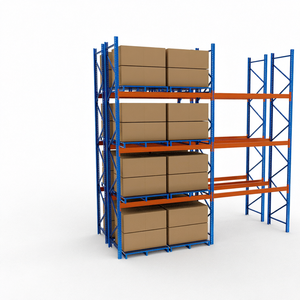
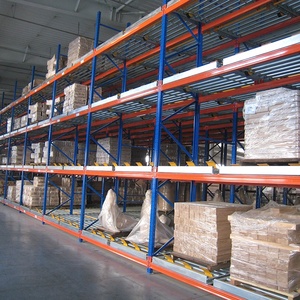
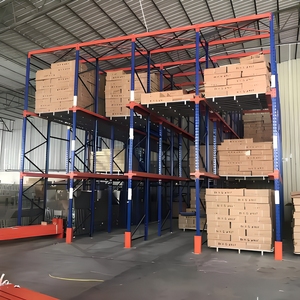
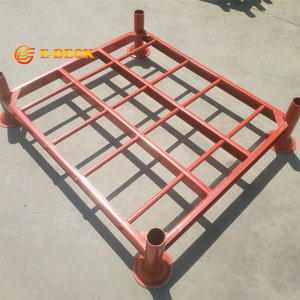
Engineering Principles of Dynamic Pallet Flow Gravity Racks
Pallet flow racking (often referred to as gravity flow systems) transforms stationary warehouse cubic volume into high-throughput dynamic storage. Operating strictly on potential energy and gravity, these systems maximize volumetric density while delivering ironclad First-In, First-Out (FIFO) material rotation.
Pitch Gradient Optimization (3.5% to 4.2%)
The physical backbone of gravity flow depends on precise lane slope calculations. A gradient between 3.5% and 4.2% ensures consistent roll initiation for loaded pallets weighing between 300kg and 1,500kg without runaway acceleration. Cold-chain operations at -30°C utilize a 4.0% pitch to overcome low-temperature lubricant drag inside bearing assemblies.
Centrifugal Speed Controller Dampers
To prevent progressive dynamic kinetic acceleration in runs exceeding 3 pallets deep, centrifugal speed brakes are integrated directly into the roller tracks every 1.5 to 2 meters. Internal weighted planetary flyweights expand against brake shoes proportional to speed, automatically holding terminal travel speeds below 0.3 meters per second.
Time-Delay Pallet Separator Mechanics
At the unloading face, hydro-mechanical separator gates trap the accumulated line-load of behind pallets, completely isolating the leading pallet. This eliminates severe static back-pressure (which can exceed 10 tons in 15-deep runs) allowing the forklift operator to extract the target pallet smoothly without product binding or mast damage.
Pallet Flow vs. Alternative High-Density Systems
Evaluating storage infrastructure requires balancing upfront capital expenditure (CapEx), recurring operational labor expense (OpEx), SKU selectivity, and floor utilization efficiency. Review the verified engineering metrics below:
| Storage Configuration | Space Utilization | Rotation Logic | Pick Speed & Cycle Time | Forklift Aisle Requirements | Risk of Collision Damage | Sub-Zero Cold Chain Rating |
|---|---|---|---|---|---|---|
| Selective Pallet Racking | 40% - 45% (Aisle-Heavy) | 100% Selectivity / Mixed | High (Direct Pick) | Requires 3.0m - 3.8m aisles | Moderate (Upright impact risk) | Good (Low density hurts OPEX) |
| Drive-In Racking | 65% - 75% (High Density) | Strictly LIFO (Last-In) | Slow (Truck enters lanes) | Front staging only | High (Inside bay navigation) | Moderate (Slow cycle speeds) |
| Push-Back Racks (Carts) | 60% - 70% (2 to 6 Deep) | Strictly LIFO (Last-In) | Moderate (Driver pushes pallets) | Single loading/unloading aisle | Low-Moderate (External access) | Moderate (Wheel icing vulnerability) |
| Radio Shuttle Automation | 80% - 85% (Ultra High) | FIFO or LIFO Flexible | High (Automated carrier) | Dedicated perimeter aisles | Very Low (Shuttle inside lanes) | Good (Battery maintenance needed) |
| Gravity Pallet Flow (HEDA) | 75% - 85% (Continuous Run) | 100% Strict FIFO | Fastest (Separate load/unload) | Only 2 Operating Aisles Needed | Zero (No truck bay entry) | Optimal (Sub-zero sealed bearings) |
Future Procurement Trends in Pallet Flow Systems (2025–2030)
Modern distribution facilities demand higher integration with autonomous systems, extreme thermal adaptability, and environmentally neutral supply chains. Procurement directors must anticipate these structural shifts when selecting an industrial racking partner.
AGV & AMR Autonomous Docking
Pallet flow lanes are increasingly becoming physical buffer bridges between autonomous unloading robots and outbound fulfillment. Future-proof factories specify entry guidance funnels with laser positioning retroreflectors, dynamic entry stoppers, and millimeter-level alignment tolerances so Autonomous Mobile Robots (AMRs) can inject and pick pallets without human operators.
Low-Carbon Circular Cold Chains
With power tariffs and cold-storage refrigeration costs escalating, energy-free gravity flow replaces energy-hungry automated conveyors. Racking suppliers are engineering specialized ultra-low-friction synthetic polymer wheels and zinc-thermal diffusion coatings that resist heavy frost-thaw cycles without chipping or requiring heat-tracing tape.
Seismic Dynamic Finite Element Design
Pacific Rim procurement (e.g., Japan, Philippines, Indonesia, West Coast US) now mandates dynamic finite element response spectrum analyses. Under earthquake accelerations, rolling pallet mass creates harmonic resonance. Leading suppliers now calculate dual-directional cross-bracing and oversized anchored baseplates according to FEMA 460 and ASCE 7 standards.
IoT-Enabled In-Lane Speed Telemetry
The next tier of smart factories implements non-powered mechanical pulse generators inside brake rollers that connect via wireless LoRaWAN gateways. These monitor roller rotational speed, identifying degraded pallet skids or broken runners before jams occur, enabling predictive warehouse maintenance without downtime.
Why Global Logistics Leaders Partner with HEDA Shelves
Since 2001, Guangzhou Heda Shelves Co., Ltd. has stood as a Tier-1 manufacturing authority in heavy-duty warehouse racking. Operating our own massive 30,000 m² facility with a 300+ strong engineering workforce, we bridge structural integrity with competitive factory-direct supply chains.
25+ Years of Proven Reliability
Over two decades of pure racking design, production, and worldwide installation. With more than 10,000 completed mega-projects across 120+ countries, our engineering calculation protocols eliminate design failure, beam deflection risks, and rack unseating.
30,000 Tons Monthly Capacity
Scale guarantees delivery security. Automated continuous roll-forming lines, robotic CNC beam welders, and in-house electrostatic powder coating chambers ensure high-volume outputs with delivery timelines maintained even during high-peak global logistics seasons.
Free 3D & CAD Engineering Proposal
Our certified structural engineers provide preliminary 2D CAD layouts, realistic 3D spatial renders, and full seismic/static structural deflection calculations free of charge prior to commercial commitment, ensuring your operational requirements are met with zero guesswork.


10-Step Fully Integrated Manufacturing Lifecycle
Every upright post, connector claw, and roller frame is manufactured within our Guangzhou plant, ensuring continuous metallurgical compliance from raw steel coil to finished container dispatch.

Q235B/Q355B Prime Steel

Precision Laser Cutting

CNC Column Punching

Cold-Bending Profile

Continuous Roll Forming

Surface De-burring

Robotic CO2 Welding

Pickling & Phosphating

Electrostatic Powder Coat

Full CMM QC & Staging
Frequently Asked Questions for Pallet Flow Sourcing
Clear, technically rigorous answers to assist supply chain managers, warehouse operations leads, and procurement teams in specifying pallet flow gravity racks.
What pallet types are compatible with gravity flow roller systems?
Pallet flow systems work seamlessly with standardized wooden GMA (48"x40"), European EUR/EPAL (1200x800mm), and industrial plastic skids featuring full perimeter base bottom boards. The bottom runners must contact at least two rollers simultaneously. Deformed wooden stringers, protruding nails, or non-rigid soft plastic bottoms will increase rolling friction and require full-width cylindrical steel rollers or multi-track skate wheels.
How are runaway pallet accidents prevented in long lanes?
Safety is managed by our multi-layered velocity control architecture: First, our centrifugal speed controller brakes engage automatically as kinetic speed approaches 0.3 m/s. Second, entry impact guides align crooked forklift deposits. Finally, heavy-duty mechanical floor stops and hydraulic end-bumpers absorb residual shock at the discharge face, securely stopping full loads up to 1,500kg.
How does HEDA handle severe humidity and coastal corrosion?
Every structural member passes through an automated 8-stage pre-treatment wash encompassing acid pickling (clearing all micro-scale scale and rust) and zinc phosphating before automated electrostatic powder coating. This delivers strong adhesion and prevents salt-spray blistering. For extreme cold-storage condensation zones or coastal warehouses across Southeast Asia, hot-dip galvanized uprights and roller channels are available.
What is the typical shipping lead time and sea transit to overseas ports?
Standard production cycles range from 15 to 22 business days depending on tonnage. Situated adjacent to Guangzhou and Nansha deep-sea terminals, indicative direct sea transit times are fast: 2–5 days to Vietnam; 3–5 days to the Philippines (Manila); 5–7 days to Singapore and Thailand; 6–8 days to Malaysia (Port Klang); 7–10 days to Indonesia; and 18–25 days to North America and Europe.
Can HEDA Shelves engineer racking systems for high seismic risk zones?
Yes. We regularly supply major industrial racking installations across seismic zones like the Philippines, Indonesia, and New Zealand. Our engineering team calculates dynamic structural responses based on local ground acceleration (Ss, S1 values), incorporating heavy-wall tubular vertical uprights, high-tensile column baseplate anchors, and engineered horizontal spine bracing to prevent catastrophic racking collapse.
What documentation and technical data are required to receive a proposal?
To produce a compliant CAD layout and formal quotation, our engineering team requires: (1) Facility architectural floor plan showing column grid spacing, building clear height, and floor slab load capacity; (2) Pallet specifications including width, depth, height, and maximum loaded weight; (3) Mast lift height and turn radius of your forklift fleet; and (4) Daily SKU inventory turnover velocity.
Optimize Your Warehouse Volumetric Capacity Today
Connect directly with HEDA Shelves’ project engineering team. Obtain an optimized 2D/3D CAD warehouse layout proposal, load-deflection analysis, and factory-direct quotation within 24 hours.