Electric Powered
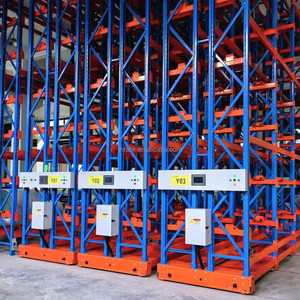
PLC Automated
Up to 24t/Base
Direct from our 30,000 m² Guangzhou production facility. Our certified movable racking systems reduce dedicated aisle footprints by up to 50%, virtually doubling physical pallet density for heavy logistics hubs, cold stores, and industrial staging centers.
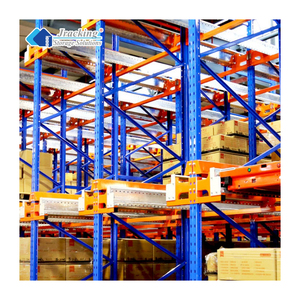
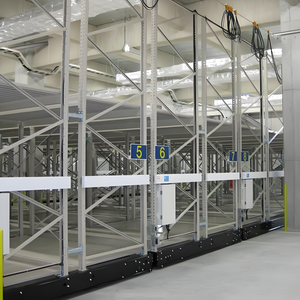
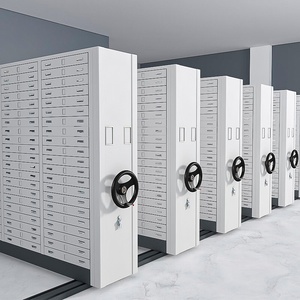
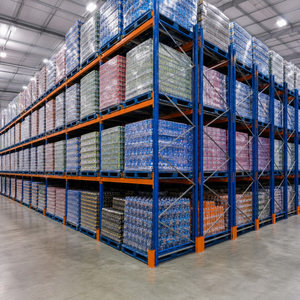
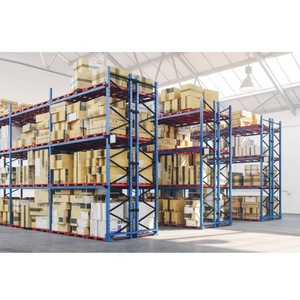
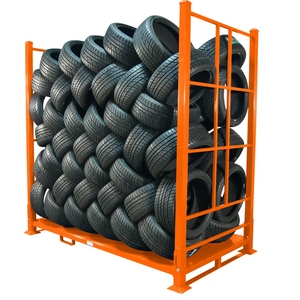
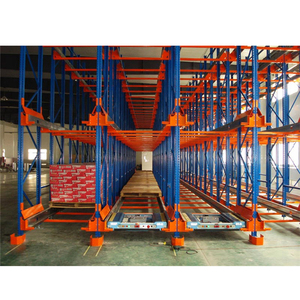
Movable warehouse racking (also designated as Motorized Mobile Pallet Racking or Compactus Heavy-Duty Racking) represents the convergence of high-capacity structural steel design and synchronized electromechanical automation. Unlike static selective pallet racking, movable racking transforms passive storage rows into active motorized carriages operating over high-precision floor rails.
Every movable racking block sits upon machined ductile cast iron or forged carbon steel drive and idler wheels. Guided by heavy ground-embedded tracks, our multi-wheel carriage designs spread concentrated dynamic point loads into the building slab, eliminating structural fatigue under individual carriage payloads reaching 400 metric tons per array.
Sudden start-stop torque causes pallet dislocation and premature frame deformation. HEDA’s mobile carriages deploy decentralized helical-geared motors linked via Siemens or Mitsubishi micro-PLC architectures. Programmable acceleration and S-curve deceleration profiles ensure vibration-free transit even with unstrapped bulk materials.
Personnel safety is safeguarded by category-4 safety architectures: optical perimeter light grids that immediately cease carriage movement if an operator enters an active aisle, full-length pneumatic bottom collision foot-bumpers, and manual mechanical clutch decouplers for emergency egress and power interruptions.
| System Architecture | Footprint Space Saving | Floor Slab Loading (kN/m²) | Direct Pallet Accessibility | Cold Room ROI Horizon | Capital Cost Multiplier |
|---|---|---|---|---|---|
| Heavy Duty Electric Movable Racking | 80% – 95% Density Increase | 50 – 85 kN/m² (Concentrated) | 100% (Dynamic Single Aisle) | 14 – 22 Months | 2.2x – 2.8x |
| Automated Radio Shuttle Pallet System | 70% – 85% Density Increase | 40 – 65 kN/m² (Distributed) | Batch / Lane Access (FIFO/LIFO) | 18 – 28 Months | 2.4x – 3.2x |
| Standard Static Selective Racking | Baseline (Requires 3.2m Aisles) | 20 – 35 kN/m² (Distributed) | 100% (Continuous Direct) | Baseline Reference | 1.0x (Baseline) |
| Deep-Lane Drive-In Racking | 50% – 65% Density Increase | 35 – 55 kN/m² (Medium-High) | LIFO Exclusive (High Honeycombing) | 24 – 36 Months | 1.3x – 1.6x |
*Note on Structural Calculations: In seismic-prone zones (such as Indonesia, the Philippines, and regions compliant with UBC Zone 4 or Eurocode 8), movable racking base plates undergo non-linear dynamic time-history analysis. Dynamic carriages are secured with longitudinal anti-tipping guide rails anchored directly into core slab footings to resist overturning moments caused by high ground acceleration.
Driven by skyrocketing urban land costs, soaring refrigerated storage power expenses, and the transition toward automated dark warehousing, enterprise procurement strategies for mobile storage are evolving rapidly.
Traditional mobile racking required forklift operators to manually trigger radio remote controls to open desired aisles. Next-generation procurement specifications mandate API-level integration between the mobile racking PLC and the facility's Warehouse Execution System (WES). Movable carriages now open dynamically based on predictive route scheduling for driverless autonomous counterbalanced forklifts, eliminating operator idle times entirely.
Refrigerated warehouse operators face immense energy costs to cool unused static cubic space. By condensing footprint volume by up to 45% through motorized mobile racks, facilities reduce the physical cold vault volume required per metric ton of frozen food. Modern procurement guidelines increasingly factor in carbon tax credits and chiller compressor workload reductions, demonstrating payback within 18 months in tropical and equatorial regions.
Future-ready movable carriages are engineered with real-time telematics: infrared rail-debris scanners, vibration accelerometers on wheel axles, and continuous amp-draw sensors on drive motors. By identifying rail misalignments or bearing friction before mechanical stalling occurs, maintenance teams shift from costly unscheduled downtime to predictive servicing schedules.
Established in 2001, Guangzhou Heda Shelves Co., Ltd. has developed from an advanced precision fabrication workshop into a premier multinational manufacturer and exporter of heavy-duty warehouse storage systems. Operating from an integrated 30,000 square meter intelligent production complex in Guangzhou, China, our team of over 300 experienced engineers, structural technicians, and manufacturing specialists delivers up to 30,000 metric tons of certified racking monthly.
We do not merely supply steel; we engineer complete structural solutions. From initial structural layout calculations and building code compliance to computerized roll forming, automated robotic welding, multi-stage pre-treatment, and international logistics, HEDA serves leading distributors, logistics contractors, and end-users in over 120 countries worldwide.
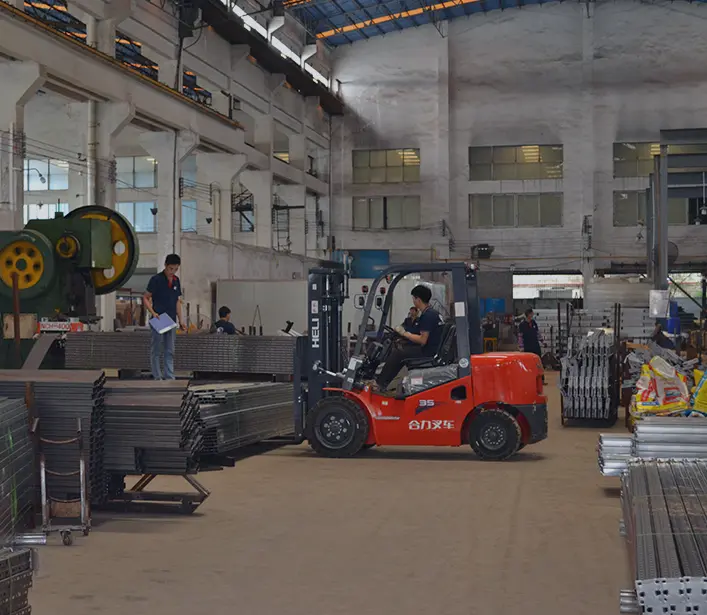
Structural reliability under dynamic kinetic loads demands zero material compromise. Every beam, upright column, chassis frame, and carriage wheel is fabricated in-house under strict ISO 9001:2015 quality assurance protocols.










Four core operational pillars eliminate procurement risk, shorten implementation timelines, and guarantee long-term operational safety.
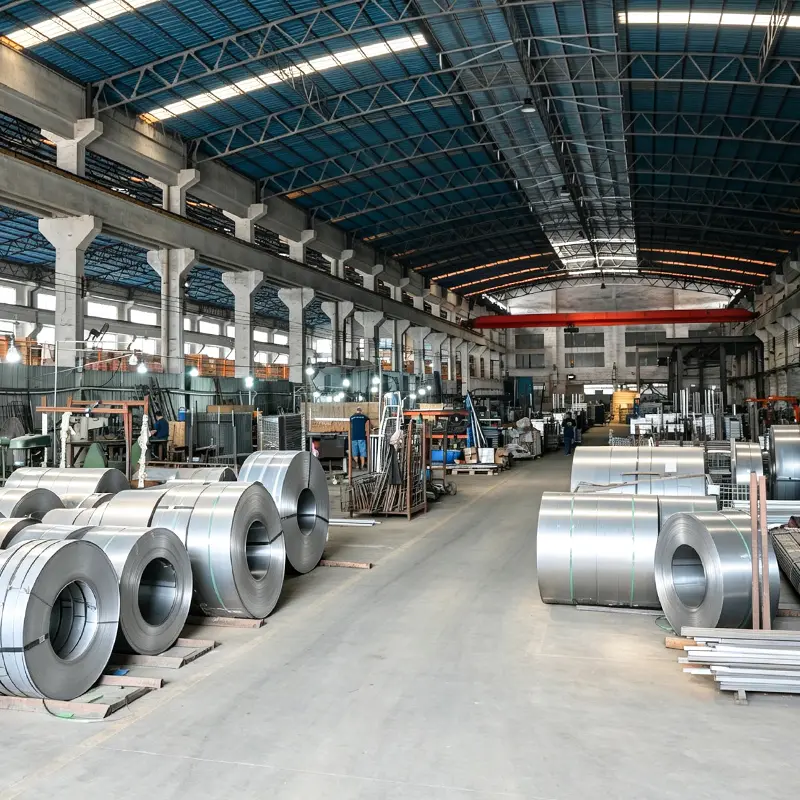
Our senior structural design teams have designed complex movable and high-density installations for cold rooms, chemical plants, and e-commerce distribution centers across the globe.
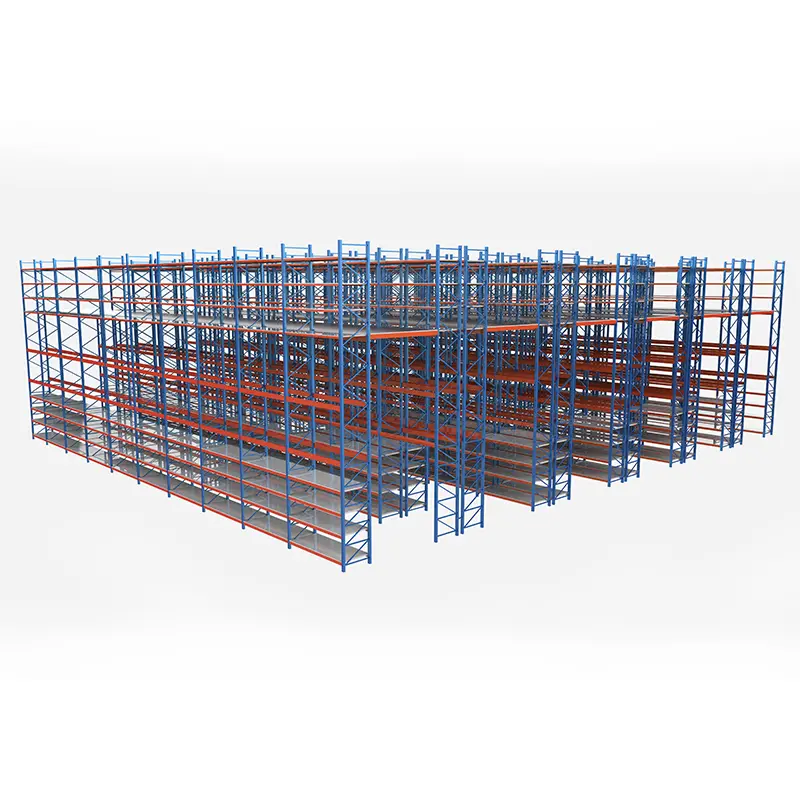
Send us your building dimensions, clear heights, and pallet specifications. We provide complete structural engineering analyses, beam loading calculations, and CAD schematics without upfront fees.
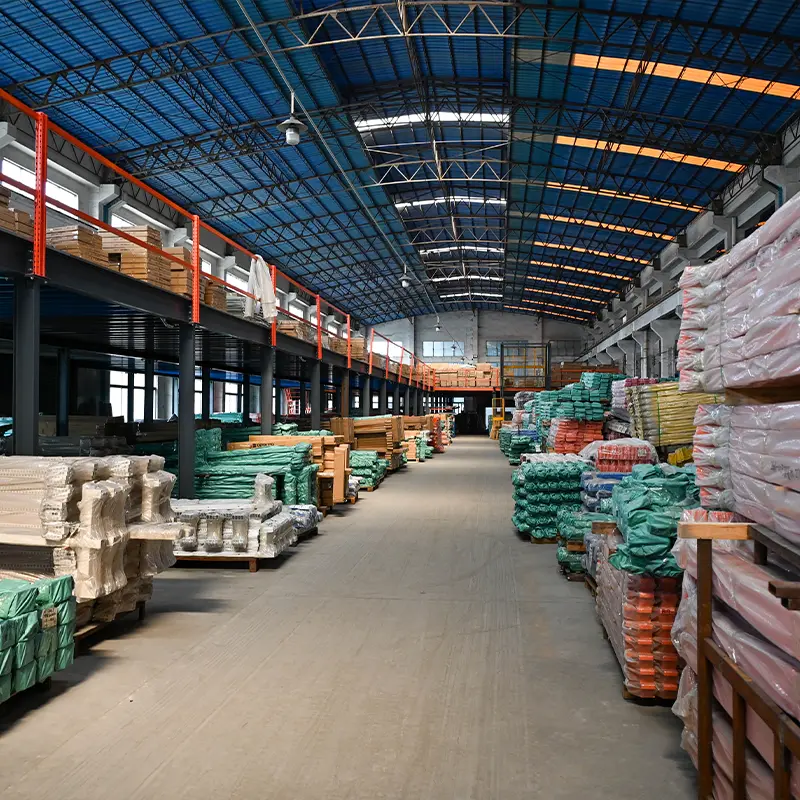
Every steel component undergoes acid pickling and zinc phosphating prior to electrostatic polyester powder coating, ensuring long-term rust and corrosion resistance even in coastal environments.
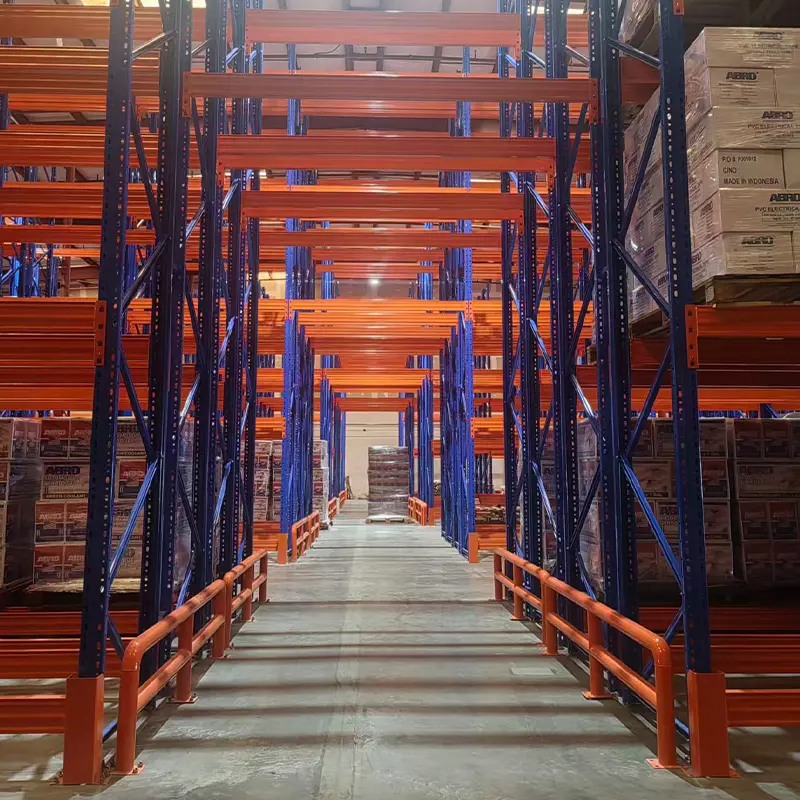
Non-standard pallet footprints, European sizing, heavy IBC containers, seismic anchor footplates, and specific client branding colors are engineered directly to exact site requirements.
Detailed answers regarding rail tolerances, foundation requirements, electrical specifications, and international export logistics.
Movable racking requires strict floor levelness to ensure proper carriage engagement and prevent motor overload. Rails are installed in accordance with DIN 18202 or EN 15620 standards. Generally, rail elevation deviations must not exceed ±1 mm across a 2-meter span, and cumulative levelness deviation across the entire track length must be under 3 mm. We offer surface-mounted ramped tracks as well as embedded rails cast directly into fresh screed channels.
Yes. If your existing concrete slab has sufficient load-bearing capacity (typically a minimum of 40–60 kN/m² uniformly distributed or equivalent point load capacity), precision floor cutting can be performed to recess the guide and running rails into narrow trenches before grouting with high-strength non-shrink epoxy grout. Alternatively, low-profile surface tracks with sloped entry plates can be bolted using chemical anchor studs.
Our cold-chain movable racking systems feature specialized low-temperature electrical and mechanical packages. These include low-temperature synthetic lubricants inside heavy-duty gearboxes, internal heating resistors inside PLC controller cabinets and motor housings to prevent condensation, flexible silicone-jacketed power cables that resist embrittlement, and IP65/IP67 rated optical safety sensors.
HEDA movable racking systems feature dual fail-safe options. Electrically, systems can be wired into the building's emergency standby diesel generator circuit with automatic transfer switches (ATS). Mechanically, every drive base incorporates an electromagnetic brake release lever. Maintenance personnel can insert a manual hand-crank to disengage the brake mechanism and open aisles manually during prolonged outages.
We routinely export under EXW, FOB (Guangzhou / Nansha / Shenzhen), CFR, and CIF terms. Direct sea transit from our South China hub to Southeast Asian ports (Singapore, Port Klang, Bangkok, Manila, Jakarta, Haiphong) takes approximately 3 to 10 days. Transit to Middle Eastern, Australian, European, and American main ports typically ranges from 18 to 35 days. Every shipment is packaged with numbered container distribution plans to streamline on-site offloading.
Every shipment is accompanied by comprehensive 3D component layout drawings, step-by-step installation manuals, and wiring schematics with labeled electrical cables. For medium and large-scale projects, HEDA can dispatch bilingual site engineers to conduct on-site installation supervision and safety commissioning, or provide real-time remote video engineering assistance to your local mechanical contractor.
Connect directly with our senior intralogistics engineering department. Send your architectural floor plan, ceiling clear heights, and pallet load profiles to receive an optimal layout proposal, structural load assessment, and turnkey quotation.