Engineered Deep Pallet Racking Systems
Heavy-duty structural storage configurations designed to maximize cubic volume, boost bay load safety factors, and streamline high-density cargo handling.
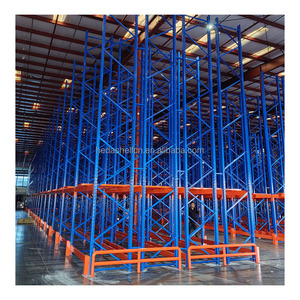
Heda Economical Heavy Duty Double Deep Pallet Racks
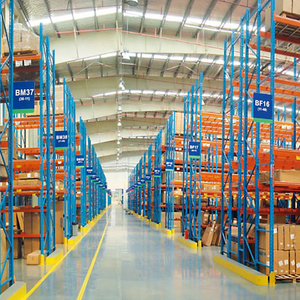
Heavy Duty Double Deep Steel Warehouse Rack System
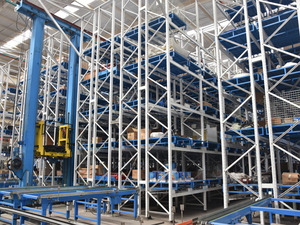
Double Deep Steel Racking with Shuttle Integration
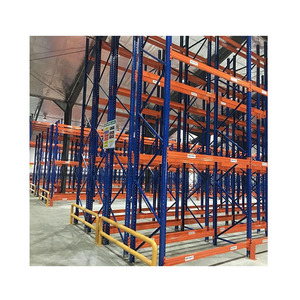
Galvanized Heavy Duty Double Deep High Density Storage
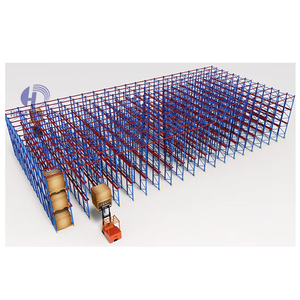
High Capacity Deep Lane Steel Drive-In Racking System
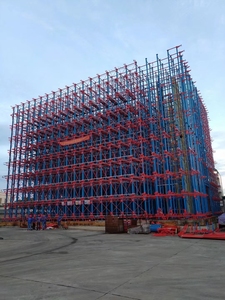
Semi-Automated Pallet Shuttle Deep Lane Storage
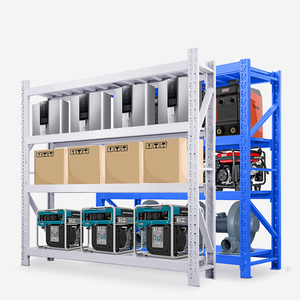
Double Deep High-Bay 6M-12M Heavy Duty Storage
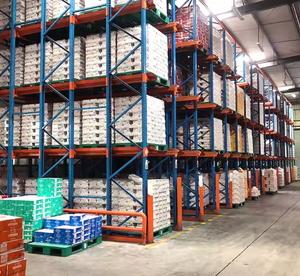
Galvanized Selective & Double Deep Cold Chain Racks
Structural Anatomy of Deep Pallet Racking Systems
An in-depth technical analysis of yield stresses, upright profile geometries, deflection ratios, and volumetric optimization for supply chain directors and structural consultants.
Balancing Pallet Accessibility & Cubic Floor Footprint
Deep pallet racking represents the premier engineering solution for warehouses facing a common structural dilemma: selective pallet racking provides 100% individual pallet selectivity but wastes up to 60% of floor area in access aisles. Conversely, drive-in systems achieve extreme density but impose severe First-In, Last-Out (FILO) retrieval constraints.
By positioning pallets two deep (Double Deep) or multiple deep using automated motorized shuttles, industrial operations eliminate one handling aisle for every two rack runs. This increases storage density by 30% to 45% compared to standard selective racking while maintaining high handling throughput via reach trucks equipped with pantograph mechanisms or deep-reach scissor forks.
Our heavy-duty upright frames are roll-formed from cold-rolled steel coils matching certified Q235B and Q355B structural grades, featuring a modified Omega (Ω) profile with up to 11 mechanical bending planes. These multiple return flanges dramatically boost torsional stiffness and buckling resistance under heavy asymmetric live loads.
Structural Engineering Benchmarks
- Deflection Safety Ratio: Engineered to L/200 under maximal permissible static load, exceeding FEM 10.2.02 and RMI MH16.1 guidelines.
- Connector Connectance: 3-Claw and 4-Claw cold-punched end connectors with self-locking safety spring pins that withstand >5kN uplift force.
- Dynamic Stability: High-tensile cross-diagonal structural bracing (C-channel 30x50mm) bolted with Grade 8.8 structural fasteners.
- Seismic Resiliency: Reinforced high-ductility anchor footplates (160x180x8mm) customized for seismic accelerations exceeding 0.3g.
| Racking Architecture | Floor Space Utilization | Selectivity Ratio | Ideal Handling Equipment | Capital Cost / Pallet | Throughput Velocity |
|---|---|---|---|---|---|
| Standard Selective | 35% - 40% | 100% (Instant Direct) | Standard Counterbalance Forklift | Baseline ($) | High Velocity Pick |
| Double Deep Racking | 55% - 65% | 50% (Pairwise) | Pantograph / Scissor Reach Truck | Moderate ($$) | Medium - High |
| Drive-In Deep Lane | 65% - 75% | 10% - 20% (Batch LIFO) | Narrow Mast Drive-In Truck | Moderate ($$) | Low - Medium |
| Radio Pallet Shuttle | 75% - 85% | Configurable FIFO / LIFO | Standard Forklift + Motorized Shuttle | Advanced ($$$) | Very High Automation |
| Push-Back Cart Racking | 60% - 70% | 25% - 33% (Lane Level) | Standard Reach Truck | Moderate - High ($$$) | Medium (Gravity Assist) |
Procurement Trends in Deep Pallet Racking
Global supply chain disruptions, rising urban warehouse rental rates, and ESG mandates are fundamentally altering how procurement directors source heavy storage hardware.
Cubic Volume Maximization over Horizontal Expansion
With prime industrial land lease rates escalating across key logistics corridors worldwide, modern distribution centers are verticalizing. Procurement contracts have transitioned from low-clearance 6-meter bays to 12-meter to 16-meter tall double-deep and high-bay shuttle structures. Warehouses can effectively double storage SKU count within the exact same structural footprint without acquiring adjacent land plots.
Convergence of Deep Lanes & Automated Shuttle Robotics
Pure manual drive-in racking is giving way to semi-automated deep-lane radio shuttle systems and automated storage and retrieval systems (ASRS). Warehouses are procuring hybrid racking frames designed with integrated run rails capable of operating wireless lithium-ion shuttles. This reduces forklift rack impact damage by over 80% while multiplying picking cycles per shift.
Demands for Non-Toxic Powder Coatings & HDG Zinc Protection
The explosion of cold-chain logistics in food safety and pharmaceuticals demands anti-corrosive performance that withstands severe condensation cycling (-30°C to ambient humidity). Procurement specifications now emphasize multi-stage acid pickling with phosphate surface passivations, lead-free RoHS electrostatic epoxy coatings, and hot-dip galvanizing per ISO 1461 standards.
Technological Advancements in Racking Architecture
Modern deep pallet racking is not static steel. Our design and manufacturing processes leverage advanced metallurgy, finite element analysis (FEA), and smart warehouse accessories.
FEA-Validated High Yield Steels
We run full 3D Finite Element Analysis simulations on every customized bay profile, modeling dynamic seismic shifts, seismic base shear, and asymmetric point loading before initiating continuous roll-forming.
Smart Impact-Deflecting Column Guards
To safeguard critical uprights from deep-reach pantograph forklift impacts, our engineering includes heavy-gauge polymer-sheathed and floor-anchored wrap-around steel guards that deflect kinetic collision forces.
Dual-Welded Interlocking Box Beams
Our step and box beams feature automated double-pulse robotic seam welding along the bottom channel, eliminating torsional roll and maintaining uniform deflection characteristics under dynamic pallet loading.
Drop-In Galvanized Wire Mesh Decks
Configured with engineered flared waterfall edges and bottom channel stiffeners, our heavy-duty wire mesh panels enhance overhead sprinkler fire penetration while preventing pallet drop throughs.
10 Controlled Steps: From Prime Steel Coil to Container
Unlike trading brokers, Guangzhou Heda Shelves Co., Ltd. executes 100% of the manufacturing stages in-house at our 30,000 m² facility under certified ISO 9001:2015 quality control.
Raw Material Verification
Spectrometric tensile and elongation testing on certified prime steel master coils.
Precision CNC Slitting
High-speed longitudinal slitting lines cutting strip steel to exact dimensional tolerances.
Multi-Station Punching
Automated continuous perforation presses stamping 50mm / 75mm pitch connection holes.
Continuous Roll-Forming
18 to 24-station roll-forming lines shaping high-rigidity Omega columns and interlocking beams.
Robotic Plasma Cutting
Precision miter cutting and beveling of bracing elements and footplates for gapless welds.
Robotic Dual Welding
Automated multi-axis robotic welding cells joining beam end connectors with zero splatter.
9-Stage Pre-Treatment
Acid degreasing, rust pickling, multi-rinse, and zinc phosphating for superior coating bond.
Electrostatic Powder Coating
Automated Swiss Gema powder spray booths applying 60-80µm heavy thermoset polyester.
High-Temp Curing Tunnel
180°C - 200°C convection curing ensuring cross-linked polymer scratch and chemical resistance.
QC & Flat-Pack Export
Micrometer thickness checks, cross-hatch adhesion tests, and timber-cushioned container packing.
Frequently Asked Questions on Deep Pallet Racking
Essential technical insights, equipment compatibility requirements, operational parameters, and project logistics directly answered by our senior racking engineers.
What specific forklift models are required to operate double-deep pallet racks?
Double-deep racking systems cannot be serviced by standard counterbalance forklifts because the second pallet is positioned behind the front pallet. Operations require specialized reach trucks equipped with either a hydraulic pantograph scissor mechanism or telescopic extending forks. Standard pantograph reach trucks typically require an operating aisle width between 2.8 meters to 3.4 meters depending on pallet depth, mast design, and base chassis dimensions.
How does deep pallet racking impact inventory selectivity and stock rotation?
Double-deep pallet racking provides 50% immediate pallet selectivity compared to 100% in standard single-selective systems. For every front pallet, one rear pallet is buffered. This configuration operates on a Last-In, First-Out (LIFO) basis per individual pair of storage slots. It is best suited for facilities storing multiple pallets per SKU (typically 4 to 20 pallets per SKU line), such as beverage distributors, consumer packaged goods (CPG), and bulk raw ingredients.
Can standard selective pallet racking be converted into a double-deep system?
Yes. If your building's existing floor slabs meet structural concrete compressive strength requirements (typically minimum 20–25 MPa, 150mm–200mm slab thickness with rebar mesh) and floor flatness standards (DIN 18202 or ASTM FF/FL numbers), selective uprights and beams can frequently be reconfigured into back-to-back double-deep bays connected by heavy-duty row spacers. A complete load recertification is required to ensure column bases withstand revised concentrated loads.
What surface treatment is best for blast freezers and sub-zero cold chain facilities?
For sub-zero environments ranging between -10°C and -30°C, steel is subject to severe condensation whenever ambient warm air enters during dock loading. While heavy electrostatic polyester powder coating performs well when applied over phosphated steel, hot-dip galvanized (HDG) coating per ISO 1461 is the ultimate industry benchmark. HDG creates a metallurgically bonded zinc-iron alloy layer providing decades of maintenance-free cathodic corrosion protection.
How does Heda Shelves calculate and verify seismic load ratings?
Our engineering design department utilizes finite element modeling software aligned with international building codes (including EN 15512, RMI MH16.1, and AS 4084). Based on the project site’s specific ground acceleration coefficients (Ss and S1 values), soil category classifications, and local seismic micro-zoning, we engineer customized upright gauge thicknesses, baseplate anchor embedment depths, and reinforced back-to-back cross-frame bracing towers.
What is the standard factory lead time and international shipping logistics capability?
Standard production cycles for typical containerized deep pallet racking orders (2 to 10 forty-foot high cube containers) average 15 to 25 business days from final approved CAD fabrication drawings. Located in Guangzhou with direct proximity to Nansha, Huangpu, and Shenzhen ports, our factory coordinates seamless direct sea transit: 2–5 days to Southeast Asia, 14–22 days to Middle East and Oceania, and 25–35 days to North America and Europe under FOB, CIF, or DDP terms.
Request an Engineered Layout & Project Catalog
Collaborate with Guangzhou Heda Shelves Co., Ltd. to optimize your warehouse volumetric storage capacity. Our certified design engineers return full AutoCAD floor plans, 3D structural renderings, and verified bay load static calculation sheets within 24 to 48 hours.
- Zero-Cost AutoCAD & 3D Modeling
- Verified CE & ISO Quality Standards
- Factory-Direct Wholesale Pricing
- Global Port-to-Port Logistics Support
Connect with our technical sales specialists to review your clear ceiling heights, pallet weights, and forklift specifications.
Get Catalog