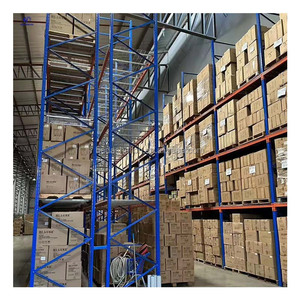
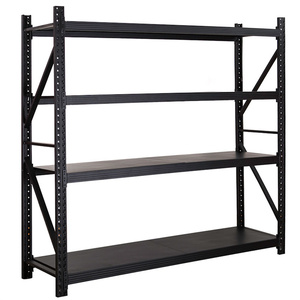
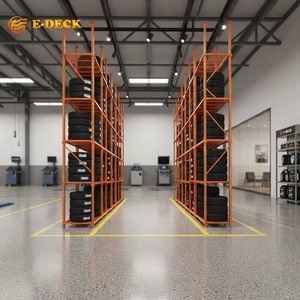
Global logistics networks and supply chain infrastructure are undergoing an unprecedented shift toward vertical volumetric optimization. Modern distribution centers cannot afford structural deflections, floor space underutilization, or corrosion-induced metal fatigue. Sourcing from premier warehouse racking heavy duty exporters requires a comprehensive verification of structural engineering calculations, steel metallurgy, precision roll-forming tolerances, and climatic protective finishes.
Structural Engineering Rigor: Evaluating Exporter Metallurgical Credentials
When selecting tier-one warehouse racking heavy duty exporters, supply chain directors and industrial structural engineers must prioritize mechanical tensile performance over nominal surface appearance. Industrial pallet racks are subjected to continuous dynamic, static, and impact stresses. True heavy-duty manufacturing demands high-yield micro-alloyed structural steel—predominantly Q235B (yield strength ≥ 235 MPa) for light-to-medium structural bracing and Q355B (yield strength ≥ 355 MPa) for main upright columns and primary box beams.
In accordance with global structural specifications such as EN 15512 (European Racking Standard), RMI MH16.1 (Specification for the Design, Testing and Utilization of Industrial Steel Storage Racks), and AS 4084-2023 (Australian Steel Storage Racking Standard), tier-one exporters carry out Finite Element Analysis (FEA) on upright punch geometries to avoid stress concentration at the hook connection points. Cold-formed steel profiles experience localized bucking under extreme vertical compression; therefore, certified exporters integrate continuous stiffening ribs along both web and flange faces of upright profiles.
| Racking Architecture |
Storage Density Index |
SKU Selectivity |
Optimum Pallet Payload |
Seismic Dissipation Capacity |
Primary Application Environment |
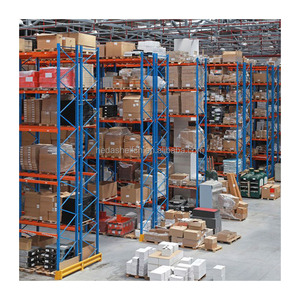
| Selective Pallet Racking |
Moderate (40–50%) |
100% Immediate Direct |
1,000 – 4,500 kg / Level |
High (Ductile frames) |
FMCG, Retail DCs, General 3PL Hubs |
| Drive-In / Drive-Through |
Very High (75–85%) |
LIFO / Batch FIFO |
1,000 – 1,800 kg / Position |
Moderate (Requires X-Bracing) |
Cold Storage, Seasonal Harvest Batches |
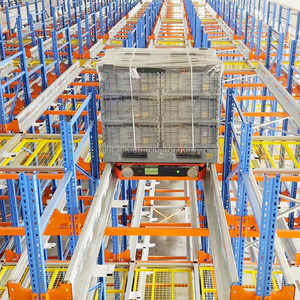
| Automated 4-Way Radio Shuttle |
Ultra High (85–92%) |
Automated FIFO / LIFO |
1,200 – 2,000 kg / Pallet |
Superior (Rigidified guide rail grids) |
Automated Mega-Hubs, Sub-Zero Chambers |
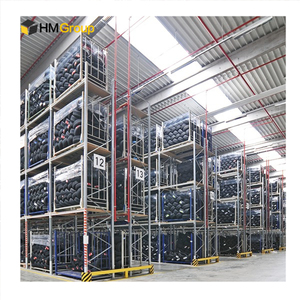
| Push-Back Cart Racking |
High (70–80%) |
LIFO (2–6 Deep) |
1,000 – 1,500 kg / Pallet |
High (Low mechanical wear) |
Buffer Zones, Cross-Dock Shipping Staging |
| Structural Cantilever Systems |
High (Linear footprint) |
100% Column-Free |
1,000 – 3,000 kg / Arm |
Engineered Base Anchors |
Steel Tubes, Rebar, Timber, PVC Extrusions |
| Multi-Tier Mezzanine Floors |
Maximum Vertical Cubing |
Multi-Tier Pick Face |
300 – 1,000 kg / m² Floor |
Integrated Column Structural Grid |
E-Commerce Picking, Auto Parts Distribution |
Future Procurement Trends Shaping the Industrial Storage Landscape
The global warehousing storage equipment sector is evolving beyond conventional static metal frames. Procurement executives and logistics strategists should factor the following macroeconomic and technological megatrends into their multi-year capital expenditure programs:
1. Autonomous ASRS & 4-Way Shuttle Adoption
Labor shortages and skyrocketing industrial rents are driving procurement from manual forklift drive-in racks toward automated 4-way radio shuttle systems. These semi-automated carriers travel longitudinally and latitudinally down narrow storage channels, operating smoothly within sub-zero cold stores without human entry.
2. Climatic Anti-Corrosion Surface Engineering
Warehouses in tropical coastal regions (ASEAN, Gulf Coast, Latin America) experience 85%+ relative humidity and saline condensation. Modern procurement frameworks now mandate chemical phosphating followed by thermoset electrostatic powder coatings exceeding 70–90 microns, with hot-dip galvanization specified for open canopies.
3. Seismic Load Dissipation & Dynamic Damping
Facilities erected across the Pacific Ring of Fire or seismically active zones demand rigorous dynamic response analysis. Exporters must supply specialized base-plate gussets, high-grade Hilti anchoring schematics, and horizontal diagonal sway bracing to prevent catastrophic progressive collapse under seismic shearing.
The 10 Operational Benchmarks of World-Class Racking Exporters
How does a corporate buyer differentiate an authentic factory manufacturer from an uncertified middleman? Top heavy-duty warehouse racking exporters meet ten non-negotiable operational benchmarks:
- Direct Mill Steel Sourcing: Full metallurgical heat certificates for Q235B/Q355B coil stock directly from premier tier-one steel mills.
- Multi-Stand Continuous Cold-Roll Forming: Computer-controlled automated roll-forming lines that guarantee straightness within 1/1000 mm over a 12-meter profile.
- Automated In-Line 50T Column Punching: High-speed optical punch systems preserving strict 50mm or 75mm hole pitches to eliminate connection play.
- Full Robotic Seam Welding: Robotic CO₂ gas shielded welding arms for beam end-connector brackets, guaranteeing continuous weld throats free of porosity or slag inclusions.
- Comprehensive 8-Stage Chemical Pre-Treatment: Complete ultrasonic degreasing, acid pickling, rinsing, and zinc phosphating before coating application to guarantee maximum paint adhesion.
- Cured Electrostatic Epoxy-Polyester Powder Coating: Automated dual-reciprocating spray booths with 200°C curing tunnels producing uniform, chip-resistant coatings verified via cross-hatch adhesion testing.
- Verified Third-Party Certifications: Documented European CE marking compliance (EN 1090 / CPR), ISO 9001:2015 quality management systems, and RoHS chemical safety conformance.
- In-House Structural FEA Engineering Department: Complimentary customized 2D AutoCAD layouts, full 3D BIM/Navisworks visual representations, and finite element load capacity deflection calculations.
- Container Cubing and Safe Export Packaging: Steel strapping on customized timber bunks, plastic edge angle protectors, water-repellent bubble wrapping, and component numbering to eliminate container unloading damage.
- Rapid Ocean Freight Connectivity: Strategic manufacturing proximity to world-class deep-water maritime ports (such as Guangzhou and Nansha), ensuring predictable shipping turnarounds to major transshipment hubs.
Quality Under Control: The 10-Stage Precision Production Sequence
From raw uncoiling to final ocean-container consolidation, reliable manufacturers enforce a closed-loop quality tracking workflow at every manufacturing node:
01
Coil Inspection
Ultrasonic thickness gauge and spectral chemical composition verification.
02
Precision Cutting
Automated uncoiling and high-speed hydraulic shearing to exact lengths.
03
CNC Punching
50-ton automated punching of precision teardrop or butterfly connector slots.
04
Roll Forming
Multi-roller continuous cold-bending forming complex multi-bend omega uprights.
05
Box Profiling
Interlocking twin C-channel seam fusion forming high-rigidity step and box beams.
06
Robotic Welding
Automated dual-torch robotic welding of 3-claw and 4-claw connector ears.
07
Shot Blast/Pickle
Multi-stage acid pickling and phosphating pre-treatment stripping all mill scales.
08
Powder Coating
Automatic electrostatic powder spray applying 70–90µm thermoset polyester resin.
09
200°C Baking
High-temperature cross-linking tunnel curing polymer bond to steel surface.
10
Export Bundling
Barcoded bundling with edge protectors and moisture-proof packing for ocean transit.