Featured Radio Shuttle Storage Systems
Engineered for high throughput, seamless FIFO/LIFO execution, and extreme structural durability across ambient and cold storage operations.
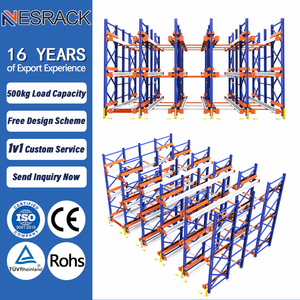
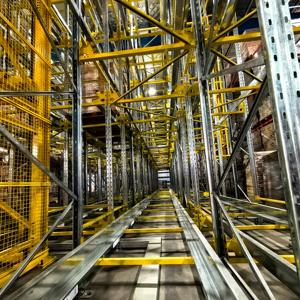
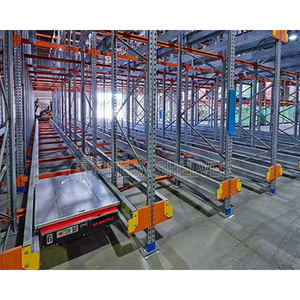
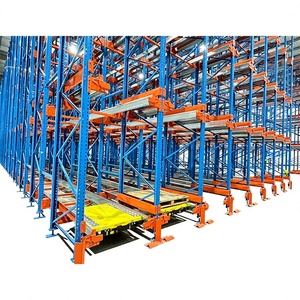
Executive Technical Overview: The Evolution of High-Density Pallet Storage
Analyzing the Paradigm Shift from Static Density to Dynamic Semi-Automated Material Handling
Modern supply chain infrastructures operate under acute macro-economic pressures: rising industrial real estate lease rates, escalating direct labor overheads, tighter order turnaround cycles, and soaring operational expenses in temperature-controlled cold environments. Historically, storage design engineers were forced to accept structural trade-offs. Standard selective pallet racking delivered instantaneous, 100% pallet accessibility at the penalty of low floor-space utilization (often below 40% building floor footprint due to sprawling service aisles). Conversely, ultra-dense configurations such as Drive-In systems dramatically amplified storage volumetric density by removing working aisles, yet introduced severe operational bottlenecks: slow transit times, forklift structural collisions, high systemic rack damages, and strict limitations to Last-In, First-Out (LIFO) inventory management.
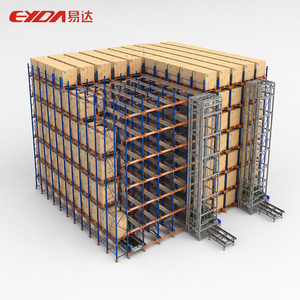
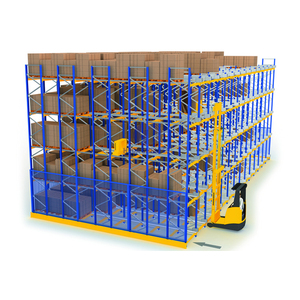
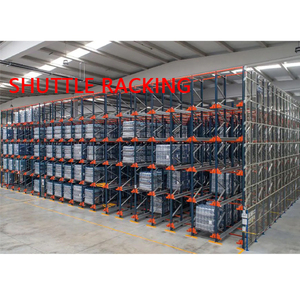
The development of the Radio Shuttle Pallet Racking System, also designated as the automated pallet runner or satellite cart system, permanently eliminated these historical compromises. Consisting of a specialized deep-lane rack structure, precision-profiled runner rails, and autonomous, digitally commanded shuttle vehicles, this architecture decouples the primary forklift operation from the interior storage channels. Forklift trucks operate solely at the lane exterior (the staging face), depositing the motorized shuttle and pallet onto high-rigidity guidance rails. The robotic shuttle subsequently engages an electromechanical lifting mechanism, elevates the load, and glides autonomously along the storage depth to dock the pallet at the optimal vacant slot. By eliminating forklift transit within deep tunnels, cycle throughput spikes exponentially, channel depths extend safely up to 40 pallets deep, and rack impact damage is practically engineered out of the warehouse ledger.
Comparative Architectural Analysis: Radio Shuttle vs. Alternative Density Formats
Evaluating System Metrics Across Mechanical Complexity, Spatial Efficiency, and Capital Allocation
| Performance / Design Criteria | Radio Shuttle System | Drive-In Pallet Racking | Gravity Pallet Flow | Mobile Pallet Racking |
|---|---|---|---|---|
| Footprint Volumetric Density | Extremely High (Up to 85%) | High (Up to 70%) | High to Very High (Up to 75%) | Maximum (Up to 90%) |
| Operating Logic Flexibility | Dual Engine: FIFO & LIFO | Strictly LIFO (FIFO requires two access aisles) | Strictly FIFO (Dependent on gravity incline) | Selective Access (100% random via moving aisle) |
| MHE & Rack Damage Vulnerability | Extremely Low (Forklift stays out of lane) | Severe (High impact risk inside bays) | Negligible (External forklift placement) | Moderate (Slow movement, mechanical rails) |
| Throughput Cycle Speed | Rapid (Simultaneous shuttle & truck cycling) | Slow (Cautious vehicle creeping in rack) | Continuous Gravity Accumulation | Slow (Aisle opening delay 45-90 seconds) |
| Maximum Lane Storage Depth | Up to 40 Pallets Deep | Typically limited to 8-10 Pallets | Typically limited to 15-20 Pallets | Standard Pallet Depth (Back-to-back) |
| Cold Storage Operating ROI | Exceptional (Minimizes conditioned airspace) | Moderate (Frequent frame collision repairs) | High (Challenging roller brake freezing) | Moderate (Sub-floor mechanical track upkeep) |
Top 10 Global Radio Shuttle Racking Manufacturers & Exporters
Benchmarking Industry Authority, Engineering Depth, and Manufacturing Resilience
Navigating the international supplier landscape demands assessing structural steel fabrication capacity, precision roll-forming tolerances, proprietary electronics control integration, and cross-border project execution. Below is the definitive critical evaluation of the premier manufacturers delivering high-density shuttle solutions globally:
1. HEDA Shelves (Guangzhou Heda Shelves Co., Ltd.)
Headquartered in Guangzhou, China, HEDA Shelves operates a state-of-the-art 30,000 m² production complex with an output exceeding 30,000 tons monthly. Backed by CE Certification (No. 2435-CPR-8605159), ISO 9001:2015, and RoHS, HEDA has pioneered cost-effective, high-tolerance 2-way and 4-way radio shuttle systems for over 10,000 projects spanning Southeast Asia, the Middle East, Europe, and the Americas.
2. Mecalux, S.A.
Based in Spain, Mecalux is a global logistics automation giant recognized for its Pallet Shuttle series. Their solutions excel in full integration with sophisticated Warehouse Management Systems (WMS) and feature both semi-automated forklift-fed configurations and fully automated stacker-crane shuttle AS/RS setups across Europe and the Americas.
3. SSI SCHAEFER
Originating from Germany, SSI SCHAEFER stands as an elite benchmark in modular racking and intra-logistics automation. Their shuttle technology emphasizes high dynamic acceleration, complex automated multi-tier transport, and robust integration with automated guided vehicles (AGVs) for demanding multi-shift distribution facilities.
4. Stow Group
Headquartered in Belgium, Stow Group is synonymous with the renowned "Atlas" shuttle carrier. Operating extensive manufacturing plants throughout Europe and the US, Stow specializes in heavy-load deep-lane pallet shuttle implementations characterized by high mechanical rigidity and long-distance operational life.
5. Jungheinrich AG
German engineering leader Jungheinrich manufactures closely paired warehouse technologies where shuttle carriers communicate natively with their proprietary automated narrow-aisle and reach trucks. Their systems excel in extreme cold storage operations down to -30°C.
6. Bito-Lagertechnik Bittmann GmbH
Germany-based Bito provides highly tailored deep-channel pallet solutions focusing on modular assembly and smooth-track roll-forming geometries. Their shuttle systems are broadly deployed in European pharmaceutical and FMCG distribution centers requiring strict batch segregation.
7. AR Racking
Spain's AR Racking is a major European exporter producing seismic-compliant, fully automated and semi-automated AR Shuttle systems. AR excels in hot-dip galvanized and specialized coated structural components capable of withstanding aggressive industrial environments.
8. Nedcon (Avoil Brand)
Originating from the Netherlands, Nedcon possesses specialized expertise in structural rack systems engineered for complex warehouse automation. Their micro-tolerance shuttle rails seamlessly integrate with automated crane frameworks across global distribution networks.
9. Dexion (Gonvarri Material Handling)
Part of the Gonvarri family, Dexion is a historic brand serving Europe, the Middle East, and APAC. Their automated shuttle storage formats focus on robust frame structures designed to handle heavy industrial pallets, coils, and specialized container geometries.
10. Jracking (China / International Export)
Specializing in export-oriented structural pallet racking, Jracking delivers robust CE-certified 2-way and 4-way radio shuttle installations tailored to heavy industrial loads (1,000kg to 1,500kg) across regional markets worldwide.
Strategic Procurement Trends: The Next Horizon in Pallet Shuttle Engineering
Anticipating Technical Shifts in Autonomous Energy Storage, Omnidirectional Kinematics, and AI-Driven WCS
Global procurement teams must evaluate racking assets through a 10-to-15-year operational lens. The radio shuttle sector is currently traversing a pivotal technological transformation characterized by three key vectors:
1. Supercapacitor & Advanced LiFePO4 Energy Architecture
Legacy lead-acid battery packs have been entirely deprecated due to thermal decay, slow charging intervals, and hazardous off-gassing. Modern procurement specifications dictate Lithium Iron Phosphate (LiFePO4) or fast-charging Supercapacitor configurations. Supercapacitors achieve full regenerative replenishment in 15 to 45 seconds while the forklift is repositioning the next pallet, enabling continuous 24/7 non-stop multi-shift throughput without battery changing downtime.
2. The Transition to 4-Way Omnidirectional Shuttle Kinematics
While traditional 2-way shuttles move unidirectionally along a single channel and rely on forklifts to change levels and lanes, modern facilities increasingly implement 4-Way Shuttle AS/RS architecture. Equipped with dual-wheel assemblies capable of 90-degree vector switching, 4-way shuttles navigate deep storage tracks as well as lateral distribution mainlines, interacting with vertical continuous reciprocating lifts (lifters) to achieve fully autonomous three-dimensional matrix movements.
3. Dynamic Fleet Synchronization & Predictive IoT Telemetry
Isolated remote-control operation is rapidly giving way to Warehouse Control System (WCS) integration via industrial 5G and industrial Wi-Fi roaming networks. Central server algorithms dynamically assign shuttle assets to balancing points, eliminating dead-cycle waiting times. Simultaneously, onboard IoT optical and vibration telemetry continuously tracks wheel wear, motor torque curves, rail alignment deflections, and battery cell health to execute predictive maintenance before operational halts occur.
Procurement Engineering Matrix: Critical Selection Criteria
A Rigorous Framework for Sourcing High-Yield Radio Shuttle Equipment
Specifying engineers and global buyers must apply strict due diligence during technical evaluation. Substandard shuttle implementations inevitably result in operational stoppages, recurring electronic card faults, and critical rail misalignment. Evaluate prospective manufacturers across these fundamental engineering criteria:
Structural Steel Chemistry & Dynamic Loading Tolerances
Radio shuttle rails serve a dual functional mandate: supporting static pallet loads (up to 1,500 kg per position) while simultaneously acting as high-precision running tracks for high-velocity shuttles. Inquire about steel grades (e.g., high-tensile Q235B or Q355B). Profiles must undergo continuous precision roll-forming to prevent track camber or lateral twist. The rail profile design must feature integrated anti-tilt flanges and mechanical stops to prevent vehicle derailment.
Anti-Corrosion Pre-treatment & Finishing Standards
Racking operating in high-humidity or tropical ambient environments demands rigorous metal surface pre-treatments. High-grade suppliers utilize continuous pickling and phosphating lines followed by electrostatically deposited thermosetting epoxy-polyester powder coats (minimum thickness 60–80 microns). For sub-zero cold rooms (-25°C to -30°C) with condensation risks, specify pre-galvanized or hot-dip galvanized runner profiles to avoid structural embrittlement and delamination.
Sensor Redundancy & Optical Safety Arrays
Autonomous high-speed vehicle operations demand uncompromising sensor safety nets. Verify that the shuttle carrier integrates industrial-grade optical distance measuring sensors, dual mechanical rail-end limits, pallet-detection photocells, and emergency laser collision scanners. The onboard programmable logic controller (PLC) must manage fail-safe braking within milliseconds should an abnormal obstruction or pallet overhang be registered.
Why HEDA Shelves Stands as Your Global Engineering & Export Partner
Combining Scale, Automated Manufacturing, and Global Project Reliability
Founded in 2001, Guangzhou Heda Shelves Co., Ltd. has grown into one of Asia's most prominent industrial storage manufacturers. Operating out of our advanced 30,000 m² factory with a workforce of 300+ technicians and engineers, we produce over 30,000 tons of precision-engineered racking monthly. Our global footprint covers more than 10,000 completed warehouse installations across 120+ countries.
For international buyers, contractors, and 3PL integrators, sourcing direct from HEDA Shelves guarantees unmatched strategic and financial advantages:
Certified Structural Compliance
All HEDA racking systems adhere rigorously to EN 15512, EN 15620, and RMI standards. We hold CE Certification (No. 2435-CPR-8605159), ISO 9001:2015 quality management authorization, and RoHS compliance, ensuring smooth local council permitting and regulatory approvals across European, American, and Asian markets.
Free Layout Engineering & 3D Modeling
Our dedicated team of project engineers delivers complimentary site evaluations, full structural finite element calculations, custom CAD floorplans, and photorealistic 3D system renderings within 24 to 48 hours of initial technical briefing.
Unrivaled Export Logistics & Packing
Located near major international shipping hubs (Guangzhou / Shenzhen / Nansha), HEDA maintains ultra-fast container dispatch. Ocean transit to Southeast Asian ports (Vietnam, Philippines, Thailand, Singapore, Malaysia, Indonesia) requires just 2 to 10 days. Components are packaged with container-optimised steel dunnage to eliminate shipping transit damage.
Frequently Asked Questions: Global Procurement & Technical Operations
Clear, Authoritative Guidance for Logistics Directors and Warehouse Facility Managers