Featured Industrial Racking & Pallet Handling Systems
Direct from Guangzhou Heda Shelves Co., Ltd. production lines: CE-marked, ISO 9001 certified structural storage systems designed for high-density logistics, heavy static loads, and harsh industrial environments.
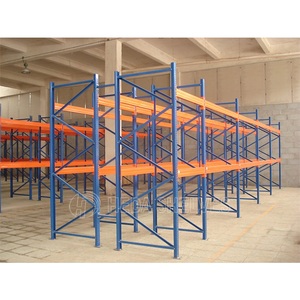
Europe Style Heavy Duty Q235 Steel Industrial Pallet Rack
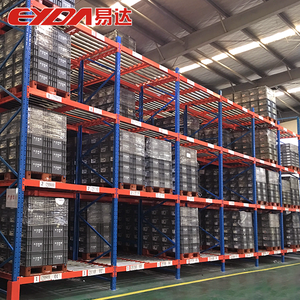
5 Layer Metal Pallet Flow Rack Gravity Storage System
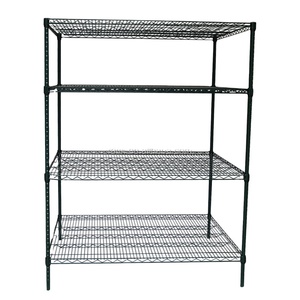
NSF Adjustable Cold Room Storage Metal Wire Shelf
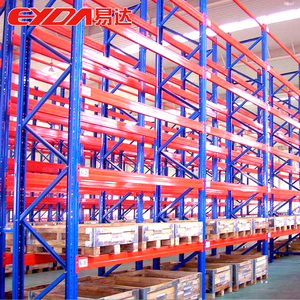
Standard Steel Heavy Duty Pallet Rack with Powder Coating
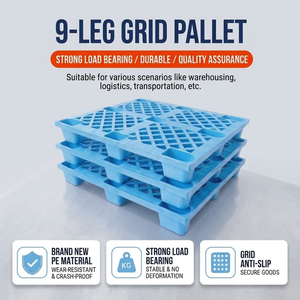
Nestable HDPE Grid Nine-Leg 1200x1000mm Industrial Pallet
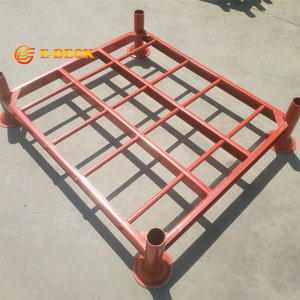
Heavy-Duty Steel Logistic Stackable Storage Post Pallet Racks
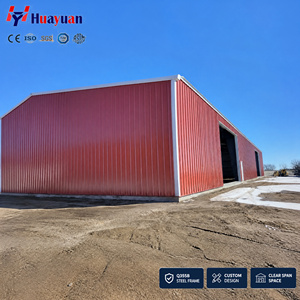
Prefabricated Multi-Level Structural Steel Mezzanine System
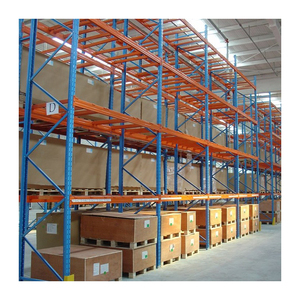
Industrial 5-Layer 2000kg Capacity Heavy Duty Pallet Rack
Industrial Racking Architectures & Procurement Science
A complete technical evaluation designed for Supply Chain Directors, Plant Engineering Managers, Logistics Operations Heads, and General Contractors evaluating heavy-duty storage assets.
In an era where industrial land prices and cold storage cubic-meter refrigeration power costs have reached historical peaks, modern warehousing cannot afford dead cubic footprint or inefficient handling geometry. Specifying racks for industrial use is no longer a simple catalog commodity purchase; it is a critical structural engineering and throughput optimization calculation governed by finite element analysis (FEA), strict international safety compliances (including European FEM 10.2.02, RMI MH16.1 in North America, and EN 15512), and localized seismic and microclimatic stresses.
Key Structural Metric: Dynamic Deflection vs. Static Yield Strength
Industrial storage racks must withstand immense static gravity loads while maintaining structural stability under forklift dynamic impacts and seismic lateral accelerations. Leading rack manufacturers utilize cold-formed Q235B and Q355B structural carbon steel, calibrating column profiles with 11-to-13 fold roll-formed stiffening ribs. Under full structural design capacity, maximum allowable beam deflection is engineered to not exceed L/200 (1/200th of the clear beam span), preventing cyclic fatigue and catastrophic frame failure.
Whether configuring a 3PL distribution center handling hundreds of fast-moving SKUs, an automotive plant feeding assembly lines via KanBan buffers, or a seafood freezer operating at -28°C across Southeast Asia, identifying the exact structural typology directly dictates order picking cycle times, floor area utilization ratios (FAUR), and total cost of ownership (TCO) across a 25-year structural design life.
Deep Technical Analysis: Top 10 Racks For Industrial Use
Explore the 10 quintessential industrial rack configurations, their load mechanics, material handling equipment (MHE) pairing, and ideal industry implementations.
Selective Pallet Racking (100% Direct Access)
The global benchmark for general distribution, fast-moving consumer goods (FMCG), and multi-SKU facilities. Every single pallet bay is immediately accessible without rearranging adjacent stock. Roll-formed uprights feature teardrop or European diamond-hole perforations with precision connector box beams secured by 5-claw safety pins.
- Access Ratio: 100% Immediate
- Aisle Width: 3.0m - 3.5m (Standard Counterbalance)
- Max Bay Load: Up to 5,000 kg/tier
- Rotation Policy: Total FIFO & LIFO capability
Drive-In & Drive-Through Racking Systems
Engineered specifically for uniform, high-volume pallet batches with minimal SKU differentiation. Forklifts drive directly into longitudinal storage lanes, depositing pallets onto continuous side cantilever rails. By eliminating intermediary aisles, cubic space efficiency increases by up to 75% compared to conventional layouts.
- Volume Gain: +60% to +75% Cube Utilization
- MHE Type: Reach Truck / Counterbalance with Overhead Guard
- Operational Logic: LIFO (Drive-In) or FIFO (Drive-Through)
- Best Use: Cold Stores, Beverage & Bulk Seasonal Goods
Dynamic Pallet Flow Racks (Gravity Driven)
Utilizes inclined roller tracks (typically set at a 3% to 4% gradient) with calibrated centrifugal speed controllers and mechanical end-stops. Pallets inserted at the loading charge face glide smoothly toward the retrieval discharge face under natural gravity, guaranteeing uncompromised First-In, First-Out (FIFO) stock turnover.
- Stock Rotation: 100% Automated Strict FIFO
- Safety Mechanism: Magnetic/Centrifugal Brake Rollers
- Throughput Speed: Ultra-fast, zero forklift travel inside bays
- Key Sectors: Perishable Food, Dairy, Pharmaceuticals
Semi-Automated Radio Shuttle Racking
Combines high-density lane storage with intelligent robotic carriers. Pallet shuttles run on specialized galvanized profile guide rails beneath the pallet, commanded wirelessly via industrial tablet. Eliminates forklift transit inside storage lanes, cutting rack collision damage to virtually zero while skyrocketing pallet cycling velocity.
- Shuttle Speed: Up to 1.1 m/s (Loaded)
- Battery System: High-Capacity Lithium Iron Phosphate (LiFePO4)
- Thermal Resilience: Ambient down to -25°C Deep Freeze
- ROI Horizon: Typically 14 to 22 months in cold storage
Multi-Level Mezzanine & Catwalk Systems
Multiplies usable building square footage vertically without civil construction or exterior warehouse expansion. Utilizing high-strength cold-formed steel uprights as the primary structural columns, these multi-tier platforms support heavy-duty decking (perforated galvanized steel plates or plywood), overhead conveyor systems, and order packing hubs.
- Floor Load Rating: 300 to 1,200 kg/m² uniform distributed load
- Staircase Incline: 38° - 45° with OSHA-compliant safety railings
- Deck Options: Perforated fire-sprinkler mesh, Solid steel, B2 Wood
- Application: E-commerce Sorting, Auto Spares, Garment Pick Hubs
Heavy-Duty Cantilever Racking Systems
Designed without front column obstructions to accommodate extra-long, awkward, or non-palletized industrial inventory. Heavy vertical central columns are welded to wide structural bases, with arms extending outward horizontally. Arms feature adjustable pin or bolt-connection sleeves with mechanical stop pins to prevent inventory roll-off.
- Arm Load Rating: 500 kg to 3,000 kg per arm level
- Column Height: Up to 12 meters with structural H-beam profiles
- Configuration: Single-sided wall or Double-sided island
- Target Materials: Steel rebar, PVC pipes, lumber packs, sheet metals
Push-Back Dynamic Cart Racks
A high-density dynamic storage solution allowing 2 to 6 pallets deep per lane. Pallets sit on a series of nested rolling steel carriages running on inclined structural channels. When loading, the forklift pushes the front pallet back to expose the subsequent nesting cart. When retrieving, gravity rolls remaining pallets forward to the picking aisle.
- Storage Depth: 2 to 6 Pallets Deep
- Operational Logic: LIFO (Last-In, First-Out) per lane
- Forklift Access: Front face only (Zero lane entry)
- Advantage: Much faster cycle times than drive-in racks
Automated High-Bay AS/RS & Mini-Load Racking
Ultra-high precision structural racks engineered to interface directly with automated stacker cranes, high-speed rail-guided shuttles, and WMS software. Operating at heights up to 35 meters, AS/RS racks demand ultra-tight manufacturing tolerances (EN 15620 class 100-300) to ensure zero millimeter deflection during high-speed robotic picking.
- Vertical Clearance: 12m to 35+ meters
- Structural Steel: High-tensile Q355B with robotic weld joints
- Automation Interface: Stacker Crane, AGV, AMR, Roller Conveyor
- Throughput: 24/7 dark warehouse lights-out automated operation
Stackable Steel Post Pallet & Manurack Units
The premier agile storage unit for manufacturing buffers, dynamic seasonal warehouses, and rental facilities that require zero permanent floor anchor bolts. Four heavy structural corner posts fit securely into cupped nesting feet, allowing fully loaded units to stack safely 4 to 5 tiers high, then demount flat when empty to reclaim 80% floor area.
- Mobility: 100% relocatable, Zero anchor bolts needed
- Load Capacity: 1,000 kg to 2,500 kg static tier load
- Demountable Ratio: 5:1 volume reduction when stored flat
- Key Industries: Auto stamping parts, tire warehouses, export staging
Very Narrow Aisle (VNA) Heavy-Duty Racking
Condenses operating aisles down to a mere 1.5 to 1.8 meters by pairing high-bay pallet racking with specialized turret trucks or order pickers running on floor guide rails or inductive wire guidance. Delivers the full 100% selective access of conventional racks while recapturing over 45% of unnecessary floor aisle space.
- Aisle Width: 1500mm to 1800mm
- Height Envelope: 10m to 18 meters
- Floor Flatness: Requires Superflat Floor (DIN 18202 / ASTM E1155)
- Efficiency Gain: 40-50% footprint density boost with 100% access
Industrial Storage Architecture Comparison Matrix
Cross-evaluate system performance parameters across storage density, selectivity, picking speed, initial Capex, and MHE equipment dependencies.
| Racking Architecture | Space Density | SKU Selectivity | Picking Velocity | Forklift Compatibility | Capex Index |
|---|---|---|---|---|---|
| Selective Pallet Rack | Medium (40%) | 100% Direct | Rapid | Standard Counterbalance / Reach | $ (Economic) |
| Drive-In Racking | Very High (75%) | Low (Batch LIFO) | Moderate | Reach Truck with Narrow Guard | $$ (Moderate) |
| Pallet Flow (Gravity) | High (70%) | Moderate (FIFO) | Continuous | Any Standard Forklift | $$$ (Capital Intensive) |
| Radio Shuttle System | Maximum (85%) | FIFO / LIFO by Lane | Fast Robotic | Standard Reach (Never enters lane) | $$$ (Advanced Tech) |
| Very Narrow Aisle (VNA) | High (65%) | 100% Direct | Very High | VNA Turret Truck / Man-Up | $$$ (Precision System) |
| Structural Mezzanine | 200-300% (Vertical) | 100% Picking | High Manual Pick | Hand Pallet Jack / Goods Lift | $$ (High ROI) |
Future Procurement Trends in Industrial Storage Engineering
How next-generation material science, environmental regulations, automation robotics, and climatic extremes are reshaping global warehouse infrastructure investments.
AGV & Autonomous Mobile Robot Integration
Fixed-aisle forklifts are rapidly being augmented by autonomous mobile robots (AMRs) and automated guided vehicles (AGVs). Future-proof rack design demands bottom-tier base elevations with reinforced lower bracing, magnetic guidance strip embedding clearances, and high-precision laser target reflectors mounted onto upright posts.
Tropical Microclimate & Maritime Corrosion Defense
Rapid supply chain re-shoring across ASEAN nations (Vietnam, Indonesia, Thailand, Malaysia) exposes steel storage assets to year-round 85%+ relative humidity and coastal chloride atmospheres. Standard wet paint finishes degrade within 24 months. Procurement now specifies high-adhesion phosphate pickling pre-treatments followed by thermoset electrostatic epoxy-polyester hybrid powder coating or hot-dip galvanization conforming to ISO 12944-C4 atmospheric corrosivity standards.
Decarbonized Steel & Finite Element Structural Optimization
Enterprise ESG mandates require auditable embodied carbon accounting in heavy steel warehouse infrastructure. Progressive manufacturers utilize specialized high-tensile micro-alloyed structural coils (such as Q355B with niobium/vanadium grain refinement). This delivers equivalent load-bearing moments of inertia while reducing overall steel mass by 12% to 18%, significantly trimming ocean freight emissions and raw material depletion.
Industrial Racking Procurement FAQs
Direct technical answers addressing seismic design, slab foundation tolerances, cold chain specifications, and turnkey factory support.
What slab floor flatness and concrete compressive strength are required for heavy-duty industrial racking?
For standard selective pallet racks up to 8 meters in height, a concrete slab with a minimum compressive strength of 25 to 30 MPa (C25/C30 grade) and a thickness of 180mm to 200mm is generally required to support baseplate anchor tension (typically M12 to M16 chemical or expansion anchor bolts). For high-bay Very Narrow Aisle (VNA) systems or AS/RS racking reaching 12 to 25 meters, facilities must meet Superflat Floor standards according to DIN 18202 Table 3 Line 4 or ASTM E1155 F-min 75 to 100, preventing angular tilt magnification at mast height.
How does HEDA Shelves engineer racking systems for high-seismic zones like Indonesia and the Philippines?
In active tectonic regions, static gravity load calculations are insufficient. Our structural engineering department performs dynamic seismic finite element analysis in accordance with UBC Zone 4, IBC 2021, and Eurocode 8. We reinforce the structural baseplates, widen the column footprint, integrate oversized grade 8.8 structural anchor studs, and introduce heavy diagonal horizontal and vertical cross-bracing towers (K-bracing and X-bracing) to absorb cyclical dynamic energy without joint shear failure.
What anti-corrosion protection is specified for sub-zero cold chain and high-humidity maritime warehouses?
Cold food distribution centers experience frequent moisture condensation cycles, accelerating steel oxidation. We provide a dual-defense solution: For ambient and controlled chilled storage (0°C to +15°C), uprights and beams undergo thorough chemical degreasing, acid pickling, and phosphating, followed by an automated electrostatic epoxy-polyester powder coating cured at 200°C (80-120 microns film thickness). For blast freezers (-25°C to -35°C) or exterior seaside yards, components are treated with Hot-Dip Galvanization conforming to ISO 1461 / ASTM A123, delivering a metallurgical zinc-iron alloy barrier that is impervious to peeling and rust for over 30 years.
What essential building layout and inventory data are required to generate a custom 3D CAD design proposal?
To deliver a certified CAD layout and load calculation model within 24 to 48 hours, our engineering office requires: (1) Architectural DWG drawing or dimensioned PDF showing interior clear ceiling height under trusses, column grid spacing, building door positions, and fire egress pathways; (2) Pallet specifications: Width x Depth x Total Height (including goods overhang) and maximum loaded gross weight per unit; (3) Existing or planned Material Handling Equipment (forklift model, lift mast height, turning radius AST, and minimum operating aisle width); and (4) SKU profile and turnover velocity (FIFO vs. LIFO).
Does HEDA Shelves provide turnkey installation services and third-party site verification across Southeast Asia?
Yes. Every export container is systematically bundled with color-coded part numbers, detailed assembly schematics, component 3D exploded views, and step-by-step video manuals. Furthermore, HEDA Shelves routinely dispatches senior site installation supervisors and bilingual project managers to client warehouses across Malaysia, Thailand, Vietnam, Indonesia, and Singapore to direct local rigging crews, calibrate plumb-line upright verticality tolerances, torque-verify base anchor bolts, and issue official commissioning load safety certificates.