Engineered Heavy-Duty Industrial Shelving & Racking Configurations
Certified under CE (EN 15512) and ISO 9001:2015 frameworks. Built with high-tensile cold-rolled steel, automated CNC perforation, and anti-corrosive multi-stage pre-treated finishes.
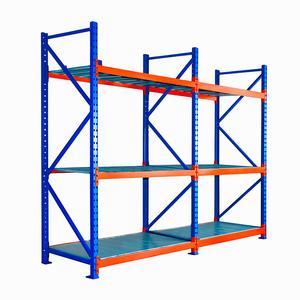
Heavy Duty Wide Span Pallet Rack Bulk Storage
- Capacity: 1,000 kg – 4,500 kg per beam level
- Upright Section: 80–120mm omega profile with 50/75mm pitch
- Surface: Electrostatic powder coat; anti-scratch epoxy
- Application: High-throughput 3PL, FMCG, and automotive
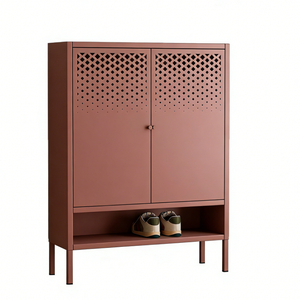
High-Capacity Ventilated Steel Storage Cabinet
- Gauge: 0.8mm – 1.2mm SPCC cold-rolled prime steel
- Ventilation: Louvered doors with dust/humidity mesh
- Locking: Central multi-cam security or RFID electronic
- Application: Industrial staff facilities, hospitality, institutions
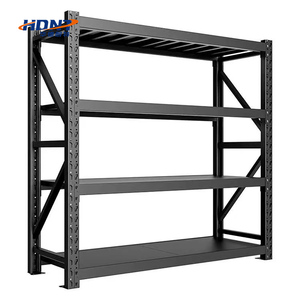
4-Tier Black Steel Garage & Workshop Shelving (300kg)
- Payload: 300 kg UDL per tier (1,200 kg total bay)
- Dimensions: 2.0m (H) x 0.6m (D) x 2.0m (L)
- Assembly: 100% boltless snap-in interlocking keyholes
- Finish: Hammer-tone matte black anti-corrosion barrier
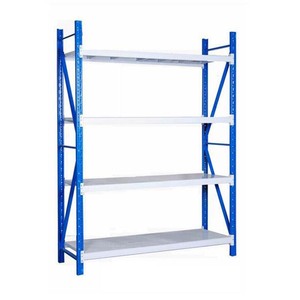
Longspan Narrow Aisle Selective High Bay Shelving
- Vertical Reach: Up to 12 meters with structural splice kits
- Aisle Clearance: Optimized for VNA turret trucks (1.6m)
- Flooring Options: Steel decking panels, wire mesh, or timber
- Structural Certification: EN 15512 & FEM 10.2.02 compliant
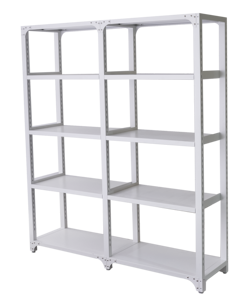
5-Tier Chemical & Lab Storage Adjustable Rack
- Coating: Chemical-resistant thermoset fluoropolymer epoxy
- Containment: Optional galvanized bunded spill-trays
- Corrosion Proof: 1,000-hour ASTM B117 salt spray test
- Adjustment: Incremental 25mm height configuration
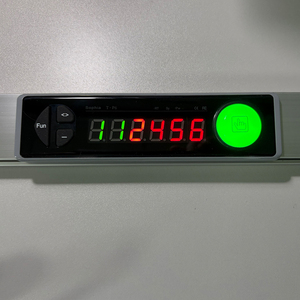
Sophia 6-Digit Pick-to-Light (PTL) Shelf Electronic Tag
- Display: High-contrast 6-digit dynamic alphanumeric LED
- Network: RS-485 Modbus or Sub-1G low-latency wireless
- Feedback: Dual-color confirmation buttons with sensor auto-detect
- WMS Integration: Real-time API integration for high-speed picking
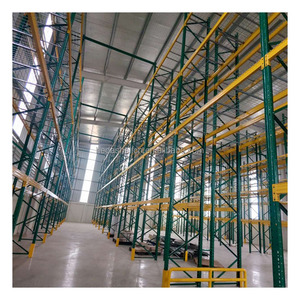
Commercial Warehouse Integrated Material Handling Racking
- Design: Comprehensive bay architecture with crash barriers
- Compatibility: Fully rated for reach trucks, counterbalances, AGVs
- Accessories: Column protectors, pallet backstops, run spacers
- Safety Standard: Strict compliance with OSHA & EN 15635
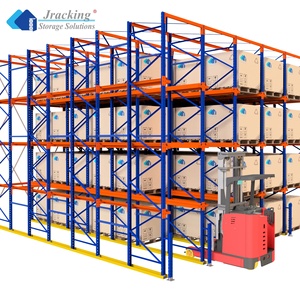
Warehouse Heavy Duty EU Blue & Orange Selective Racking
- Steel Grade: Premium high-yield Q235B & Q355B hot-rolled strip
- Color Spec: Industrial Safety RAL 5015 (Blue) & RAL 2004 (Orange)
- Connector: 3/4-prong welded connector hooks with safety drop pins
- Certification: CE Cert No. 2435-CPR-8605159; ISO 9001:2015
Top 10 Industrial Steel Shelving Factories & Exporters: Global Comparative Audit
An authoritative analysis of worldwide structural steel manufacturing hubs, assessing continuous roll-forming accuracy, metallurgical steel grades, automated welding tolerances, and export shipping lead times.
Industrial steel shelving and heavy-duty warehouse racking represent the backbone of the physical supply chain. From high-throughput fulfillment centers running 24/7 autonomous mobile robots (AMRs) to high-density cold-chain storage facilities maintaining sub-zero environments, the structural integrity of your shelving systems directly impacts operational safety, inventory longevity, and gross warehouse capacity. Sourcing directly from an established original equipment manufacturer (OEM) or export-oriented factory requires an audit that goes well beyond surface prices: procurement directors must balance structural yield limits (EN 10025 / ASTM A1011), deflection standards under maximum uniform distributed load (UDL), chemical anti-corrosion pretreatments, and finite element analysis (FEA) engineering support.
Core Evaluation Rule for Global B2B Procurement: Industrial steel shelving must never be procured strictly as a commodity. A structural deflection limit of L/200 versus L/300 under dynamic forklift loading can mean the difference between decades of incident-free operation and sudden progressive frame collapse. In this whitepaper, we dissect the top manufacturing clusters worldwide and profile the top 10 industrial steel shelving factories and exporters delivering verified performance.
Global Industrial Shelving Manufacturing Clusters
The manufacturing landscape for structural steel storage is divided into three key geographic clusters: the Pearl River Delta and Yangtze River Delta (China), dominating high-volume roll-forming capacity, advanced automated finishing, and agile custom OEM engineering; Western and Central Europe (Germany, Italy, Spain), known for highly standardized cold-formed profile systems and dense proprietary engineering under FEM standards; and North America (Midwest USA, Mexico), focused on welded structural steel frames, teardrop-pattern racking, and heavy hot-rolled channels conforming strictly to RMI ANSI MH16.1 specifications.
| Manufacturer / Cluster | Primary Production Focus | Standard Steel Grades | Certified Quality Protocols | Typical Sea Freight Transit |
|---|---|---|---|---|
| Guangzhou Heda Shelves Co., Ltd. (China) | Heavy Pallet Racks, Multi-Tier Mezzanines, Longspan & Radio Shuttle | Q235B, Q355B, SPCC High Tensile Cold-Rolled | CE No. 2435-CPR-8605159 ISO 9001:2015 | 2–10 Days to ASEAN; 14–28 Days Global |
| Mecalux, S.A. (Spain / Poland) | Automated AS/RS, Clad-Rack Warehouses, Conventional Racking | S235JR, S355JR European Standard | EN 15512 FEM 10.2.02 | Regional European Distribution; 25–40 Days Export |
| Dexion (Kardex Group, Germany/Romania) | Adjustable Pallet Racks, Dynamic Flow Racking, Cantilever Systems | High-Grade European Structural Steel | ISO 9001 EN 15635 | Central European Rail & Trucking; 30+ Days Ocean |
| SSI Schaefer (Germany / International) | Modular Shelving, High Bay Warehouses, Semi-Automated Racks | Certified DIN EN 10025 Steel Alloys | TÜV Rhineland ISO 14001 | Global Hubs; Lead Times Dependent on Project Scope |
| AR Racking (Grupo Arania, Spain) | Heavy-Duty Selective, Drive-in, Seismic-Resistant Storage | High Yield-Strength Coils (S355/S420) | CE Mark ASTM A1011 | Short-Sea Mediterranean; Ocean Freight to Americas |
| Steel King Industries (USA) | Structural Channel Racks, SK2000 Closed-Tube Pallet Racks | ASTM A36, Structural C-Channels | RMI Certified ANSI MH16.1 | North American Domestic Flatbed Logistics |
| Interlake Mecalux Inc. (USA / Mexico) | Teardrop Selective Racking, Drive-In, Push-Back Systems | ASTM Structural Steel Strips | RMI Approved ISO 9001 | Domestic Intermodal & Cross-Border Logistics |
| Stow Group (Belgium) | Silo Clad Racking, Atlas Radio Shuttle, Heavy Duty Pallet Racks | Micro-alloyed High Yield Steels | EN 15512:2020 ISO 9001 | Western & Eastern European Fast-Track Hubs |
| Frazier Industrial Company (USA) | 100% Structural Steel Storage Racks, Cantilever, High Bay | ASTM A992, Hot-Rolled Structural Shapes | AISC Certified RMI Member | North America Regional Truckload Deliveries |
| Constructor Group (Kastrup, Denmark / UK) | Industrial Shelving, Multi-Tier Mezzanines, Archive Systems | Cold-Rolled Galv/Powder Coated Strip | ISO 9001 EN Standards | Nordic and Pan-European Distribution Logistics |
Engineering Deep-Dive: Sourcing from Guangzhou Heda Shelves Co., Ltd.
Founded in 2001 and headquartered in Guangzhou, China, Guangzhou Heda Shelves Co., Ltd. (HEDA Shelves) has established itself as an agile, vertically integrated powerhouse among global industrial steel shelving exporters. Operating a modern 30,000-square-meter manufacturing complex staffed by more than 300 experienced engineers and technical personnel, HEDA Shelves maintains a formidable production capacity exceeding 30,000 metric tons per month.
Verified Safety & Certification
HEDA Shelves operates under strictly audited quality regimens, holding official CE Certification No. 2435-CPR-8605159, comprehensive ISO 9001:2015 Certification No. 18624Q00169R0M, and full RoHS compliance. Every production run is backed by certified Mill Test Certificates (MTC EN 10204 3.1) tracing yield and tensile limits.
Geographic & Maritime Speed
Positioned in Guangzhou adjacent to deep-water berths in Nansha and Shenzhen, sea transit to major ASEAN seaports is remarkably compressed: 2–5 days to Vietnam (Haiphong/Cat Lai), 3–5 days to Manila, 5–7 days to Singapore & Laem Chabang, and 7–10 days to Jakarta. Containerized export packing maximizes 40HQ cube efficiency.
Tropical Chemical Pre-treatment
Unlike suppliers who apply powder coating directly over raw mill scale, HEDA enforces an automated 10-stage immersion pickling and phosphating pre-treatment. This eradicates surface rust and applies a microscopic zinc-phosphate barrier, ensuring 100% coating adhesion even in 85%+ tropical humidity and coastal saline environments.
The 10-Stage Controlled Manufacturing Sequence
Quality control in heavy steel manufacturing must occur inline at every step of fabrication. HEDA Shelves enforces a rigorous 10-stage fabrication workflow:
- Raw Steel Metallurgical Inspection: Coil spectrometry and tensile-yield verification of incoming Q235B/Q355B coils.
- Precision CNC Slitting: High-speed automated slitting lines ensuring width tolerances within ±0.1mm.
- Continuous Automated Column Punching: High-tonnage CNC presses stamping 50mm/75mm adjustment holes with zero pitch drift over 12-meter lengths.
- Multi-Stage Cold Roll-Forming: 24-station rolling mills executing progressive bending without micro-fracturing the structural spine.
- Precision Profile Forming & Calibrating: Continuous laser verification of flange dimensions and inner angle orthogonality.
- Mechanical De-burring & Polishing: Edge smoothing of all punched holes to prevent snagging and personnel hazards during manual picking.
- Robotic Beam Seam Welding: Dual-torch automated robotic welders ensuring full-penetration seam welds between box-beam profiles and end connectors.
- Pickling, Degreasing & Phosphating: Chemical surface treatment removing oxidation and etching the steel substrate for molecular bonding.
- Thermoset Electrostatic Powder Coating: Application of 80–120μm epoxy-polyester powder baked in continuous ovens at 200°C.
- Rigid Structural QC & Container Packing: Bundle-strapping, wooden cushioning, and steel cradling engineered to prevent transit chafing.
Strategic Sourcing Trends: Industrial Steel Shelving (2026–2035)
The industrial storage sector is navigating an unprecedented structural transformation driven by e-commerce velocity, automated handling vehicles, and decarbonization mandates. Buyers modernizing their procurement frameworks must evaluate three decisive technological vectors:
1. Integration with Mobile Robotics (AMRs, AGVs, & Shuttle Carts)
Traditional selective racking allowed generous installation tolerances (±3.0mm floor-to-beam). The deployment of autonomous reach trucks and high-speed pallet shuttles has forced structural manufacturing tolerances down to sub-millimeter precision (±0.8mm). Furthermore, baseplate anchoring now demands dynamic seismic-load factoring to resist repetitive micro-vibrations generated by robotic fleets operating round the clock.
2. Electronic Pick-to-Light (PTL) & Digital Sensor Integration
Static shelves are converting into connected nodes. As demonstrated by the Sophia 6-Digit Pick-to-Light Tag integrated into modern shelving channels, physical uprights and beams are being engineered with pre-routed wiring channels, magnetic busways, and infrared sensors. This allows facilities to realize order fulfillment speeds surpassing 450 lines per hour with near-zero picking error rates.
3. High-Density Space Optimization: Rack-Supported Mezzanines
Skyrocketing industrial land lease rates across tier-one cities in Southeast Asia, North America, and Western Europe have made horizontal warehouse expansion economically unfeasible. Consequently, capital allocation is shifting toward rack-supported multi-tier mezzanines. By converting dead vertical overhead space into 2-tier or 4-tier picking platforms supporting 300 to 1,000 kg/m² floor loads, operators double or triple cubic storage capacity without changing their real estate footprint.
Request a Free Engineering Layout & Load Calculation
Send us your warehouse CAD floor plan, building clear heights, and pallet specifications. Our senior structural engineers will deliver a complete 2D/3D design layout, static load calculations, and itemized factory-direct quotation within 24 hours.
Total Cost of Ownership (TCO) & Procurement Checklist
How enterprise supply chain managers calculate true lifetime value, prevent cargo damage, and ensure strict compliance with regional seismic codes.
When evaluating supplier bids across overseas factories, nominal price per metric ton of steel can be deeply deceptive. Substandard exporters frequently shave steel thickness from the specified 2.0mm down to 1.75mm, skip phosphating pre-treatments, or utilize non-certified secondary coil scrap with inconsistent yield strength. To protect warehouse operators from premature structural failure, procurement executives must evaluate total cost of ownership across four distinct metrics:
Structural Steel Gauge & Deflection
Always stipulate the maximum permissible deflection ratio under full design payload (typically L/200 for conventional pallet racking, or L/300 for automated crane/shuttle bays). Demand third-party ultrasonic thickness testing on raw coils to verify that specified nominal wall thicknesses (e.g., 1.5mm, 1.8mm, 2.0mm, 2.5mm) are met without negative mill tolerances.
Container Packaging & Ocean Freight
Uprights and longspan beams are heavy, awkward structural profiles. Inefficient packing results in dead freight space or severe transit deformation. Certified exporters like HEDA utilize precision timber cribbing, heavy-gauge steel strapping bands, and corner protection angle irons, ensuring 100% container volume utilization (up to 26–28 tons per 40HQ container).
Site Seismic Engineering & Anchoring
Warehouses situated along active seismic belts (such as the Pacific Ring of Fire spanning Indonesia, the Philippines, Japan, and the US West Coast) require dynamic finite element calculations. Baseplates must feature extended footprints, upgraded chemical or mechanical wedge anchor diameters (M12–M16), and heavy-duty diagonal back-bracing systems.
Frequently Asked Questions (FAQ) on Industrial Steel Shelving
Direct engineering answers to technical, commercial, logistics, and compliance questions commonly raised by global procurement teams.