Featured Industrial Storage Racks & Systems for Global Export
High-performance structural steel racking, automated radio shuttle systems, multi-tier mezzanine floors, and ultra-dry industrial enclosures manufactured under CE and ISO 9001 quality compliance.
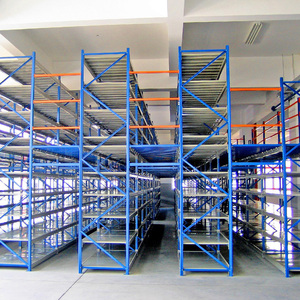
Industrial Customized Steel Mezzanine Attic Platform Warehouse Picking Rack
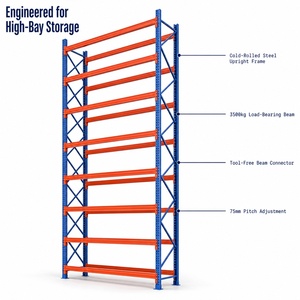
High Bay Pallet Rack System 3500kg Load 7 Levels H7800mm Adjustable
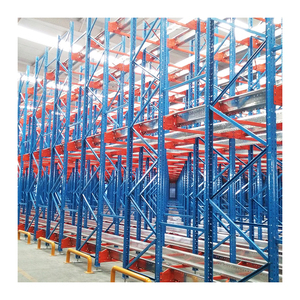
High Quality Shuttle Racking Selective Shuttle Rack Move Stable Metal Pallet Rack
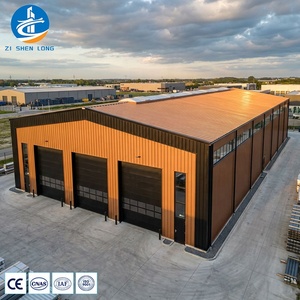
Cost-Effective Prefabricated Steel Frame Warehouse Supplies Customizable Workshop
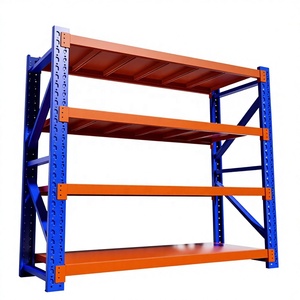
4 Tier Heavy Duty Foldable Boltless Metal Storage Rack Adjustable Shelves
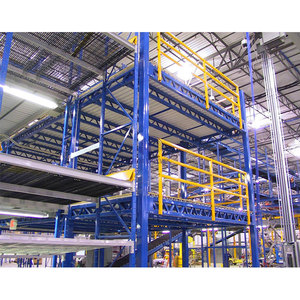
Narrow Aisle Racking Warehouse Storage Heavy Duty Beam Pallet Racking Rack
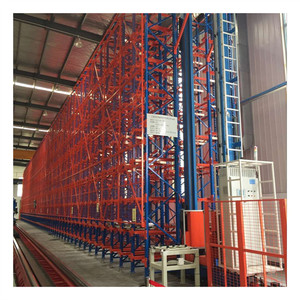
Heavy Duty Industrial Warehouse Automated Steel Racking System For AS/RS
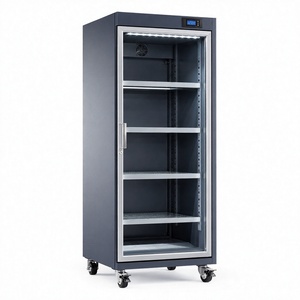
Single Door Nitrogen Cabinet Ultra Dry Storage Cabinet 1-10%RH LCD Display
Evaluating the World's Leading Industrial Racks Storage Exporters
In high-velocity global supply chains, modern warehousing has evolved from a passive real estate asset into an active, high-density throughput engine. As logistics facilities face increasing land acquisition costs, fluctuating operational margins, and surging automated intralogistics adoption, identifying the top industrial racks for storage exporter network becomes an existential supply chain decision. An enterprise-class storage rack exporter is not merely a trading broker; it must embody the full spectrum of structural engineering, metallurgical certified traceability, continuous cold-roll forming capacity, automated pre-treatment surface chemistry, and specialized oceanic shipping container optimization.
Engineering compliance across international logistics hubs demands adherence to strict structural design codes. While North American distribution facilities reference the Rack Manufacturers Institute (RMI MH16.1) standards, European, Middle Eastern, and Latin American EPC contractors design under EN 15512:2020 (Steel Static Storage Systems: Adjustable Pallet Racking Systems — Principles for Structural Design) and FEM 10.2.02. Concurrently, operations across the Asia-Pacific (ASEAN) and Australasian corridors require strict conformance with AS 4084-2023 (Steel Storage Racking) alongside seismic dynamic calculations that factor in ground motion parameters ($S_s, S_1$) dictated by regional fault lines.
To establish a transparent baseline for EPC contractors, multi-national logistics third-party providers (3PLs), and industrial facility managers, our research group has compiled the critical quantitative benchmarks that differentiate qualified global exporters from non-certified steel fabricators:
| Engineering Evaluation Metric | Certified Global Exporter Benchmark | Secondary Market Fabricator | Supply Chain Impact |
|---|---|---|---|
| Raw Steel Grade & Traceability | Certified Q235B / Q355B or ASTM A36 / A572 with Mill Test Certificates (MTC) | Mixed scrap or commercial hot-rolled sheet with variable carbon content | Guaranteed yield strength; zero brittle cracking during seismic stress displacement. |
| Surface Pre-Treatment Process | 10-Stage Automated Chemical Acid Pickling, Phosphating, and Deionized Water Rinse | Manual wiping or single-bath solvent wash with oil residue retention | Eliminates micro-oxidation beneath the powder coat; prevents blistering in 85%+ RH climates. |
| Electrostatic Powder Coating | Thermosetting Polyester/Epoxy Powder, 60–90 μm thickness, 180°C–200°C curing | Cold spray liquid paint or air-dry enamel under 35 μm thickness | Superior pencil hardness (≥2H), impact resistance, and 500+ hour ASTM B117 salt spray survival. |
| Manufacturing Capacity & Line Automation | Continuous cold-roll forming, CNC laser profiling, automated robotic beam welding | Manual press braking, disjointed hand welding with thermal distortion | Precise vertical column pitch (±0.5 mm); rapid production runs exceeding 30,000 tons/month. |
| Container Cube-Out Packing | CAD-modeled structural bundling, heavy nested cradles, anti-chafing strap wrap | Loose stacking, unpadded banded bundles causing transit scratches and bent flanges | Lowers landed freight cost per pallet position by 15%–24%; prevents in-transit marine damage. |
Scale Metrics Defining Top Global Racks Exporters
Continuous industrial capital investment in automated roll-forming lines, computerized structural testing rigs, and direct port connectivity ensures uncompromised delivery timelines across global trade corridors.
Technological & Engineering Trends Transforming Industrial Storage
Next-generation warehouse racking is transitioning from static steel structures into intelligent, digitally integrated intralogistics ecosystems designed for autonomous operations.
AS/RS & 4-Way Radio Shuttle
Integration of ultra-thin shuttle rails within standard roll-formed racking profiles allows autonomous battery-powered shuttles to navigate along X, Y, and Z axes. This eliminates forklift impact risks while maximizing volumetric density up to 90%.
Finite Element Analysis (FEA)
Advanced CAD simulation models column buckling, torsional deformation, and beam-to-column connector semi-rigidity ($K_i$) under variable point loading. This customizes steel gauge thickness down to the millimeter without excess weight.
Seismic Baseplate Attenuation
To combat high ground acceleration across Pacific Rim seismic zones, baseplates now feature energy-dissipating ductile anchor zones and oversized cold-forged footplates that flex dynamically to dissipate earthquake energy.
IoT Structural Health Sensors
Wireless micro-electromechanical (MEMS) sensors mounted directly on high-risk upright columns monitor impact vibrations from material handling equipment (MHE) and beam deflection over time, alerting warehouse management before catastrophic failure.
Global Procurement Trends Shaping Industrial Storage Sourcing
Procurement directors and supply chain executives are discarding transactional spot-purchasing in favor of long-term strategic relationships with engineering-backed manufacturing exporters.
Total Cost of Ownership (TCO) Shift
Procurement teams are evaluating racking by TCO over 15 years rather than initial FOB purchase cost. Factors include reconfigurability of bolted beams, durability of tropicalized electrostatic finishes against corrosion, and modular interchangeability during warehouse expansion or SKU profile shifts.
Direct Port-to-DC Freight Modeling
With maritime container rates experiencing periodic volatility, industrial exporters located adjacent to major deep-water ports (e.g., Guangzhou, Nansha, Yantian) provide a massive cost advantage. Integrated container load planning software maximizes 40HQ fill rates beyond 95%, cutting freight cost per metric ton.
Supply Chain Decarbonization
Global carbon footprint mandates (CBAM in the European Union, ESG compliance across North America) are requiring exporters to verify low-emission steel sourcing. Tier-1 manufacturers are adopting scrap-fed Electric Arc Furnace (EAF) raw materials and solvent-free, zero-VOC powder coating technologies.
Guangzhou Heda Shelves Co., Ltd. Enterprise Advantage
Founded in 2001, Guangzhou Heda Shelves Co., Ltd. has established itself as an engineering partner for industrial warehousing across Southeast Asia, the Middle East, Europe, and the Americas.
Verified Certifications
Official holder of CE Certification No. 2435-CPR-8605159, ISO 9001:2015 Quality Management No. 18624Q00169R0M, and comprehensive RoHS chemical safety compliance for all finished powder coatings.
Tropicalized Corrosion Defense
Automated 10-stage pre-treatment with chemical pickling and phosphating ensures flawless adhesion in 85%+ relative humidity environments across Southeast Asia, coastal ports, and cold-chain refrigerated distribution centers.
Rapid Sea Transit Times
Strategically located in Guangzhou with direct sailing to Haiphong/Cat Lai (2–5 days), Manila (3–5 days), Singapore/Laem Chabang (5–7 days), Port Klang (6–8 days), and Jakarta (7–10 days) under FOB or CIF terms.
Industrial Storage Procurement: Technical FAQ
Authoritative answers from structural racking engineers addressing international certifications, material specifications, seismic engineering, and global logistics execution.
When importing structural steel storage systems, regulatory authorities and municipal building departments require compliance documentation aligned with recognized international standards. In Europe and the UK, manufacturers must supply CE-marked documentation under EN 1090-1 and design compliance certificates according to EN 15512:2020. In North America, the critical standard is ANSI/RMI MH16.1 along with PE-stamped structural calculations demonstrating beam deflection limits under $L/200$ (where $L$ is the clear span distance). In Australia and New Zealand, AS 4084-2023 governs testing, design tolerances, and operational safety. Guangzhou Heda Shelves Co., Ltd. provides complete CE Certification (No. 2435-CPR-8605159) and ISO 9001:2015 traceability with verifiable mill test certificates for steel chemistry.
Atmospheric corrosion in tropical markets (such as Southeast Asia, Central America, or coastal industrial zones) is accelerated by sustained relative humidity above 80% and airborne marine salts. Long-term corrosion resistance cannot be achieved by surface painting alone. A certified exporter utilizes an automated multi-stage pre-treatment line: first, acid pickling to strip mill scale, followed by iron or zinc phosphating, deionized water rinsing, and dry-off drying at 120°C. Afterward, thermosetting epoxy-polyester hybrid powder is applied electrostatically at 60–90 μm thickness and oven-cured at 180°C–200°C. For deep sub-zero cold stores or open-air fertilizer storage, components receive continuous hot-dip galvanization conforming to ASTM A123 or ISO 1461, yielding a zinc layer of 60–85 μm for multi-decade rust immunity.
In seismic-prone regions (such as the Philippines, Indonesia, Japan, New Zealand, or the western coast of the Americas), industrial pallet racks act as complex steel frame structures subjected to horizontal and vertical dynamic accelerations. Design calculations utilize Response Spectrum Analysis factoring in site soil classification (Class A to E), spectral acceleration parameters ($S_s, S_1$), and building importance factors ($I_p$). Structural modifications implemented by our engineering team include upgrading upright steel to high-yield Q355B, widening upright baseplates, integrating dual heavy-duty anchor bolts per column, adding cross-aisle top-tie bracing, and designing energy-dissipating back-bracing systems to prevent progressive collapse under dynamic shake conditions.
The primary differentiator lies in the minimum guaranteed yield strength ($\sigma_y$): Q235B has a minimum yield point of 235 MPa, while Q355B delivers 355 MPa (a 51% increase in load resistance before plastic deformation occurs). For lower-height storage bays (under 6 meters) with pallet loads below 1,000 kg, Q235B provides an economical and reliable profile. However, for high-bay pallet racking exceeding 8 to 15 meters, VNA (Very Narrow Aisle) systems, or heavy mezzanine support columns carrying up to 1,000 kg/m², specifying Q355B enables thinner cold-formed wall thicknesses while maintaining structural safety factors above 1.65. This reduces raw dead load on warehouse concrete slabs while cutting ocean container shipping tonnage.
To produce an accurate CAD floor plan, 3D structural model, and static load calculation free of charge, our engineering team requires six specific data sets:
1. Architectural Building Drawings: Clear length, width, column grid locations, dock door positions, and clear height under the lowest obstruction (sprinklers or lighting trusses).
2. Concrete Slab Specifications: Slab thickness (typically 150–250 mm), compressive strength ($f'_c \ge 25–30 \text{ MPa}$), and reinforcement detail.
3. Unit Load Characteristics: Pallet dimensions (W x D x H), overhang, maximum gross weight per pallet, and bottom-deck runner orientation.
4. Material Handling Equipment (MHE): Forklift type (counterbalance, reach truck, VNA turret truck), minimum right-angle stacking aisle requirement (AST), and maximum mast lift elevation.
5. SKU Profile & Inventory Strategy: Total pallet count, number of individual SKUs, and FIFO (First-In, First-Out) versus LIFO (Last-In, First-Out) rotation.
6. Environmental Conditions: Ambient temperature range, relative humidity, and seismic/wind building zone ratings.
Shipping damage and container volume underutilization are major hidden costs with non-specialized exporters. Professional packaging protocols dictate that upright frames are bundled in alternating head-to-toe patterns separated by protective cardboard and corrugated foam runners, bound with heavy-duty polyester strapping rather than raw steel wire that bites into powder coatings. Step beams and box beams are interlocked in custom welded steel transport cradles that can be unloaded directly with a standard forklift in under 35 minutes. Fasteners, baseplates, shims, and safety locking pins are sealed in reinforced plywood crates or poly-lined steel tubs. This rigorous method ensures 95%+ cube utilization in 40HQ containers and zero transit scratching over long-haul oceanic voyages.
For standard selective or drive-in projects (2,000 to 5,000 pallet positions), manufacturing lead time runs approximately 15 to 20 days. Ocean freight from South China to regional hubs takes between 3 and 25 days depending on the destination port. Every order arrives with complete installation sets: fully numbered component bundles corresponding to 2D assembly drawings, 3D perspective views, anchor-bolt torque specifications, and step-by-step video tutorials. For complex automated radio shuttle installations, high-bay VNA racks, or multi-tier mezzanine picking platforms, Guangzhou Heda Shelves Co., Ltd. provides real-time remote engineering video support or dispatches bilingual field supervisors directly to your project site to direct local mechanical installation crews and conduct final load certification audits.
Request a Free Warehouse CAD Layout & Engineering Proposal
Connect directly with Guangzhou Heda Shelves structural engineering team. Submit your warehouse dimensions, pallet specs, and throughput requirements to receive a customized 3D layout, static load calculation, and factory-direct export quotation within 24 hours.