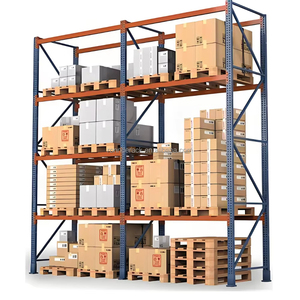
Factory Engineered Inventory
High-Density Industrial Storage & Pallet Racking Systems
Direct from our 30,000 m² Guangzhou production facility. Precision-manufactured to CE & ISO 9001 standards, offering tropicalized powder coating, heavy-duty structural load integrity, and custom bay modularity.
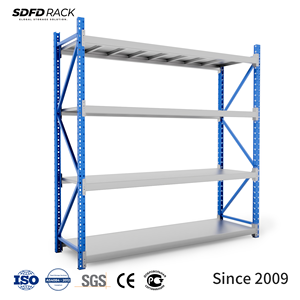
Custom 200kg 300kg 500kg Adjustable Pallet Racks Steel Heavy Duty Shelf Long Span Warehouse Shelving for E-commerce Storage
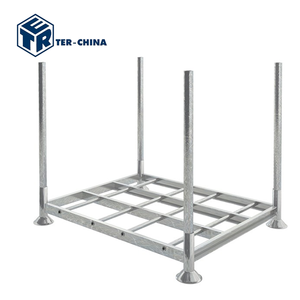
Post Pallet Rack Heavy Duty Stackable Removable Warehouse Hot-dip Galvanized Mild Steel Structure Rack Cargo & Storage Equipment
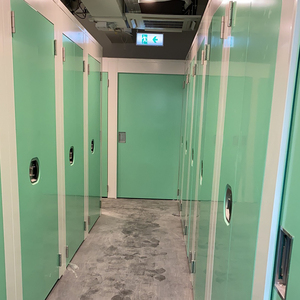
Mini Unit Mezzanine Platform Durable Adjustable Steel Chinese Hotel Garage Shed Use Warehouse Rack Protection Pallet Racking
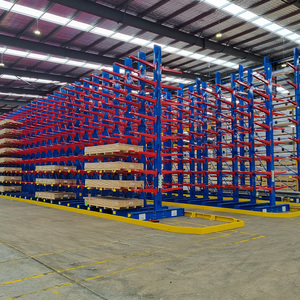
China Factory Heavy Duty Cantilever Racks Steel Warehouse Cantilever Rack For Cold Room Storage System
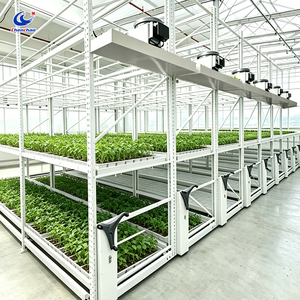
Multi-Layer Vertical Farm Grow Rack, Mobile Ebb and Flow Rolling Bench System for Indoor Hydroponic Greenhouse
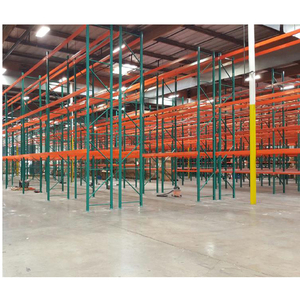
American Type Teardrop Pallet Racking Heavy Duty Steel Racking Shelves Pallet Racks Industrial Warehouse Storage
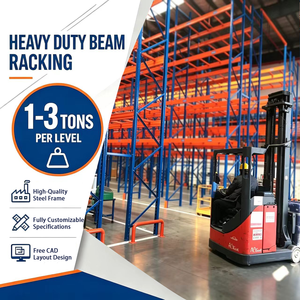
Custom Heavy Duty Steel Pallet Rack Industrial Storage Rack System For Warehouse Warehousing
Engineering Fundamentals of Gravity Pallet Flow Racking
In modern high-velocity warehousing, Gravity Pallet Flow Racking (also widely designated as Pallet Flow, Dynamic Flow, or Roller-Track Racking) serves as the primary mechanical solution for automatic First-In, First-Out (FIFO) material handling. Operating entirely without continuous electrical energy consumption, these systems harness gravitational potential energy along inclined roller beds (engineered at gradients ranging precisely from 2.8% to 4.0%) to convey palletized loads from a rear replenishment face to a frontal retrieval aisle.
From an intralogistics architectural standpoint, gravity pallet racking eliminates conventional internal forklift transit corridors. By consolidating deep storage lanes up to 25 to 30 pallets in depth, facilities regularly achieve a floor area utilization rate of 65% to 78%—nearly double that of conventional selective pallet racking. However, the operational reliability and life safety of a gravity flow installation rely heavily on precise physical calculations: the static and dynamic coefficients of friction, the torque curves of centrifugal speed-controller brake rollers, automatic line-pressure separator mechanisms, and the structural bending resistance of roll-formed upright profiles under dynamic impact forces.
Industry Benchmarks
Top 10 Gravity Pallet Racking Manufacturers & Suppliers
A rigorous evaluation of global manufacturers based on manufacturing footprint, roller physics proprietary technology, structural testing certifications (CE, ISO, R-Mark), and ASEAN/international delivery execution.
1. Guangzhou Heda Shelves Co., Ltd.
OEM/ODM LeaderHolding CE Certification (No. 2435-CPR-8605159) and ISO 9001:2015 accreditation (No. 18624Q00169R0M), Heda Shelves operates a 30,000 m² advanced production base. Generating an unmatched monthly volume of over 30,000 tons of racking, Heda specializes in custom gravity roller beds, integrated pneumatic pallet separators, and heavy-duty seismic-rated upright columns. Renowned for tropicalized anti-corrosion pre-treatment (pickling, phosphating, electrostatic powder coating), they are the premier supplier for cold-chain, agriculture, and manufacturing hubs across Southeast Asia, North America, and Europe.
- Free Structural 3D Modeling & Finite Element CAD Analysis
- In-house manufacturing from slit coil roll forming to automated welding
- Rapid 2–8 days sea freight direct to primary ASEAN seaports
2. Interroll Group
Roller Component PioneerInterroll is globally synonymous with dynamic flow systems. Focusing intently on the core mechanical sub-assemblies of gravity flow, their patented centrifugal speed controllers, magnetic speed regulators, and safety separators set international standards for velocity moderation and low pallet-runaway risks.
- Advanced Magnetic Speed Controllers (MSC 50)
- Wear-free eddy current braking technology
- Extensive testing modules for degraded wooden pallets
3. SSI SCHAEFER
Tier-1 Systems IntegratorSSI Schaefer engineers heavy-duty live storage systems optimized for automated guided vehicles (AGVs) and complex distribution center integrations. Their gravity flow setups are frequently engineered as buffer staging lanes for order consolidation and automated picking lines.
- High-grade European structural profile engineering
- Seamless interface with Schaefer WMS & automated conveyors
- Fully enclosed brake housing designs
4. Mecalux, S.A.
Global Storage MultinationalMecalux delivers pallet flow solutions across South America, Europe, and North America. Their dynamic gravity systems utilize double-roller and full-width continuous cylindrical rollers suited for Euro, ISO, and GMA pallet configurations with complex undercarriage runners.
- Patented mechanical foot-release pallet separators
- Cold-formed steel profiles with zinc-galvanized track finishes
- Integrated Easy WMS software compatibility
5. BITO-Lagertechnik
Precision Live StorageBITO PROflow pallet live storage racks emphasize ultra-smooth roller-bearing action and modular assembly. BITO has conducted exhaustive empirical research into pallet base sag and wood moisture levels, tailoring roller pitch to virtually eliminate stalled pallets in sub-zero temperatures.
- Patented PROflow safety stop mechanism
- Precision cold storage roller bearings functional to -30°C
- High-density carton live storage modules
6. Stow Group
Heavy-Duty Structural MasterStow delivers high-tonnage pallet flow racks engineered from high-tensile hot-rolled and cold-formed steels. Widely deployed in brewery and chemical sectors, Stow systems feature robust physical upright reinforcement to endure daily forklift docking impacts at lane charging faces.
- FEM 10.2.02 and EN 15512 compliance verified
- Heavy structural guide channels and entry guides
- Custom deep-freeze roller wheel formulations
7. Frazier Industrial Company
Structural Steel SpecialistRenowned in North America for exclusively fabricating from structural hot-rolled channel steel (ASTM A36), Frazier manufactures dynamic pallet flow racks that withstand excessive abusive impact. Their systems are widely favored in heavy grocery distribution centers where equipment longevity is paramount.
- 100% Structural C-Channel Steel construction
- R-Mark certified engineering adhering to RMI standards
- High resistance to forklift impact corners
8. Dexion (Gonvarri)
Pioneering HeritageAs a foundational brand in industrial shelving, Dexion delivers sophisticated dynamic live storage through the Gonvarri network. Their systems feature versatile modular track options, such as single-lane skate wheels or heavy triple-track roller channels configured for uneven slave pallets.
- EN 15512:2020 compliance verified structural models
- Variable velocity mechanical drop-catch brakes
- Extensive Nordic and European distribution support
9. Jungheinrich AG
Intralogistics ArchitectureJungheinrich blends forklift dynamics with racking engineering. Because they manufacture the reach trucks, VNA cranes, and counterbalanced units feeding gravity systems, their gravity flow lanes feature optimized entry funnels, ergonomic unloading tilt trays, and tailored clearance margins.
- Truck-to-rack harmonic safety dimensioning
- Heavy duty impact-resistant column base assemblies
- Comprehensive European warehouse safety audits
10. Daifuku Co., Ltd.
Asia-Pacific Automation TitanDaifuku integrates gravity flow modules within complex automated storage and retrieval systems (AS/RS). In high-throughput Japanese and Asian consumer goods supply chains, their dynamic gravity lanes serve as rapid buffer sorting stages directly linked to stacker crane discharge stations, boasting unparalleled reliability and micron-precision roller assembly.
- Extreme precision Japanese JIS-standard rolling bearings
- Seismic resistance engineering optimized for active tectonic belts
- AS/RS robotic interface integration architecture
Architectural Decision Matrix
High-Density Storage Systems: Comparative Engineering Analysis
Evaluating trade-offs between CapEx, OpEx, volumetric density, and FIFO stock rotation accuracy across principal warehouse pallet racking configurations.
| Racking Architecture | Stock Rotation Logic | Floor Space Utilization | Dynamic Energy Need | Forklift Cycle Time | Relative CapEx / Pallet |
|---|---|---|---|---|---|
| Gravity Pallet Flow | Strict FIFO (100%) | Very High (65% – 78%) | Zero (Gravity Driven) | Fast (Dedicated In/Out Aisles) | Moderate to High |
| Radio Shuttle System | FIFO or LIFO | Maximum (70% – 82%) | Battery / Electrical Charging | Moderate (Wait time for shuttle) | High (Automation CapEx) |
| Drive-In Racking | LIFO Only | High (60% – 70%) | Zero (Passive Steel) | Slow (Mast enters lane) | Low to Moderate |
| Push Back Racking | LIFO Only | Moderate to High (55% – 65%) | Zero (Gravity / Cart Push) | Moderate (Front Access) | Moderate |
| Selective Pallet Racking | Any (100% Access) | Low (35% – 42%) | Zero (Standard Aisles) | High Travel / Low Pick Density | Low (Basic Benchmark) |
Engineering Dynamics: Kinetic Energy, Velocity Braking & Separator Physics
The successful deployment of a high-density gravity flow lane requires resolving several interrelated mechanical forces. Left unmitigated, a 1,200 kg pallet traveling down an unchecked 30-meter incline accumulates severe kinetic energy ($E_k = \frac{1}{2}mv^2$), creating catastrophic impact forces at the unloading pick face. High-performance gravity racking solves this through three critical sub-assemblies:
1. Centrifugal Brake Rollers & Magnetic Retarders
Centrifugal speed controllers are integrated at precise calculated pitches—typically every one or two pallet lengths along the flow lane. As the pallet's bottom skids rotate the external roller shell, internal planetary gears spin flyweights outward against an internal friction brake drum. Braking torque scales quadratically with speed: if a pallet moves too fast, the braking resistance surges immediately, constraining pallet descent speed to an OSHA-safe range of 0.2 to 0.3 m/s.
2. Hydro-Mechanical Line Pressure Separators
In deep lanes (e.g., 10 to 25 pallets deep), cumulative line pressure represents a major hazard. The forward thrust of upstream pallets pushes against the leading pallet with thousands of Newtons of force ($F_{thrust} = \sum m_i g \sin\theta$). This causes forklift drivers difficulty in disengaging the front pallet safely. Precision mechanical pallet separators automatically isolate the leading pallet from rear pallets by triggering a pop-up safety stop until the first pallet has been lifted and completely extracted.
3. Incline Geometry & Pallet Deflection Ratios
The standard incline angle is calibrated between 2.5° and 3.5° depending on bottom skid materials. Hardwood four-way block pallets roll smoothly at lower angles, whereas plastic pallets with hollow-runner deflection or soft composite stringers require a 3.5° incline and triple-line continuous rollers to avoid "belly sag" stall. Engineering designs must account for maximum deflection thresholds of $L/250$ to guarantee that pallets do not bind between adjacent roller frames.
Future Forecasting
Emerging Trends in Gravity Racking Engineering (2025–2030)
How automation, IoT sensorization, and carbon-neutral logistics policies are reshaping pallet flow system specifications.
AMR / AGV Automated Interface
Modern DC layouts are pairing gravity flow replenishment faces with automated counterbalanced AGVs. Optical sensor arrays and magnetic guides ensure forklift-free lane induction and continuous 24/7 replenishment.
Smart Friction Monitoring
IoT embedded vibration and temperature sensors in brake rollers detect bearing wear and brake shoe degradation before a pallet-runaway occurs, feeding real-time maintenance telemetry to central WMS dashboards.
Cold-Chain Zero-Energy FIFO
With sub-zero cubic meters carrying extreme electrical refrigeration costs, cold-chain operators in ASEAN and worldwide are replacing selective racks with 15-deep galvanized gravity flow lanes to cut refrigerated air loss.
Direct Manufacturer Advantage
Why Global Buyers Partner with HEDA Shelves
Combining 25+ years of heavy structural manufacturing with specialized ASEAN maritime logistics, HEDA Shelves provides end-to-end turnkey engineering from raw coils to on-site commissioning.
30,000 m² Manufacturing Scale
Continuous automated steel slitting, cold roll-forming lines, computerized multi-axis column punching, and dual robotic beam-welding stations yield over 30,000 tons per month.
Verified CE & ISO Credentials
Full certified traceability under CE Certificate No. 2435-CPR-8605159 and ISO 9001:2015 No. 18624Q00169R0M. All designs calculated against FEM and RMI standards.
Fast Maritime Transit (ASEAN Hub)
Strategic export consolidation from Guangzhou port gives direct transit: 2–5 days to Vietnam, 3–5 days to Manila, 5–7 days to Singapore/Laem Chabang, 6–8 days to Port Klang, 7–10 days to Jakarta.
Tropicalized Surface Treatment
Continuous multi-stage acid pickling and chemical phosphating prior to curing with electrostatic polyester powder. Unsurpassed salt spray resistance in humid coastal tropical regions.
Seismic Structural Engineering
Custom beam profiles, reinforced upright trusses, and seismic floor anchor arrays engineered to local peak ground acceleration (PGA) metrics across active earthquake fault zones.
Turnkey OEM & Customization
From custom beam hooks, teardrop or 50mm pitch punchings, to bespoke brand powder matching (RAL series) and custom skid roller tracks for non-standard pallet profiles.
Procurement Due Diligence
Frequently Asked Questions on Gravity Pallet Flow Procurement
Direct technical answers from senior structural engineers to simplify project risk assessment and specification bidding.
What is the standard incline angle, and can it be adjusted after installation?
The engineered industry standard slope is generally 3.0% to 3.5% (approx. 2 degrees). At HEDA Shelves, beam brackets on gravity flow lanes are designed with vertical increment adjustment holes (typically on a 50mm pitch), allowing technicians to fine-tune the gradient by ±0.5% during commissioning to accommodate specific pallet bottom friction conditions.
What pallet quality standards are required for reliable gravity flow operations?
Gravity flow systems rely on structural contact with bottom runners. Wood pallets must have intact bottom skids free from loose nails, cracked boards, or deflection exceeding L/200. In cold room applications, plastic pallets require non-slip surface runners or textured roller contact tracks to prevent low-temperature hydroplaning over frost-coated steel rollers.
How does HEDA Shelves prevent high-humidity corrosion in tropical distribution centers?
All structural members undergo an intensive 10-step surface preparation regimen, including chemical bath degreasing, acid pickling to eliminate mill scale, and zinc phosphating before electrostatic curing with thermosetting polyester powder coating. For exterior, seaside, or cold-store condensation environments, full hot-dip galvanization according to ISO 1461 is available.
What project parameters are necessary to receive a free 3D CAD design proposal?
To compute static load analysis and lane track configurations, our engineering desk requires: (1) Warehouse clear height, column raster layout, and slab thickness; (2) Pallet dimensions (width, depth, full height) including bottom runner orientation; (3) Weight distribution (minimum, average, and maximum payload); (4) Desired throughput rate (pallets per hour); and (5) Forklift mast lift capacity and aisle turning radius.
Ready to Engineer Your High-Density Dynamic Warehouse?
Connect directly with HEDA Shelves' senior application engineering team in Guangzhou. Receive a complimentary 3D layout, finite element structural calculation, and factory-direct export quote within 24 hours.
Inquire Now