FIFO / FILO Hybrid
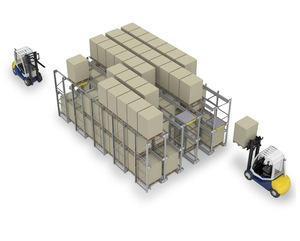
Drive-Through High-Density High-Turnover Racking
Dual Access Aisle
High Volume
Explore heavy-duty, factory-direct pallet flow, drive-through, roller bed, and mobile automated storage structures engineered for zero-spoilage stock rotation.
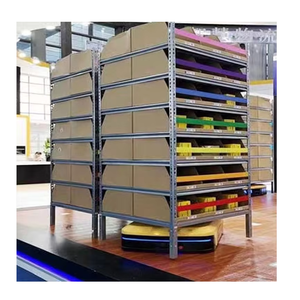
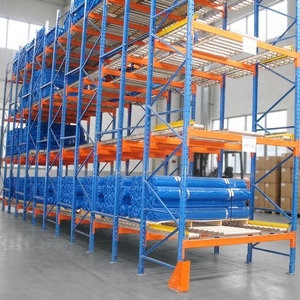
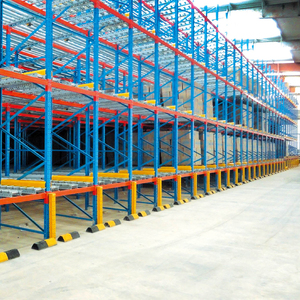
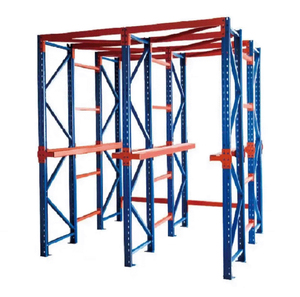
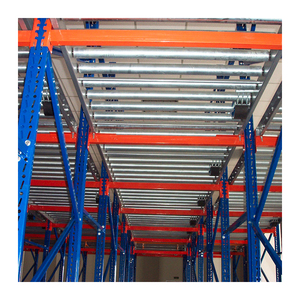
In high-velocity warehouse environments, inventory obsolescence, spoiled shelf-life batches, and delayed dispatch represent significant bottom-line losses. First-In, First-Out (FIFO) racking systems are mechanically engineered storage frameworks designed to ensure that the initial pallet or carton deposited into the system is consistently the first unit retrieved. Unlike First-In, Last-Out (FILO/LIFO) drive-in systems that rely on dead-end channels, FIFO infrastructure requires dedicated loading (replenishment) and unloading (picking) aisles.
The operational return on investment (ROI) of FIFO systems is anchored in three primary industrial physics drivers: density optimization, turnover cadence synchronization, and elimination of double-handling. By employing slight downward slope gradients (typically 2.5% to 3.5%) lined with centrifugal brake rollers and entry/exit pallet separators, gravity flow racking channels kinetic force to move multi-ton pallet loads smoothly toward discharge positions without electrical power.
For operations balancing deep storage with fast expiration cycles—such as pharmaceutical packaging facilities, food processing plants, dairy hubs, chemical compounding warehouses, and automotive just-in-time (JIT) sub-assembly lines—FIFO racking eliminates the time-consuming and hazardous pallet shuffling typical of standard selective or drive-in racks.
Choosing the correct FIFO configuration requires evaluating mechanical complexity against capital expenditure (CapEx) and picking throughput velocity. The engineering data matrix below illustrates operational thresholds across primary FIFO racking methodologies:
| System Architecture | Kinematic Mechanism | Floor Footprint Utilization | Lane Depth Limit | Selectivity Index | Ideal SKU Profile |
|---|---|---|---|---|---|
| Gravity Pallet Flow Rack | Gravity incline (2.8–3.2%) with brake rollers | 80% – 88% | 2 to 25 pallets deep | High per lane | High-turnover FMCG, dairy, cold rooms |
| Radio Shuttle FIFO Rack | Semi-automated robotic cart on guide rails | 85% – 92% | Up to 40+ pallets deep | High batch selectivity | Massive uniform batches, cold distribution |
| Drive-Through Racking | Forklift drives through open bay structure | 65% – 75% | 5 to 12 pallets deep | Moderate per aisle | Non-fragile bulk raw materials |
| Carton Live Storage Flow | Polypropylene or steel roller tracks | 75% – 85% | Split picking channels | 100% carton face | E-commerce fulfillment, assembly parts |
| AGV Integrated Dynamic Rack | Autonomous mobile robot interface + flow tracks | 85% – 94% | Custom engineered | Automated dynamic | Lights-out 24/7 manufacturing plants |
While gravity pallet flow demands no operational electricity, Radio Shuttle and AGV-interfaced systems shift labor expenses away from traditional forklift drivers, lowering long-term operational expenditures (OpEx) despite higher initial machinery investment.
A vendor review based on structural steel engineering compliance, international certifications, factory production capacity, and global delivery reliability.
Established in 2001 with a 30,000 m² advanced fabrication complex and 30,000 tons monthly capacity. World leader in heavy-duty custom FIFO gravity flow, radio shuttle, and cantilever systems engineered for challenging environments.
Pioneer in large-scale intralogistics automation and dynamic pallet flow systems. Renowned for extremely tight manufacturing tolerances and complex AS/RS integration capabilities.
A dominant force across Europe and the Americas, offering pallet flow and live racking alongside proprietary warehouse management software (Easy WMS).
Specializes in static and dynamic pallet racking systems, recently pioneering scalable shuttle robotics under the stow Robotics division.
With decades of brand heritage, Dexion offers industrial live storage and FIFO roller beds compliant with European FEM and EN standard codes.
Focuses on fully automated, high-throughput dynamic buffer racking, marrying pallet live beds with automated retrieval cranes and high-speed sorters.
World-leading manufacturer of conveyor rollers, motorized pulleys, and specialized dynamic pallet flow modules supplied to global integrators.
Combines bespoke racking fabrication with electric forklift trucks, automated guided vehicles, and dense radio shuttle systems.
Global automation leader specializing in automated dynamic storage, cleanroom FIFO systems for electronics, and cold-store automotive distribution.
Renowned for carton flow racking and light-to-medium pallet flow tracks, excelling in piece-picking and assembly line FIFO buffering.
The procurement landscape for material handling structures is undergoing a fundamental structural transition. Driven by surging labor rates, land costs, and ESG mandates, warehouse designers are actively moving past static shelving toward intelligent, flexible dynamic systems.
Rather than relying on human forklift drivers for picking faces, next-generation FIFO racking incorporates optical alignment targets and automatic latching devices designed for Autonomous Mobile Robots (AMRs) to extract pallets with sub-millimeter precision.
Sensors embedded within centrifugal brake rollers are beginning to report real-time roller speed, bearing temperature, and lane occupancy back to central WMS dashboards, providing predictive maintenance flags before roller lockup can cause channel jams.
Advanced FEA (Finite Element Analysis) modeling allows manufacturers to utilize micro-alloyed Q355B and Q460 cold-rolled coils, trimming physical steel deadweight while boosting load ratings per bay up to 24,000 kg, directly lowering ocean freight costs.
Global supply chain directors are increasingly shifting away from multi-tiered local distributors toward direct collaboration with certified manufacturing factories. Sourcing direct from primary manufacturers—such as HEDA Shelves—eliminates intermediary markups (typically 25% to 40%), shortens fabrication change-order lead times, and allows structural engineers to customize frame gauges directly to seismic, soil, and building parameters.
Combining 25+ years of heavy structural manufacturing experience with specialized engineering for humid, seismic, and high-turnover logistics hubs worldwide.
Over two decades of precision fabrication for heavy-duty industrial storage racks and automated structures.
Massive Guangzhou production hub featuring automated roll forming, robotic welding, and powder coating lines.
High-volume processing capacity guaranteeing fast fabrication turnaround for large infrastructure rollouts.
Extensive project footprint across Southeast Asia, the Middle East, the Americas, and Europe.
Warehousing operations across Southeast Asia, coastal regions, and sub-zero cold stores encounter aggressive relative humidity (>80%) that rapidly deteriorates poorly finished steel. HEDA Shelves addresses this challenge through a multi-stage automated pre-treatment line: hot degreasing, acid pickling to eliminate mill scale, and zinc phosphating that forms an inert protective crystal barrier prior to electrostatic powder coating. For exterior or damp environments, continuous hot-dip galvanizing provides decades of corrosion-free performance.
Prior to project commitment, HEDA's engineering team provides clients with comprehensive structural documentation free of charge:
Authoritative technical answers to common engineering, logistical, and structural questions raised by project engineers and procurement heads.
Standard pallet flow tracks are typically set at an incline of 2.8% to 3.2% (approximately 30 to 35 mm of fall per linear meter of lane depth). Warped or lighter plastic pallets may require up to 3.5%, while uniform GMA/Euro pallets run smoothly at 3.0% when paired with centrifugal speed controller rollers.
In deep lanes (exceeding 4 pallets), accumulated line pressure can make extracting the first pallet hazardous or damage packaging. A heavy-duty mechanical Pallet Separator is installed behind the front discharge pallet. It mechanically locks the trailing line in place until the front pallet is completely lifted and cleared by the forklift.
Yes. Low-temperature operations require low-viscosity, non-freezing lubricants inside all roller bearings and brake drums. Structural steel must also be certified against cold embrittlement (e.g., impact test-rated Q355D/E or specialized cold-resistant grades) to eliminate the risk of brittle fracture under impact.
HEDA Shelves products are verified under CE Certification No. 2435-CPR-8605159, compliant with European structural steel EN 1090 standards, alongside ISO 9001:2015 Certification No. 18624Q00169R0M and RoHS compliance documentation for all surface powder coat resins.
Departing directly from Guangzhou/Nansha port, direct ocean transit is remarkably short: 2–5 days to Vietnam (Haiphong/Cat Lai), 3–5 days to Manila, 5–7 days to Singapore and Laem Chabang (Thailand), 6–8 days to Port Klang (Malaysia), and 7–10 days to Jakarta (Indonesia).
Every shipment is packaged with color-coded component tagging, step-by-step CAD assembly drawings, and video guides. For mid-to-large scale facilities, HEDA dispatches senior structural engineers for on-site installation supervision and floor alignment certification.
Send your warehouse floor plans, pallet weights, and throughput targets to our Guangzhou engineering team. Receive a zero-cost CAD layout, 3D digital model, and direct factory pricing within 24 hours.