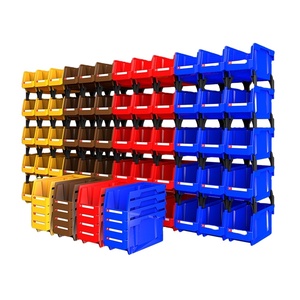
Modular Parts Picking
Precision-manufactured in Guangzhou with cold-rolled Q235B/Q355B structural steel, our modular racking architectures ensure seismic resistance, automated shuttle interoperability, and long-span load reliability.
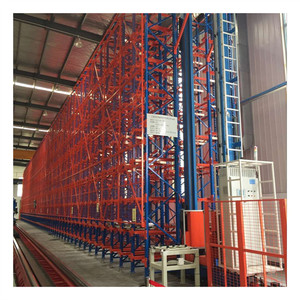
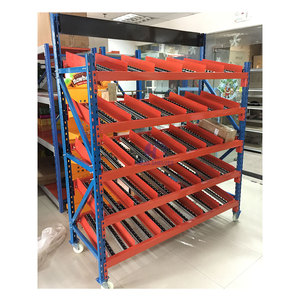
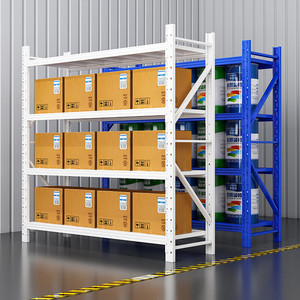
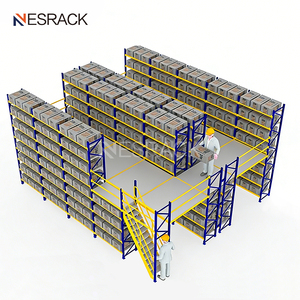
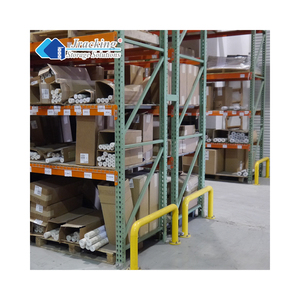
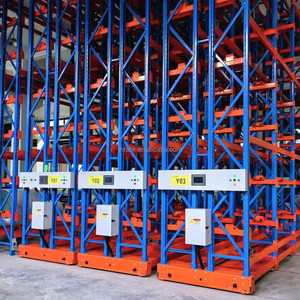
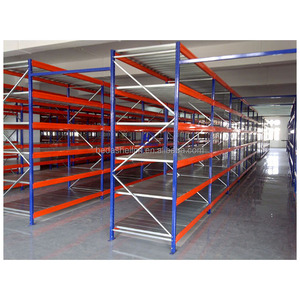
Slotted pallet racking systems—characterized by teardrop, diamond, or precision-punched multi-pitch slot profiles—represent the backbone of global material handling. Sourcing directly from an OEM/ODM factory requires an acute understanding of structural engineering dynamics, material yield strengths, beam-to-column connector safety factors, and surface passivation treatments.
Unlike standard static shelving, an engineered slotted rack must withstand both dead loads (self-weight) and dynamic live loads (forklift impact, seismic vibration, and uneven pallet deceleration). Our cold-formed omega profiles (uprights) feature continuous punching on CNC-controlled lines, ensuring punch centers remain accurate within ±0.1mm along the entire column length. This precision ensures tight interlock tolerances between the beam connector pins and upright slots, eliminating micro-wobbles and eccentric column buckling under ultimate load test states.
Engineered for 100% SKU selectivity. Utilizing universal pitch slots (50mm, 75mm, or 76.2mm teardrop), warehouse operators can adjust level spacing without structural rewelding, optimizing clearances for varied packaging heights.
Maximizes volumetric efficiency up to 85% by removing operational forklift aisles. Rails are attached to slotted uprights via cantilevered brackets, creating uninterrupted deep storage for single-SKU homogenous stock.
Leverages vertical clear heights by transforming heavy-duty slotted frames into building load-bearing structures. Directly integrates catwalks, wire decking, and conveyor channels without adding structural building columns.
| Racking Architecture | Typical Bay Load Limit | Floor Space Utilization | Access Selectivity | Best Application Profile |
|---|---|---|---|---|
| Selective Slotted Rack | Up to 4,500 kg / Level | 40% – 45% | 100% (Direct Immediate) | Fast-turnaround 3PL, e-commerce, spare parts depots |
| Drive-In Racking System | Up to 1,500 kg / Pallet | 75% – 85% | Low (Last-In First-Out) | Cold storage, raw material bulk, beverage containers |
| Gravity Pallet Flow | Up to 1,200 kg / Roller Bay | 65% – 75% | High (First-In First-Out) | Perishable food, pharmaceuticals, time-stamped batches |
| Radio Shuttle High-Density | Up to 2,000 kg / Pallet | 80% – 90% | Configurable (FIFO/LIFO) | Modern sub-zero logistics, heavy automated buffering |
The global storage equipment supply chain is undergoing profound shifts driven by supply resilience, climate regulations, and cross-border project management. Forward-thinking procurement officers are transitioning away from local intermediary resellers in favor of direct ODM partnerships with Chinese manufacturing leaders. Key trends governing 2026–2030 contracts include:
Environmental scrutiny in the EU (CBAM), the Americas, and Australasia demands verified carbon transparency. OEM factories utilizing clean coil-coating lines, low-VOC electrostatic thermosetting powders, and zero-discharge phosphating recovery systems provide distinct supply compliance benefits over antiquated workshops.
Procuring slotted racks without pre-configured BIM (Building Information Modeling) integration is becoming obsolete. Leading factories now supply native Revit and IFC files containing precise structural dead-weight, anchor bolt shear forces, and thermal expansion indices, facilitating immediate approvals from municipal building authorities.
Global multi-site enterprise clients now demand hybrid slotted frame extrusions capable of accepting American teardrop connectors alongside universal European 50mm metric hook designs. This enables consolidated multi-facility procurement with zero beam-stock cross-contamination.
Modern racking is no longer static metal; it has evolved into a hyper-engineered skeleton supporting automated guided vehicles (AGVs), automated storage and retrieval systems (ASRS), and high-frequency warehouse execution software (WES).
Shifting from standard Q235B to micro-alloyed Q355B and high-yield cold-rolled profiles reduces steel dead-weight by 12–18% while sustaining equivalent deflection limits (L/200 to L/300) under maximum loading.
For high-humidity tropical conditions and sub-zero condensation zones (-30°C), advanced zinc-nickel electro-dip primers coupled with hot-dip galvanized upright bases prevent crevice oxidation and structural fatigue.
Next-generation slotted columns incorporate laser alignment indicators, load-cell safety pins, and RFID tracking tags embedded directly during continuous roll-forming to monitor deflection and aisle impacts remotely.
Founded in 2001, Guangzhou Heda Shelves Co., Ltd. stands as a premier manufacturing benchmark for high-performance industrial storage systems. Spanning over 30,000 square meters of precision fabrication infrastructure with 300+ engineering specialists, our plant delivers an unmatched 30,000-ton monthly capacity to logistics hubs, fulfillment centers, and manufacturing giants across 120+ countries.
Backed by official CE Certification (No. 2435-CPR-8605159), ISO 9001:2015 (No. 18624Q00169R0M), and verified RoHS environmental standards, ensuring effortless permitting across stringent international jurisdictions.
Every structural member is produced fully in-house: continuous coil de-coiling, precision CNC laser cutting, automated column punching, cold-bending forming, profiling, robotic welding, acid pickling, phosphating, electrostatic powder coating, and pre-loading container optimization.
Our senior structural team provides complete 2D warehouse layouts, full 3D realistic renderings, seismic calculations, and foundation anchor layout diagrams at zero cost before commercial finalization.
All structural beam-to-frame ratings are calculated strictly according to EN 15512 (European Racking Code) and RMI (Rack Manufacturers Institute) design standards. Physical destruction and deflection testing are conducted under third-party supervised conditions. Beam deflection is strictly engineered not to exceed L/200 under uniformly distributed load (UDL), and connector drop pins feature a minimum 5kN vertical shear resistance.
Standard volume orders (1 to 5 containers) are manufactured within 15 to 20 working days. Because racking members are long and heavy, uprights are nested with high-density poly spacers, and beams are cross-tied on wooden pallets with steel tension strapping. This method prevents paint scuffing and transit warping, while enabling forklift de-stuffing in under 90 minutes per 40HQ container.
When engineering projects in seismic regions like Indonesia, the Philippines, or Japan, our team adjusts structural computations based on your local building ground acceleration coefficients (Ss and S1 values). Upright footplates are expanded, steel gauge thicknesses are elevated from 1.5mm to 2.0mm or 2.5mm, high-tensile chemical anchors (M12/M16) are specified, and full horizontal and vertical cross-bracing towers are added into the plan.
For environments exceeding 75% relative humidity or walk-in chillers (0°C to +4°C), our standard 7-stage chemical immersion (acid cleaning, zinc phosphating, deionized water rinsing) combined with thermosetting epoxy polyester powder coating (60-80 microns thickness) provides over 500 hours of salt spray resistance. For sub-zero freezers (-18°C to -30°C) or open-air marine ports, we supply full continuous hot-dip galvanized steel components.
Yes. Under our OEM/ODM manufacturing capability, our tooling shop can configure CNC punch presses to match proprietary teardrop patterns, diamond holes, or specific metric slotted arrays (50mm, 75mm, 76.2mm, and 100mm pitches). This allows existing warehouses to source replacement frames and add beam levels that match their installed base seamlessly.
Submit your architectural CAD drawing, clear height parameters, and pallet specifications. Our senior structural engineering department will prepare a comprehensive bay layout, beam load calculation, and factory quotation within 24 hours.