Featured Industrial & Shuttle Pallet Racking Systems
Explore our precision-rolled, high-yield Q235B structural steel racking portfolio. Tailored for automated multi-lane radio shuttles, high-bay distribution hubs, and temperature-controlled logistics complexes.
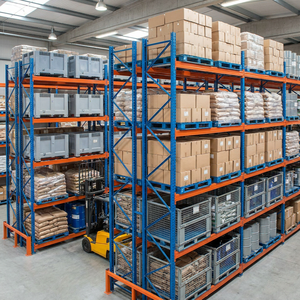
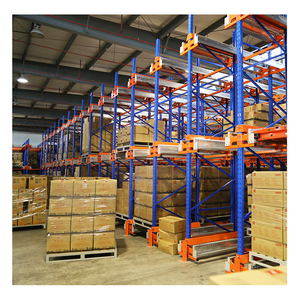
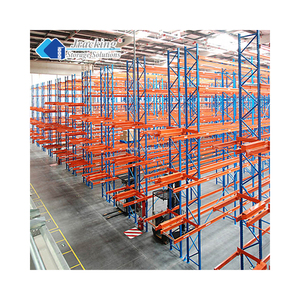
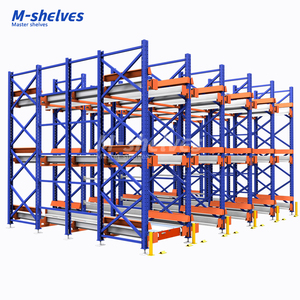
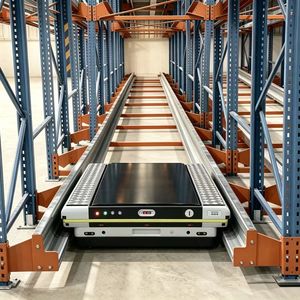
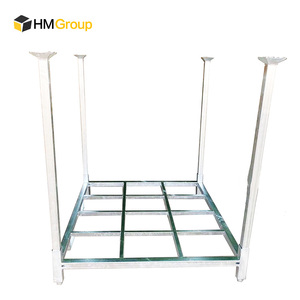
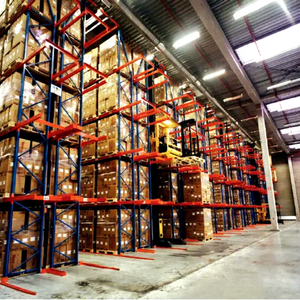
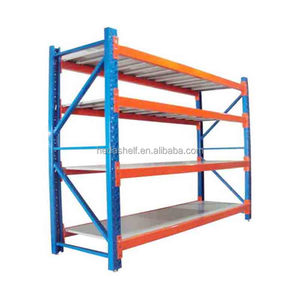
Engineering Leadership, Scale & Direct OEM/ODM Capabilities
With over two decades of production heritage, our integrated Guangzhou production base combines automated roll-forming lines, certified welding procedures, and rigorous mechanical simulation to ensure zero structural fatigue across extreme operating conditions.
Global CE & ISO 9001 Compliance
Certified under CE Certificate No. 2435-CPR-8605159, ISO 9001:2015 No. 18624Q00169R0M, and RoHS directives. Every shuttle rail profile, beam lock, and anchor plate adheres strictly to FEM 10.2.02, EN 15512, and RMI safety benchmarks.
Full-Lifecycle Free Engineering
We do not supply standard steel parts off the shelf without analytical validation. Our 300+ engineering and technical team provides complimentary CAD floorplans, 3D parametric renderings, and finite element load calculations tailored to seismic, soil, and dynamic vehicle loads.
Tropical & Cold-Chain Surface Treatment
Our proprietary 10-stage preparation process integrates high-pressure acid pickling and chemical phosphating before automated electrostatic powder coating. This delivers exceptional salt spray resistance (>500h) and corrosion defense for high-humidity ASEAN coastal climates and sub-zero freezer plants.
Direct Port Proximity & Fast ASEAN Logistics
Operating strategically from Guangzhou with direct access to Nansha Port. Direct sea transit arrives within 2 to 5 days to Vietnam and Manila, 5 to 7 days to Singapore and Thailand, and 6 to 10 days to Port Klang and Jakarta, reducing ocean logistics friction and site lead time.
Future Procurement Trends in Automated Pallet Shuttle Warehousing
Global supply chain shocks, surging industrial land values, and escalating manual operator labor costs are fundamentally redefining intralogistics procurement. Modern enterprise buyers are shifting from conventional static racks toward modular, scalable robotic architectures.
TCO-Driven Volumetric Densification
Industrial real estate acquisition costs have surged globally. Traditional wide-aisle selective configurations utilize as little as 35-40% of building volume due to dedicated forklift transit lanes. Modern RFPs mandate volumetric utilization rates above 75%.
- Elimination of internal forklift transit aisles
- Extended lane depths exceeding 30 to 50 pallet positions
- Significant compression of sub-zero cubic refrigeration volume
Hybrid CapEx vs. Phased Scalability
Procurement directors are avoiding inflexible, capital-intensive monolithic stacker cranes (ASRS) with multi-year paybacks. Radio pallet shuttle systems decouple structural steel CapEx from mobile robotic automation.
- Deploy 100% shuttle racking steel on Day 1
- Introduce additional radio shuttles progressively as pallet throughput climbs
- Near-zero facility downtime during fleet expansion
OEM/ODM Interoperability & WCS Integration
Supply chain managers reject proprietary, closed-loop vendor lock-in. Buyers now procure galvanized or coated shuttle structural steel from certified direct OEM factories, pairing them with open-architecture shuttle carts.
- Open API integration between Shuttle PLC and Tier-1 WMS/WCS systems
- Standardized optical, LiDAR, and RFID pallet positioning
- Interchangeability of shuttle units across multi-tier storage zones
| Storage Architecture Type | Volumetric Space Utilization | Throughput Speed (Pallets/hr) | Initial CapEx Expenditure | Operational Risk & Damage Profile |
|---|---|---|---|---|
| Selective Pallet Racking | 35% - 42% (Low) | Direct Fast Access (Single) | Low Initial CapEx | High forklift impact risks on uprights |
| Drive-In Pallet Racking | 55% - 65% (Medium-High) | Slow (Forklift enters channels) | Low-Medium CapEx | Severe mast collision risks; honeycombing loss |
| Radio Pallet Shuttle System | 75% - 85% (Ultra-High) | Rapid (Automated in-lane travel) | Moderate / Scalable ROI | Extremely Low (Forklift stays on main aisles) |
| Full Stacker Crane ASRS | 85% - 90% (Maximum) | Continuous Automated | Extremely High CapEx | Single crane breakdown halts entire storage bay |
Key Technological Trends Shaping Pallet Shuttle Systems
The radio pallet shuttle industry is undergoing transformative mechanical and electrical upgrades. Engineering teams are leveraging high-capacity energy storage, cross-plane robotics, and cloud telemetry to achieve non-stop material handling.
LiFePO4 & Supercapacitor Power
Replacing legacy Lead-Acid batteries, Lithium Iron Phosphate (LiFePO4) chemistry and supercapacitors offer 30-minute fast charging, 8-10 hour duty cycles, and uncompromised continuous discharge in extreme -30°C cold chain freezers without thermal degradation.
4-Way Shuttle Kinematics (3D Matrix)
While traditional 2-way shuttles operate on fixed horizontal lanes paired with reach trucks, emerging 4-way multi-directional shuttles traverse both longitudinal and transverse coordinate tracks. Paired with vertical pallet elevators, they deliver full 3D matrix automation.
Predictive Maintenance & IoT Telemetry
Next-generation shuttles monitor wheel bearing vibration, rail alignment deviation, motor temperature gradients, and braking wear in real time. Wi-Fi 6 industrial roaming ensures seamless handshakes without dead zones across dense steel racks.
Sub-Millimeter Cold-Formed Steel Rails
Shuttle movement stability relies heavily on galvanized track geometry. Modern roll-forming lines leverage continuous multi-stand rollers with in-line laser sensors to maintain running rail parallelism and straightness within tight ±1.0mm tolerances over 100 meters.
Frequently Asked Questions for B2B Importers & Contractors
Technical, logistical, and structural answers to streamline your factory-direct procurement process.
We require the building CAD drawing (column grid, clear height to roof truss obstructions, floor expansion joints), exact pallet specifications (width, depth, overall height including cargo overhang, and gross weight), forklift model/mast lift height, operational mode preference (FIFO vs. LIFO), and local seismic acceleration coefficients.
The racking structure itself determines the physical topology: LIFO (Last-In-First-Out) configurations feature a single loading/unloading aisle where the shuttle works from one side. FIFO (First-In-First-Out) configurations feature separate loading and unloading faces on opposite ends. The shuttle software is toggled directly via wireless tablet control.
Yes. We engineer customized cold-storage setups down to -30°C. Structural steel uses low-temperature toughness steel (Q355D/E or specialized Q235 variants) to prevent brittle fracture. Shuttles feature internal heating elements, IP65-sealed electronics, anti-condensation coatings, and specialized low-temperature lubricants.
Uprights and beam bundles are bound with steel strapping, padded with protective corrugated edging, and wrapped with heavy-gauge waterproof stretch film. Sensitive galvanised guide rails and electrical shuttle units are enclosed in vacuum vapor-barrier film with desiccant packs and packaged in reinforced export wooden crates.
Yes. As a direct manufacturer, over 40% of our capacity is dedicated to OEM/ODM custom contracts. We can manufacture uprights according to proprietary pitch patterns (e.g., 50mm, 75mm, 76.2mm Dexion style, teardrop), customize rail press forms, and package under private label with complete container optimization.
Standard production cycles are 15 to 25 days depending on project tonnage. From our Guangzhou facility to Nansha Port, loading takes 24 hours. Sea transit times are approximately 2-5 days to Haiphong/HCMC and Manila; 5-7 days to Singapore and Bangkok/Laem Chabang; 6-8 days to Port Klang; and 7-10 days to Jakarta.
Accelerate Your High-Density Automated Storage Project
Consult with our structural engineering team today. Receive comprehensive AutoCAD layout schemes, 3D structural visualisations, load-stress analysis, and factory-direct OEM pricing within 24 hours.