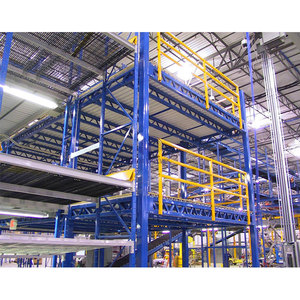
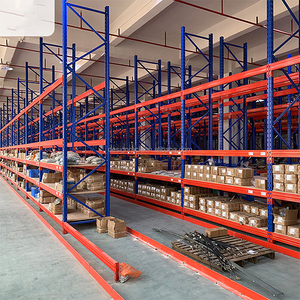
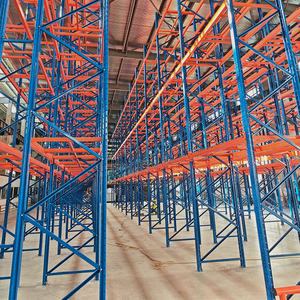
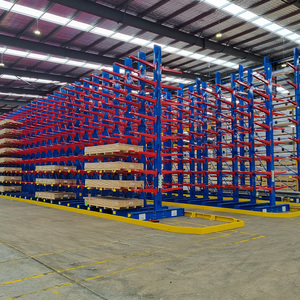
1. White Paper Overview: Engineering Excellence in Modern Warehouse Racking
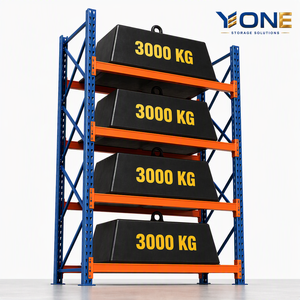
In modern industrial supply chains, a warehouse pallet racking system is no longer simply a static steel framework; it is an active mechanical platform engineered to sustain dynamic harmonic vibrations, seismic ground accelerations, forklift impact dynamics, and extreme cyclic loading. Sourcing through experienced OEM/ODM pallet racking manufacturers allows global logistics operators, procurement directors, and 3PL enterprises to bypass conventional off-the-shelf compromises and achieve millimetric structural optimization tailored to specific unit loads and building parameters.
As international supply networks navigate unpredictable container freight, evolving building regulations, and surging real estate leasing costs, warehouse storage efficiency directly dictates operational bottom lines. A high-performance pallet racking implementation delivers measurable throughput velocity, operational worker safety, and floor-to-ceiling volumetric utilization reaching up to 85% of total building envelope capacity.
Information Gain Principle in Racking Procurement: Structural safety factors are dictated by precise yield strength thresholds of raw coiled steel, roll-formed profile geometries, multi-point welded connector claw mechanics, and environmental pre-treatment coats. Specifying certified Q235B and Q355B steel guarantees structural resilience against ductile deflection under continuous full-bay working load limits (WLL).
2. Structural Metallurgy, Load Mechanics & Quality Engineering Standards
The core structural integrity of heavy-duty industrial pallet racking begins with high-grade carbon structural steel coil. Leading global suppliers employ cold-rolled steel coils matching rigid tensile parameters. The upright column profiles are cold-formed into specialized omega cross-sections featuring multi-bend stiffening ribs that distribute axial compressive forces while resisting torsional buckling modes.
| Steel Classification | Yield Strength (MPa) | Tensile Strength (MPa) | Elongation (%) | Primary Racking Component Application |
|---|---|---|---|---|
| Q235B Cold-Rolled | ≥ 235 | 370 – 500 | ≥ 26 | Standard step beams, box beams, horizontal & diagonal frame bracing |
| Q355B High-Tensile | ≥ 355 | 470 – 630 | ≥ 21 | Heavy-load omega uprights, high-bay cantilever columns, seismic baseplates |
| SS400 Industrial | ≥ 245 | 400 – 510 | ≥ 21 | Structural mezzanine support columns, primary I-beams, heavy brackets |
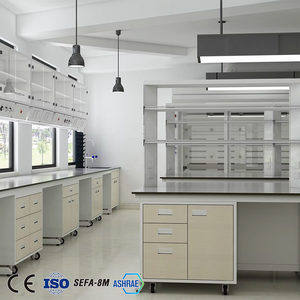
| SUS304 Stainless | ≥ 205 | ≥ 520 | ≥ 40 | Cleanroom boltless shelving, cold-room pick faces, aggressive washdown zones |
To eliminate stress concentrations at beam-to-column connections, OEM/ODM manufacturers engineer drop-forged and precision-stamped hook-claws with 3, 4, or 5-point teeth configurations. These claws mechanically interlock into CNC-punched 50mm or 75mm diamond or teardrop column pitch perforations, transferring vertical shear forces into axial compressive loads throughout the upright frame. Spring-loaded zinc-plated safety locking pins secure each connector claw to prevent accidental beam dislodgement caused by upward forklift mast snagging.
Surface Finishing & Climate Resistance: Phosphating to Electrostatic Coating
Industrial racking systems exported across diverse climatic environments—from sub-zero blast freezers to hyper-humid equatorial maritime ports—require industrial-grade chemical pre-treatment. Components undergo an automated 9-stage bath immersion or spray sequence including degreasing, ultrasonic water rinsing, pickling for rust descaling, and manganese/zinc phosphating. This chemically etches the micro-crystalline surface of the steel, dramatically amplifying bond adhesion for subsequent thermoset polyester epoxy powder coatings cured at 180°C–200°C. In high-salinity or exterior yards, structural hot-dip galvanization per ASTM A123 / ISO 1461 guarantees over 30 years of maintenance-free anti-corrosion defense.
3. Comprehensive Comparison: Warehouse Racking Typology & Selection Matrix
Selecting the appropriate intralogistics system requires cross-evaluating throughput velocity, stock-keeping unit (SKU) diversity, access selectivity, initial capital expenditure, and forklift fleet compatibility. The matrix below outlines how primary storage configurations compare across mission-critical parameters:
| Storage Topology | Selectivity Ratio | Space Utilization | Inventory Turnover | Handling Equipment Required | Optimal Industry Application |
|---|---|---|---|---|---|
| Selective Pallet Racking | 100% Direct Access | 40% – 50% | FIFO or LIFO | Standard Counterbalance, Reach Truck | FMCG, 3PL Distribution, E-commerce hubs |
| Narrow Aisle (VNA) | 100% Direct Access | 60% – 75% | FIFO | Articulated VNA or Man-Up Turret Truck | High-density pharmaceutical & spare parts |
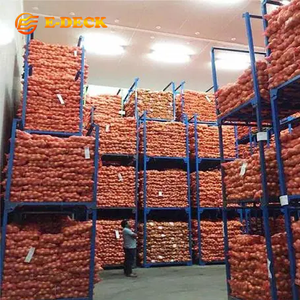
| Drive-In / Drive-Thru | Low (Per Lane) | 70% – 80% | LIFO (Drive-In) / FIFO (Drive-Thru) | Counterbalance, Narrow-Mast Reach | Seasonal produce, batch beverage, bulk storage |
| Push Back Racking | Moderate (2-6 Deep) | 65% – 75% | LIFO | Standard Counterbalance, Reach Truck | Medium batch manufacturing buffers |
| Pallet Flow (Gravity) | Lane Dependent | 75% – 85% | Strict FIFO | Standard Forklifts (Dedicated In/Out) | Perishable food, short shelf-life chemicals |
| Radio Shuttle Automation | High Lane Density | 80% – 88% | Configurable FIFO / LIFO | Conventional Forklift + Smart Shuttles | Cold storage, meat processing, deep-freeze 3PL |
4. Future Technological & Procurement Trends (2026-2035)
As the international logistics landscape shifts toward total cost of ownership (TCO) efficiency and automated handling, procurement executives must anticipate four macro shifts reshaping industrial racking infrastructure:
ASRS & AMR Integration
Traditional manually operated bays are converting into ultra-tolerant structural matrices accommodating Automated Guided Vehicles (AGVs), Autonomous Mobile Robots (AMRs), and stacker cranes with millimeter-grade deflection limits.
IoT Structural Health Sensors
Embedded strain-gauge load cells and wireless tilt-accelerometers integrated into baseplates transmit real-time telemetry, detecting unrecorded forklift collisions and dynamic overload conditions before structural fatigue occurs.
Circular Carbon Steel Supply
Global green building mandates (LEED and BREEAM) are prioritizing racking manufactured with electric arc furnace (EAF) low-carbon recycled steel and toxic-free, VOC-free low-bake thermosetting powder formulations.
From a procurement perspective, global supply chains are abandoning fragmented spot-market purchasing in favor of strategic direct-to-factory OEM/ODM alliances. Contracting with unified manufacturers that house in-house roll-forming, laser profiling, automated robot welding, and structural calculation departments eliminates multiple layers of distributor markup while reducing overall delivery timelines by 30% to 50%.
5. Enterprise Advantages & Customization Capabilities: Guangzhou Heda Shelves
Established in 2001, Guangzhou Heda Shelves Co., Ltd. has developed over 25 years of specialized manufacturing authority in warehouse storage engineering, emerging as an international supplier and exporter of heavy-duty racking, industrial shelving, and mezzanine systems worldwide.
Turnkey OEM/ODM Engineering Competence
Operating a modernized 30,000 square-meter production facility backed by more than 300 experienced technical engineers, precision operators, and project supervisors, Heda Shelves produces up to 30,000 tons of structural steel storage systems each month. Serving more than 120 countries across Southeast Asia, the Middle East, the Americas, Europe, and Oceania, our team has executed over 10,000 commercial logistics projects.
- Custom Beam Clearances & Profiles
- Seismic Load Calculations (UBC/IBC)
- Bespoke RAL Powder Color Matching
- Complimentary 2D CAD & 3D Renderings
Every overseas shipment is engineered for shipping container cube efficiency. Standardized structural components, boxed beams, and pre-nested upright frames are wrapped in non-abrasive protective bubble membranes, edge-guarded with high-density steel corner brackets, and strapped onto steel dunnage rails to prevent deformation during ocean transit.
Verified Compliance & Certifications
Structural reliability is confirmed by verifiable international accreditation bodies, ensuring turnkey project approvals for global public tenders, municipal building inspections, and commercial facility insurance policies.
6. Frequently Asked Questions (Technical & Procurement FAQ)
What engineering parameters are required for a customized layout proposal?
To produce an optimized CAD proposal and structural calculation, our engineering team requires: architectural floor drawings indicating column grid positions, ceiling clear height below sprinklers/lighting, concrete slab compressive strength (e.g., 25-30 MPa) and thickness, pallet dimensions including overhanging cargo (Width × Depth × Height), gross pallet weight, and operating forklift models with turning radius and mast reach specifications.
How are cold-storage and high-humidity applications protected against corrosion?
For blast freezers and sub-zero storage (-30°C), we recommend low-temperature impact-resistant structural steel configurations combined with hot-dip galvanization or specialized polyurethane powder systems. For tropical humidity, steel members undergo multi-stage pickling, zinc phosphating, and electrostatic epoxy coating to prevent under-film moisture migration and oxidation.
Can OEM/ODM designs integrate seismic engineering for active earthquake zones?
Yes. For seismically active regions such as Indonesia, the Philippines, Japan, and the American West Coast, our structural engineers conduct Finite Element Analysis (FEA) compliant with RMI (Rack Manufacturers Institute) MH16.1, AS 4084, and Eurocode EN 15512 standards. This includes widened heavy-gauge baseplates, heavy seismic portal ties, dynamic diagonal bracing, and high-tensile chemical wedge anchors.
What is the standard production lead time and export sea transit schedule?
Factory production lead times typically range from 15 to 25 days depending on project tonnage and custom tooling requirements. Positioned near primary international container ports (Guangzhou / Nansha / Shenzhen), sea transit schedules are exceptionally competitive: approximately 2-5 days to Vietnam, 3-5 days to Manila, 5-7 days to Singapore/Laem Chabang, 6-8 days to Port Klang, 7-10 days to Jakarta, and direct scheduled sailings to Europe, Australia, and the Americas.
How do you support on-site installation for international projects?
Every export order is accompanied by detailed structural component assembly diagrams, 3D exploded architectural layouts, numbered component packaging tags, and instructional video guidance. For major industrial distribution complexes, Heda Shelves provides remote video engineer consultations or dispatches certified installation supervisors to oversee assembly and load-testing on-site.
What safety factors and beam deflection tolerances are applied?
Our structural designs strictly adhere to international engineering safety thresholds. Under full rated uniform distributed loads (UDL), horizontal beam vertical deflection is engineered not to exceed L/200 (or L/250 in automated shuttle and ASRS installations), where L equals the clear span distance between uprights. Structural frames carry a minimum design safety factor of 1.5 to 1.65 against material yield limits.
Request Your Complimentary Warehouse Structural Study
Collaborate directly with our senior intralogistics structural engineers. Submit your floor dimensions, pallet load profiles, and operational parameters for a rapid 2D/3D layout, load calculation, and factory-direct quotation.