Selective Pallet
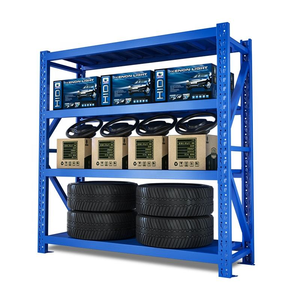
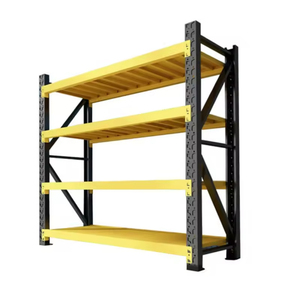
Heavy Duty Warehouse Pallet Rack Selective Steel Storage Shelving System
100% Direct Access
Up to 4,500 kg/Level
Adjustable Pitch 75mm
Manufactured with certified Q235B and Q355B cold-formed structural steel. Every unit is engineered for uniform load dissipation, structural seismic resistance, and seamless integration with standard handling equipment.
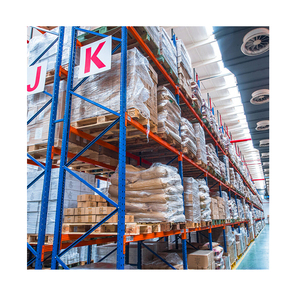
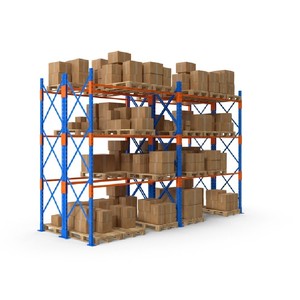
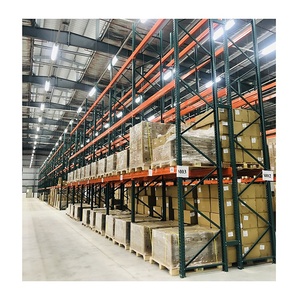
Founded in 2001, Guangzhou Heda Shelves Co., Ltd. operates a state-of-the-art 30,000 m² production base delivering up to 30,000 metric tons of custom industrial racking per month for 3PL providers, cold chain hubs, and automated DCs worldwide.
Our structures conform strictly to international safety benchmarks, including CE Certificate No. 2435-CPR-8605159, ISO 9001:2015 Quality Management Certificate No. 18624Q00169R0M, and RoHS adherence. Every coil heat number is documented with mill test certificates.
Strategically located near major maritime terminals in Guangzhou and Nansha. Direct oceanic transit reaches Haiphong/Cat Lai in 2-5 days, Manila in 3-5 days, Singapore/Laem Chabang in 5-7 days, Port Klang in 6-8 days, and Jakarta in 7-10 days, slashing supply chain dead times.
Our 300+ technical personnel include senior structural engineers providing turnkey AutoCAD blueprints, 3D architectural renders, and finite element stress analysis at zero charge, ensuring optimal aisle layouts for forklifts, VNA turrets, and automated mobile shuttles.
Every upright frame, load beam, and interlocking connector undergoes 10 controlled stages inside our Guangzhou plant.
Certified Q235B/Q355B coils tested for yield & tensile limits.
Automated CNC high-speed shearing to exact strip tolerances.
Continuous hydraulic stamping for precision diamond/teardrop holes.
24-station continuous rolling profiles for cold-formed rigidity.
Interlocking box-beam seams rolled for high torsional resistance.
Mechanical edge rounding prevents contact stress concentrations.
Automated CO₂ gas-shielded welding for high-shear beam end-connectors.
Full 4-stage acid pickling, rinse, phosphating, and de-greasing baths.
Thermoset polyester epoxy powder cured at 200°C for corrosion defense.
Load deflection testing, component tagging, and seaworthy steel packaging.
Industrial warehousing is transitioning rapidly from passive static storage into dynamic, automation-ready logistics hubs. As automated guided vehicles (AGVs), automated storage and retrieval systems (AS/RS), and complex seismic considerations become standard, structural racking design must satisfy higher geometric and metallurgical tolerances.
Traditional selective racking allows deflection allowances up to 1/200th of the span ($L/200$). Automated shuttle aisles and crane-fed AS/RS setups demand strict structural deflection thresholds within $L/300$ or even $L/400$. Our roll-formed uprights are calibrated using automated laser tracking to ensure plumb accuracy within 1.5mm per 10 meters of height, preventing sensor disruption during micro-movement docking.
Warehousing in active seismic zones (such as Indonesia, the Philippines, Japan, and the western Americas) requires advanced dynamic modeling rather than static assumptions. We compute site-specific Spectral Acceleration coefficients ($S_s, S_1$), integrating reinforced box baseplates, heavy back-to-back bracing trusses, and energy-dissipating bolted connections that absorb harmonic shear during tremors without frame collapse.
In sub-zero cold stores operating down to -30°C, structural mild steels run the risk of ductile-to-brittle transitions. We employ specialized hot-rolled micro-alloyed steels with verified Charpy V-notch impact toughness at low temperatures. Coupled with hot-dip galvanization to ASTM A123 (minimum 65–85 μm thickness), our cold-chain configurations resist condensation rust cycles indefinitely.
The rise of Industry 4.0 has driven demand for continuous structural monitoring. By integrating wireless strain-gauge transponders and impact sensors onto critical perimeter column guards, facilities receive instant notifications regarding forklift collisions, cumulative joint fatigue, or accidental overload imbalances, transforming passive steel racks into proactive safety assets.
Evaluating an industrial racking system goes far beyond the initial procurement invoice. Savvy warehouse operators calculate Total Cost of Ownership (TCO) across 10-15 year horizons, evaluating floor footprint conservation, handling equipment compatibility, and pick cycle speeds.
| Storage Architecture | Floor Space Efficiency | Direct Selectivity | Handling Vehicle Type | Best Fit SKU Profile | Relative Cost Index |
|---|---|---|---|---|---|
| Selective Pallet Racking | 40% – 50% | 100% (Instant) | Standard Counterbalance, Reach | High SKU variety, fast pick-face turns | ★☆☆☆☆ (Baseline) |
| Double Deep Racking | 55% – 65% | 50% Direct Access | Deep-Reach Pantograph Forklift | Medium SKU velocity, 2-4 pallets/SKU | ★★☆☆☆ |
| Drive-In / Drive-Through | 65% – 75% | Low (LIFO / FIFO) | Standard Counterbalance Inside Lanes | Bulk homogeneous goods, cold stores | ★★☆☆☆ |
| Radio Shuttle Automation | 75% – 85% | Medium (Batch FIFO/LIFO) | Automated Cart + Standard Forklift | High-throughput FMCG, sub-zero storage | ★★★★☆ |
| Very Narrow Aisle (VNA) | 60% – 70% | 100% (Instant) | Turret Truck, Wire/Rail Guided Man-Up | High-density vertical space up to 18m | ★★★☆☆ |
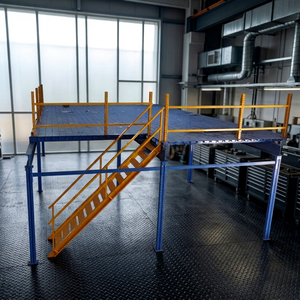
| Rack-Supported Mezzanine | 100% – 200% (Multi-level) | 100% (Manual / Conveyor) | Pedestrian, Order Pickers, Lifts | E-commerce split-case order picking | ★★★★☆ |
Modern distribution contracts change rapidly, often every 2 to 3 years. B2B buyers now mandate teardrop or universal hole pitches that allow beam re-spacing without structural welding. Standardized connector brackets enable fast conversion between bulk pallet racking, carton live flow shelves, and picking decks as SKU dimensions evolve.
Global procurement directives increasingly enforce Scope 3 carbon reduction metrics. Our manufacturing facility uses low-emission electric induction melting raw material inputs, solvent-free epoxy powder recycling systems (achieving 98% powder reclaim rates), and container cube maximization algorithms that reduce maritime fuel per pallet spot.
Clear, technically accurate answers covering structural engineering, floor capacity, surface treatment selections, and international shipping protocols.
Send our senior engineering team your warehouse floor dimensions, pallet load profiles, and throughput goals. Receive a complimentary AutoCAD architectural layout, 3D structural visual model, and full factory-direct bill of materials within 24 hours.