Precision Heavy-Duty Industrial Racking & Modular Shelving Systems
Engineered to international structural safety codes (FEM 10.2.02, RMI, and EN 15512), our heavy-duty racking solutions leverage certified structural Q235B and Q355B cold-rolled carbon steel, high-durability electrostatic powder coatings, and field-tested load capacities exceeding 4,000 kg per beam level.
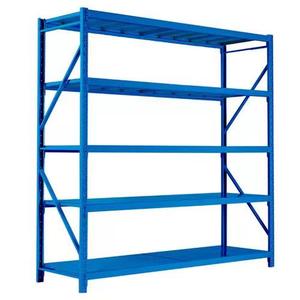
Q235 Steel Uprights and Beams Metal Shelving 5-Layer Storage Rack
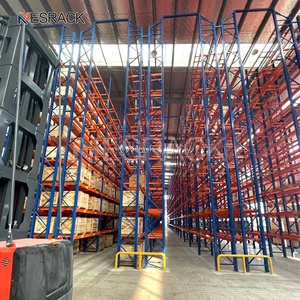
Heavy Duty Warehouse Rack Boltless Storage Shelving High Pallet Racking
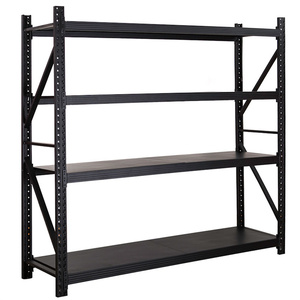
Boltless Modular Storage Racks Shelving Units Heavy Duty Warehouse Shelves
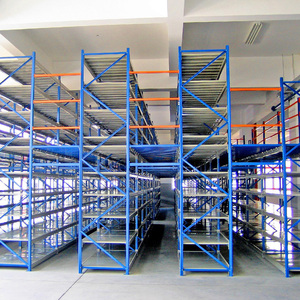
Industrial Customized Steel Mezzanine Platform Warehouse Picking Rack
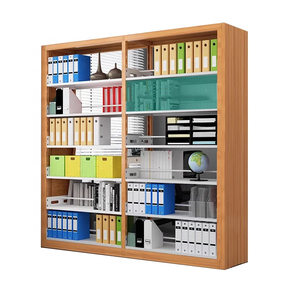
Bulk Engineering Heavy Duty Double-Faced Steel High-Density Archive Shelving
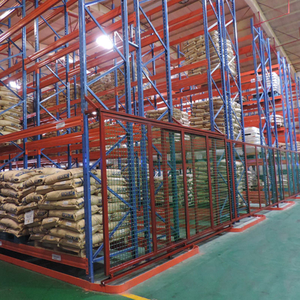
VNA Very Narrow Aisle High-Bay Racking System Anti-Corrosion Alloy Rack
Carton Flow Gravity Roller Rack FIFO High-Throughput Warehouse Picking
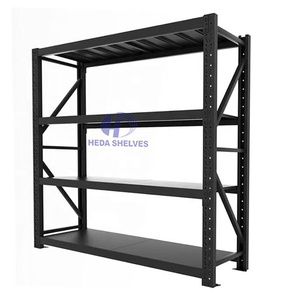
Adjustable Multipurpose Steel Metal Storage Stacking Rack Shelving System
End-to-End OEM & ODM Manufacturing Prowess: From Steel Coil to Global Destination
Operating as a premier factory-direct manufacturer and international exporter based in Guangzhou, China, we integrate metallurgical excellence, robotic continuous roll forming, automated dual-station welding, and advanced chemical passivation lines.
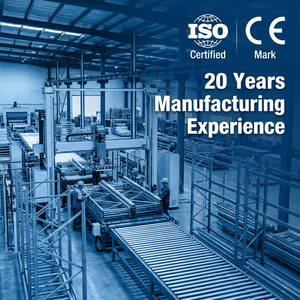
In modern industrial logistics, static storage infrastructure must withstand severe cyclic mechanical fatigue, point-load deflection stresses, dynamic forklift collisions, and stringent seismic acceleration factors. Unlike regional intermediaries and trading companies who outsource structural component fabrication, our 30,000 m² heavy-industrial complex controls every step of the mechanical lifecycle. Operating under strictly monitored ISO 9001:2015 quality management procedures and CE structural certification (Certificate No. 2435-CPR-8605159), we fabricate up to 30,000 metric tons of custom-engineered upright columns, load beams, cantilever arms, and mezzanine profiles monthly.
Our raw material procurement standard strictly mandates premium hot-rolled and cold-rolled micro-alloy structural steel sheet from audited tier-1 state-owned mills, principally Grade Q235B (yield strength ≥ 235 MPa, tensile strength 370-500 MPa) for standard heavy-duty warehouse applications, and Grade Q355B (yield strength ≥ 355 MPa, tensile strength 470-630 MPa) for high-bay Automated Storage and Retrieval Systems (ASRS), cantilever cantilever arms, and multi-tier mezzanine frameworks requiring rigorous deflection tolerances (L/200 under full design capacity).
Verified European & US Standards
Certified under CE No. 2435-CPR-8605159, ISO 9001:2015, and RoHS directives. Structural calculations rigorously satisfy FEM 10.2.02, EN 15512, and RMI standards with full Mill Test Certificates (MTC 3.1).
Tropical-Grade Anti-Corrosion
Multi-stage pickling, iron-phosphating passivation, and 70-90μm electrostatic thermosetting epoxy-polyester powder coating engineered to surpass 500-hour ASTM B117 neutral salt spray tests.
Complimentary Structural Engineering
In-house CAD/BIM drafting, 3D structural visual rendering, and finite element analysis (FEA) simulating uniform distributed loads (UDL) and seismic site ground accelerations prior to production run.
Direct Coastal Logistics Hub
Direct positioning within Guangzhou enables lightning sea transit to global corridors: 2-5 days to Vietnam, 3-5 days to Manila, 5-7 days to Singapore/Thailand, and optimized intermodal container stuffing.
Industrial Racking System Comparative Selection Framework
Selecting an optimal warehouse racking system requires cross-evaluating footprint cubic efficiency, SKU velocity, forklift handling parameters, and capital expenditure per pallet position.
| Racking Architecture | Cubic Volume Utilization | Pallet Selectivity Ratio | Inventory Rotation | Max Reach / Bay Height | Approximate Load per Bay | Forklift Compatibility |
|---|---|---|---|---|---|---|
| Selective Pallet Racking | 40% - 50% (Standard) | 100% Direct Access | FIFO / LIFO Dynamic | Up to 12.0 Meters | Up to 15,000 kg | Standard Counterbalance, Reach Truck |
| Very Narrow Aisle (VNA) | 65% - 75% (High) | 100% Direct Access | Strict FIFO / LIFO | Up to 16.5 Meters | Up to 18,000 kg | Specialized Wire/Rail-Guided VNA Turret |
| Drive-In / Drive-Through | 75% - 85% (Ultra-High) | Low (Batched SKUs) | LIFO (Drive-In) / FIFO | Up to 11.0 Meters | Up to 20,000 kg | Standard Reach, Counterbalance Truck |
| Radio Shuttle System | 80% - 90% (Maximum Density) | Channel Batched (High) | Automated FIFO / LIFO | Up to 24.0 Meters | Custom Continuous | Semi-Automated 4-Way / 2-Way Shuttle Cart |
| Rack-Supported Mezzanine | Doubles / Triples Usable Area | 100% Manual Hand-Pick | High Velocity Small Parts | Multi-Tier (2-4 Levels) | 300 - 1,000 kg / m² | Freight Lifts, Conveyors, Spiral Chutes |
| Gravity Carton / Pallet Flow | 70% - 80% (Dynamic) | Automatic Gravity Feed | Guaranteed FIFO | Up to 8.0 Meters | Up to 1,500 kg / Lane | Order Picking Carts, Hand Trucks, AGVs |
Future Procurement Trends & Technological Innovations in Intralogistics Racking
The global materials handling landscape is experiencing profound transformations driven by micro-fulfillment automation, resilient supply-chain nearshoring, and aggressive zero-carbon sustainability mandates.
Future Procurement Trends
1. Turnkey Engineering Procurement Over Commodity Spot Buying: Industrial developers and 3PL conglomerates are increasingly moving away from purchasing uncertified, unbranded static steel racks. Procurement directors now mandate certified engineering calculations, digital FEA stress modeling, and guaranteed compliance with local building seismic codes prior to contract signing.
2. Containerized Cubing Optimization to Counter Sea Freight Volatility: Rising and volatile global shipping costs necessitate advanced packaging engineering. Progressive manufacturers utilize specialized software that nests rolled upright frames, staggered connector brackets, and bundled interlocking beams, achieving over 95% volumetric fill rate per 40HQ container and drastically lowering landed costs per pallet location.
3. Decoupling and Regional Nearshoring Buffer Hubs: To counter global logistics bottlenecks, enterprises throughout North America, Europe, and ASEAN are securing direct OEM agreements with high-capacity Chinese facilities capable of high-volume container dispatch on guaranteed 15-day factory lead times.
Technological & Engineering Innovations
1. Robotic Automation & ASRS Integration Readiness: Conventional passive racking is giving way to automated intralogistics structures designed for robotic shuttle vehicles (2-way and 4-way systems) and Autonomous Mobile Robots (AMRs). Racking tolerances must now be millimetric: beam deflection, rail straightness, and column plumbs are fabricated to tight DIN standard limits.
2. Advanced Dual-Phase and High-Yield Micro-Alloys: Progressive cold-forming machines now roll multi-ribbed upright profiles containing 11 to 13 structural bends across a single cold-rolled channel. This specialized profile geometry maximizes polar moment of inertia and radius of gyration, yielding superior column strength with reduced steel weight.
3. Heavy-Duty Galvanized Cold-Chain and Coastal Systems: As tropical warehousing, pharmaceutical logistics, and cold-chain seafood hubs boom, hot-dip galvanization conforming to ASTM A123 (65-85μm zinc layer thickness) provides long-term corrosion resistance in condensation-heavy and sub-zero environments down to -30°C.
Frequently Asked Questions: Technical Engineering & Procurement
Authoritative answers addressing engineering calculations, international customs documentation, surface chemistry, and floor slab load bearing.
Our structural engineering team incorporates site-specific seismic ground acceleration variables (Ss, S1 values, seismic design category A through F) in accordance with RMI (Rack Manufacturers Institute) and EN 16681 guidelines. We enhance lateral stiffness by incorporating heavy-duty diagonal back-bracing, double-welded upright baseplates, heavy floor expansion anchor bolts (Hilti / Fischer specification), and stiffened beam-to-column connector brackets with 4-to-5 point locking pins to prevent premature shear failure.
To eliminate corrosion risk in ambient warehouse environments exceeding 80% relative humidity, every steel component undergoes an automatic 9-stage pre-treatment line encompassing high-pressure hot degreasing, ultrasonic water rinsing, acid pickling to eradicate mill scale, and iron-phosphate conversion coating. We then electrostatically apply a 70–90 micron lead-free epoxy-polyester hybrid powder, fully cured inside a 200°C convection oven, delivering superior impact resistance and 500+ hour salt spray durability.
To develop a certified AutoCAD layout, 3D render, and quote, we require: (1) Architectural warehouse floor plan indicating clear height to underside of roof trusses, column locations, and fire exit doors; (2) Pallet specifications including overall dimensions (W x D x H), overhang, and maximum pallet weight including merchandise; (3) Material handling equipment (forklift model, maximum lifting height, outer turning radius, and minimum required operating aisle width); and (4) Throughput characteristics (FIFO vs LIFO).
Every production heat from our certified steel suppliers is verified via an EN 10204 3.1 Mill Test Certificate (MTC) certifying Carbon, Manganese, Silicon, Phosphorus, and Sulfur content, alongside yield and tensile strengths. Finished upright frames and beam connectors undergo destructive static compression and cyclic fatigue load testing on hydraulic computerized test benches to verify structural deflection limits (typically L/200 for beams under maximum Uniform Distributed Load).
Our typical factory manufacturing lead time for standard industrial pallet racking (1 to 5 full 40HQ containers) is 15 to 20 working days. For structural mezzanines or custom-engineered automated radio shuttle systems requiring custom fabrication, production spans 20 to 25 days. Benefiting from direct ocean berths at Guangzhou / Nansha / Shenzhen ports, sea shipping is 2 to 5 days to Vietnam, 5 to 7 days to Singapore and Thailand, 14 to 18 days to Australia, 18 to 24 days to Europe, and 20 to 28 days to the US West Coast.
Every international shipment is accompanied by comprehensive bilingual (English/Chinese) assembly blueprints, component piece-mark tags, anchor positioning templates, and high-definition 3D instructional assembly videos. For enterprise-scale distribution centers and multi-tier mezzanine installations exceeding 5,000 square meters, we can dispatch seasoned project engineers to provide on-site installation supervision and safety sign-off.
Transform Your Warehouse Floor Plan Into a High-Density Storage Asset
Connect directly with our senior structural intralogistics engineers today. We will evaluate your facility layout, structural floor slab loading, and throughput velocity to deliver a certified CAD layout proposal and factory-direct quotation within 24 hours.