Featured Heavy-Duty & Dynamic Storage Deployments
Our precision structural manufacturing line produces certified high-density racking configurations engineered to integrate seamlessly with long-load cantilever arrays, push-back lines, and gravity feeds.
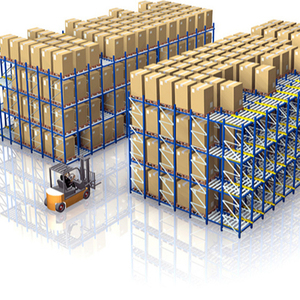 FIFO Dynamic
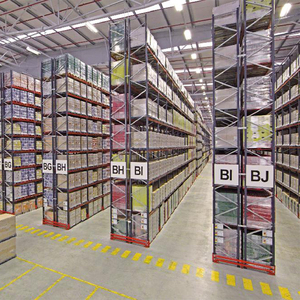 2500KG / Level
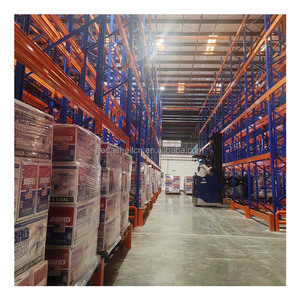 OEM Direct
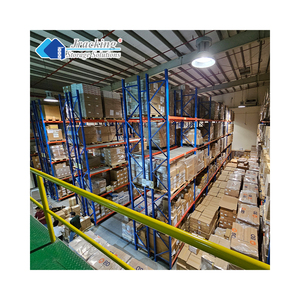 EU Standard
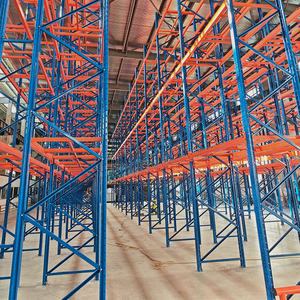 1T to 4T Rating
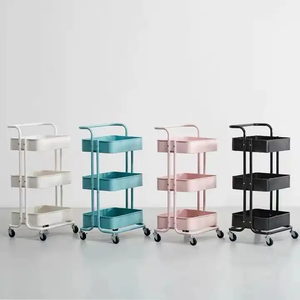 Mobile Picking
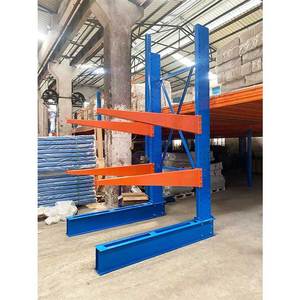 Core Cantilever
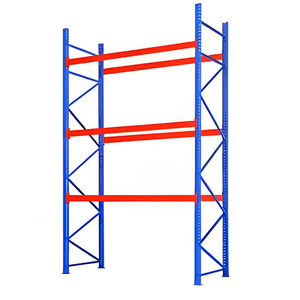 High Density LIFO
Structural Mechanics of Heavy Duty Cantilever Racking
Unlike conventional pallet racks constrained by front aisle columns, cantilever storage eliminates horizontal span limitations. However, it transfers total mechanical bending moments directly into single upright profiles, demanding precise structural analysis.
Cold-Formed vs. Hot-Rolled Structural Steel
For medium duty runs up to 800kg per arm, cold-formed C-profiles offer optimized steel efficiency. For rigorous heavy-duty demands exceeding 1,000kg to 3,000kg per arm, we specify hot-rolled structural steel profiles (IPE, HEA, and HEB beams in Q235B or Q355B grades). Hot-rolled steel eliminates localized residual stress, delivering unparalleled torsional stiffness against impact from heavy timber packs, long billets, and cast pipe bundles.
Deflection Limits & Moment Resistance
Every custom-designed cantilever configuration strictly complies with FEM 10.2.02 and European EN 15512 codes. Cantilever arms are engineered with an upward 2° to 3° compensatory camber angle under dead weight. Under maximum static permissible load, arm vertical deflection is calculated to stay strictly within L/300 to L/250, ensuring that stock never slides outward and avoiding high-strain localized fatigue at the upright connection collar.
Seismic-Aware Upright Anchoring
The upright base must counteract extreme overturning moment. We utilize heavy-gauge continuous-welded base plates equipped with multi-point chemical anchoring or mechanical undercut expansion anchors. Structural bracing towers featuring high-tensile tension rods (X-bracing) link adjacent upright columns, transferring lateral wind and seismic sway safely across the building slab without dynamic column twist.
| Structural System Parameter | Standard Duty Specification | Heavy Duty Structural Cantilever | Extra-Heavy Duty Custom (OEM/ODM) |
|---|---|---|---|
| Column Profile Construction | Roll-formed C-Channel (200 × 60 × 2.5mm) | Hot-rolled IPE 240 / IPE 300 Steel | Reinforced HEA 260 / HEB 360 Structural Steel |
| Arm Safe Working Load (UDL) | 300 kg – 700 kg per arm | 1,000 kg – 2,500 kg per arm | Up to 3,500+ kg per single arm |
| System Clear Height | Up to 4,500 mm | Up to 8,000 mm | Up to 12,500 mm (Tailored for AS/RS) |
| Steel Mechanical Grade | Q235B Cold Rolled (Yield 235 MPa) | Q355B Structural Steel (Yield 355 MPa) | Q355B / High Yield S355JR Certified |
| Surface Coating System | Standard Electrostatic Epoxy (60–70 μm) | Epoxy-Polyester Hybrid (70–90 μm) | Hot-Dip Galvanized (ISO 1461, ≥85 μm) |
| Operational Environment | Indoor Retail & Light Warehousing | Heavy Manufacturing, Steel Centers | Coastal Outdoor Yards, Tropical Rain Zones |
OEM / ODM Custom Manufacturing Capabilities
Every industrial layout involves unique inventory geometries, from rigid structural I-beams and aluminum extrusions to flexible PVC conduits and moisture-sensitive dimensional timber.
Custom Arm Profiles & Retaining Accessories
Arm lengths range from 500mm to 2,000mm, engineered with tapered cross-sections to maximize vertical clearance between load tiers. Optional accessories include bolt-on or slide-in end stop pins, continuous wire mesh decking, steel saddle plates for cylindrical bar stocks, and wooden/plastic dunnage linings to prevent scratch damage on sensitive aerospace alloys.
Outdoor Roofed Shed Configurations
Warehouses facing ceiling constraints often expand storage into exterior yard areas. We engineer self-supporting outdoor cantilever structures with integrated mono-pitch or dual-pitch roof canopy trusses, water gutters, and downspout attachments. Wind load calculations strictly account for regional typhoons and hurricane forces up to 2.4 kPa.
Side-Loader & Multidirectional Forklift Integration
Maximizing storage density requires narrowing operating aisles down to 1,800mm – 2,200mm. We fabricate heavy structural steel floor-guide rails and entry funnel shoe plates that interface precisely with multidirectional electric reach trucks, combi-lifts, and guided automated guided vehicles (AGVs), preventing accidental rack collisions.
The Future of Heavy Industrial Storage: Trends 2026–2035
Driven by smart warehouse automation, stringent worker safety regulations, and volatile raw material supply chains, industrial cantilever procurement is shifting rapidly from off-the-shelf catalog buying to bespoke, high-performance structural engineering.
1. Fully Automated Cantilever AS/RS
Manual forklift picking for 6-meter steel pipes creates acute safety and productivity bottlenecks. The industry is transitioning toward Automated Storage and Retrieval Systems (AS/RS) tailored for cantilever architecture. Twin-mast stacker cranes running on overhead guide rails pick and place 5-ton bundles automatically via laser positioning and IoT warehouse management systems (WMS).
2. Micro-Alloyed High-Tensile Steels
To reduce freight shipping volume and container deadweight without sacrificing load-bearing safety, modern manufacturing leverages micro-alloyed, thermo-mechanically controlled processed steels (e.g., S460MC / Q420B). These materials deliver a 25% yield strength elevation, allowing slimmer beam profiles with higher deflection limits and reduced raw material consumption.
3. Advanced Galvanizing & Duplex Systems
With industrial growth booming across humid Southeast Asian hubs and coastal Mediterranean ports, buyers now mandate corrosion warranties exceeding 15 years. The combination of Hot-Dip Galvanizing (HDG) compliant with ISO 1461, capped with architectural electrostatic polyester powder topcoats (Duplex Coating), provides unmatched defense against C4 and C5 harsh atmospheric corrosion.
Global Procurement Analysis: Total Cost of Ownership (TCO)
Procuring heavy-duty cantilever racking from premier OEM/ODM Chinese suppliers requires looking beyond basic FOB metric ton steel pricing to evaluate container packing factor, seismic certification compliance, and structural service lifetime.
Direct Mill Supply vs. Subcontracted Steel
Tier-1 OEM suppliers partner directly with primary steel mills (Baosteel, Shougang) with full mill test certs (MTC EN 10204 3.1). Sub-tier suppliers using uncertified secondary melting scrap introduce unpredictable structural brittleness, resulting in micro-fracturing at weld roots under cyclical forklift loading.
Container Cubing & Freight Optimization
Cantilever uprights and base weldments are geometrically irregular, often causing empty container dead space. HEDA Shelves utilizes dedicated 3D nesting packing algorithms. Arms, brace channels, and column weldments are nested into high-density steel bundles, maximizing weight limits (up to 26.5 tons per 40HQ), saving up to 30% in ocean freight per ton.
Verifiable Compliance & Regulatory Protection
Municipal building approvals and project insurers mandate certified structural calculations. HEDA Shelves delivers comprehensive finite element analysis (FEA) reports verifying base plate reactions, anchor shear stresses, and column buckling safety margins under AS 4084, ANSI/RMI MH16.1, and EN 15512 codes.
10 Controlled Steps: From Prime Steel Coil to Container Dispatch
Quality is engineered into every stage of manufacturing inside our Guangzhou facility, maintaining complete traceability under ISO 9001:2015 quality assurance.
Raw Materials
Prime Q235B/Q355B coils verified with MTC chemical & tensile testing.
Precision Cutting
Automated laser and CNC saw cutting to ±0.5mm dimensional tolerances.
Column Punching
Multi-station CNC punch lines stamping exact 75mm or 100mm pin pitch.
Cold Bending
Heavy 1,000-ton CNC press brakes shaping seamless reinforced profiles.
Profile Forming
Continuous roll-forming stations calibrating upright straightness.
Edge Polishing
Automated robotic grinding removing all burrs, sharp edges, and spatter.
Robotic Welding
CO&sub2; shielded robotic welding producing flawless full-penetration seams.
Pickling & Phosphating
Multi-tank chemical degreasing and phosphating for superior coating bond.
Powder Coating
Electrostatic robotic powder spraying cured at 200°C (70-90μm thick).
QC & Shipping
Deflection test, ultrasonic weld inspection, and palletized steel bundling.
Your Trusted Global Racking Manufacturing Partner
Established in 2001, Guangzhou Heda Shelves Co., Ltd. has grown to become an international powerhouse in logistics storage design, industrial warehousing systems, and custom structural cantilever racking.
Manufacturing Powerhouse
Operating from our 30,000 square meter modernized factory staffed by over 300 technical and production professionals, our facility outputs more than 30,000 tons of high-grade steel racking every month, providing stable delivery schedules even during seasonal steel supply volatility.
Verifiable Global Compliance
We hold verified international accreditations including CE Certification (Certificate No. 2435-CPR-8605159), ISO 9001:2015 Quality Management (Certificate No. 18624Q00169R0M), and full RoHS compliance. All calculation packages are backed by registered structural engineering stamps.
Rapid Port Proximity & Logistics
Positioned adjacent to Guangzhou and Nansha international deep-water terminals, our maritime transit times offer huge logistical advantages: 2-5 days to Vietnam, 3-5 days to Manila, 5-7 days to Singapore and Bangkok, 6-8 days to Port Klang, and direct multi-carrier sailings to Europe, Australia, and the Americas.
Heavy Duty Cantilever Procurement & Engineering FAQ
Expert technical answers covering structural calculation methods, foundation requirements, seismic engineering, and long-load storage best practices.
How is cantilever arm safe working load calculated?
Safe load capacity is calculated on a Uniformly Distributed Load (UDL) basis across the usable arm length. If point loads or concentrated front tip loads are expected, structural arm bending capacity must be derated by up to 50%. Our CAD engineering reports provide exact loading curve graphs based on your actual cargo profile.
What concrete slab specifications are required?
For standard heavy-duty systems (columns 5,000mm–8,000mm tall), a minimum reinforced concrete slab thickness of 200mm to 250mm with a compressive strength of C25/30 or 3,000–4,000 PSI is required. If slab depth is insufficient, we engineer extended load-spreading base channels or ground anchoring foundation blocks.
What is the difference between single-sided and double-sided columns?
Single-sided cantilever racks are placed against perimeter walls, transferring unilateral bending moments to the foundation. Double-sided central columns support arms on both faces. When symmetrically loaded, double-sided designs naturally balance arm moments, allowing substantially greater height and overall structural weight efficiency.
Can cantilever racking be customized for seismic active zones?
Yes. We regularly supply high-seismic zones across the Pacific Rim, Indonesia, New Zealand, and the Philippines. Our engineering models integrate localized spectral acceleration parameters (Ss, S1), upsizing column flange thicknesses, stiffening base gussets, and adding heavy horizontal tie-struts.
How do you protect cantilever racking in outdoor environments?
For outdoor lumber and steel yards, we recommend Hot-Dip Galvanizing (HDG) per ISO 1461, achieving a minimum zinc coating thickness of 85 microns. All connection pins, tension rods, and hardware are grade 8.8 hot-dip galvanized or Dacromet-coated to eliminate galvanic rust points.
What is the standard production lead time for OEM/ODM projects?
Custom engineering CAD proposals and static finite element calculations are provided within 24 to 48 hours. Upon sign-off and approval of shop drawings, factory production takes approximately 15 to 25 calendar days for a 20-container project, backed by 30,000-ton monthly capacity.