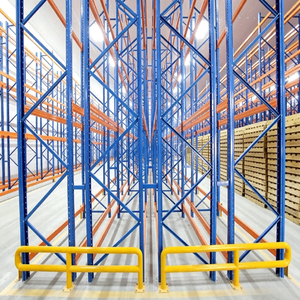
Precision-Engineered Heavy Duty Storage Portfolios
Explore our heavy-duty warehouse infrastructure systems. Manufactured under ISO 9001:2015 and CE standards to support 1,000 kg to 3,000 kg uniform distributed loads per beam level.
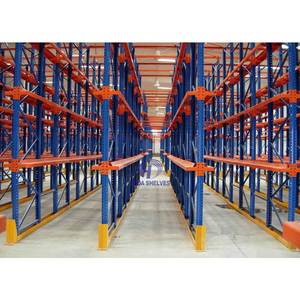
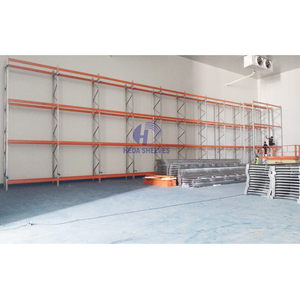
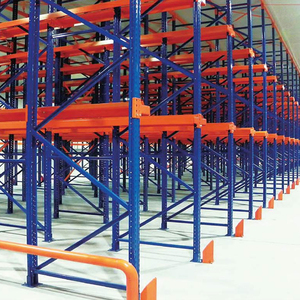
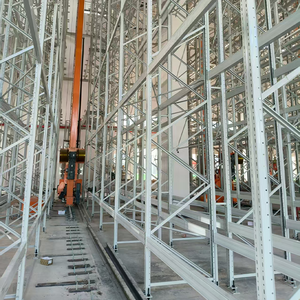
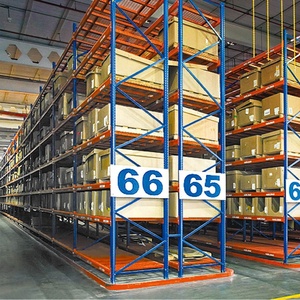
Engineering Double Deep Pallet Racking: Architectural Densification Mechanics
A Double Deep Pallet Racking System stores pallets two rows deep instead of a single row in standard selective racking configurations. By eliminating every second operating aisle, facility footprints yield a direct storage floor utilization density increase between 50% and 60% compared to traditional single-selective configurations. Double deep racking bridges the gap between low-density, 100% accessible single-selective systems and ultra-dense, low-selectivity drive-in options.
Operating a double deep matrix requires specialized reach trucks fitted with pantograph mechanisms or double-deep telescopic forks. Structural integrity relies upon rigid upright frames cold-rolled from certified Q235B structural grade steel. Our beams feature robust 3-claw or 4-claw structural connection hooks engineered with mechanical safety pins to eliminate beam displacement under seismic tremors or vertical impact during deep-fork pallet retrieval.
60%
Aisle Floor Space Saved
Q235B
Certified Structural Steel Grade
3,000 kg
Max Layer Weight Capacity
30,000 t
Monthly Export Output
Load Distribution and Dynamic Engineering Tolerances
Engineered upright frames employ continuous cold-roll forming profiles that distribute downward vertical dead-loads evenly across heavy-duty steel baseplates. These footplates are secured directly to industrial slab floors using specialized expansion anchors designed to counter dynamic moment shifts. Lateral stability across deep multi-bay spans is maintained through horizontal and diagonal cross-bracing bolted via M10/M12 high-tensile hardware. To support regional seismic specifications across active zones in the Asia-Pacific (such as Indonesia, the Philippines, and New Zealand), custom FEM (Finite Element Method) simulations ensure flexural rigidity across dynamic loads.
Global Procurement & Logistics Evolution Trends
Understanding shifting technical requirements ensures long-term capital equipment viability and compliance with automated material handling integrations.
Hybrid AGV & Telematics Integration
Global fulfillment centers are shifting toward automated guided vehicles (AGVs) outfitted with extended telescopic deep forks. Procurement specifications increasingly require laser-calibrated beam tolerances (+/- 1.5mm) and integrated optical position targets on bottom frame sections to streamline robotic fleet guidance without operator error.
Cold Chain Thermal Efficiency
Rising power costs across blast freezers and cold storage terminals drive demand for double deep architectures. Compacting SKU matrices cuts thermal refrigeration volume loss by up to 35%. Modern procurement demands multi-stage hot-dip galvanized or specialized zinc-rich electrostatic powders that resist embrittlement at -30°C.
Sustainable Metallurgy Lifecycle
Corporate ESG criteria are reshaping international tenders. Procurement teams now mandate full steel mill test certificates verifying structural yields, lower embodied carbon via advanced blast oxygen furnaces, and 100% recyclable lead-free thermoset powder coats with zero VOC emission during fabrication.
Enterprise Manufacturing Authority & Production Scale
Operating a modernized 30,000 square meter factory base equipped with automated roll-forming lines, robotic welding stations, and automated coating lines to fulfill high-volume international contracts.
Verified Compliance
Third-party certified to CE Standard EN 15512 and ISO 9001:2015 quality standards with full traceable batch inspections.
Direct Port Logistics
Minutes from South China ports with fast container dispatch: 2-5 days to Vietnam, 5-7 days to Singapore, 6-8 days to Port Klang.
Complimentary Engineering
In-house structural engineering team provides complete 2D CAD floor layouts, 3D spatial renders, and load calculations free of charge.
Tropical Pre-Treatment
Multi-stage chemical pickling and phosphating pre-treatment guarantees 80%+ relative humidity rust resistance in ASEAN climates.
Rigorous 5-Stage Precision Manufacturing Workflow
From prime hot-rolled steel coils to containerized sea freight, every component moves through strict quality checkpoints.
01
Raw Material QC
Certified Q235B cold rolled steel inspected for mechanical yield strength and metallurgical consistency.
02
Roll-Forming
Automated continuous multi-roller profiles press structural column sections with precision-cut hole patterns.
03
Robotic Welding
Industrial robotic arms weld beam connectors and baseplates with clean, penetrated seam joins.
04
Chemical Pre-treatment
Pickling, degreasing, and phosphating dip cycles prepare surfaces for electrostatic adhesion.
05
Curing & Packing
High-temp curing at 200°C creates durable powder finishes, bundled with steel strap bracing for export.
Frequently Asked Questions on Double Deep Systems
Crucial technical considerations, forklift requirements, and warehouse planning insights.
What type of material handling equipment is mandatory for double deep racking?
+
Double deep systems require pantograph reach trucks or specialized forklifts fitted with double-deep telescopic forks. When planning aisle widths, pantograph reach trucks typically require operating aisles ranging between 2.8 to 3.2 meters, depending on mast height and pallet load footprint. Lift capacity derating curves must also be factored in, as lifting at reach limits lowers the truck's effective capacity.
How does inventory turnover operate under a double deep layout?
+
Double deep storage operates primarily on a Last-In, First-Out (LIFO) inventory sequence per pallet pair. Consequently, it is optimal for facilities storing multiple pallets per individual SKU (typically 4 or more pallet positions per line). To optimize operational speed, Warehouse Management Systems (WMS) automate replenishment rules so that when the outer front pallet is cleared, the rear pallet moves to the front lane during non-peak picking cycles.
How do you engineer racking for high-humidity coastal and seismic zones?
+
For regions with extreme humidity (such as Southeast Asia, coastal storage centers, or refrigerated ports), components receive a complete chemical pickling and phosphating pre-treatment that strips surface oxides prior to electrostatic coating. For active seismic regions, our structural team calculates seismic base-shear values according to local building codes, integrating enlarged anchor footprints, heavier gauge upright steel, and rigid back-to-back cross-bracing ties.
What technical data is required to provide a turnkey CAD design and quotation?
+
To generate an engineering proposal, we require: (1) Warehouse building footprint showing clear overhead clearance, interior column locations, and fire exit corridors; (2) Pallet specifications (width, depth, overall cargo height, and gross pallet weight); (3) Forklift specifications (minimum turning radius, collapsed mast height, and maximum mast reach); and (4) Daily SKU turnover throughput requirements.
Request Complete Technical Catalogs & Layout Proposals
Consult with our engineering team for customized OEM/ODM structural load plans and factory export pricing.