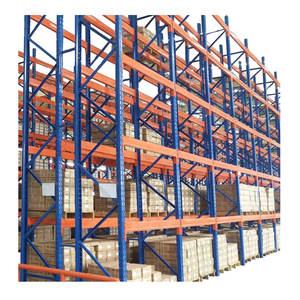
 Heavy-Duty
Industrial Heavy Duty Adjustable Pallet Storage Racking System
Up to 4,500 kg/tier capacity
50mm/75mm adjustable beam pitch
Explore our custom factory-manufactured warehousing platforms. From specialized high-density cantilever setups and narrow-aisle drive-in structures to multi-tier mezzanines, every system is fabricated to stringent global load criteria.
Heavy-Duty
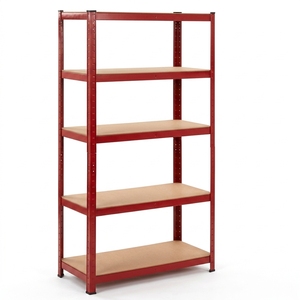 Anti-Corrosion
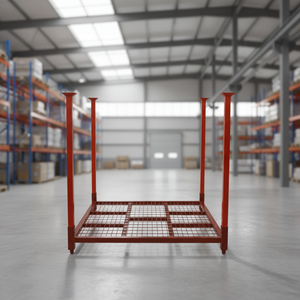 Stackable
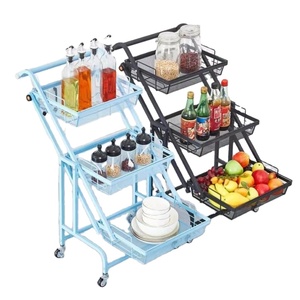 Auxiliary Order Picking
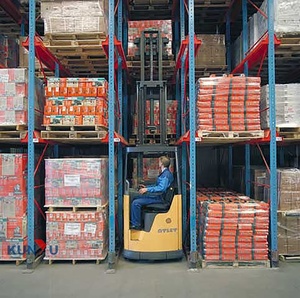 High-Density
 5-Ton Capacity
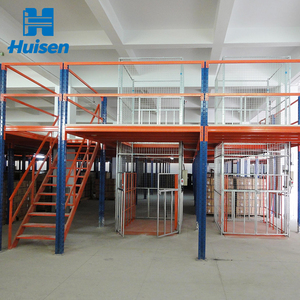 Multi-Tier System
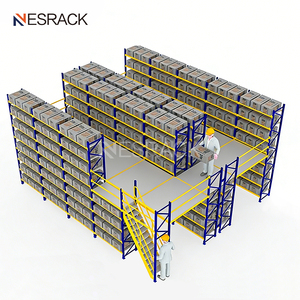 Rack-Supported
Unlike pallet racks constrained by front vertical uprights, cantilever racking systems utilize continuous open-front horizontal levels supported by central columns. Designing bespoke OEM/ODM cantilever structures demands thorough mathematical modeling of moment, shear, and arm deflection.
Cantilever storage presents unique mechanical load challenges because each arm acts as an unsupported structural beam anchored rigidly to a vertical column. The fundamental engineering calculation begins with the bending moment: M = (P × L) / 2 under a uniformly distributed load (UDL), where P represents the nominal cargo weight and L defines the effective arm length from column face to tip. When storing non-uniform bundles such as structural steel I-beams, bundle packs of rebar, or coiled aluminum sheet rolls, localized point loading can induce severe localized torsional deflection.
As a tier-1 OEM/ODM exporter, our Guangzhou engineering department formulates finite element analysis (FEA) computer models to balance yield strength against steel elasticity limits in compliance with ANSI MH16.1 and EN 15620 standards. Cantilever arms are engineered with an intentional upward incline angle (typically 1.5° to 2.5° unloaded pitch). Under total maximum design load, the permissible vertical arm tip deflection does not exceed L/180 to L/250. This mechanical camber prevents products from sliding forward while maintaining safe forklift tine entry tolerances.
| Engineering Attribute | Hot-Rolled Structural I-Beam System (Heavy/Extra Heavy) | Cold Roll-Formed C/U Profile System (Medium/Heavy) |
|---|---|---|
| Primary Raw Steel Grade | Q355B / ASTM A572 Grade 50 (High Tensile Structural) | Q235B / Cold-Rolled Carbon Strip Steel |
| Arm Capacity Range | 800 kg to 3,500+ kg per arm (Point or UDL load) | 200 kg to 1,000 kg per arm level |
| Column Height Envelope | Up to 14,000 mm free-standing or building-tied | Up to 6,000 mm operational height |
| Impact Resistance (Forklift) | Extreme: Solid hot-rolled flanges absorb forklift impacts | Moderate: Requires lower column reinforced crash buffers |
| Ideal Industrial Use Case | Steel mills, timber yards, PVC/cast pipes, oil & gas drill collars | Plumbing retail distributors, light extrusions, auto trim parts |
| Surface Protection Finishes | Hot-Dip Galvanized (ISO 1461, 85µm) or High-Adhesion Polyester | Pickled & Phosphated Electrostatic Powder Coating (60–80µm) |
Cantilever upright columns transmit substantial eccentric bending moments into the warehouse slab. In a single-sided system, the overturning moment ($M_{OT} = \sum P_i \times e_i$) is completely unbalanced, demanding wide-flange base beams bolted to high-grade industrial concrete (minimum C25/30 or 4,000 PSI) with high-tensile chemical or mechanical wedge anchors. Conversely, double-sided (tree-type) cantilever uprights balance the static load across the central column neutral axis, though design protocols must still account for asymmetric loading conditions when one side is emptied during active picking operations.
Our patented pivot arm connection utilizes high-shear grade 8.8 structural pins. If a forklift mast accidentally strikes the arm vertically or diagonally during elevation, the arm pivots upward harmlessly rather than shearing the column welds or buckling the upright flange.
Precision laser-cut arm tapers reduce deadweight near the unsupported tip while maximizing section modulus at the column connection collar. This tapered geometry increases vertical clearance by 100–150mm per tier, gaining whole-bay pallet equivalents.
Pre-welded tubular or C-channel X-bracing bays span between adjacent columns to form an unyielding longitudinal shear truss. This structural diaphragm prevents sidesway under high-seismic accelerations or turbulent lateral wind forces in open yards.
The long-goods storage sector is moving away from manual forklifts navigating expansive 6-meter aisles. Discover the engineering transformations reshaping modern steel mills, building material distribution hubs, and automated manufacturing yards.
High-bay cantilever towers up to 25 meters tall integrated with telescopic extraction forks. Automated cranes rapidly retrieve sheet metal cassettes and bar-stock cradles without operator intervention, cutting cycle times by 65%.
Cantilever uprights mounted atop high-load motor-driven chassis traversing embedded ground rails. Opening only the designated working aisle increases storage density by up to 85% within existing building perimeters.
Embedded wireless strain gauges along primary root welds transmit real-time stress data to cloud dashboards. Automated alerts notify plant managers if an overloaded arm approaches critical elastic limits or seismic deformation thresholds.
Dual-purpose outdoor cantilever columns with top-mounted structural rafters designed to carry roofing sheets and storm water guttering. Turns external open storage yards into protected, cost-effective semi-indoor warehouses.
International warehouse managers, system integrators, and logistics contractors face volatile raw material costs, stricter environmental standards, and higher demand for fast project delivery. Here is how modern procurement teams navigate these shifts.
Leading enterprise buyers calculate lifetime lifecycle costs rather than base steel metric tonnage prices. Specifying hot-dip galvanized uprights for humid coastal zones or open lumber storage yards eliminates repainting downtime, corrosion-related structural failures, and early system replacement.
High international ocean freight rates require intelligent knock-down geometry. Modern OEM cantilever suppliers engineer splined columns, bolt-on base feet, and nested arm brackets. This packing layout maximizes each 40HQ ocean container's capacity up to 26–28 metric tons, lowering per-unit freight costs.
Wholesalers, automated system integrators, and regional dealers increasingly bypass middleman trading brokers. Partnering directly with certified Guangzhou manufacturers secures tailored arm pitch geometry, custom RAL brand powder coatings, private-label packaging, and direct CAD engineering validation.
Founded in 2001, Guangzhou Heda Shelves Co., Ltd. has grown into one of Asia's premier heavy industrial racking manufacturing and exporting hubs. Operating a modern 30,000 m² factory in Guangzhou, we deliver heavy-duty structural cantilever systems with proven reliability.
Experienced structural engineers who calculate real-world project layouts for cold stores, raw material distribution centers, and port logistics facilities—not generic sales representatives.
Submit your building drawings and inventory SKU dimensions to receive comprehensive AutoCAD layouts, 3D stress renders, and seismic calculations within 24–48 hours free of charge.
Every component undergoes hot acid pickling, automated phosphating, and electrostatic epoxy-polyester powder baking (or ISO 1461 hot-dip galvanizing) to resist 85%+ tropical humidity and coastal air.
Complete documentation for tender filings and building inspector approvals: CE Certification (No. 2435-CPR-8605159), ISO 9001:2015 Quality Management (No. 18624Q00169R0M), and RoHS compliance.
Certified Q235B/Q355B coils with mill test certificates
CNC optical fiber cutters ensure exact hole alignment
Multi-station presses punch exact 50/75/100/140mm pitch
Computerized hydraulic press brakes ensure precision angles
Continuous roll mills profile uprights without structural stress
Shot blasting and deburring clean edges and root welds
Pulse MIG welders execute consistent, deep-penetration joints
Multi-tank chemical dip wash removes rust and improves paint grip
Automated electrostatic powder line baked at 200°C
Caliper, dry film thickness, load test, and seaworthy bundling
Get clear, practical answers to structural engineering, seismic design, shipping logistics, and custom OEM manufacturing questions for global projects.
Arm capacity assumes a Uniformly Distributed Load (UDL). If an arm is rated for 1,500 kg at 1,200 mm length, the cargo weight must be evenly supported along its length. Concentrating weight exclusively on the outer arm tip halves safe working capacity due to multiplied leverage bending moments. For concentrated loads, our engineers adjust arm profiles, collar plate thicknesses, and weld sizes to match your specific SKU load envelope.
Yes. Standard indoor systems use electrostatic epoxy-polyester powder coating (60–80 microns) cured at 200°C over acid-pickled and phosphated steel. For outdoor lumber yards, coastal docks, or open steel storage, we recommend batch Hot-Dip Galvanizing (HDG) per ISO 1461. This creates an 85–100+ micron metallurgical zinc-iron alloy barrier that self-heals minor scratches and provides 25+ years of corrosion resistance in tropical, coastal, or rainy environments.
We configure our structural FEA simulations using the site's spectral ground acceleration values (such as Ss and S1 under IBC/ASCE 7, or Eurocode 8). Seismic configurations use widened base beam footings, thicker steel column baseplates, high-embedment chemical epoxy anchors, and reinforced X-braced vertical truss bays. This design absorbs dynamic ground motion forces without structural tipping or arm dislodgement.
Production lead times run 15–25 days from final CAD sign-off, depending on tonnage and custom tooling. Shipping from Guangzhou/Nansha/Shenzhen ports provides direct routes: 2–5 days to Vietnam and the Philippines; 5–8 days to Singapore, Thailand, and Malaysia; 14–20 days to Australia and the Middle East; and 22–32 days to European and North American ports. Components are bundled with protective corrugated paper, edge guards, and steel banding for easy container unloading.
To deliver an accurate, code-compliant proposal, provide: (1) Warehouse clear ceiling height and slab thickness; (2) Product details including minimum/maximum lengths, bundle depths, heights, and single unit weights; (3) Operating forklift type, mast lift ceiling, and aisle turning radius; and (4) Preference for single-sided (wall-adjacent) or double-sided runs. Our engineering team will supply complete 2D/3D DWG drawings and a priced bill of materials.
Yes. We act as an OEM/ODM manufacturing partner for leading racking brands, distributors, and material handling dealers worldwide. We can customize column punching pitch, manufacture custom arm connect brackets, match custom RAL color palettes, apply branded laser-cut logo nameplates, and supply unbranded neutral installation documentation for seamless local delivery.
Send us your warehouse dimensions, SKU specifications, or project tenders. Our Guangzhou engineering team will return a certified structural CAD proposal and factory-direct pricing within 24 hours.