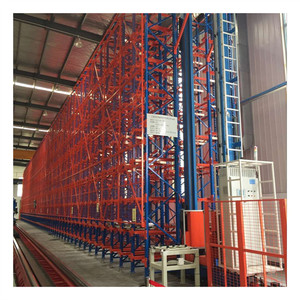
 ASRS & Heavy Duty
Heavy Duty Automated Warehouse Steel Storage Racking System
Q355B Steel
Up to 5,000kg/Level
Automated Stacker Ready
Engineered to FEM 10.2.02 and ANSI MH16.1 specifications. Direct factory supply with modular beam sections, cold-rolled upright columns, and corrosive-resistant tropical surface finishing.
ASRS & Heavy Duty
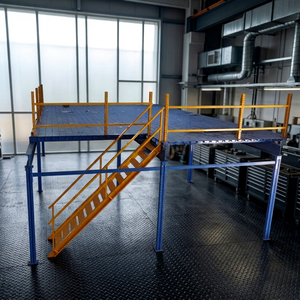 Multi-Tier Storage
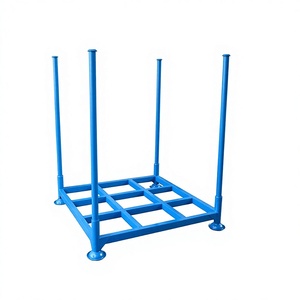 Roll Logistics
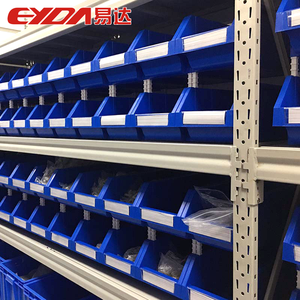 Custom Shelving
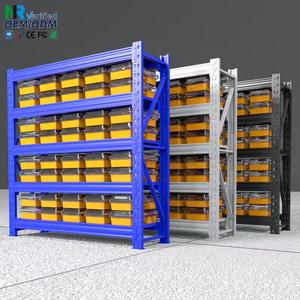 Selective Single-Deep
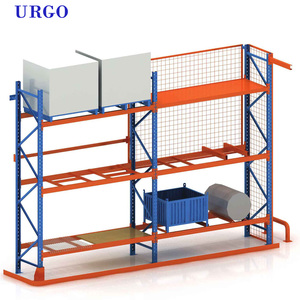 VNA Storage
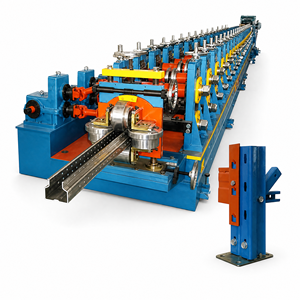 Structural Profiles
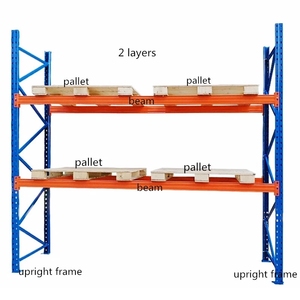 Specialized OEM
A rigorous examination of load paths, moment-resisting connections, torsional instability mitigation, and NFPA 13 / EN 12845 flue compliance for international project engineers.
Back-to-back racking represents the global benchmark for high-throughput pallet logistics, providing uncompromised 100% selective access while maximizing structural rigidity. By uniting two independent single-deep racking runs through engineered longitudinal row spacers, the entire racking structure behaves as an interconnected twin-frame truss. This configuration critically enhances the cross-aisle second moment of area ($I_y$), drastically reducing lateral bucking tendencies under seismic dynamic excitations or unintended material handling equipment impacts.
From an engineering perspective under EN 15512:2020 and ANSI MH16.1, unbraced single upright runs suffer from higher effective buckling length factors ($K$). In contrast, back-to-back systems allow row spacers to distribute torsional loading and wind or seismic shear loads across both upright lines. The placement, rigidity, and quantity of row spacers per bay height are calculated to stabilize vertical upright columns against out-of-plane twist, preventing global collapse cascades.
| Engineering Attribute | Standard Single-Deep Run | Engineered Back-to-Back Configuration | Technical Advantage & Standard Compliance |
|---|---|---|---|
| Aisle-to-Rack Ratio | High floor footprint, frequent aisles | Consolidated twin bays, reduced aisle frequency | Reclaims 35% to 45% of warehouse floor footprint |
| Cross-Aisle Stability ($K_y$) | Dependent entirely on baseplate anchor moment | Dual-frame coupling via rigid row spacers | Resists seismic torsional twist (Eurocode 8 / RMI MH16.1) |
| Sprinkler Penetration | Open perimeter, vulnerable to draft | Engineered longitudinal flue channel (150-300mm) | Meets NFPA 13, FM Global 8-9 & EN 12845 fire codes |
| Row Spacer Physics | Not applicable | Rigid tubular bolted or clamped spacers | Transfers out-of-plane moment loads between frames |
| Forklift Impact Redundancy | Impact on isolated upright threatens frame | Opposing linked upright dampens shock energy | Lower probability of catastrophic progressive collapse |
Why leading global storage brands, industrial distributors, and logistics EPC contractors partner with HEDA Shelves for customized OEM/ODM contract production.
We source certified hot-rolled and cold-rolled steel coils from top-tier mills with certified tensile properties. Q355B delivers a minimum yield strength of 355 MPa, giving beam and upright members superior strength-to-weight ratios and ductility in cold-storage environments.
Our 30,000 m² factory operates continuous multi-station CNC roll-forming lines. Automated column punching lines punch pitch patterns with sub-millimeter tolerances: 50mm metric, 75mm euro, or 76.2mm teardrop designs, ensuring interchangeability across global systems.
Designed for tropical and coastal conditions. Our in-house automated pre-treatment includes ultrasonic degreasing, multi-stage water rinsing, acid pickling, zinc phosphating, and electrostatic epoxy-polyester powder coating (60–90 μm) tested past 500 hours in salt spray chambers.
From slit coil decoiling to container loading, zero outsourced steps guarantee 100% structural traceability across your OEM project.
Spectrometric & yield tensile coil testing
Automated uncoiling & CNC strip cutting
High-speed hydraulic repetitive dies
Multi-roller cold forming without stress cracks
Robotized MIG dual-C beam seam fusion
Surface descaling to Sa 2.5 cleanliness
Micro-crystalline conversion chemical dip
GEMA electrostatic automated guns
200°C tunnel cure for polymer adhesion
Steel banded bundles with timber dunnage
Market shifts, technological convergences, and ESG governance dynamics altering how enterprise procurement managers contract for back-to-back warehouse assets.
Traditional back-to-back racking was engineered primarily around counterbalanced and reach forklifts. However, over 40% of new DC designs now plan for automated pallet trucks and counterbalanced AMRs. This shift demands tighter upright alignment tolerances ($\pm 2\text{mm}$ over 12m upright runs) and flush-mounted lower row spacers that avoid interfering with autonomous optical LiDAR scanners or inductive floor wire navigation systems.
With Scope 3 carbon compliance gaining legal enforcement in the EU and North America, multinational shippers evaluate the embodied carbon in their racking infrastructure. Transitioning from traditional heavy-gauge low-tensile steel to cold-formed high-strength Q355B and micro-alloyed structural steels enables a 12% to 18% reduction in raw steel weight per pallet position without compromising ultimate load capacity, directly lowering shipping freight emissions.
Steel price volatility remains the primary challenge in global racking procurement. Forward-looking buyers are negotiating indexed raw-material lock-in contracts directly with integrated manufacturers like HEDA Shelves, holding rolling buffer stocks of 20,000+ tons of slit master coil. This insulates multi-phase warehouse rollouts from unexpected steel tariff spikes and currency fluctuations.
Cold-chain logistics hubs in high-humidity zones (such as Southeast Asia, the Gulf, and Latin America) experience rapid condensation near dock transition zones. Modern back-to-back procurement increasingly specifies hybrid finishing: hot-dip galvanized baseplates, zinc-rich powder pre-coat primers, and polyurethane-modified powder coats to prevent rust weeping at critical welded connector junctions.
How back-to-back selective racking has evolved across structural generations to accommodate higher seismic demands and digital twin warehouse management systems.
Hot-rolled structural steel channel and bolted angle configurations. Heavy, inflexible, requiring continuous on-site drilling and bolting. Obsolete for dynamic multi-SKU retail fulfillment.
Standardized cold-formed C-profiles with keyhole or teardrop slots. Enabled toolless beam height adjustments, but lacked cross-frame torsional stiffness in tall seismic bays above 8 meters.
Introduction of mathematically modeled row spacers, boxed twin-C beams, and calibrated flue spaces for fire control, compliant with FEM 10.2.02 and NFPA seismic code updates.
Modern smart racking: integrated wireless strain gauges on lower uprights, optical retro-reflective targets for automated drone inventory scanning, and RFID row-spacer markers for real-time asset localization.
In-depth responses from our senior structural engineering team addressing seismic calculation standards, container packing factors, and OEM customization tolerances.
Send your warehouse floor plans, building elevations, and pallet load profiles. Our senior structural engineers deliver a comprehensive 2D CAD layout, 3D spatial rendering, bill of materials, and certified structural load calculation within 24 to 48 hours.