Specialized OEM/ODM Racking & Material Handling Modules
Standard and bespoke warehouse infrastructure manufactured in our ISO 9001:2015 and CE-certified production facility, optimized for automated cranes, radio shuttles, and industrial heavy-load storage.
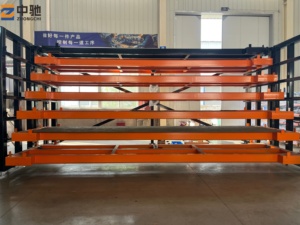
High Load Capacity 8-Layer Anti-Rust Powder Coated Steel Rack
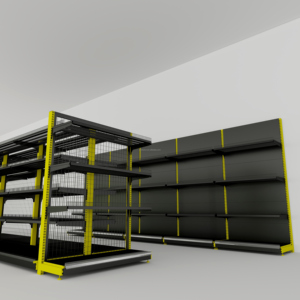
Double-Sided Heavy Duty Metal Supermarket & Retail Storage Shelves
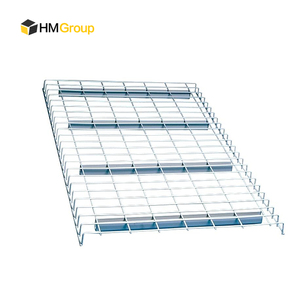
Galvanized Steel U-Channel Industrial Welded Wire Decking
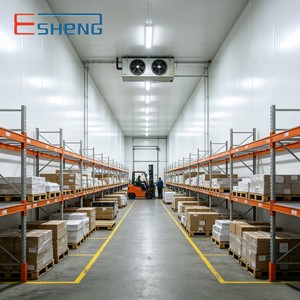
Automated High-Bay Cold Storage AS/RS System (-25℃ to 0℃)
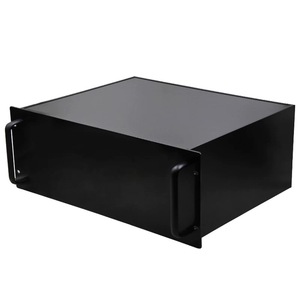
Custom Aluminum/Q235 Sheet Metal 19" Rack Enclosure Chassis
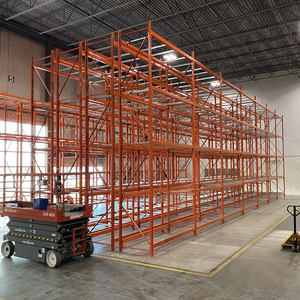
Engineered Double Deep Pallet Racking System for Retail DCs
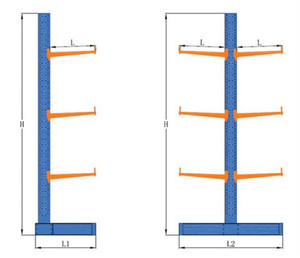
CE Certified Heavy-Duty Cantilever Racking for Long Profiles
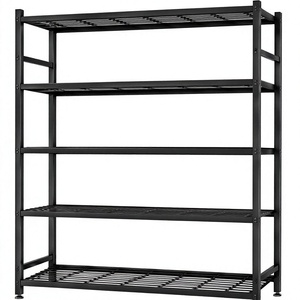
5-Tier Boltless Industrial Shelving Unit with Leveling Feet
Why Tier-1 Integrators Partner with Our Facility
From initial structural simulation to container-optimized oceanic delivery, our engineering team mitigates supply chain risks for system integrators, EPC logistics contractors, and warehouse operators globally.
25+ Years Industrial Expertise
Over a quarter-century specializing strictly in rack structure fabrication, seismic engineering, and bespoke storage integration across 120+ destination countries.
Free Structural CAD & 3D Modeling
In-house parametric modeling engineers deliver floor slotting layouts, static calculations, and finite element analyses (FEA) compliant with FEM 10.2.02 and RMI specifications.
Certified Production Governance
Independently audited and holding CE Certification (No. 2435-CPR-8605159), ISO 9001:2015 Quality Management, and full RoHS ecological process certifications.
Pre-Treatment Coating Durability
Continuous-line automated pickling, phosphating, and electrostatic powder coating, providing anti-corrosion barrier protection suited for extreme tropical humidity and sub-zero cold rooms.
Engineering Strategic Automation: Sourcing Guide for OEM/ODM Racking Systems
Modern distribution hubs are transitioning from passive static shelving into dynamically orchestrated, software-coupled material handling nodes. When engineering an Automation Racking System, structural integrators must align metallurgy, roll-forming tolerances, floor slab anchorages, and spatial kinematics to avoid automated vehicle jamming and deflection-induced operational downtime.
1. Technological Divergence: Automated High-Density Storage Architectures
Procuring warehouse racking at an industrial scale demands a granular understanding of operational mechanics. The trade-offs between capital expenditure (CapEx) and operating velocity dictate the ideal architectural selection:
| System Architecture | Throughput Profile | Space Utilization | Mechanical/Sensor Requirements | Optimal Industry Application |
|---|---|---|---|---|
| AS/RS High-Bay Clad Rack | Extreme Continuous | 90%–95% Cubed Volume | Precision tolerances (DIN 15185), Crane Mast guides | Automotive Tier-1, Cold-Chain hubs (-25℃) |
| Radio Shuttle Automation | Medium to High Batch | 80%–85% Lane Density | Optical lane end-stops, continuous battery contact rails | Food & Beverage, FMCG buffer stores |
| Automated 4-Way Shuttle (Pallet/Carton) | Dynamic Multi-Level | 88% Full 3D Density | Bi-directional precision track alignment, IoT dispatching | E-commerce fulfillment centers, Electronics |
| Double Deep Pallet Racking | Medium Selective | 60%–65% Footprint Access | Pantograph reach truck, heavy base rail protection | Retail bulk consolidation, Fast-turnaround 3PL |
2. Future Procurement Trends Shaping Global Supply Chains (2026–2030)
Procurement directors and facility consultants are prioritizing four major shifts when specifying racking tenders for upcoming buildouts:
A. Monitored Structural Integrity & IoT Sensing: Modern high-bay upright columns are increasingly pre-punched to accommodate impact-load sensors and laser beam-deflection monitoring transponders. In high-velocity facilities operating 24/7 autonomous AGVs and stacker cranes, continuous vibration monitoring detects structural micro-deflections before catastrophic column buckling occurs.
B. Low-Carbon High-Yield Cold-Rolled Steels: Environmental compliance standards are pushing manufacturers away from energy-intensive hot-rolled beams toward high-tensile, low-alloy micro-composite cold-formed profiles (e.g., Q355B and specialized micro-alloy additions). These geometries reduce structural self-weight by up to 18% while simultaneously increasing permissible load-carrying thresholds under dynamic braking deceleration forces.
C. Clad-Rack Warehouse Engineering: Facility owners are abandoning separate civil warehouse buildings housing freestanding racks. By utilizing the rack matrix itself as the load-bearing framework supporting exterior insulated sandwich panels and roofing membranes, companies save up to 25% on total structural steel CapEx and compress construction cycles by several months.
D. Tropicalization and Harsh Environment Surface Finishes: Cross-border trade routes traversing hot and humid ASEAN littoral belts or chemical processing sectors demand pre-treatment beyond standard degreasing. Multi-stage zinc-phosphate immersion followed by thermosetting hybrid epoxy-polyester coatings ensures anti-osmotic barrier performance against continuous 85%+ relative humidity.
Frequently Asked Questions on Racking Procurement & Engineering
Critical structural, seismic, and logistical questions addressed directly by our industrial design team.
Our engineering department calculates dynamic seismic actions based on local territorial building codes (such as ASCE 7, Eurocode 8, or GB 50011). Utilizing seismic response spectrum analysis, we adjust cold-formed upright gauge thickness, enlarge anchor footplates, integrate cross-directional vertical and horizontal portal bracing, and verify anchor bolt shear and pull-out resistance relative to concrete floor compressive strength.
Automated storage and retrieval systems demand strict geometric compliance conforming to EN 15620 (Class 100 to 400) or FEM 9.831 standards. We utilize continuous automated CNC roll-forming lines with in-line laser punch sensors, holding upright profile deflection and hole pitch tolerances within ±0.5mm across extended vertical beam heights to prevent robotic pallet extractors from sensor trip-offs.
To produce a compliant blueprint and quotation, we require: (1) Architectural floor plan depicting clear heights under trusses, slab load capacities, and column grids; (2) Unit load specifications (pallet outer dimensions including overhang, height, and maximum gross weight); (3) Handling machinery kinematics (forklift mast type, turning radius, or automated AGV/crane interface parameters); and (4) Throughput requirements (SKU velocity, FIFO/LIFO protocol).
Sub-zero temperatures create severe thermal contraction stresses and condensation cycles during defrost intervals. Our components undergo chemical bath pickling to remove mill scale, followed by iron-phosphating to etch micro-anchors into the steel matrix. The thermosetting powder coating is cured at high temperatures to maintain chemical elasticity, preventing micro-cracking and subsequent sub-film oxidation when exposed to freezer moisture.
Standard roll-formed systems ship within 15–25 production days post-drawing freeze. For oceanic freight, our logistics department generates custom nesting plans using specialized loading software. Upright frames and roll-formed box beams are bundled in custom-configured steel cradles to maximize cubic weight and cube inside 40ft High Cube (HQ) containers, protecting painted surfaces and reducing freight cost per storage bay.
Transform Your Warehouse Floor Into a High-Density Asset
Speak directly with our structural engineering team. Receive complimentary site slotting layouts, static loading analysis, and factory-direct OEM/ODM commercial terms tailored to your regional project requirements.