Featured Heavy-Duty Dynamic & Structural Storage Systems
Engineered for international distribution hubs, cold storage distribution centers, and high-throughput industrial plants. Explore our core range of custom push back configurations, specialized heavy-duty racks, and structural building solutions.
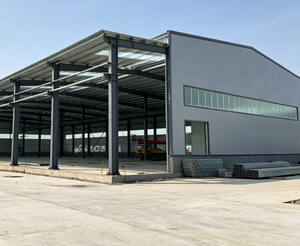
Prefabricated Steel Structure Warehouse & Logistics Storage Facilities
Industrial-grade clear-span steel buildings customized for high-bay push back racking installations and regional distribution hubs.
View Product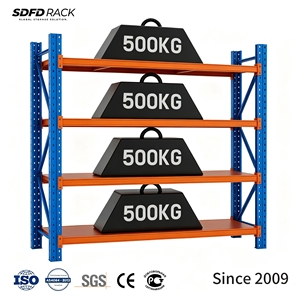
Custom Heavy-Duty Carpet Roll & Long-Material Beam Racking
Reinforced 5 multi-level cantilevered beam systems designed for dense cylindrical roll handling, textile storage, and heavy coil inventory.
View Product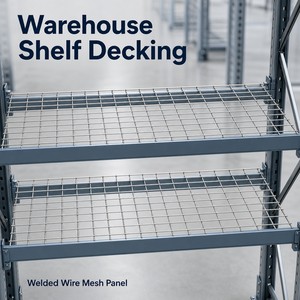
Galvanized Wire Mesh Decking Panels for Pallet Rack Storage
High-strength welded wire deck with bottom structural channel supports, ensuring ANSI MH26.2 fire safety and point-load protection.
View Product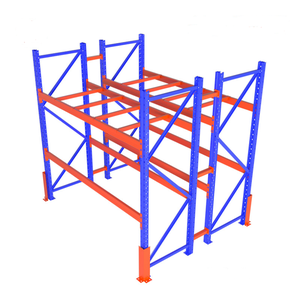
Metal Pallet Storage Racking & Industrial Logistics Warehouse Rack
Precision-punched teardrop and diamond-hole upright frames compatible with push-back conversion rails, wire decking, and crossbars.
View Product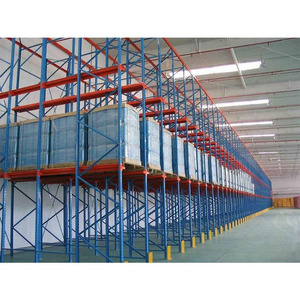
Drive-In Pallet Racking System for Deep Batch Cold Warehouses
Continuous lane storage reducing dedicated operating aisles by up to 75%, engineered for high-volume, uniform SKU cold supply chains.
View Product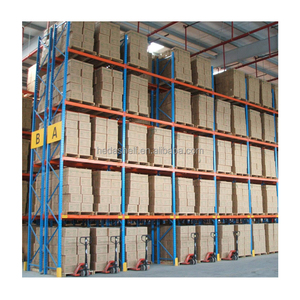
Industrial Heavy-Duty Metal Pallet Shelving (1T / 2T / 3T Per Level)
Box-beam and step-beam engineering with high safety factor calculations, designed for heavy machinery, tool dies, and bulk crates.
View Product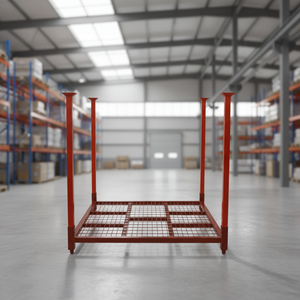
Portable Steel Roll Post Pallets & Foldable Stacking Storage Frames
Flexible modular storage units that eliminate fixed aisle constraints, ideal for peak seasonal staging, intermodal shipping, and returns.
View Product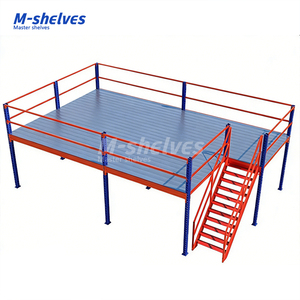
Integrated Multi-Tier Industrial Steel Mezzanine Storage Platform
CE-certified structural mezzanine platforms doubling usable floor square footage for manual fulfillment, sorting, and mezzanine offices.
View ProductEngineering Architecture of Custom Push Back Racking Systems
A definitive structural breakdown of gravity-assisted nested cart kinematics, structural steel selection, and dynamic loading principles for high-density warehouse storage.
Push back pallet racking represents one of the most mechanically sophisticated dynamic storage configurations in modern intralogistics. Operating on a Last-In, First-Out (LIFO) inventory principle, a custom OEM push back system utilizes a series of nested rolling carts that glide along inclined structural steel channel tracks mounted to heavy-duty load beams. When the first pallet is loaded onto the topmost cart by a standard forklift, the subsequent pallet pushed into that lane gently forces the first cart backward along a calibrated slope (typically 2% to 3.5% inclination gradient). As pallets are retrieved from the front aisle, gravity smoothly returns the remaining nested carts to the picking face at a controlled speed.
Unlike static selective racking that demands up to 60% of floor space for forklift access aisles, or drive-in racking that forces forklift trucks to drive deep into structural tunnels, a custom push back system reduces aisle requirements by 40% to 55% while eliminating forklift mast collisions with interior rack columns. As a premier direct OEM supplier and exporter, Guangzhou Heda Shelves Co., Ltd. engineers each push back installation based on empirical static and dynamic finite element analysis (FEA), factoring in exact pallet dimensions, load center of gravity, operational ambient temperature (-30°C cold chain to +50°C tropical humidity), and seismic ground motion requirements.
Nested Cart Kinematics & Profile Height
Our proprietary low-profile nested carts are fabricated from high-yield structural plate steel. Each lower cart envelops the upper cart with minimal vertical profile height (under 120mm total stack height for a 4-deep configuration), conserving precious vertical clearance under building sprinkler systems.
- Available in 2-deep, 3-deep, 4-deep, 5-deep, and 6-deep lane depths
- Heavy-duty CNC machined flanged steel wheels with shielded bearings
- Low coefficient of friction for gentle forklift push-in force (<3% of pallet weight)
- Built-in structural pallet positioning guides preventing lateral shifting
Structural Steel Grade & Upright Integrity
All vertical upright frames and horizontal load-bearing crossbeams are roll-formed from premium certified Q235B and Q355B hot-rolled structural steel coils. Uprights undergo precision automated CNC column punching for accurate 50mm or 75mm beam pitch adjustment.
- Yield strength rated up to 355 MPa for superior resistance to torsional buckling
- Robotic continuous seam welding on multi-hook connectors and baseplates
- Meets EN 15512:2020, RMI MH16.1, and AS4084-2012 international engineering standards
- Heavy-duty structural wrap-around column guards and aisle crash barriers included
Dynamic Safety Deceleration & Anti-Lift Catches
Dynamic pallet motion demands fail-safe structural restraint. Our custom push back tracks integrate mechanical end-stops, anti-lift interlocks, and speed-regulating centrifugal brake rollers to guarantee that pallets advance steadily without impact shock.
- Patented front-face anti-rollout stops prevent pallet dislodgement during picking
- Interlocking cart tabs prevent carts from lifting off track under asymmetrical loading
- Optional hydraulic impact dampeners installed at back stops for heavy loads (>1,500kg)
- High-visibility yellow safety face plates assist forklift operators in lane alignment
Push Back Racking vs. Alternative High-Density Systems
Choosing the optimal warehouse storage architecture requires balancing capital expenditure, pallet accessibility, honeycombing loss, and cycle times. Review the comparative engineering parameters below.
| Performance Dimension | Custom Push Back Rack | Drive-In Pallet Rack | Gravity Pallet Flow | Radio Shuttle Racking | Selective Pallet Rack |
|---|---|---|---|---|---|
| Inventory Rotation | LIFO (Per Lane) | Strict LIFO | Strict FIFO | FIFO & LIFO | 100% Direct Access |
| Storage Density Efficiency | Very High (75-80%) | High (65-75%) | Extreme (85-90%) | Extreme (85-92%) | Low (40-50%) |
| Honeycombing Space Loss | Low (2–6 Pallets/SKU) | Severe (Requires Full Lane) | Low to Moderate | Low to Moderate | None |
| Forklift Mast Collision Risk | Zero (External Aisles) | High (Enters Racking) | Zero (External Aisles) | Zero (Shuttle Operates) | Low (Standard Aisles) |
| Throughput Pick Cycle Speed | Fast (Self-Feeding Front) | Slow (Careful In-Lane Driving) | Fast (Dedicated Loading/Picking) | Automated Rapid Lane Travel | Fast (Single Pallet) |
| Relative Initial CapEx | Moderate Investment | Economical Initial Cost | Substantial (Full Rollers) | High (Robotics + Batteries) | Most Economical |
| Maintenance & Downtime | Minimal (Pure Mechanical) | Frequent Structural Repairs | Roller & Brake Inspections | Battery, PLC, Sensor Service | Negligible Maintenance |
Strategic Takeaway for Procurement Officers: While drive-in racking may feature a lower purchase price, its operational lifecycle expense often escalates dramatically due to ongoing upright damage from forklift impacts and severe honeycombing losses (unoccupied pallet positions in partially filled lanes). Conversely, fully automated radio shuttle systems offer peak volume density but introduce battery degradation, sensor recalibration overheads, and complex PLC software dependencies.
Push back racking achieves the golden mean: it delivers deep multi-pallet density without requiring specialized turret or reach trucks, features entirely mechanical zero-power operation, and keeps forklifts safely in main access aisles, significantly cutting routine warehouse maintenance costs.
Direct OEM Manufacturing Excellence & Export Scale
Backed by Guangzhou Heda Shelves Co., Ltd.'s 25-year manufacturing heritage, cutting-edge automated roll-forming lines, and comprehensive international compliance certifications.
Procuring custom OEM push back racks from Guangzhou Heda Shelves Co., Ltd. eliminates intermediary trader markups and guarantees direct collaboration with the structural engineers designing your system. Operating out of our modern 30,000 m² factory in Guangzhou, China, our manufacturing line integrates advanced robotic CNC tube punching, laser cutting, automated multi-station roll-forming lines, and state-of-the-art dual-station electrostatic powder coating booths.
We maintain strict adherence to international quality standards, verified by third-party credentials including CE Certification No. 2435-CPR-8605159, ISO 9001:2015 Quality Management No. 18624Q00169R0M, and full RoHS compliance. Before dispatch, raw steel undergoes spectral metallurgical verification and every welded nested cart assembly is dynamic-tested under full rated payload along inclined testing jigs.
Our 10-Step Controlled Manufacturing Workflow
From certified steel coil to containerized ocean freight, quality is monitored at every critical fabrication phase.










Future Procurement Trends & Technological Evolution (2025–2030+)
How macro supply chain shifts, sustainability mandates, and warehouse automation are transforming the engineering requirements of dynamic push-back storage infrastructure.
1. IoT-Enabled Lane Occupancy & Velocity Telemetry
Modern smart distribution hubs are increasingly retrofitting push back racks with passive RFID tags, optical lane sensors, and IoT-connected micro-switches at picking stops. This enables real-time visual warehouse management systems (WMS) to detect exact pallet positions, track velocity, and trigger automated replenishment alerts without manual barcode scanning.
2. AGV & AMR Autonomous Forklift Integration
As driver shortages drive global adoption of autonomous reach trucks and Automated Guided Vehicles (AGVs), custom OEM push back systems are being re-engineered with tighter mechanical tolerances. Future-proof designs feature laser-aligned cart center markers and widened entry funnels to accommodate algorithmic forklift insertion speeds with zero human intervention.
3. Cryogenic Steel & Decarbonized Cold Storage
With chilled and sub-zero pharmaceutical and food distribution experiencing explosive growth, warehouse operators are moving away from energy-intensive wide aisles. Modern push back procurement requires certified low-temperature impact steel (resisting brittle fracture at -30°C) and synthetic food-grade silicone bearing grease that maintains fluid rotation without freezing.
4. Green Steel Sourcing & Low-VOC Polyurethane Coatings
Multinational 3PLs and Fortune 500 retailers are now mandating Scope 3 emissions reporting across all logistics infrastructure. Push back rack procurement is moving rapidly toward steel milled with electric arc furnaces (EAF) utilizing high scrap ratios, paired with zero-VOC thermosetting powder coatings cured at lower thermal thresholds to minimize embodied carbon.
5. Site-Specific Non-Linear Dynamic Seismic Engineering
Seismically active distribution corridors across the Pacific Rim, Southeast Asia (Indonesia, Philippines), and Latin America require advanced non-linear time-history analyses. Modern OEM suppliers must incorporate oversized base plates, multi-bolt chemical anchor patterns, and dynamic energy-dissipating cart retainers that prevent pallet jumping during sudden seismic events.
6. Container-Optimized Flat-Pack Export Engineering
Volatile international container shipping tariffs make ocean freight packing density a key determinant of landed project cost. Future-ready push back designs feature fully dismountable nested carts and modular bolted tracks engineered to maximize internal volume within standard 40-foot High Cube (40HQ) maritime shipping containers.
Frequently Asked Questions for Push Back Racking Procurement
Critical technical, operational, and commercial answers to inform engineering specifications, tender documents, and warehouse layout planning.
Request Your Custom OEM Racking Engineering Proposal
Send your building dimensions, clear roof heights, pallet dimensions, and target throughput. Our senior structural engineers will prepare an optimized 2D CAD floor plan, 3D visualization render, and competitive factory-direct export quotation within 24 hours.