Industrial Storage Systems & Racking Solutions
Engineered for intense material handling, high static stability, and direct compatibility with standard and custom warehouse footprints worldwide.
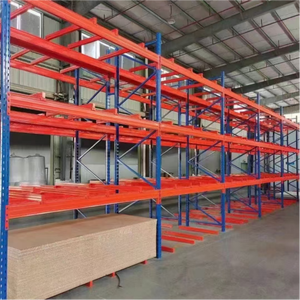
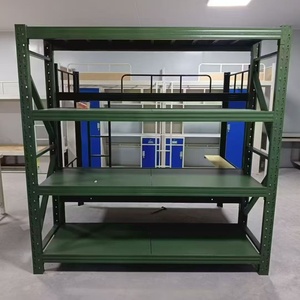
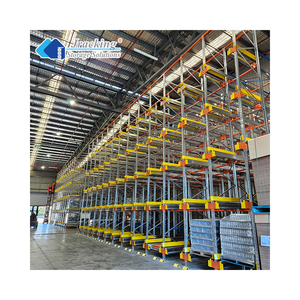
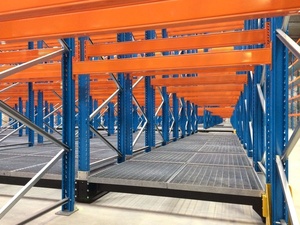
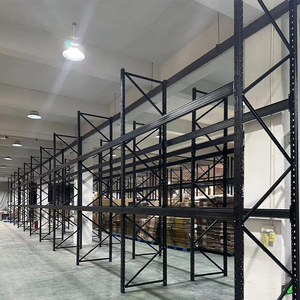
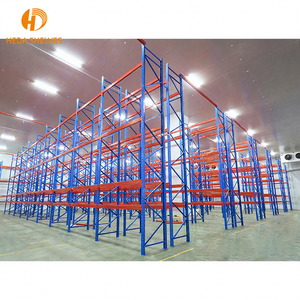
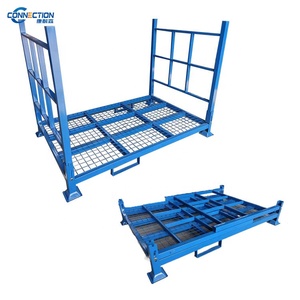
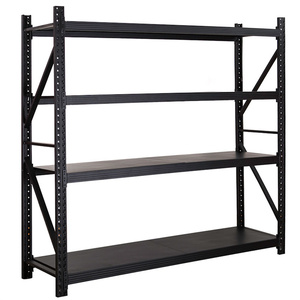
Engineering Architecture of Custom OEM Adjustable Cantilever Racking
In modern logistics engineering, storage solutions for non-standard, long-span, or irregular inventory—such as structural steel beams, extruded aluminum profiles, industrial PVC pipes, timber packs, sheet metals, and engineered trusses—present unique challenges. Standard pallet racking systems impose severe lateral constraints via front vertical columns, restricting load distribution and causing severe material damage or volumetric inefficiency. As specialized custom OEM adjustable cantilever racking factories and exporters, our direct-manufacturing mission focuses on engineering cantilever frameworks that resolve deflection variables, dynamic seismic forces, and continuous longitudinal loading without compromising crane or reach-truck access.
Cantilever racking operates primarily on the mechanical equilibrium between an anchored vertical tower column, extended load-carrying cantilever arms, and heavy structural bases. Unlike conventional pallet frames, a cantilever column endures intense eccentric compressive-bending moments. The structural integrity relies heavily on high-tensile structural steel profiles (hot-rolled H-beams conforming to Q235B or Q355B standards) versus cold-roll-formed continuous profiles. In heavy industrial setups demanding up to 3,000 kg load capacity per arm level, structural I-beam cantilever columns resist twisting under uneven loading scenarios, ensuring zero elastic deformation beyond standardized international safety thresholds ($L/250$ to $L/300$ deflection ratios conforming to FEM 10.2.02 and ANSI MH16.1).
Single & Double-Sided Upright Columns
Precision roll-formed or heavy-duty structural H-beam columns ranging from 2,000mm to over 12,000mm in clear height. Configurable as space-saving single-sided wall lines or double-sided central aisles to achieve symmetrical moment neutralization.
Pin-Lock Articulated Cantilever Arms
Specialized pivot-pin connectors prevent structural damage from accidental forklift impacts. The arm deflects upward and absorbs kinetic shock rather than transmitting destructive shear forces directly into the column core.
Horizontal & Diagonal X-Bracing
Welded steel angle trusses establish rigid longitudinal structural bays, suppressing dynamic sway under seismic loading and high-wind environments for outdoor warehouse yards and port-adjacent transshipment hubs.
Our proprietary pitch-adjustment matrix features 100mm, 140mm, or 150mm hole centerings along the column face, enabling facility operators to instantly re-index arm elevations as inventory profiles change. For high-density tubing, arm end-stops and removable steel retention pins prevent round cargo roll-off, while custom saddle decks, wire mesh decks, or steel grating can be dropped over adjacent arms to store non-standard pallets or varied lengths on the exact same cantilever bay.
Structural I-Beam vs. Roll-Formed Cantilever Racking
Evaluating engineering limits, load capacities, and application fit for industrial procurement teams.
| Evaluation Parameter | Roll-Formed Steel Cantilever | Structural Hot-Rolled I-Beam Cantilever | Procurement Selection Factor |
|---|---|---|---|
| Raw Material Specification | Cold-rolled steel coils Q235B / SPCC | Hot-rolled H-beam steel Q355B / ASTM A36 | Impact resistance and extreme yield strength |
| Load Rating Per Arm | 200 kg – 800 kg per arm | 800 kg – 3,500+ kg per arm | Target density of lumber, rebar, or heavy casting molds |
| Maximum Column Height | Up to 6,000 mm | Up to 12,000+ mm | High-bay clearance and reach truck mast limitations |
| Connection Interface | Wedge-lock boltless connector or drop pin | High-tensile Grade 8.8 structural bolt assemblies | Reconfiguration agility vs. absolute static rigidity |
| Impact Resistance | Moderate; vulnerable to heavy side impact | Ultra-high; resilient against industrial machinery collisions | MHE traffic intensity and operator forklift speed |
| Environmental Resistance | Epoxy polyester powder coating | Hot-dip galvanized (ISO 1461) or marine-grade epoxy | Indoor dry facility vs. exposed outdoor marine yard |
Enterprise Manufacturing Strength: 25+ Years of Racking Excellence
Direct-from-factory engineering, full custom OEM/ODM processing, and globally recognized quality credentials.
Founded in 2001, Guangzhou Heda Shelves Co., Ltd. has grown into an international leader in industrial warehouse storage solutions. Backed by over a quarter-century of technical expertise, our Guangzhou manufacturing infrastructure spans over 30,000 m² of automated fabrication workshops, staffed by more than 300 experienced mechanical engineers, certified welders, and production technicians. With an unmatched monthly capacity of 30,000 tons of finished steel racking, our facilities deliver scalable supply chain predictability to 3PL logistics operators, manufacturing plants, EPC contractors, and overseas racking distributors in more than 120 countries.
Rigorous International Certifications
Full compliance with certified quality regimes: European CE Certificate No. 2435-CPR-8605159, ISO 9001:2015 Quality Management System Certification No. 18624Q00169R0M, and comprehensive RoHS chemical testing guarantees safe, non-toxic installations.
10-Step Controlled Surface Treatment
Our automated metal finishing line features an exhaustive 10-step cycle: chemical degreasing, ultrasonic water rinse, acid pickling rust-removal, silane phosphating, and electrostatic powder curing. This ensures peel-resistant adhesion capable of withstanding 500+ hours of continuous salt-spray testing.
Fast Coastal Export & Transit
Strategically positioned in Guangzhou near major container terminals (Nansha, Huangpu, Shenzhen). Direct sailings reach Southeast Asian ports (Vietnam, Manila, Singapore, Bangkok, Jakarta) in 2 to 10 days, dramatically compressing EPC project delivery schedules.
Future Procurement Trends in Heavy-Duty Cantilever Racking
Analysis of structural automation, seismic resilience engineering, and regional supply chain evolution.
Cantilever AS/RS Integration
Automated stacker cranes are progressively replacing conventional sideloaders. Modern cantilever systems are engineered with sub-millimeter manufacturing tolerances, optical laser-positioning targets, and sensor-monitored arm deflectors to support driverless 24/7 long-load retrieval.
Dynamic Finite Element Analysis
Global buyers in earthquake zones (e.g., the Pacific Rim, Indonesia, Philippines) now require project-specific FEA structural modeling. Designs account for second-order P-Delta effects, dynamic floor acceleration, and reinforced heavy anchor baseplates to prevent catastrophic buckling.
Marine-Grade Outdoor Finishing
With industrial land costs rising, enterprises are shifting pipe and metal storage to external yards. Demand for heavy hot-dip galvanization conforming to ISO 1461 and duplex protective coatings that resist extreme UV radiation and coastal salinity is growing at an annual rate exceeding 14%.
OEM Modular Standardization
Supply chain resilience favors boltless and pinned modular cantilever components that can be disassembled, relocated, or reconfigured across global sites without cutting or hot-work welding, protecting long-term capital expenditure investments.
Frequently Asked Technical Questions
Straightforward answers from our Chief Structural Engineers to assist your layout planning and project tenders.
Transform Your Warehouse Logistics Architecture Today
Consult directly with Guangzhou Heda Shelves' senior structural engineers. We provide complimentary CAD layout drafting, 3D parametric renderings, and certified static load calculations within 24 hours.