High-Performance Warehouse Storage Rack Series
Manufactured from premium cold-formed structural steel coils, precision-punched with CNC progressive tooling, and finished with impact-resistant electrostatic powder coatings for heavy commercial operation.
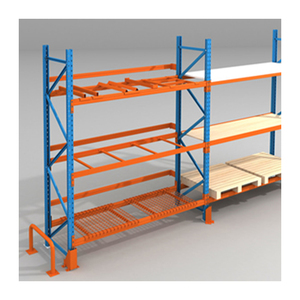
Dual-Purpose Industrial Warehouse Racking System 5-Layer All Metal Corrosion Protected Heavy Duty Storage Rack
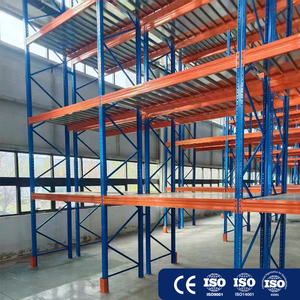
Warehouse Storage Rack System Q235B Steel Heavy Duty Selective Pallet Racking System Industrial Racks Customized Solutions
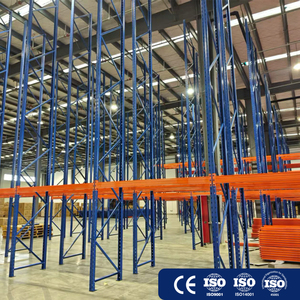
Steel Storage Rack Heavy Duty Racks Industriales Pallet Storage for Cold Chain and Dry Food Storage Solutions
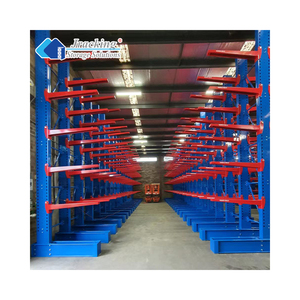
Jracking Industrial Shelving Warehouse Racks Heavy Duty Steel Cantilever Storage Rack System for Steel Pipe Storage
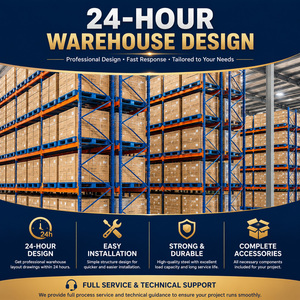
Steel Storage Rack Q235B Steel Flat Warehouse 12m With 500 Times Wear-resistant Tested Durable Pallet Racker Frame
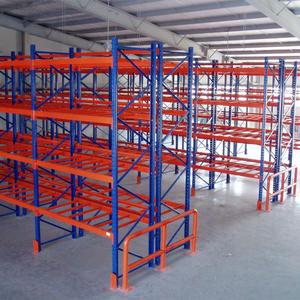
Q235 Steel High Density Layout Rack for Building Materials Storage
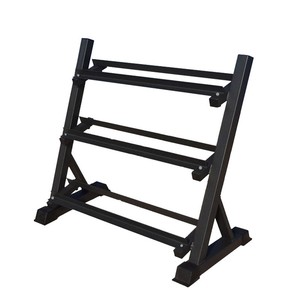
Factory Direct 3 Tier Metal Dumbbell Rack Modern Storage Stand Heavy Duty A3 Steel For Gym Dumbbell Kettlebell Storage
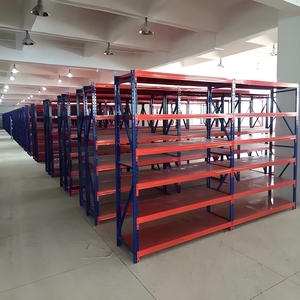
Adjustable 5-Layer Steel Metal Stacking Racks & Shelves Anti-Rust Efficient Warehouse Storage Solution
Structural Engineering Whitepaper: Pallet Racking Selection & Deflection Mechanics
Selecting industrial storage racking at wholesale mill scale requires analyzing physical failure boundaries, live loads vs. dead loads, and seismic ductility ratios. As an authoritative Chinese OEM/ODM manufacturing plant, our fabrication complies strictly with FEM 10.2.02 (European Design Code), RMI ANSI MH16.1 (North American Standard), and AS 4084-2023 (Australian Standard for Steel Storage Racks). Racking is not merely steel shelving; it is an unbraced or semi-rigid framed structural system subjected to combined axial compression, major and minor axis bending moments, and localized shear stresses under dynamic forklift impacts.
Under standard elastic analysis, structural deflection across horizontal load-bearing beams must not exceed L/200 for standard selective applications and L/300 for automated retrieval systems (ASRS), where L equals the clear span between adjacent upright frames. Exceeding these limits introduces permanent plastic deformation, fatiguing the welded 3-claw or 4-claw beam end connectors and risking catastrophic rack collapse.
| Storage Architecture | Floor Space Efficiency | Pallet Selectivity | Throughput Velocity | Seismic Resilience | Recommended Industrial Application |
|---|---|---|---|---|---|
| Selective Pallet Racking | 40% - 45% | 100% Direct | High (Manual Forklift) | Standard Dynamic Ductility | General Distribution, FMCG, Spare Parts |
| Drive-In / Drive-Through | 65% - 75% | 15% - 20% (LIFO/FIFO) | Moderate (Deep Lane Ingress) | Requires Top Tie Bracing | Homogeneous Bulk Commodities, Raw Paper Coils |
| Radio Shuttle Automation | 75% - 85% | Flexible Batch Control | Ultra-High (Autonomous) | High (Rigid Rail Matrix) | Cold Storage (-25°C), Frozen Seafood, High-Value Beverage |
| Heavy Duty Cantilever | 50% - 60% | 100% Unobstructed | High (Crane / Side-Loader) | Heavy Tapered Column Base | Steel Tubing, Timber Lumber, Extrusions, Rebar |
| Rack-Supported Mezzanine | 85% - 95% Vertical | 100% Manual Deck Access | High Pick & Pack Speed | Integrated Multilevel Bracing | E-commerce Fulfillment Centers, Automotive Spare Logistics |
Our manufacturing metallurgy centers on high-ductility Q235B and Q355B low-carbon micro-alloyed structural steels. Unlike standard rerolled scrap, our prime coils feature a guaranteed minimum yield strength ($f_y$) of 235 MPa to 355 MPa, an elongation rate exceeding 25%, and optimal chemical balance with silicon ($\le 0.07\%$) and phosphorus ($\le 0.035\%$). This chemical composition ensures exceptional crack arrest performance during severe seismic accelerations or low-temperature cold storage environments down to -30°C.
Controlled Manufacturing: From Raw Coil to Loaded Container
Precision roll-forming tolerances, structural weld certifications, and multi-stage pre-treatments guarantee structural stability and surface durability against tropical maritime humidity.
Continuous CNC Roll-Forming
Raw coil slitting, progressive automated diamond punching (50mm/75mm pitch), and high-precision cold roll forming across 22 consecutive continuous roller stations.
Robotic Arc Welding
Automated dual-torch CO₂ shielded welding joins box beams, step beams, and connector claws, ensuring 100% weld root penetration and zero structural cold cracking.
Pre-Treatment & Passivation
Complete multi-tank immersion: Hot alkaline degreasing, acid pickling rust removal, and zinc phosphating creating an impenetrable nano-conversion layer.
Electrostatic Powder Coat
Automatic reciprocating spray booths apply 60–90µm thermosetting polyester epoxy powder, baked at 200°C for superior chemical resistance and 500+ hour ASTM B117 salt-spray tolerance.
Future Trends in Global Warehouse Racking Procurement (2025–2030)
How automation, nearshoring buffer inventories, and climate resilience are reshaping global racking specifications and wholesale factory supply chains.
Hybrid High-Density Automation (ASRS & 4-Way Shuttles)
Standard static pallet racking is rapidly evolving into hybrid automation infrastructure. High-bay racking structures are now specified to support autonomous mobile robots (AMRs) and 4-way pallet shuttle systems. Upright structural tolerances have tightened from ±3mm to less than ±1mm to ensure robotic vehicle laser navigation accuracy.
High-Tensile Cold-Formed Steel Decarbonization
Global procurement directives demand lower embodied carbon without sacrificing load ratings. Through higher-tensile Q355B and specialized micro-alloy additions, roll-formed profile engineering reduces raw steel weight per pallet position by 14% to 18%, substantially reducing sea freight container shipping costs and project carbon footprints.
Direct Factory Mill Sourcing & Modular Standardization
Supply chain shocks have driven enterprise logistics managers, retail giants, and cold chain 3PLs away from local intermediaries toward direct relationships with primary Chinese mills. Turnkey procurement packages now combine 3D structural CAD modeling, custom fabrication, seismic certification, and containerized dispatch straight to port.
Failure Mode and Effects Analysis (FMEA) in Racking Systems
How professional structural design neutralizes the primary structural failure modes encountered in high-traffic logistics hubs.
1. Upright Column Buckling
- Root Cause: Forklift mast collisions, uneven floor slab settlement, or dynamic overload exceeding the critical Euler buckling limit.
- Engineering Defense: Omega-profile cold roll-forming with multi-ribbed stiffening bends, heavy-duty wraparound floor anchor guards, and ductile footplates with multi-point M12/M16 chemical anchoring.
2. Beam Connector Disengagement
- Root Cause: Upward forklift operator error catching bottom beam flanges, dislodging standard friction pins.
- Engineering Defense: 3-prong and 4-prong one-piece stamped connector teeth with heavy-gauge spring-steel automatic safety lock pins that resist vertical withdrawal forces up to 1,000 kg.
3. Seismic Resonance & Side-Sway
- Root Cause: Seismic ground accelerations matching the natural resonant period of loaded multi-tier racking frameworks.
- Engineering Defense: Diagonal upright frame cross-bracing bolted with Grade 8.8 high-tensile fasteners, spine ties connecting back-to-back rows, and finite-element portal frame modeling under Eurocode 8 / ASCE 7-22 parameters.
Guangzhou Heda Shelves Co., Ltd. — Your Verified Factory Partner
Founded in 2001, Guangzhou Heda Shelves Co., Ltd. has grown over two decades to become an international leader in structural storage racking systems, industrial mezzanines, and automated warehouse material handling infrastructure. Based in the logistics nexus of Guangzhou, South China, our industrial footprint spans a modern 30,000 square meter specialized manufacturing facility powered by over 300 skilled technical personnel, senior structural engineers, and logistics layout specialists.
Our manufacturing capacity reaches up to 30,000 metric tons per month, ensuring prompt fulfillment of major infrastructure tenders, multi-warehouse logistics park build-outs, and distributor wholesale supply programs. With more than 10,000 completed installations across 120+ countries, we possess comprehensive domain expertise spanning cold chain facilities, chemical and paint distribution, automotive assembly warehousing, e-commerce retail distribution, and bulk agricultural storage.
We operate under verified international compliance standards, including CE Certification No. 2435-CPR-8605159, ISO 9001:2015 Quality Management No. 18624Q00169R0M (valid through 2027), and complete RoHS environmental material compliance. Located in close proximity to the major deep-water ports of Guangzhou (Nansha/Huangpu) and Shenzhen (Yantian/Shekou), we offer seamless multimodal shipping logistics with fast ocean transit: 2–5 days to Vietnam, 3–5 days to the Philippines, 5–7 days to Singapore and Thailand, 6–8 days to Malaysia, and 7–10 days to Indonesia, as well as rapid vessel connections to Europe, North America, the Middle East, and Latin America.
Frequently Asked Questions by Industrial Buyers & Engineers
Direct technical answers addressing structural calculations, load testing, international shipping container optimization, and compliance verification.
Our engineering team calculates member sizing based on static finite-element analysis (FEA) combined with empirical load-to-failure testing. We specify upright profiles ranging from 80mm × 60mm to 120mm × 95mm with steel thicknesses from 1.5mm to 2.5mm, and beam depths from 80mm to 160mm in twin-C interlocking box profiles. Calculations incorporate a safety factor of 1.4 to 1.5 against ultimate yield strength, factoring in live load impact factors, longitudinal beam deflection under 100% rated capacity, and seismic acceleration parameters ($S_s, S_1$) provided for your specific site coordinates.
Corrosion control begins at the chemical pre-treatment stage. Unlike low-tier fabricators who perform simple manual wiping, HEDA Shelves utilizes an automated multi-stage immersion cycle consisting of hot alkaline degreasing, clean water cascade rinsing, hydrochloric acid pickling to eliminate mill scale, followed by chemical zinc phosphating. This forms an insoluble, crystalline phosphate conversion coating that chemically locks the subsequent electrostatic polyester powder coating to the steel substrate. For outdoor lumber yards, coastal docks, or sub-zero blast freezers with condensation cycles, we provide hot-dip galvanizing per ISO 1461 with minimum zinc coating thickness of 65–85µm.
To produce an exact structural and spatial layout, our engineering desk requires: (1) Architectural CAD floor plan showing building column grids, interior wall dimensions, dock doors, clear height to lowest roof obstruction, and concrete slab specifications; (2) Pallet unit load characteristics, including pallet depth, width, total load height (including wooden skid), and maximum gross pallet weight; (3) Forklift material handling equipment specifications, specifically the minimum right-angle stacking aisle width (AST) and maximum fork mast reach height; and (4) Operating SKU count, rotation methodology (FIFO vs. LIFO), and daily dispatch cycle rates.
Freight efficiency directly governs the landed cost per pallet position. Racking components are structurally dense yet awkwardly elongated. Our packing engineering team designs 3D container packing diagrams for every export order. Upright frames are either shipped pre-assembled or flat-packed (knock-down bolted) depending on freight lane costs. Uprights are bundled using customized heavy steel protective cradles, beams are nested head-to-tail with high-density corrugated spacers preventing cosmetic coating abrasion, and smaller connector pins, baseplates, and hardware are strapped into palletized wooden crates. A single 40ft High Cube (40HQ) container typically accommodates between 18 to 22 tons of finished structural equipment.
Yes. Standard static racking often fails in active seismic regions due to shear bolt failure or upright footplate tearing. For high-seismicity regions, our engineering team performs dynamic modal response spectrum analysis in accordance with local building codes, such as the Indonesian National Standard (SNI 1726), Philippine National Structural Code (NSCP), or Eurocode 8. We engineer heavy-gauge oversized footplates, increase anchor bolt embedment depths from 80mm to 160mm+, integrate heavy diagonal vertical bracing towers behind rack bays, and utilize ductile Q355B steel to absorb cyclical lateral kinetic forces without brittle rupture.
Transform Your Warehouse Volumetric Storage Capacity
Submit your architectural drawings, storage requirements, or SKU specifications. Our senior structural logistics engineering team will prepare an optimized CAD floor layout, structural bill of materials, and direct-factory quotation within 24 hours.