Engineered Warehouse Storage Racking Systems
Precision-fabricated pallet racking and gravity flow solutions direct from our 30,000 m² Guangzhou manufacturing hub, engineered to meet European FEM 10.2.02, EN 15512, and American RMI specification standards.
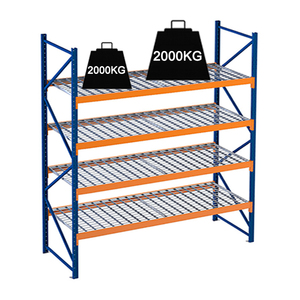 1000–3000 KG
Stackable Storage Rack Pallet Racking Systems Warehouse Equipment
Heavy-duty modular stacking frames capable of handling multi-ton palletized stock in variable distribution configurations without permanent floor bolting.
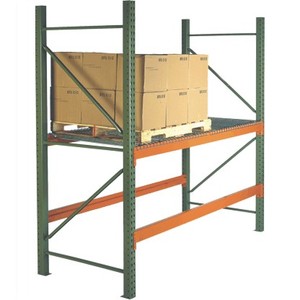 RMI Standard
Teardrop Upright Heavy Duty Warehouse Storage North American Standard Pallet Rack
Interchangeable teardrop punch hole profiles offering rapid toolless beam adjustment, high torsional stiffness, and seamless integration into US supply facilities.
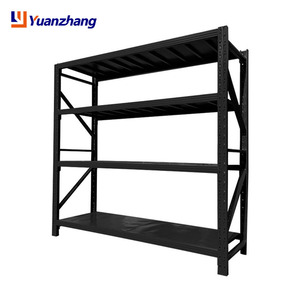 Modular Shelving
Adjustable Steel Light Duty Shelving, Easy Assembly Industrial Rack
Cold-rolled steel industrial shelving designed for piece-picking, carton maintenance storage, and fast boltless assembly in spare-parts depots.
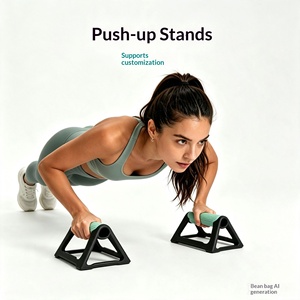 Structural Rigidity
H-shaped Push-up Rack Training Stand Multi-functional I-beam Design Home Gym
Multi-functional heavy-gauge steel framework utilizing high-strength joint geometry to achieve unmatched stability under dynamic and repetitive loading cycles.
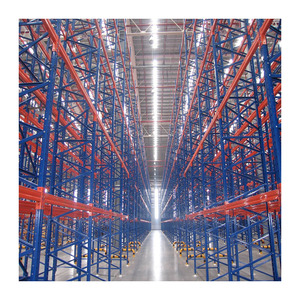 1000–4000 KG
Mracking Heavy Duty Industrial Palletized Racking Capacity 1000-4000kg
High-volume palletized racking structure engineered with custom safety factors for heavy FMCG, beverage, and bulk industrial manufacturing storage facilities.
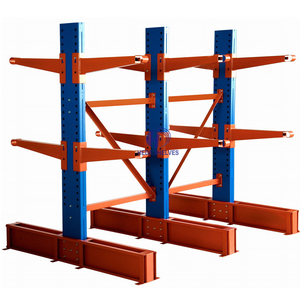 Long Bar & Pipe
Cantilever Racking Heavy Duty Industrial Cantilever Shelf Shelving System
Clear-front structural cantilever design providing unimpeded horizontal loading lanes for timber, steel rebar, PVC extrusion profiles, and sheet materials.
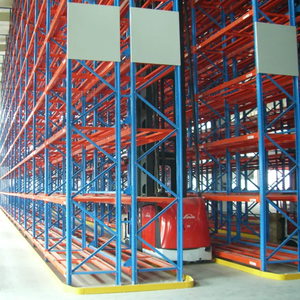 VNA System
Warehouse Storage Shelf Heavy Duty Very Narrow Aisle (VNA) Racking System
High-bay space optimizer narrowing handling aisles down to 1.5–1.8m, designed for guided turret trucks and maximizing vertical cubic storage capacity.
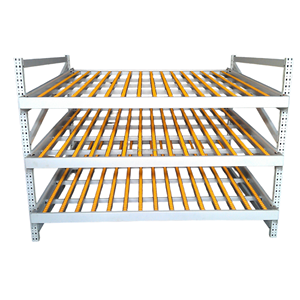 Dynamic Flow FIFO
Collapsible Mobile Gravity Pallet Roller Steel Rack Flow Storage System
Engineered gravity roller beds equipped with internal centrifugal brake rollers and entry guides to achieve self-regulating FIFO stock rotation.
The Mechanics of High-Performance Pallet Flow Storage Systems
A comprehensive technical examination of gravity flow physics, lane slope calibrations, dynamic pallet speed deceleration, and structural steel tolerances under intensive multi-shift distribution cycles.
1. Gravity Flow Dynamics & The Pitch Calculation Matrix
Pallet flow racks—frequently designated as gravity flow or dynamic flow systems—operate on an inclined track mechanism equipped with specialized conveyor roller beds or polycarbonate skate-wheel tracks. The fundamental physics require a pitch gradient precisely calibrated between 2.5% to 4.0% (approximately 1.5° to 2.3°) depending on the pallet bottom configuration, total unit-load weight, and roller track diameter.
If the pitch angle is designed below 2.5%, bottom board deflection on wooden pallets creates start-up friction that stalls the lane, forcing manual intervention. Conversely, a slope exceeding 4.2% generates uncontrolled terminal velocity, introducing catastrophic kinetic impact forces at the discharge pick face.
Our Guangzhou manufacturing division utilizes precision cold-rolled profile uprights engineered from premium Q235B and Q355B structural carbon steel, verifying finite element analysis (FEA) against racking deflection thresholds specified by EN 15512 and RMI MH16.1.
Kinetic Kinetic Velocity Equation
Dynamic acceleration along an inclined gravity bed is defined by the balance of gravitational force and mechanical retarding forces:
Where θ represents the lane slope angle, μ_r is the coefficient of rolling resistance for the pallet runner, and F_brake represents the counteracting torque applied by strategically spaced centrifugal speed controllers.
Comprehensive Engineering Parameters: Pallet Flow vs Alternative High-Density Systems
| Racking Architecture | Rotation Logic | Storage Density Index | Energy Consumption | Forklift Travel In-Rack | Throughput Efficiency |
|---|---|---|---|---|---|
| Gravity Pallet Flow | Strict FIFO (100%) | 85% – 90% Floor Cubic | Zero (Pure Gravity) | None (Dedicated Loading/Picking) | High (Continuous Flow) |
| Drive-In Racking | LIFO (Last-In-First-Out) | 70% – 75% Floor Cubic | Zero (Passive) | Deep (High Collateral Risk) | Low (Bottlenecks Common) |
| Push-Back Cart System | LIFO (Last-In-First-Out) | 75% – 80% Floor Cubic | Zero (Mechanical Springs) | None (Front Loading Face) | Moderate (2–6 Pallets Deep) |
| Radio Shuttle Automation | Flexible (FIFO / LIFO) | 88% – 92% Floor Cubic | Battery Electric (Lithium/Lead) | None (Robotic In-Lane Carrier) | High (Dependent on Cart Qty) |
| Very Narrow Aisle (VNA) | 100% Selective FIFO | 60% – 68% Floor Cubic | Vehicle Dependent | Aisle Travel Only (Specialized Turret) | High (Direct Pick Access) |
Centrifugal Brake Rollers
Integrated internal planetary gearings regulate pallet descent to an invariant terminal velocity of 0.25 to 0.30 m/s, irrespective of whether the pallet weighs 300 kg or 1,500 kg, preventing load impact shocks.
Mechanical Pallet Separators
Spring-loaded or counterweight pallet separators physically isolate the discharge pallet from the cumulative hydraulic pressure of the backline pallets, allowing seamless, friction-free forklift extraction.
Heavy-Duty Entry Impact Trays
Reinforced structural entry sections absorb repeated impact loads from rough forklift pallet placement, redirecting forces directly through braced upright frames to protect roller precision bearings.
Future Procurement & Technology Trends in Pallet Flow Racking
How progressive multinational 3PL operators, cold chain networks, and pharmaceutical manufacturers are adapting their capital expenditure for dynamic gravity storage.
1. Decarbonization & Zero-Energy Warehousing Directives
With global corporate sustainability reporting frameworks (Scope 1 and Scope 2 emissions) tightening in North America and the European Union, dynamic gravity flow racking offers an unparalleled advantage: zero electrical kilowatt-hour consumption. Unlike automated shuttle systems or stacker crane ASRS that demand continuous electrical grid power, gravity pallet flow delivers autonomous lane handling driven solely by physics.
Procurement officers are increasingly auditing lifecycle operational expenditures (OpEx). While complex automated systems feature high initial capital outlay and perpetual maintenance agreements, wholesale pallet flow systems engineered by verified Chinese exporters yield complete payback cycles within 18 to 24 months through energy savings and labor reduction.
2. Cold-Chain Resiliency & Sub-Zero Metallurgical Standards
The exponential surge in frozen food distribution, bio-pharmaceutical storage, and cross-border seafood trade demands pallet flow racking certified to perform reliably in deep freeze conditions down to -30°C (-22°F). Under extreme cold, low-grade steel experiences ductile-to-brittle transitions, resulting in sudden structural shear failures.
Future procurement mandates focus on impact-tested steels (such as fine-grain treated Q355D/E), specialized food-grade low-viscosity synthetic bearing lubricants that avoid hardening, and dual-layer hot-dip galvanized or thermoset zinc-rich powder barrier coatings that prevent condensation pitting corrosion.
3. AGV & AMR Integration at the Loading and Pick Faces
The transition from manual counterbalanced forklifts to Autonomous Mobile Robots (AMRs) and Automated Guided Forklifts (AGVs) is revolutionizing the discharge pick face design. AGV optical and LiDAR navigation systems require extreme structural repeatability.
Suppliers must provide tight manufacturing tolerances (within ±1.0 mm per beam span), heavy-gauge seismic floor anchoring baseplates, and laser-aligned magnetic sensor targets to guarantee automated pallet pick repeatability without human driver intervention.
4. Supply Chain Regionalization & Hybrid Factory Direct Sourcing
Procurement directors in Southeast Asia (Malaysia, Thailand, Vietnam, Indonesia, Singapore), the Middle East, and the Americas are bypassing multi-tier regional distributors to source directly from qualified original equipment manufacturers (OEM/ODM) in China.
By partnering directly with fully integrated manufacturing facilities that possess in-house roll-forming, automatic column punching, robotic welding, and automated powder coating lines, buyers capture substantial 25% to 40% cost efficiencies while retaining direct communication with engineering project leaders.
Guangzhou Heda Shelves Co., Ltd.
Founded in 2001, Guangzhou Heda Shelves Co., Ltd. has established itself as an authoritative global manufacturer and exporter of heavy-duty pallet racking, dynamic gravity flow systems, and industrial mezzanine platforms. Operating from an integrated 30,000 m² state-of-the-art production facility, our 300+ technical personnel execute end-to-end manufacturing delivering up to 30,000 metric tons per month.
Positioned in Guangzhou, within immediate proximity to major international maritime terminals (Nansha, Huangpu, Shenzhen, and Hong Kong), we maintain rapid sea-freight connectivity across Southeast Asia (2–10 days transit), the Middle East, Europe, and the Americas under FOB, CIF, or DDP terms.
Holders of verifiable European CE Certification No. 2435-CPR-8605159, ISO 9001:2015 Quality Management No. 18624Q00169R0M, and comprehensive RoHS environmental certification.
Our project engineers provide complimentary CAD layout schemes, 3D photorealistic renderings, and rigorous structural calculation load matrixes custom-tailored to local seismic zones (such as UBC/IBC and Eurocode 8).
Every steel component undergoes an automated 9-stage chemical pre-treatment (pickling and phosphating) before electrostatic thermosetting epoxy-polyester powder coating, resisting extreme humidity (>85% RH) and corrosive coastal air.
Export Verification & Shipping Metrics
- Verified Direct Sea Transit: Vietnam (2-5d) · Manila (3-5d) · SG (5-7d)
- Raw Steel Material Grade: Certified Q235B / Q355B Hot-Rolled Strip
- Standard Column Pitch: 50mm / 75mm / 76.2mm Adjustable
- Roller Track Load Rating: 150 – 350 KG per Roller Segment
- Container Stacking Efficiency: Maximized Bundles for 40HQ Cubing
- Inspection & Assembly Guidance: 3D Diagrams + Remote Supervision
10 Controlled Steps: From Prime Steel Coil to Container Loading
Strict in-house quality inspection tracking at every fabrication milestone.
Raw Steel Inspection
Spectrometric & tensile verification of certified steel coils.
Precision Slitting
CNC longitudinal strip shearing with ±0.2mm tolerance.
Column CNC Punching
High-speed continuous progressive teardrop/diamond punching.
Cold Roll-Forming
Multi-station precision roll lines forming continuous upright profiles.
Box Beam Forming
Interlocking twin-C profile automatic seam engagement.
Robotic Welding
Automated CO2 shielded robotic connector-to-beam welding.
Pickling & Phosphating
Chemical de-rusting & passivation bath guaranteeing paint bond.
Electrostatic Powder
Automatic powder spray cured at 200°C for high scratch resilience.
Roller Track Rigging
Test assembly of gravity beds, brake rollers, and separators.
Export Container Stowing
Custom steel bundling, edge wrapping & direct sea container stuffing.
Frequently Asked Questions: Pallet Flow Racking
Clear, technically rigorous answers addressing engineering validations, pallet quality standards, site climate adjustments, and global delivery logistics.
1. What pallet specifications are required for dependable gravity flow operation?
Pallet flow systems rely on consistent physical contact between the pallet runners and conveyor rollers. High-grade wooden GMA (48×40 inch), Euro (1200×800 mm), or ISO pallets with undamaged bottom runners oriented parallel to the flow direction provide ideal performance. Pallets with warped deck boards, missing base runners, or protruding nails will cause jamming. Plastic pallets with perimeter runner bases can be utilized when matched with customized full-width steel rollers.
2. How are runaway pallet risks and lane impacts mitigated in deep-lane runs?
For lanes deeper than 3 pallets (ranging up to 25 pallets deep), centrifugal speed control rollers are installed at designated intervals (typically every 1 to 2 pallet lengths). These devices contain internal planetary gears that engage brake pads via centrifugal force whenever surface speed surpasses 0.3 m/s, maintaining a steady, safe creeping velocity throughout the entire descent.
3. What engineering details are necessary to request a custom CAD layout & quotation?
To deliver an accurate layout and quotation, our engineering team requires: (1) Warehouse clear height under sprinkler/obstruction heads; (2) Building architectural column grid layout; (3) Pallet dimensions including width, depth, overall height, and gross load weight; (4) Forklift model, mast height, and turning radius; and (5) Operational SKU profiles and target hourly dispatch throughput.
4. Can your racking designs accommodate seismic risk zones like Indonesia, Japan, or the Philippines?
Yes. Every racking system engineered for seismic regions is calculated using localized spectral response accelerations (Ss and S1 values). We increase structural upright profile thicknesses, incorporate reinforced horizontal and diagonal bracing trusses, widen baseplates, and engineer heavy-duty Hilti-grade wedge mechanical anchors to resist overturning moments under dynamic ground motion.
5. What protection is provided against coastal corrosion and high tropical humidity?
Our fabrication lines deploy an automated 9-step pickling and phosphating acid wash sequence to strip oxidation and form an inert microscopic conversion coating. This is followed by robotic electrostatic application of thermosetting TGIC-free epoxy-polyester powder baked at 180°C–200°C. For extreme humidity, marine coastal zones, or cold storage washdown areas, hot-dip galvanizing per ISO 1461 is available.
6. How are replacement components and installation supervised internationally?
Every export container is packed with modular, color-coded, and piece-numbered components correlated directly to 3D assembly shop drawings and step-by-step video manuals. In addition to remote technical video support, HEDA Shelves provides experienced on-site installation directors for major multi-tier warehouse projects worldwide.