Engineered Pallet Racking & Warehouse Systems
Precision-manufactured structural storage frameworks built for demanding cold storage, FMCG, and high-throughput distribution environments.
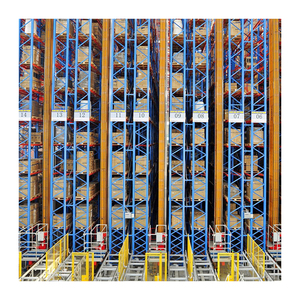
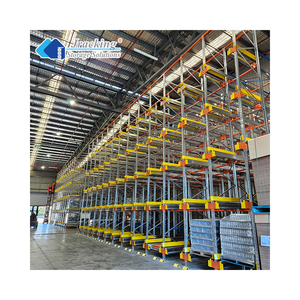
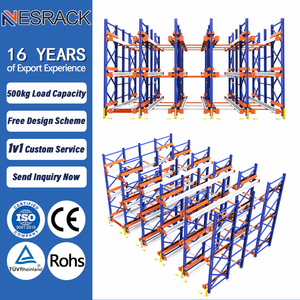
Whitepaper: Engineering Mechanics & Industrial Value of Drive In Pallet Racks
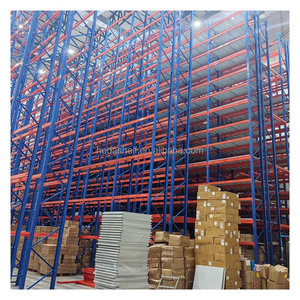
In contemporary industrial logistics and high-volume materials handling, the challenge of warehouse space optimization is fundamentally an economic and structural calculation. For enterprises managing massive batch quantities of homogeneous stock keeping units (SKUs)—such as cold storage logistics, agricultural commodities, industrial beverages, raw polymer staging, and heavy manufacturing chemicals—traditional selective pallet racking introduces excessive, non-productive operating aisles. A high-efficiency Drive In Pallet Racking System resolves this spatial bottleneck by eliminating intermediary forklift access corridors, consolidating storage footprint, and elevating warehouse volumetric density by up to 75% to 80% compared to standard wide-aisle configurations.
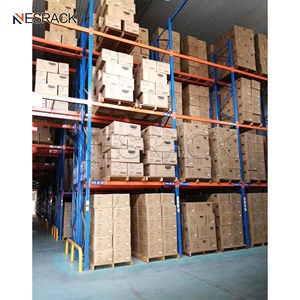
As a premier China wholesale drive in pallet racking manufacturer and direct factory, our production protocols integrate structural cold-formed high-tensile steel (standard Q235B and Q355B profiles), precision-punched upright frames, and rigid continuous cantilever support rails. In a drive-in system, counterbalanced or reach forklifts physically drive inside the racking bays along defined storage lanes to deposit or retrieve unitized loads placed on structural pallet rails. Operating primarily on a Last-In, First-Out (LIFO) inventory management logic—or First-In, First-Out (FIFO) when engineered as a Drive-Through system with dual-access ends—this configuration delivers the lowest capital equipment cost per pallet position among all existing ultra-high-density storage topologies.
Future Procurement Trends in High-Density Storage (2025–2030)
Global supply chain professionals are shifting away from generic commodity procurement toward lifecycle-engineered, climate-resilient, and modular racking architectures. Sourcing directors across the Americas, Europe, the Middle East, and Southeast Asia are evaluating storage systems based on the following structural procurement criteria:
Seismic & Geo-Climatic Customization
Racking is no longer designed with arbitrary generic tolerances. Modern procurement specifies Finite Element Analysis (FEA) compliant with FEM 10.2.02, RMI (Rack Manufacturers Institute), and AS 4084 standards, calculating localized ground acceleration, concrete floor slab shear resistance, and wind/temperature stresses.
Tropical-Grade Surface Metallurgy
With significant expansion across high-humidity logistics zones, industrial buyers mandate multi-stage surface treatments. Our 10-step pickling, phosphating, and electrostatic powder coating process delivers superior corrosion immunity, preventing delamination in environments exceeding 85% relative humidity.
Hybrid Drive-In & Shuttle Transitioning
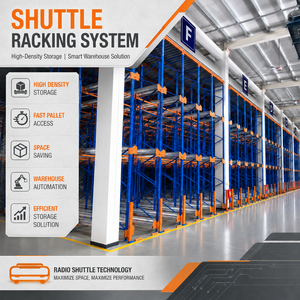
Warehouse planners are actively selecting drive-in channel profiles that can be retrofitted with autonomous radio shuttles. This dual-purpose design allows companies to invest in manual drive-in systems today and upgrade lanes to semi-automated shuttle carts as throughput increases without replacing structural uprights.
Evolutionary Roadmap: From Traditional Racks to Intelligent Steel Networks
The engineering design of drive-in racking has developed from static, heavy structural ironwork into highly optimized, cold-formed open steel profiles. Key technical milestones in this evolution include:
1. Optimized Beam & Rail Geometry: Older systems utilized heavy rolled angle steel for pallet support, which reduced vertical overhead clearances. Contemporary Chinese manufacturing utilizes roll-formed continuous galvanized support rails with folded guide flanges. These guide flanges automatically center the pallet base during forklift transit, reducing pallet tipping hazards and driver error inside deep bays.
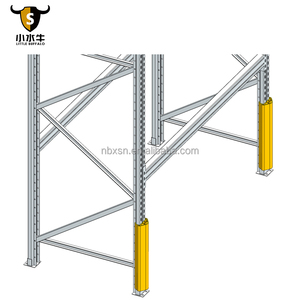
2. Dynamic Collision Mitigation: Because forklift operators enter the interior bays of the structure, upright impact has historically represented the primary maintenance challenge for drive-in racking. Current best practices combine reinforced double-flanged column sections at floor level with polymer floor-anchored entry guards and heavy steel guide rails. These protective assemblies divert side-impact kinetic forces safely into the concrete foundation instead of the vertical load-bearing frame.
3. High-Integrity Overhead Portal Bracing: Eliminating intermediary horizontal load beams reduces structural rigidity along the longitudinal axis. To counteract rotational deflection and lateral drift under heavy cyclic loading, modern drive-in systems utilize top horizontal portal frames, roof truss cross-bracing, and vertical rear back-bracing grids. This transforms the storage block into an integrated three-dimensional monolithic space frame capable of withstanding dynamic seismic forces.
Direct Manufacturing Superiority: Why Partner with Guangzhou Heda Shelves
Guangzhou Heda Shelves Co., Ltd. (operating since 2001) is a specialized Chinese manufacturer of structural warehouse racking, mezzanine platforms, and automated storage solutions. Sourcing direct from our Guangzhou manufacturing facility delivers verified structural, financial, and logistical advantages:
Certified Structural Compliance
Our manufacturing processes are certified under CE Certificate No. 2435-CPR-8605159, ISO 9001:2015 Quality Management System No. 18624Q00169R0M, and RoHS standards. All structural load tables are calculated to international standards, providing complete documentation for municipal building permits and third-party engineering audits.
Fully Integrated In-House Fabrication
From our 30,000 square meter factory floor, our team of over 300 technical and production specialists oversees the entire 10-step fabrication chain: raw slit steel coil decoiling, precision punching, roll profile forming, robotic beam welding, acid pickling, phosphating, and automated electrostatic powder coating lines.
Direct Sea Lane Logistics & Rapid Transit
Situated adjacent to the major maritime hubs of Guangzhou, Nansha, and Shenzhen, we provide efficient global ocean freight logistics. Port-to-port container sailing averages only 2–5 days to Vietnam, 3–5 days to the Philippines, 5–7 days to Singapore and Thailand, 6–8 days to Malaysia, and 7–10 days to Indonesia, significantly shortening project schedules.
Frequently Asked Questions: Industrial Procurement & Engineering
Consult with Heda Shelves Senior Racking Engineers
Send us your warehouse dimensions, clear operating height, pallet dimensions, and forklift specifications. Our engineering office will deliver a comprehensive 2D CAD layout, 3D structural render, and factory-direct quotation.
Get a Quote