High-Performance Warehouse Racking & Industrial Shelving Architectures
Explore our cold-formed Q235B/Q355B structural steel systems configured for maximum load rigidity, selective access, and volumetric optimization in modern supply chain hubs.
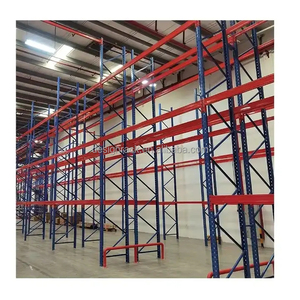
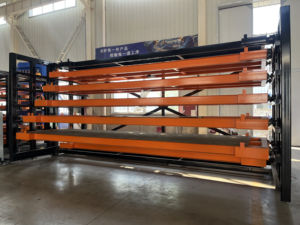
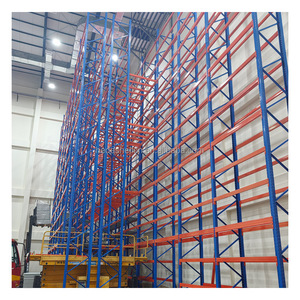
Why Tier-1 3PLs and Industrial Enterprises Partner with Guangzhou Heda Shelves
Founded in 2001, Guangzhou Heda Shelves Co., Ltd. has evolved from a precision fabrication shop into one of China's most technologically integrated racking designers and manufacturers.
Verifiable Global Compliance
Every structural system complies with EN 15512:2020 and RMI (Rack Manufacturers Institute) standards. We hold third-party verified CE Certification (No. 2435-CPR-8605159), ISO 9001:2015 Certification (No. 18624Q00169R0M), and complete RoHS heavy metal safety documentation.
Severe Environment Metallurgy
Our uprights and beams undergo a specialized 10-stage automated pre-treatment featuring chemical pickling and phosphating before electrostatic curing. Our proprietary surface chemistry surpasses 500-hour neutral salt-spray testing (ASTM B117), guaranteeing zero flaking in coastal zones and high-humidity tropical microclimates.
Free 3D & CAD Engineering
We eliminate spatial planning friction. Forward your architectural DWG or warehouse layout parameters to our technical office, and our structural engineers return comprehensive 3D visual models, aisle dynamic radius checks, seismic load safety calculations, and bill of materials (BOM) within 48 hours without engineering fees.
Architectural System Selection: Load Dynamics, Pick Profiles, and Volumetric Density
| Storage Architecture | Space Utilization | SKU Selectivity | Load Capacity (kg/Pallet) | Inventory Logic | Recommended Industrial Context |
|---|---|---|---|---|---|
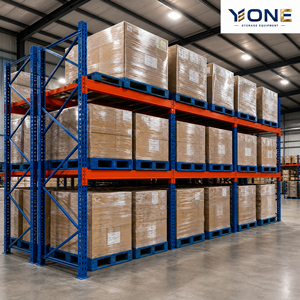
| Selective Pallet Racking | 40% – 50% | 100% Direct Access | 1,000 – 4,500 kg | FIFO / LIFO Flexible | FMCG, general 3PL hubs, automotive aftermarket, multi-SKU retail DCs. |
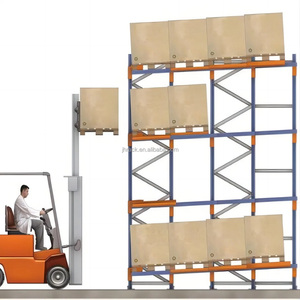
| Drive-In / Drive-Through | 65% – 75% | 20% – 30% Lane Selectivity | 800 – 2,000 kg | Strict LIFO (FIFO if Drive-Thru) | Bulk cold chain, beverage bottling plants, raw material manufacturing batches. |
| Radio Shuttle Automation | 80% – 88% | Lane-Dependent High Speed | 500 – 2,500 kg | FIFO or LIFO Switchable | Deep-freeze storage (-30°C), meat processing, high-throughput buffer docks. |
| Push-Back Cart System | 70% – 75% | Medium (1 SKU per lane) | 1,000 – 2,000 kg | Strict LIFO (Gravity Cart) | Medium-turnover goods, floor space constrained distribution facilities. |
| Multi-Tier Mezzanine Platform | 150% – 250% of footprint | 100% Manual / Tote Access | 300 – 1,200 kg/m² | Dynamic Split-Case Picking | E-commerce fulfillment centers, fashion apparel, pharmaceutical distribution. |
Emerging Procurement Trends in Global Material Handling Systems
Global procurement teams are shifting away from transactional, low-bid pricing models toward Total Cost of Ownership (TCO), material tractability, structural resilience, and lifecycle operational efficiency.
1. Steel Quality Traceability & MTC Rigor
Global logistics facilities no longer accept unverified commodity steel. Professional procurement specifications require EN 10204 Type 3.1 Mill Test Certificates (MTC) proving guaranteed tensile, yield strength, and chemical composition (controlling phosphorus and sulfur below 0.035%). Sourcing from manufacturers with direct mill allocations (such as Baosteel or Shougang) prevents catastrophic brittle frame failure under dynamic cyclic stress.
2. Ocean Freight Cube Optimization
Steel racking is heavy and voluminous. Forward-thinking procurement directors analyze packing designs to ensure 40-foot High Cube (40HQ) container cubing rates exceed 92%. At Guangzhou Heda Shelves, beam nesting profiles, interlocking upright nesting packs, and bespoke timber skids eliminate empty container dead space, reducing transatlantic and intra-Asia freight cost per pallet position by 18% to 26%.
3. ESG-Aligned Green Powder Coating
Sustainable warehousing initiatives require non-toxic, closed-loop manufacturing. Outdated solvent paints containing volatile organic compounds (VOCs) are prohibited in high-specification tenders. Our facility operates electrostatic TGIC-free polyester powder application systems paired with dry-filter reclamation booths that recover and reuse 98% of overspray, completely eliminating hazardous emissions.
Next-Generation Development Trends: From Passive Steel to Smart Racking Infrastructure
The global warehousing landscape is transitioning rapidly. Racking systems are no longer merely passive structural steel frames; they are mission-critical mechanical platforms integrating with automated systems.
1. Millimeter Tolerances for AS/RS and AMR Integration
As Automated Storage and Retrieval Systems (AS/RS), stacker cranes, and Autonomous Mobile Robots (AMRs) replace manual forklifts, manufacturing tolerances must tighten from traditional ±3.0mm structural thresholds down to laser-guided ±1.0mm precision. High-bay racking reaching heights over 30 meters requires stringent frame plumbness tolerances (exceeding 1/1000 height ratios). Guangzhou Heda Shelves uses automated CNC multi-station continuous roll-forming lines that punch and profile uprights in a continuous sequence, eliminating cumulative hole-pitch error.
2. Advanced Seismic Dynamic Modeling
Warehousing hubs in the Pacific Ring of Fire—including Indonesia, the Philippines, Japan, and Western Latin America—face severe seismic hazards. Modern structural design applies 3D finite element analysis (FEA) to evaluate second-order $P-\Delta$ effects under horizontal seismic ground motions. Upright baseplates are engineered with energy-dissipating ductile steel anchor systems that preserve structural frame integrity during earthquake-induced resonance, preventing catastrophic building collapse.
3. Structural Health Monitoring & IoT Strain Gauges
The future of warehouse safety is digital. Smart racking frames increasingly integrate wireless IoT strain sensors and laser deflection monitors directly into lower beam connectors and corner uprights. These micro-sensors register subtle metal fatigue, out-of-plumb deformation, or accidental forklift impact loads above design safety thresholds, instantly dispatching digital maintenance warnings to the warehouse management system (WMS) before structural failure occurs.
10 Controlled Production Steps from Raw Coil to Ocean Container
By controlling all fabrication steps in-house within our 30,000 m² Guangzhou facility, we eliminate subcontractor variances and maintain complete dimensional and metallurgical control.
Raw Steel QC
Certified Q235B/Q355B coils tested for yield, tensile & elongation.
Precision Slitting
Automated uncoiling & micro-tolerance slitting to exact width profiles.
CNC Punching
High-speed hydraulic punching for 50mm/75mm pitch connection slots.
Continuous Roll Form
Multi-stand roller dies forming cold-bent omega structural uprights.
Beam Profiling
Forming interlocking box beams and stepped heavy-duty shelf rails.
Deburring & Polish
Mechanical surface leveling to eliminate sharp edges and slag.
Robotic GMAW Weld
Dual-pulse robotic welding of heavy-duty claw connectors to beams.
Pickling & Phosphating
Chemical bath immersion removing oxides and ensuring primer bonding.
Powder Coating
Automated electrostatic powder coat cured at 200°C for durable finish.
Palletized Packing
Strapped steel bundles protected with foam and shock-wrap for transit.
Frequently Asked Questions by Industrial Buyers & Project Consultants
Authoritative technical, commercial, and engineering clarifications to help you specify, procure, and install industrial warehouse storage systems with confidence.
Q: How do you verify the seismic load capacity for high-risk zones?
Our structural engineering department performs finite element modeling using software aligned with regional seismic requirements (such as ASCE 7, Eurocode 8, or local Indonesian SNI codes). We evaluate ground spectral acceleration values ($S_s, S_1$), calculate base shear forces, and engineer enlarged baseplates, heavy anchor bolts, and reinforced diagonal cross-bracing to prevent racking frame collapse during seismic events.
Q: What is the advantage of continuous roll-formed uprights over bolted two-piece columns?
Continuously roll-formed omega ($\Omega$) profile uprights feature multiple structural cold-formed bends (typically 8 to 12 bends), which drastically enhance structural moment of inertia and torsional resistance compared to basic channel sections. Bolted or spliced uprights introduce mechanical stress concentrations and are prone to premature micro-yielding under dynamic impact.
Q: Can your powder coatings withstand coastal salinity and condensation in cold stores?
Standard paint finishes rapidly bubble and corrode under high relative humidity (RH > 80%) or in sub-zero cold stores where dew-point condensation is constant. Guangzhou Heda Shelves uses an intensive multi-stage pickling and phosphating pre-treatment that etches the steel surface for superior chemical adhesion. Our electrostatic TGIC-free polyester powder coat cures to 70–90 microns, verified by 500-hour neutral salt-spray test certificates. Hot-dip galvanized finishes (HDG) are also available for open marine environments.
Q: What information is required to receive a comprehensive CAD layout and structural quotation?
To design an optimized system, our technical office requires: (1) Warehouse architectural drawings detailing clear height under truss, column grid spacing, floor slab thickness, and door positions; (2) Pallet dimensions (width, depth, overall height including cargo) and maximum gross weight; (3) Forklift model, turning radius, and maximum reach height; (4) Desired warehouse throughput velocity and environmental temperature range.
Q: How do you prevent beam dislodgement caused by accidental forklift operator impact?
Every beam-to-column connector on our pallet racks incorporates an automatic spring-steel safety locking pin. When the beam claw engages the teardrop or diamond upright slot, the safety lock automatically drops into position. This mechanical lock withstands an upward impact dislodgement force exceeding 5 kN per connector, conforming fully to EN 15512 safety compliance regulations.
Q: What are the typical ocean freight transit times from your Guangzhou factory?
Our manufacturing plant is located adjacent to Guangzhou and Nansha ports, providing exceptional maritime accessibility. Direct sea transit to major Southeast Asian ports (Ho Chi Minh City, Haiphong, Manila, Singapore, Bangkok) is approximately 3 to 7 days; Port Klang and Jakarta require 6 to 10 days; Middle Eastern ports (Jebel Ali, Dammam) take 14 to 18 days; and European/North American main hubs typically run 22 to 35 days.
Optimize Your Warehouse Footprint with Certified Engineering Solutions
Whether you require a custom 10,000-pallet selective rack system, a cold-storage radio shuttle integration, or a multi-tier structural mezzanine, Guangzhou Heda Shelves provides turnkey structural calculation, 3D simulation, and direct factory pricing.