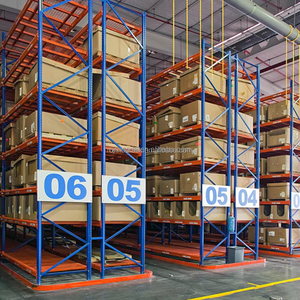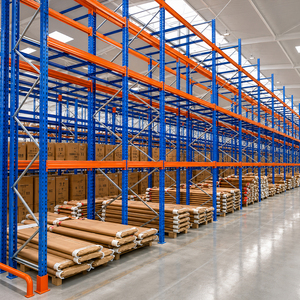
Structural Safety • High-Density Storage • Global Standards

China Top Warehouse Racking For Manufacturers & Exporters

An engineering whitepaper and technical procurement directory for plant directors, 3PL supply chain strategists, and international intralogistics buyers seeking compliant, high-density industrial racking systems.

Engineered Storage Solutions

Heavy-Duty Warehouse Racking Portfolio

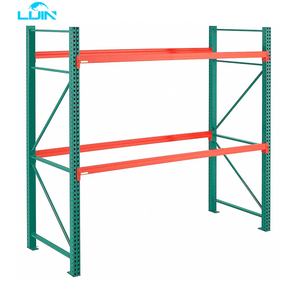
Direct factory fabrication conforming to EN 15512, RMI MH16.1, and AS 4084 specifications. Tailored structural profiles engineered with certified Q235B and Q355B structural grade steel.

Manufacturing Authority • Since 2001

Precision Metallurgy & Structural Safety for Global Supply Chains

Industrial warehouse racking represents the physical skeleton of modern global supply chains. For export-oriented manufacturing plants, cross-dock logistics centers, and cold-chain distributors, procuring steel storage infrastructure from China requires verified engineering accountability, stringent metallurgical certification, and validated FEA (Finite Element Analysis) load profiles.

Headquartered in Guangzhou, HEDA Shelves (Guangzhou Heda Shelves Co., Ltd.) has engineered and fabricated heavy-duty warehouse storage systems since 2001. Operating across a centralized 30,000 m² smart manufacturing facility staffed by 300+ technical personnel and fabrication specialists, our rolling lines maintain a capacity exceeding 30,000 metric tons per month. Every structural member—from omega-profile upright columns to box-welded step beams—undergoes computerized roll-forming, automated continuous seam welding, and multi-stage chemical passivation.

2001.
Established Year
30,000t
Monthly Capacity
10,000+
Projects Worldwide
  • High-Tensile Prime Steel: Sourced strictly from tier-one steel mills (Baosteel/Shougang) with certified mill test reports (MTR) meeting ASTM A1011, EN 10025, and GB/T 700 standards.
  • Parametric CAD & 3D Modeling: Complimentary engineering proposals, detailed layout calculations, and FEM 10.2.02 deflection validations deliver optimal cubic volume utilization prior to steel cutting.
  • Surface Pre-Treatment & Tropical Coating: 10-stage automated pickling, phosphating, and electrostatic powder deposition yielding 60–90μm dry film thickness resistant to 500-hour ASTM B117 salt spray tests.

Structural Steel Metric Matrix (Comparative FEA) HEDA Engineering Specs

Mechanical Property Standard Grade (Q235B) High-Load Grade (Q355B) Cold-Formed EN 15512
Yield Strength ($R_e$) ≥ 235 MPa ≥ 355 MPa Validated via Tensile Coupon
Tensile Strength ($R_m$) 370 – 500 MPa 470 – 630 MPa Conforms to Mill Cert
Elongation ($A_5$) ≥ 26% ≥ 22% Prevents Brittle Fracture
Beam Deflection Limit $L / 200$ (Standard) $L / 250$ to $L / 300$ Zero Plastic Deformation
Surface Treatment Epoxy Powder / Silane Dual Epoxy + Polyester Hot-Dip Galv (ISO 1461)
Seismic Acceleration ($a_g$) Designed to 0.15g Engineered ≥ 0.40g Site-Specific Spectrum Calc

*Deflection and stability criteria calculated according to FEM 10.2.02 (European Racking Code) and RMI Specification MH16.1 (Specification for the Design, Testing and Utilization of Industrial Steel Storage Racks).

Strategic Procurement Horizons

Key Procurement Trends in Global Intralogistics

Structural warehouse racking procurement is shifting from commoditized steel purchasing to comprehensive life-cycle engineering, regional supply chain risk hedging, and automated intralogistics alignment.

Total Landed Cost Over Nominal FOB

Global supply chain leaders no longer compare suppliers based solely on raw steel per-kilogram quotes. Modern procurement protocols evaluate "Total Landed Installed Cost" (TLIC)—factoring in container volumetric cube packaging efficiency, nested beam nesting geometries that save 25% ocean freight, pre-punched connector tolerances that reduce local installation man-hours by 30%, and certified steel grade compliance that eliminates local permitting delays.

Hybrid Automation & Brownfield Retrofits

Skyrocketing greenfield industrial land costs have driven warehouse operators away from standard static selective racking toward hybrid automated solutions. Multi-tier rack-supported mezzanines, electric mobile chassis, and radio shuttle racking systems are now routinely retrofitted into existing brownfield buildings. Buyers require racking designs engineered to withstand dynamic kinetic braking loads and repetitive shuttle cycles without structural fatigue.

Regional Climate & Seismic Adaptation

Global buyers operating across seismic belts (Pacific Rim, Southeast Asia, Southern Europe) and tropical high-humidity zones demand site-specific structural load designs. Off-the-shelf catalog racks are giving way to parametrically engineered systems featuring oversized footplates, calibrated ductile diagonal bracing, heavy-duty floor expansion anchor configurations, and salt-mist pre-treatments formulated for coastal ambient humidity.

Third-Party Traceability & Certification

Institutional investors, warehouse insurance underwriters, and enterprise tier-one clients demand ironclad quality documentation. Importers now mandate authentic factory-direct EN 10204 Type 3.1 steel inspection documents, verified ISO 9001:2015 quality control traceability from coil unrolling to dispatch, CE Construction Products Regulation (CPR) compliance, and toxic metal-free powder chemical formulations satisfying RoHS directives.

Structural Dynamics & FEA Design

Technological Evolution of Heavy Industrial Racking

From basic hot-rolled structural angles to modern cold-formed multi-bend omega profiles, warehouse racking engineering has transformed into an advanced branch of structural thin-walled steel mechanics.

Cold-Formed Geometry

Multi-Bend Omega Uprights & Torsional Rigidity

Early generation storage racks utilized simplistic C-channel sections prone to torsional-flexural buckling under eccentric horizontal fork impact. Modern HEDA upright columns are cold-formed through up to 24 sequential progressive roller dies into an intricate multi-bend Omega geometry. By relocating structural steel volume toward the extreme cross-sectional fibers, moment of inertia ($I_x$, $I_y$) is multiplied by up to 38% without adding net steel deadweight. This geometry withstands localized forklift scuffs while safely supporting bay loads surpassing 24,000 kilograms at heights exceeding 12 meters.

Joint Mechanics

Semi-Rigid Beam-to-Column Connection Mechanics

In modern rack design, horizontal beams do not function as ideal pinned joints or rigid welded nodes; they behave as semi-rigid elastoplastic connections defined by moment-rotation ($M-\theta$) response curves. Our cold-stamped 4-claw and 5-claw high-tensile connection brackets integrate tight-tolerance locking pins capable of absorbing vibrational shock and micro-torsion. Under cyclic seismic sway, this engineered semi-rigidity dissipates destructive kinetic energy through controlled joint rotation, preventing instantaneous structural collapse and safeguarding personnel.

Automation Synergy

Sub-Millimeter Tolerances for AS/RS and AMR Flocks

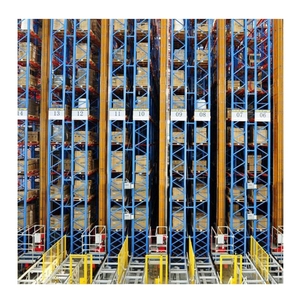
The intralogistics transition from human forklift operators to Autonomous Mobile Robots (AMRs), Automated Guided Vehicles (AGVs), and high-speed automated storage stacker cranes necessitates unprecedented fabrication accuracy. In an AS/RS high-bay installation, cumulative vertical plumb deviation across a 30-meter mast cannot exceed 1.5mm. HEDA employs computerized multi-punch column indexing tables, robotic precision welding cells, and laser-guided leveling baseplates to guarantee the sub-millimeter tolerances mandatory for autonomous sensor guidance.

Production Transparency

10 Controlled Steps: From Prime Coil to Sea Container

Integrated in-house production ensures structural reliability at every stage of the manufacturing cycle, avoiding quality variances caused by outsourced processing.

01

Coil Ingestion & QC

High-tensile certified steel coils verified for tensile yield, chemical composition, and gauge thickness.

02

Precision Slitting

Automated high-speed rotary shears cut steel rolls into micro-calibrated strip widths with zero edge burr.

03

CNC Column Punching

Computer-controlled continuous mechanical presses punch standardized 50mm, 75mm, or teardrop patterns.

04

Cold Roll-Forming

20+ station heavy rolling mills shape multi-flanged upright profiles with zero internal residual stress.

05

Box Beam Seaming

Dual interlocking C-profiles are continuously welded into rigid structural box beams for maximum load support.

06

Robotic Connector Weld

Automated multi-axis robotic welders bond multi-claw connector brackets using CO2/Argon shielding gas.

07

Shot Blasting & Acid Wash

Complete surface immersion pickling and phosphating removes all grease, scale, and oxide layers.

08

Electrostatic Powder Cure

Dual-reciprocator powder booths coat components, cured at 200°C for a scratch- and impact-resistant finish.

09

Pre-Assembly Inspection

Random batch sampling verifies connector tolerances, pin interlock safety, and beam deflection under test loads.

10

Sea Packing & Shoring

Custom steel dunnage, protective corner cards, and container-optimized bundling prevent ocean transit damage.

Enterprise Reliability

Factory-Direct Governance & Global Certifications

Eliminating middleman trading markup while giving project developers direct access to manufacturing engineers and verifiable compliance documentation.

CE Certified Conformity

Certificate No. 2435-CPR-8605159. Full compliance with EN 15512 and EU Construction Products Regulation (CPR) for structural steel execution class.

ISO 9001:2015 Management

Certificate No. 18624Q00169R0M. Comprehensive, audited quality management across layout design, raw material sourcing, rolling, and delivery verification.

RoHS & Eco-Compliance

Non-toxic TGIC-free thermosetting powder formulas that meet strict international environmental safety requirements for food, beverage, and medical storage facilities.

Need a third-party mill test report, seismic structural calculation packet, or a custom container loading simulation for your overseas tender?

Contact Us
Technical Due Diligence

Frequently Asked Procurement & Engineering Questions

Critical answers to essential questions regarding structural standards, international shipping mechanics, surface longevity, and seismic site design.

How does HEDA ensure rack integrity against regional seismic forces?

Our structural engineering team develops customized finite element models according to the project's exact geographic coordinate and spectral response acceleration parameters (Ss, S1 under IBC 2024 / Eurocode 8). Upright post profiles, bottom baseplate thickness (ranging from 6mm to 16mm), anchor bolt diameters, and horizontal-diagonal cross-bracing configurations are engineered to absorb localized lateral dynamic ground accelerations without buckling.

What surface finishes are recommended for sub-zero cold chain storage?

In standard sub-zero chillers (-5°C to -30°C), standard powder coatings can become brittle or experience moisture delamination due to freeze-thaw condensation cycles. We recommend continuous hot-dip galvanizing (HDG) conforming to ISO 1461, achieving a minimum zinc coating thickness of 65–85μm, or our specialized low-cure cold-chain polyester powder formula applied over chemical zinc phosphate pre-treatment to permanently eliminate micro-flaking.

What preliminary data is required to generate an engineering CAD proposal?

To provide an accurate, code-compliant proposal within 24–48 hours, our design office requires: (1) Warehouse architectural drawings showing clear heights, internal column spacing, dock door locations, and fire exit clear zones; (2) Unit load specifications (pallet width, depth, height, and maximum gross weight including pallet); (3) Forklift operational parameters (type, minimum turning radius, maximum mast reach height); and (4) Throughput requirements (FIFO or LIFO).

How does HEDA protect long upright frames and beams against ocean shipping damage?

International maritime logistics exposes steel structures to dynamic rolling stresses, humidity, and shifting loads. HEDA bundles upright columns and beams using high-tensile steel banding, corrugated paper cushioning strips, and multi-layer moisture-resistant PE stretch film. Step beams are nested back-to-back to maximize 40HQ container volumetric efficiency (often exceeding 24 metric tons per container) while custom wooden dunnage prevents metal-to-metal transit friction.

Can HEDA racking systems integrate with third-party automation (shuttles/cranes)?

Yes. A large share of our export manufacturing involves structural frameworks custom-fabricated for third-party automated guided vehicles (AGVs), Autonomous Mobile Robots (AMRs), automated storage and retrieval systems (AS/RS), and radio shuttles. We construct rails, dynamic entry funnels, precision docking sensors, and structural tie-backs engineered to mechanical tolerances within ±1.0mm.

What is the standard production lead time for utility-scale warehouse installations?

For standard selective pallet racking orders comprising 3 to 10 ocean containers (approx. 5,000 to 15,000 pallet positions), our typical factory manufacturing cycle is 15 to 20 working days following final approved CAD drawings. For complex custom automated AS/RS high-bay projects requiring specialized tooling or extensive hot-dip galvanizing, lead times generally range between 25 and 35 calendar days.

Direct Engineering Collaboration

Optimize Your Facility Footprint with Certified Racking Systems

Whether planning a regional distribution center, upgrading a cold-storage facility, or expanding industrial manufacturing output, our engineering team is ready to assist. Submit your layout specifications, floor dimensions, or tender document to receive complimentary 2D CAD layouts, 3D parametric renderings, and competitive factory-direct pricing.

Certified EN 15512 & CE Quality Free Structural 3D Modeling Factory-Direct B2B Pricing Worldwide Sea Freight Logistics

Consult a Project Engineer

Connect immediately via live chat to review your bill of materials, receive freight estimates, or discuss technical drawings.