Engineered Heavy-Duty Pallet Racking & Specialized Storage Systems
Direct from our Guangzhou manufacturing facility, every system is fabricated with certified high-tensile Q235B/Q355B structural steel, continuous computerized cold roll-forming, and anti-corrosive multi-stage electrostatic powder finishing.
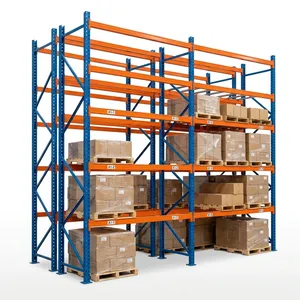
3000kg Adjustable Steel Pallet Rack Heavy Duty Boltless Shelving
- Load Capacity: Up to 3,000 kg / beam level
- Finish: Epoxy thermo-hardened powder coating
- Pitch Adjustment: 50mm / 75mm beam adjustability
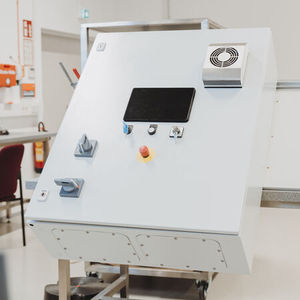
Industrial Control Cabinet According To Technical Customer Specifications
- Ingress Protection: IP55 / IP65 NEMA rated
- Application: AS/RS system plc electrical control
- Fabrication: CNC laser sheet cutting & seamless weld
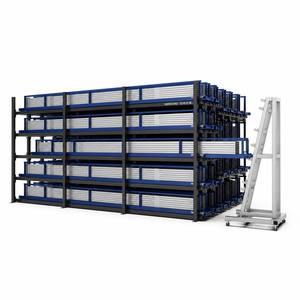
Industrial Honeycomb Modular Steel Pipe & Profile Storage Rack
- Payload: 3000kg load profile roll cell system
- Handling: Crane spreader & sideloader friendly
- Compliance: CE certified structural load frames
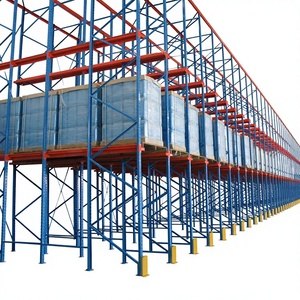
Through-Aisle Drive-In Heavy-Duty Warehouse Shelving System
- Storage Efficiency: Up to 80% floor footprint reduction
- Rails: Continuous cold-formed unibody pallet rails
- Safety: Heavy floor-anchored bull-nose guide rails
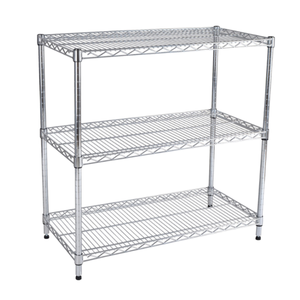
Industrial Metal Wire Shelving 4mm Thickness High Ventilation
- Decking: 4.0mm heavy-gauge spot-welded mesh
- Fire Safety: Complies with NFPA sprinkler pass-through
- Assembly: Rapid boltless & screw-lock configurations
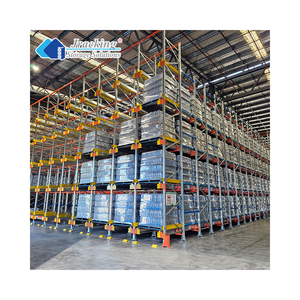
Global High-End Radio Shuttle Deep Lane Storage Racking System
- Automation: Lithium-powered 0.8-1.2 m/s shuttle bot
- Cold Storage: Sub-zero operational capability down to -30°C
- Throughput: Supports both FIFO and LIFO dispatch channels
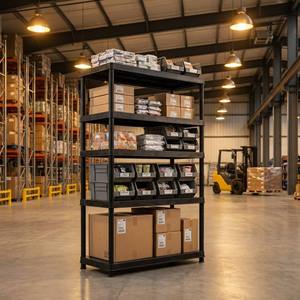
Commercial & Industrial Multi-Tier Stacking Shelving System
- Versatility: Modular 910*460*1350mm scalable units
- Finish: High-adhesion scratch-resistant powder coat
- Use: E-commerce fulfillment, tools, and spare parts
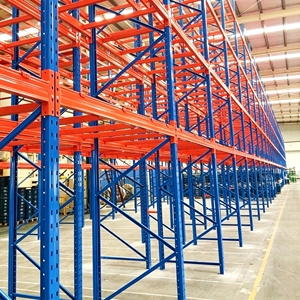
Multi-Tier High Bay Adjustable Selective Pallet Racking System
- Upright Profile: 80-140mm omega section columns
- Tier Range: 6 to 12 tier high-bay vertical integration
- Safety Locks: Spring-loaded stainless connector clips
Strategic Engineering Comparison: Selecting the Optimal Racking Architecture
Modern distribution facilities require a precise balance among SKU density, access selectivity, cycle velocity, and capital expenditure. Sourcing directly from certified Chinese manufacturers yields high mechanical performance while reducing unit pallet storage cost.
Industrial pallet racking is fundamentally an exercise in structural safety, civil engineering, and material optimization. When engineering logistics facilities across North America, Europe, Australia, and the ASEAN economic corridor, rack engineers must calculate dynamic warehouse floor loadings, aisle clearance tolerances, seismic ground acceleration coefficients, and structural deflection limits (such as the standard L/200 deflection ratio under maximum permissible static load).
Chinese steel fabrication leads global industrial logistics infrastructure by leveraging premier grade cold-rolled strip steels (predominantly Q235B and Q355B structural grades), fully automated continuous roll-forming lines, and robotic automated welding cells. Below is an engineering comparison matrix designed to guide procurement teams, logistics consultants, and general contractors in matching storage systems with warehouse operational KPIs.
| Storage System Type | Space Utilization | Pallet Selectivity | Handling Throughput | Aisle Width Reqd. | Capital Cost Index | Ideal Application |
|---|---|---|---|---|---|---|
| Selective Pallet Racking | 40% – 50% | 100% Immediate | Rapid / Continuous | 3.0m – 3.8m (Std Forklift) | Baseline (1.0x) | FMCG, 3PL, Multi-SKU retail distribution |
| Very Narrow Aisle (VNA) | 65% – 75% | 100% Immediate | High (Turret Truck) | 1.6m – 1.9m (Wire Guided) | Moderate (1.4x) | High ceiling facilities with premium real estate costs |
| Drive-In / Drive-Through | 75% – 85% | Low (LIFO / FIFO) | Moderate / Batch | Internal Drive Lanes | Low-Mid (1.2x) | Bulk food processing, beverage depots, seasonal peaks |
| Push-Back Racking | 65% – 75% | Lane-Selective (LIFO) | Fast / Push-Cart | 2.8m – 3.2m Counterbalance | Mid-High (1.6x) | Cold storage cross-docking, medium batch rotation |
| Gravity Pallet Flow | 80% – 88% | Strict First-In-First-Out | Continuous Dynamic | Dedicated Load & Pick | High (2.2x) | Perishable food, pharmaceutical inventory, buffer staging |
| Radio Shuttle Automation | 85% – 92% | Batch FIFO / LIFO | Ultra-High Semi-Auto | Minimized Forklift Travel | High (2.4x) | Cold storage freezers (-25°C), high-throughput manufacturing |
| Rack-Supported Mezzanine | 100% Cubic Gain | 100% Manual Handled | Concurrent Multi-Tier | Walkway / Catwalks | Mid-High (1.8x) | E-commerce fulfillment centers, garments, automotive spare parts |
Finite Element Structural Analysis
Top Chinese factories utilize Ansys structural simulations and full-scale physical destructive load testing. Upright columns undergo rigorous cyclic strain tests to guarantee structural integrity under ultimate seismic base shear forces and forklift impact vectors.
Surface Pre-treatment & Anti-Rust
Corrosion mitigation in tropical or sub-zero ambient environments demands thorough chemical preparation. Substrates pass through 12-stage chemical pickling, degreasing, and nano-ceramic phosphating before applying lead-free thermosetting polyester powder coatings.
Container Packaging Optimization
Export logistics efficiency significantly affects the landed cost per pallet position. Specialized modular strapping, laser-aligned nested stacking, and moisture-absorbing vapor-barrier wraps maximize 40HQ container cube utilization while eliminating transit abrasions.
10 Controlled Steps: From Prime Steel Coils to High-Precision Racks
Quality assurance at leading Chinese pallet shelving plants relies on real-time process monitoring rather than end-of-line sampling. Every step maintains strict dimensional tolerances within ±0.5mm.
Steel Coil Testing
Spectrometric tensile and yield verification of prime hot-rolled Q235B/Q355B coils.
Continuous Slitting
High-precision uncoiling and hydraulic edge trimming for exact strip profile width.
CNC Punching
High-speed mechanical presses punch 50/75mm pitch teardrop or diamond connector holes.
Cold Roll-Forming
18-to-24 progressive rolling stations produce complex load-bearing omega profiles.
Beam Interlocking
Dual-C box beam seam-joining via automated rotary roll closure for maximum torsional strength.
Robotic Welding
Multi-axis Panasonic GMAW robots weld beam-to-connector joints with full weld penetration.
De-scaling & Pickling
Full chemical immersion removing micro-scale oxides, rust, and residual mill grease.
Nano-Phosphating
Surface passivating layer deposited to maximize electrostatic adhesion and film longevity.
Electrostatic Coating
Nordson automated spray booths apply 70–90µm thermoset polyester powder cure at 200°C.
CMM & Packaging
Coordinate measuring machine inspection, bundle strapping, and containerization staging.
Future Procurement Trends in Warehouse Pallet Shelving (2025–2035)
Global supply chains are undergoing structural shifts. Understanding key industry trajectories enables procurement managers to build future-proof facilities that adapt easily to autonomous vehicles and digital inventory management.
1. The Rise of Hybrid AS/RS Retrofitting Architecture: Warehouse operators increasingly avoid fully customized AS/RS structures due to long commissioning timelines and high capital intensity. Instead, tier-one logistics developers favor hybrid pallet racking layouts. These frameworks integrate standard cold-formed selective racking with automated 2D and 4D radio shuttles, AGV-guided narrow aisles, and autonomous vertical reciprocating conveyors (VRCs). By standardizing hole matrices and column sections, facilities can transition from conventional forklift operations to automated shuttle lanes without structural teardowns.
2. Decarbonization and Low-Carbon "Green Steel" Auditing: International supply chain sustainability directives (such as the European Union's Carbon Border Adjustment Mechanism, CBAM) are transforming steel procurement. Global B2B buyers now mandate verified environmental product declarations (EPDs) from Chinese manufacturing plants. High-tier Chinese producers use electric arc furnace (EAF) steel and rooftop solar arrays for automated roll-forming and powder-curing lines, significantly reducing Scope 1 and Scope 2 embodied carbon footprints per metric ton.
3. Advanced High-Yield Thin-Walled Structural Sections: Advanced computer-aided cross-section profiling enables modern upright designs to utilize high-yield micro-alloyed steels (such as Q355B and Q460B) in lighter profiles while sustaining identical structural payloads. Multi-bend stiffening ribs across the column flanges mitigate local plate buckling risks, yielding substantial weight reductions that directly lower ocean freight shipping surcharges and raw material usage.
4. Built-in IoT Sensors and Real-Time Rack Integrity Monitoring: The integration of industrial IoT impact and strain sensors marks the next generation of racking design. Smart base-plate modules and structural upright monitors register forklift impact forces in real time, alerting safety managers to load-bearing deviations or microscopic structural deflections before catastrophic structural failures occur.
Guangzhou HEDA Shelves Co., Ltd. — Verified Factory Excellence
Since 2001, Guangzhou HEDA Shelves has engineered and exported high-performance pallet racking and industrial mezzanine systems worldwide. Certified under CE 2435-CPR-8605159 and ISO 9001:2015 (No. 18624Q00169R0M), our 30,000 square meter factory delivers reliable engineering, rapid CAD design, and direct factory pricing.
Frequently Asked Questions: Global Pallet Racking Sourcing
Engineering parameters, factory auditing criteria, international design standards, shipping logistics, and site installation practices explained for professional B2B procurement managers.
What structural design codes do top Chinese pallet rack factories adhere to?
Leading Chinese exporters engineer racking structures in strict accordance with European Standard EN 15512 (Steel static storage systems - Adjustable pallet racking systems - Principles for structural design), American RMI MH16.1 (Specification for the Design, Testing and Utilization of Industrial Steel Storage Racks), and Australian AS 4084:2023. Structural calculations account for dead loads, live pallet payloads, seismic base acceleration forces, and placement impact factors.
How do we verify steel grade authenticity and load-bearing test certs?
Factory-direct procurement includes verified Mill Test Certificates (MTC) matching EN 10204 Type 3.1 standards for every manufacturing heat number. The MTC confirms exact chemical compositions (Carbon, Manganese, Silicon, Phosphorus, Sulfur) and physical yield strengths (min 235 MPa for Q235B and 355 MPa for Q355B). In addition, physical destructive stub column tests, beam shear connection tests, and floor plate pull-out calculations are documented for client engineering reviews.
How does tropical humidity, marine air, or sub-zero cold chain affect finishing?
Standard indoor warehousing uses electrostatic polyester powder coating cured at 180°C–200°C with an average film thickness of 70–90 microns, passing 500-hour neutral salt spray tests (ASTM B117). For coastal warehouses with high relative humidity, chemical fertilizer storage, or sub-zero freezer operations (-25°C), we recommend hot-dip galvanizing per ISO 1461 (minimum 55–85 microns zinc thickness) or epoxy-zinc rich primers to prevent under-film corrosion.
What site data is required to produce a free engineered CAD layout?
To produce an optimized CAD layout, static calculations, and capacity proposals, our engineering team requires: (1) Architectural DWG floor plans highlighting column spacing, clear overhead building height, floor joint layouts, and fire exit routes; (2) Pallet specifications including width, depth, overall height (including load), and maximum gross weight; (3) Forklift fleet details such as mast collapsed height, maximum lift height, and minimum right-angle aisle stacking width requirements.
What is the standard production lead time and shipping transit from South China?
Standard fabrication schedules for bespoke pallet racking installations range from 15 to 25 working days depending on order tonnage and automated punching profiles. With our manufacturing hub situated in Guangzhou, port-to-port maritime shipping provides rapid transit windows: 2–5 days to Vietnam and the Philippines, 5–8 days to Singapore, Malaysia, and Thailand, 14–18 days to Australia, and 18–28 days to the US West Coast and Western Europe.
How is on-site installation supported for international turnkey projects?
Every export shipment is packed with detailed assembly documentation, step-by-step layout engineering drawings, and QR-coded installation videos corresponding to numbered parts. For major 3PL distribution centers or complex multi-tier mezzanine floors, HEDA Shelves deploys experienced technical supervisors on site to guide local contractor teams, conduct torque checks on M12/M16 expansion anchors, and verify plumb line tolerances within 1/1000.
Request an Engineered Layout & Factory Quote
Send us your building dimensions, pallet sizes, and load specifications. Our logistics engineers will generate an optimized 2D CAD layout, 3D structural model, and detailed bill of materials within 24 hours.
Get a Quote