2001
Established Year
30,000 m²
Manufacturing Facility
30,000 t
Monthly Output Capacity
10,000+
Completed Installations
Heavy-Duty Storage Systems
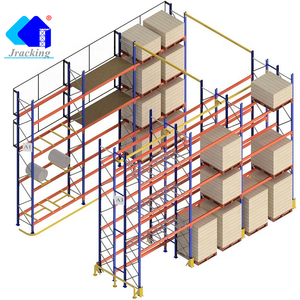
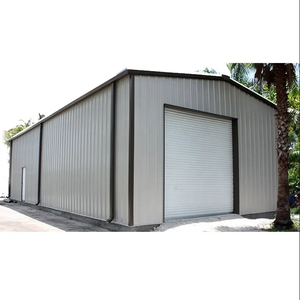
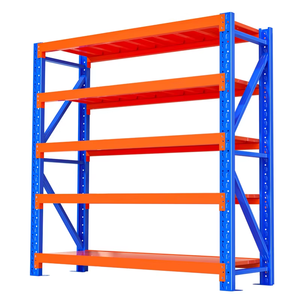
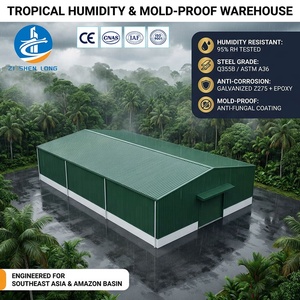
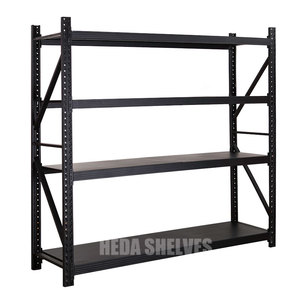
Featured Industrial Warehouse Racking & Prefabricated Structures
Precision-engineered using high-tensile Q235B and Q355B cold-rolled structural steel, treated with automated multi-stage phosphating and electrostatic nano-powder coating for extreme climate resistance.
Industry Whitepaper Deep-Dive
Engineering Integrity, Structural Tolerances & Material Quality
How Chinese industrial shelving manufacturing establishes structural safety, corrosion resilience, and seismic load compliance according to international standards.
1. Cold-Formed Steel Metallurgy and Section Properties
In modern industrial warehouse infrastructure, racking systems are not merely static shelves; they function as precision load-bearing civil structures. At our manufacturing facility, upright columns and load beams are constructed from prime certified Q235B and Q355B low-carbon high-strength structural steel coils. Standardized cold roll-forming profiles ensure that residual stress within the profile corners is minimized, maintaining consistent tensile strength and yield stress limits (Fy ≥ 235 MPa to 355 MPa) across every batch.
Uprights are manufactured with an optimized 50mm, 75mm, or 76.2mm pitch pattern punched with CNC accuracy, allowing 4-to-5-claw connector brackets to lock seamlessly with zero axial play. This interlocking beam-to-column geometry establishes a semi-rigid connection frame, critical for absorbing shear forces induced by rapid forklift truck braking and dynamic pallet drop shocks.
2. Surface Pretreatment and Anticorrosion Engineering for Tropical Climates
A primary failure point of warehouse steel racking imported into coastal or tropical high-humidity zones (such as Southeast Asia, South America, and the Middle East) is subsurface film blistering and intergranular corrosion. Our factory implements an advanced automated 10-stage pre-treatment procedure:
Following high-temperature degreasing, the steel undergoes full acid pickling to strip scale, followed by iron-zinc phosphating which etches a dense crystalline conversion coating directly into the substrate. The finish is finalized via an automated 180°C–200°C electrostatic thermosetting polyester powder baking line. This achieves an average dry film thickness (DFT) of 60–90 microns, verified by 500-hour neutral salt spray tests, ASTM D3359 cross-hatch adhesion class 5B, and high impact resistance.
3. Structural Performance & Safety Factors Comparison
| System Classification | Standard Yield Strength | Safety Factor Ratio | Seismic Deflection Limit | Ideal Inventory Dynamic |
|---|---|---|---|---|
| Selective Pallet Racking | Q235B / Q355B (EN 10025) | 1.65 – 1.95 (EN 15512) | H / 200 | 100% Selectivity / High-SKU Logistics |
| Drive-In / Drive-Through | Q355B Heavy Section | 2.00 Nominal Safety | H / 250 (Reinforced) | High Density / LIFO Batch Homogeneity |
| Radio Shuttle Automation | Q355B Cold Rolled Rails | 1.85 Integrated Factor | H / 300 (Strict Leveling) | Cold Chain / Automated FIFO Rotation |
| Heavy-Duty Cantilever | Structural H-Beams / Q355B | 2.00 Dynamic Overload | L / 250 (Arm Deflection) | Long Profiles, Timber, Steel Pipe Yards |
| Multi-Tier Mezzanine | Q235B/Q355B Composite | 1.65 Dead / 2.0 Live Load | L / 350 (Comfort Floor) | E-Commerce Picking / Floor Expansion |
All load-bearing calculations satisfy or exceed EN 15512:2020 (Steel static storage systems), RMI ANSI MH16.1, and seismic codes including UBC / IBC ASCE 7. Frame footplates and heavy ground anchors are engineered specifically according to the subfloor concrete slab compressive strength (f'c ≥ 25–30 MPa) to prevent shear tear-out under high-magnitude earthquake events.
Market Intelligence & Forecast
Future Procurement & Technological Trends in Warehouse Storage
Global fulfillment dynamics are evolving rapidly. Discover how smart warehousing, robotic automation, and green decarbonization are reshaping capital expenditure in warehouse racking.
1. Automation-Ready Hybrid Racking Infrastructures
Warehouse operators are moving away from purely manual racking toward automation-compatible configurations. Procurement strategies now prioritize structural racking systems built with tight dimensional tolerances (within ±1.0mm) capable of immediate or phased retrofitting with Autonomous Mobile Robots (AMRs), Automated Guided Vehicles (AGVs), and 2D/4D Radio Shuttles without requiring floor dismantling.
2. ESG Alignment, Decarbonized Steel & Zero-VOC Coating
International environmental standards (such as EU CBAM and US ESG mandates) are pushing tier-1 procurement managers to scrutinize the carbon footprint of structural steel. Our production lines use electric arc furnace (EAF) low-carbon recycled scrap steel options, paired exclusively with TGIC-free, zero-VOC heavy-duty thermosetting powder coatings that release zero hazardous effluent into water systems.
3. High-Cube Verticalization & Rack-Clad Warehousing
With industrial land prices surging in strategic logistics hubs, multi-level rack-supported mezzanines (2-tier to 5-tier) and Rack-Clad Buildings (where the storage racking itself forms the primary structural load frame for external wall and roof cladding) have emerged as the fastest-growing investment segment, saving up to 30% in overall building construction costs.
Why Choose Us
Global Manufacturing Scale & Direct Exporter Advantages
Backed by over 25 years of engineering authority, Guangzhou Heda Shelves Co., Ltd. operates a premier 30,000 m² heavy industrial production facility supplying certified storage hardware across 120+ nations.
CE & ISO 9001:2015 Verified Production
Every component is engineered under strict audit verification: CE Certificate No. 2435-CPR-8605159, ISO 9001:2015 Certification No. 18624Q00169R0M, and RoHS material compliance, guaranteeing full eligibility for international municipal tenders.
Free Engineering CAD, 3D & Load Simulations
Our in-house team of structural engineers translates warehouse dimensions, SKU profiles, pallet weights, and forklift turning radius data into full AutoCAD layouts, 3D BIM visualizations, and stress analyses before production begins.
Direct Ocean Freight & Container Packing Optimization
Strategically based in Guangzhou near South China deepwater ports (Nansha, Huangpu, Shenzhen). Components are bundled, palletized, and sequence-coded with 3D container packing software to maximize 40HQ volume and cut sea freight per pallet position.
Turnkey Installation Support & Component Labeling
Every shipment includes tagged, step-by-step assembly diagrams, component layout blueprints, and HD video manuals. For large logistics installations, our bilingual field engineering team provides global on-site commissioning.
Procurement Guide
Frequently Asked Questions (FAQ) for Warehouse Racking Importers
Crucial answers regarding pricing metrics, structural certifications, container consolidation, installation tolerances, and tropical climate durability.
What key technical details are needed to produce an accurate CAD warehouse layout?
To provide an optimized engineering layout and exact cost estimate, our design engineers require: (1) Architectural floor plan showing columns, building obstructions, entry gates, and clear ceiling height; (2) Pallet specifications (width, depth, overall height including cargo, and maximum gross weight); (3) Material handling equipment specifications (forklift model, maximum lifting height, turning radius, and minimum aisle width requirement); and (4) Throughput requirements (FIFO vs. LIFO rotation).
How does your factory protect steel shelving from high humidity and corrosion?
All structural steel profiles go through a continuous industrial pre-treatment process: alkaline wash, acid pickling to remove scale, and hot phosphating to generate an anti-corrosion barrier. We apply electrostatic polyester powder coat cured at 200°C for dry storage. For extreme humidity, coastal open yards, or cold storage facilities (-30°C), we supply hot-dip galvanized finishes complying with ASTM A123 / ISO 1461, ensuring decades of rust-free operation.
Can your racking systems be engineered for high-risk seismic zones?
Yes. For earthquake-prone regions (such as the Philippines, Indonesia, Japan, and the Western United States), our engineering department runs dynamic finite element structural simulations based on local peak ground acceleration (PGA) data. We configure reinforced upright section profiles, heavy cross-bracing frameworks, broadened baseplates, and high-tensile chemical or wedge anchor bolts to safely absorb seismic moments.
What is the typical shipping lead time and sea transit duration from China?
Standard factory production lead time is 15 to 25 working days depending on total project tonnage. Shipping factory-direct from our Guangzhou/Shenzhen hubs yields short ocean transit intervals: 2–5 days to Vietnam; 3–5 days to the Philippines; 5–7 days to Singapore and Thailand; 6–8 days to Malaysia; 12–18 days to Australia; and 18–28 days to European and North American main base ports under standard FOB, CIF, or DDP Incoterms.