Featured Warehouse Stacking & High-Density Storage Systems
From foldable steel post racks to automated tote handling and cold-chain frameworks, our precision-manufactured inventory is built from high-tensile Q235B/Q355B structural steel to maximize cubic warehouse density.
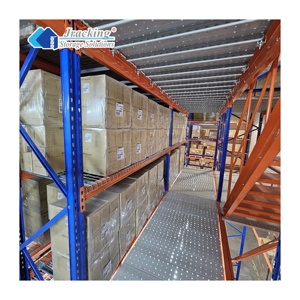
Premium Industrial Storage Stacking Shelves Racks Heavy Duty Steel EU Pallet Racking System
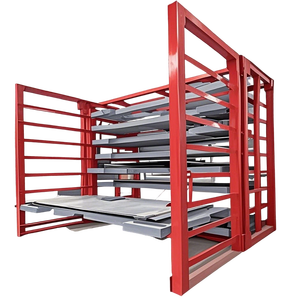
Customized Heavy-Duty 5 Layer Steel Metal Storage Rack Foldable Drawer Type Sheet Shelving
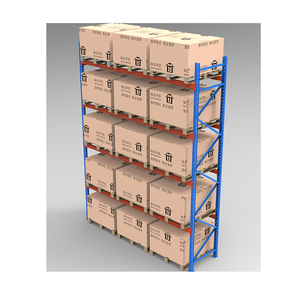
Warehouse Racking Heavy Duty Rack System Stack Warehouse Storage Steel Pallet Racks
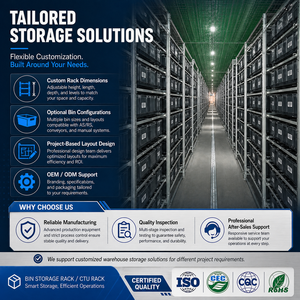
Mini Load ASRS Tote Storage Rack Automated Bin Warehouse Racking System For Small Parts
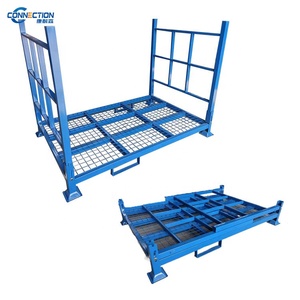
High Loading Capacity Steel Wire Mesh Pallet Foldable Stacking Rack Storage Tire Rack
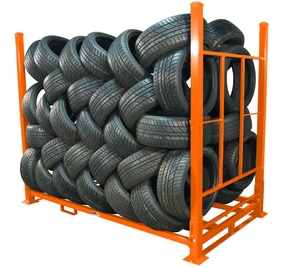
Steel Stacking Rack Heavy Duty Shelving Racks Warehouse Stackable Racking
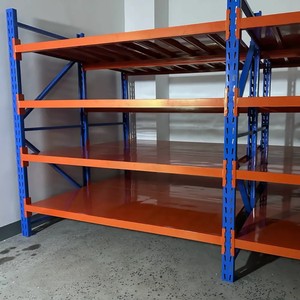
Warehouse Racks Metal Shelves Storage Shelf Three Post Rack 1000 to 3000kgs Per Level
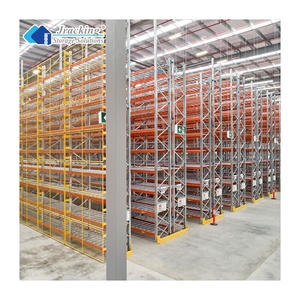
Jracking AU Standard Warehouse Rack Heavy Duty Pallet Racking for Cold Storage
Engineering Metallurgy & Structural Safety Criteria for Heavy-Duty Stacking Racks
Unlike anchored, static racking systems, warehouse stacking racks (post pallets, manuracks, and nestable frames) are exposed to compound dynamic stresses during multi-tier forklift placement, seismic ground acceleration, and rapid warehouse re-profiling.
Structural Metallurgy (Q235B vs Q355B)
The core structural integrity of warehouse stacking frames hinges upon the yield stress of cold-formed hollow sections. While commercial-grade Q235B mild steel provides adequate ductility for general industrial storage (yield strength ~235 MPa), heavy-duty cold storage and automotive tire racks utilize micro-alloyed Q355B steel (yield strength ~355 MPa).
- Tensile Elongation: ≥ 21% under ISO 6892-1
- Charpy V-Notch Impact: Tested at -20°C for freezer safety
- Carbon Equivalent (CEV): ≤ 0.38 for defect-free robot welding
Cup Foot Interlocking Dynamics
Stacking stability without floor anchoring requires positive mechanical interlocking. Our deep-drawn inverted truncated pyramid target cups (nesting sockets) provide a self-centering 4-point connection that resists forklift bumping and seismic displacement.
- Chamfered entry angles: 35° dynamic funneling action
- Positive engagement depth: 30mm minimum socket seat
- Racking tilt limit: ≤ 0.5% angular lean at full 4-high stack
Tropical & Cold-Chain Anti-Corrosion
Operating in tropical high-humidity hubs across Southeast Asia (Malaysia, Indonesia, Vietnam) or sub-zero blast freezers demands strict surface passivation. Components undergo automatic 7-stage acid pickling and phosphating pre-treatments before electrostatic coating.
- Salt Spray Resistance: > 500 hrs (ASTM B117 standard)
- Coating Thickness: 70-110 μm thermosetting polyester powder
- Optional Finish: Hot-dip galvanization to EN ISO 1461
Engineering Comparison Matrix: Stacking Racks vs. Conventional Storage Racks
| Storage System Classification | Standard Load Dynamic Rating | Vertical Stacking Limit | Civil Floor Anchoring | Warehouse Reconfiguration Speed | Reverse Logistics Collapsibility |
|---|---|---|---|---|---|
| HEDA Heavy-Duty Post Pallet Stacking Rack | 1,000 kg – 2,500 kg / Tier | 3 to 5 Tiers Free-Standing | 100% Zero Anchoring Required | Immediate (Forklift Repositionable) | 4:1 to 6:1 Tare Ratio (Foldable/Nestable) |
| Standard Selective Pallet Racking | 1,000 kg – 4,500 kg / Level | Up to 12+ Meters (Building Limited) | Heavy-Duty Chemical M12/M16 Anchors | Slow (Requires Engineering Dismantling) | Rigid Upright Structural Frames (None) |
| Drive-In Bulk Racking System | 1,000 kg – 1,500 kg / Pallet | Up to 10+ Meters High | Mandatory Floor & Top Cross-Bracing | Fixed Footprint Structural Configuration | None (Permanent Assembly) |
| Automated Bin / Tote Mini-Load ASRS | 50 kg – 350 kg / Bin Level | Up to 24 Meters High | Precision Precision-Level Ground Tracks | Permanent High-Tolerance Automation | High Initial Investment Structural Rigs |
Future Directions in Warehouse Stacking Rack Engineering (2025–2030)
Global supply chain volatility, urban logistics micro-fulfilment surges, and escalating warehouse leasing rates in prime logistics nodes are reshaping international B2B stacking rack specifications.
1. High-Density Elasticity over Fixed Real Estate
Warehouses are increasingly resisting capital lock-in caused by unalterable welded static racking. Stacking racks provide instant elastic scalability for seasonal inventory peaks (such as agricultural harvests, festive e-commerce surges, and tire manufacturing production schedules). Operators can stack units 4-high during peaks and collapse frames down to 20% floor area when empty.
2. AMR / AGV Underride Integration
Next-generation stacking racks are actively transitioning from manual counterbalanced forklift interaction toward automated mobile robot (AMR) compatibility. Custom bottom runner profiles, laser-cut reflective targets, and optical docking locator points enable AMRs to underride and transport loaded stacking frames without secondary handling pallets.
3. Circular Steel & Sustainable Procurement
Driven by EU Carbon Border Adjustment Mechanisms (CBAM) and corporate ESG mandates across North America and Australasia, suppliers must document steel scrap fractions and low-emission electric arc furnace (EAF) supply chains. Modern post pallets offer lifespans surpassing 15 years with 100% material recyclability upon retirement.
Why International EPC Contractors & Logistics 3PLs Partner with HEDA Shelves
Backed by over 25 years of structural rack engineering and heavy-gauge steel fabrication, Guangzhou Heda Shelves Co., Ltd. delivers direct factory pricing, structural safety guarantees, and complete turnkey layouts to over 120 countries.
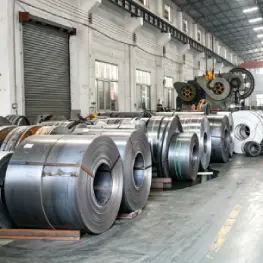
01. Prime Raw Steel
Strict spectral inspection of Baosteel/Shougang prime coils.
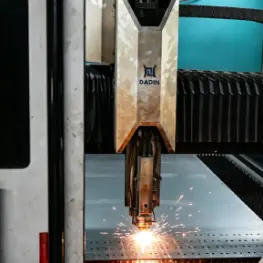
02. Laser Cutting
High-precision fiber lasers achieve ±0.1mm base-plate tolerance.
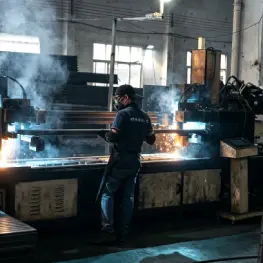
03. Robotic MAG Welding
Full penetration continuous welding across cup seams.
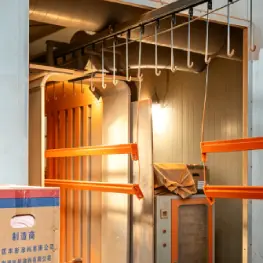
04. Powder Coating
Automatic electrostatic line ensures uniform thickness.
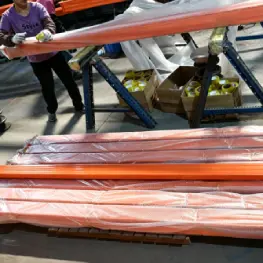
05. Rigorous QC Loading
Batch load deflection tested up to 1.5x nominal capacity.
30,000 m² Facility & 30,000 t/mo Scale
Our centralized manufacturing plant in Guangzhou integrates automated roll-forming mills, 16 multi-axis welding robots, and fully automated conveyorized powder curing lines, delivering 30,000 tons of monthly throughput to handle massive industrial deployments without project schedule delays.
Free 3D Layout & Structural FEA Calculations
Share your architectural CAD floor plan, column grid, forklift mast profiles, and unit load metrics. Within 24-48 hours, our senior logistics engineering team returns comprehensive AutoCAD layouts, 3D photorealistic renderings, and Finite Element Analysis (FEA) safety reports free of charge.
Verifiable Global Compliance: CE & ISO 9001
Procure with absolute legal and structural assurance. All HEDA storage structures hold verified third-party certifications including CE Marking (Certificate No. 2435-CPR-8605159 under EN 1090 structural steel execution standards), ISO 9001:2015 Quality Management (No. 18624Q00169R0M), and RoHS test compliance.
Stacking Racks Procurement: Technical & Operational FAQ
Answers to common structural engineering, logistics optimization, and safety compliance questions asked by procurement directors, warehouse managers, and EPC consultants.
Ready to Optimize Your Warehouse Floor Space?
Submit your warehouse building dimensions, pallet load requirements, or current SKU profiles. Our engineering team will deliver a comprehensive CAD floor layout, structural load calculation, and factory-direct price quotation within 24 hours.